
Choosing a Heavy Equipment Market Intelligence Database: Coverage and Data Quality
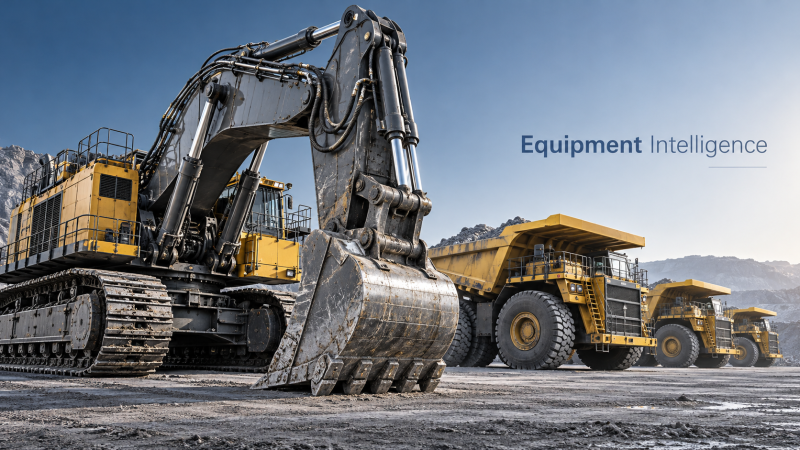
Choosing a Heavy Equipment Market Intelligence Database: Coverage and Data Quality
A heavy equipment market intelligence database is only as valuable as the decisions its coverage and data quality can support. For commercial evaluators comparing suppliers, assessing market opportunities, or validating investment assumptions, missing regional data and inconsistent equipment specifications can distort the picture. From tunnel boring machines and ultra-large excavators to crawler cranes and mining dump trucks, meaningful intelligence requires more than extensive listings. This guide examines how to evaluate geographic and equipment coverage, source transparency, update frequency, and data consistency—helping you distinguish a searchable information repository from a dependable foundation for commercial decisions.
Start with the decision, not the record count
A large database can still be the wrong database. A supplier-screening exercise needs manufacturer identities, product ranges, regional availability, and service capabilities. A market-entry assessment needs demand indicators, project timing, competitive presence, and barriers to participation. An acquisition review may require historical fleet information and a defensible distinction between equipment shipments and installed machines.
Before reviewing vendors, write down the questions the subscription must answer. “Which mining markets are growing?” is too broad to test. “Which identifiable open-pit projects could require replacement haulage capacity, and what evidence supports their procurement timing?” gives a provider something concrete to demonstrate.
Separate essential evidence from useful context. If a decision depends on active tenders, a rich archive of completed projects cannot compensate for weak tender monitoring. If technical compatibility drives the shortlist, market commentary cannot replace configuration-level specifications.
Coverage must have boundaries you can inspect
“Global coverage” describes an ambition, not a measurable service level. Ask which countries, equipment classes, project stages, and time periods are covered—and how coverage differs across them. A database may capture listed manufacturers well while missing private operators, local contractors, or announcements published only in local languages.
Request a coverage matrix that distinguishes records collected from records verified. It should also separate current activity from historical archives. Country presence alone says little: several old project entries do not establish reliable visibility into that country’s current procurement pipeline.
Equipment categories need engineering depth
Category labels can hide commercially important differences. “Mining trucks” may combine rigid and articulated machines, while “cranes” may combine equipment with very different lifting applications. The following checks reveal whether a provider understands the machinery behind its taxonomy.
These details do not turn a market database into an engineering approval tool. They establish whether its comparisons are meaningful enough to support commercial screening before project-specific technical review.
Trace important claims back to their sources
An evaluator should be able to move from a conclusion to the underlying evidence. Useful sources may include manufacturer specifications, operator disclosures, procurement notices, contractor announcements, company filings, and public trade statistics. Their value depends on the claim being tested; no source type is authoritative for everything.
A manufacturer brochure can substantiate a published specification, but not necessarily a machine’s actual site configuration. A tender notice demonstrates procurement intent, not a completed purchase. Customs records may indicate cross-border movement, yet classification breadth, used equipment, and re-exports can complicate interpretation.
Look for source links or document references, publication dates, and clear labels separating reported facts from estimates. Where figures are derived, the provider should explain the method and relevant exclusions. A market-size estimate without a definition of revenue, geography, equipment scope, and reporting period is difficult to use responsibly.
Repeated reporting is not independent confirmation. Several articles may all originate from one corporate announcement. Ask how the provider identifies shared sources and handles conflicting claims. A visible unresolved discrepancy is more useful than a confident figure whose uncertainty has been removed from view.
Consistency matters as much as accuracy
Individually plausible records can produce a misleading comparison when their definitions differ. Equipment databases need consistent units, naming conventions, configuration rules, and entity relationships. Preserve original values alongside normalized ones so an analyst can inspect conversions rather than accepting them blindly.
Check whether “tons” means metric tonnes or another unit, whether engine power is gross or net, and whether bucket capacity follows the same measurement basis. For electric mining trucks, battery capacity alone does not establish shift capability; duty cycle, gradients, charging arrangements, and thermal conditions also matter.
Company and project identities deserve similar attention. Parent companies, subsidiaries, dealers, joint ventures, and contractors should not be collapsed into interchangeable names. Otherwise, supplier counts can be inflated, project awards duplicated, and equipment ownership confused with operation.
Ask how missing information is represented. “Not disclosed,” “not applicable,” “not yet verified,” and zero are different states. If they all become blank cells—or zeros—exports can quietly distort averages and market models. Duplicate handling should also distinguish one machine redeployed between projects from two separate machines.
Freshness is a record-level question
A platform refreshed daily may still contain stale records. Distinguish the date an event occurred, the date its source was published, the date it entered the database, and the date someone last verified it. Those timestamps answer different questions.
Update expectations should reflect the information involved. Tender deadlines and award status can change quickly. Equipment specifications may remain stable until a model revision. Project schedules may need renewed checks after financing changes, permitting developments, or contractor announcements.
Historical changes should remain visible where they affect analysis. If an anticipated award date is overwritten, users lose the ability to examine delays. If only active projects remain searchable, historical pipeline analysis can overrepresent projects that survived. Ask whether cancelled, suspended, and completed projects remain available with their status history.
Use a controlled trial to expose practical weaknesses
Do not let a polished demonstration determine the purchase. Give shortlisted providers the same bounded assignment using equipment segments and regions relevant to your business. Include several records you can independently verify, but also unfamiliar records that test discovery rather than simple retrieval.
A useful trial might ask each provider to identify relevant projects, explain their procurement status, compare suitable equipment families, and supply evidence for every material claim. Evaluate the result at record level rather than judging only the presentation.
- Measure completeness against your required fields: a populated company name does not compensate for missing project status or source dates.
- Check errors and uncertainty separately: an explicitly unknown value is not equivalent to an incorrect assertion.
- Test repeatability: another analyst should be able to follow the evidence and understand the same conclusion.
- Submit a correction request: assess the response, supporting investigation, and whether the correction reaches exported data.
Set acceptance criteria before the trial. Missing sources for investment-critical claims might be a rejection condition, while limited coverage in a non-priority region may be acceptable. A weighted scorecard helps compare trade-offs, but it should not allow attractive interface features to cancel out a fundamental evidence gap.
Buy usable intelligence, not just searchable access
Commercial value also depends on how evidence moves into your workflow. Test exports for stable identifiers, source references, units, and timestamps. If an API is offered, confirm its actual field coverage, access limits, and treatment of revised records. Search access and reusable analytical data are not necessarily the same entitlement.
Review licensing terms for internal sharing, integration into reports, retention after subscription expiry, and use across subsidiaries. Ask which datasets or analyst services require separate payment. Compare the subscription price with the internal effort needed to clean records, resolve gaps, and reconstruct citations.
Specialist intelligence can be valuable where equipment characteristics and project economics are closely linked. The Global Terra-Force Hub (TF-Strategy) focuses on TBMs, ultra-large excavators, crawler cranes, large road machinery, and mining dump trucks, connecting machinery parameters with construction methods and infrastructure demand. Its coverage of sector news, technology evolution, and commercial insights reflects this connection. The same evaluation discipline should apply: test whether a specific insight is traceable, current, and relevant to the decision at hand.
For example, reporting on electric haulage or remote-controlled excavation becomes commercially useful when it distinguishes a technology announcement from operational deployment and explains the conditions affecting adoption. Interesting news is a starting point, not evidence of addressable demand.
Before selecting a heavy equipment market intelligence database, require a sample export, inspect its weakest relevant coverage area, and trace several consequential claims to their sources. Choose the provider whose limitations you can understand and manage—not the one whose headline record count is hardest to question.
Related News
 Oct 28, 2026Choosing a Heavy Equipment Market Intelligence Database: Coverage and Data QualityChoosing a heavy equipment market intelligence database? Compare coverage, data quality, source transparency, and updates to find reliable insights for smarter commercial decisions.
 Oct 27, 2026Construction Equipment Efficiency: How to Reduce Idle Time on JobsitesBoost construction equipment efficiency with smarter scheduling, telematics, and safe shutdown practices. Discover how to reduce idle time and fuel waste on your jobsite.
 Oct 26, 2026How TBM Electrical Systems Distribute Power and Protect Against FaultsExplore how TBM equipment electrical systems distribute power, coordinate fault protection, and maintain essential services. Learn what to check for safer, more reliable tunneling.
 Oct 25, 2026Comparing Industrial Equipment Suppliers: Lead Times, Warranties, and ServiceMake a smarter industrial equipment supplier comparison. Explore lead times, warranty coverage, and service support to reduce downtime risk and choose with confidence.

Related News

Ms. Elena Rodriguez
Weekly Insights
Stay ahead with our curated technology reports delivered every Monday.