
Construction Equipment Efficiency: How to Reduce Idle Time on Jobsites

Construction Equipment Efficiency: How to Reduce Idle Time on Jobsites
An engine running while a crew waits for materials can quietly erode a project’s margin. Improving construction equipment efficiency starts with understanding why machines sit idle—and which delays can be eliminated without compromising safety or equipment requirements. Excavators waiting on haul trucks and cranes held up by incomplete lift preparation often reveal coordination gaps rather than equipment limitations.
The practical objective is not zero idling. It is less avoidable engine-on time, fewer interruptions to productive work, and lower cost per completed unit. Telematics can expose the pattern, but dispatch decisions, work sequencing, and operator practices determine whether that information changes anything.
Separate unnecessary idling from necessary standby
A stationary machine is not necessarily an idle machine. A crawler crane may be holding a suspended load. An excavator may be powering an attachment without traveling. An engine may need to run for a manufacturer-specified procedure or to support essential auxiliary functions. Treating every stationary minute as waste produces misleading reports and potentially unsafe instructions.
Use three operational categories when reviewing engine-on time:
- Productive operation: The machine is performing its assigned task, including stationary hydraulic work.
- Required standby: The engine remains running for an approved safety, operational, or equipment-related reason.
- Avoidable idling: The machine is waiting without a justified need to keep the engine running.
Keep engine-off waiting visible as well. Shutting down an excavator saves idle fuel, but it does not resolve a missing truck or inaccessible workface. Fuel management and production management overlap; they are not interchangeable.
Build a baseline that reflects how the site actually works
Start with a representative operating period covering normal shifts, handovers, and recurring delivery patterns. Combine available telematics with dispatch records and direct observation. Before comparing machines, confirm how each system defines “idle.” Low engine speed, zero ground speed, and low engine load describe different conditions, especially across mixed fleets.
Useful records include machine identity, task, engine hours, reported idle duration, location, fuel consumption where available, and the reason for significant waiting events. Add accepted production output: excavated volume, hauled tonnes, completed lifts, or paved area, depending on the operation.
A basic starting metric is reported idle share = reported idle hours ÷ engine-on hours × 100%. Label it clearly. It is not automatically the avoidable-idling rate, and it is not a complete utilization measure. A machine can show a lower idle share simply because it spends more time traveling without producing useful work.
Validate suspicious events on site. An excavator reported as idle may be operating a low-load attachment; a truck apparently waiting may be held at a controlled crossing. Ask operators what happened before assigning a cause. Their explanation often identifies a constraint that the dashboard cannot show.
Fix the queue before adding equipment
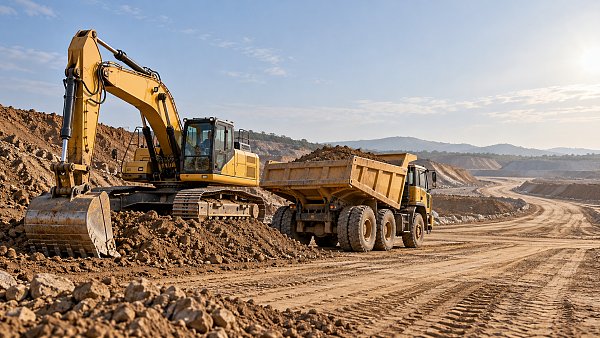
On earthmoving and mining projects, excavator waiting and truck queuing are connected. Too little effective haulage capacity leaves the loading machine waiting. Too much creates queues, congestion, and unnecessary engine hours. Neither problem is reliably solved by purchasing another machine.
Observe the complete haul cycle: positioning, loading, loaded travel, dumping, return travel, and queuing. Compare loader service time with truck arrival intervals. Investigate variability, not just averages. A changing dump location, rough haul road, restricted intersection, or slow truck positioning can disrupt an otherwise reasonable fleet balance.
Fleet matching also depends on usable payload, material density, bucket fill, loading passes, gradients, and ground conditions. Rated engine power alone says little about whether the system is balanced. At altitude or in extreme temperatures, operating limits and machine performance should be checked against manufacturer guidance rather than assumed from nominal specifications.
The same coordination problem appears in other operations, but the remedy changes:
- Crawler cranes: Confirm rigging, component access, exclusion zones, permits, and lift-team readiness before entering the operating window. Never shorten required inspections or override weather limits to reduce standby.
- Paving equipment: Coordinate material deliveries with paving speed and downstream compaction capacity. Simply stopping and restarting equipment can introduce quality risks.
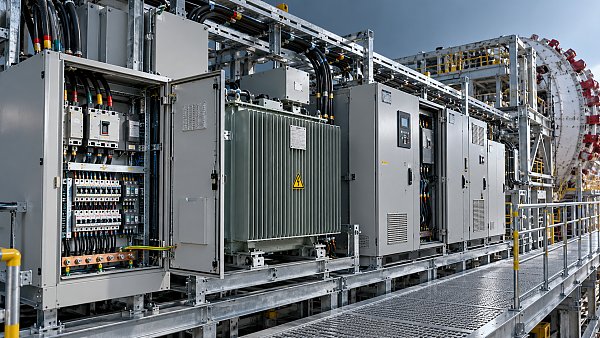
- TBM operations: Investigate excavation interruptions through the full system, including muck removal, segment supply, maintenance, and ground conditions. TBM downtime is not equivalent to diesel-engine idling, but it can create avoidable waiting across support equipment.
The Global Terra-Force Hub (TF-Strategy) connects heavy-equipment parameters with construction methods across tunneling, mining, lifting, and road machinery. That systems perspective matters here: an efficient individual machine cannot compensate for an unbalanced production chain.
Make shutdown rules specific enough to follow safely
“Switch off whenever you stop” is not a workable site policy. Instructions must account for safe parking, expected waiting duration, restart readiness, ambient conditions, and the machine’s operating manual. Warm-up, cooldown, emissions-system procedures, and auxiliary requirements vary by model and duty cycle.
Have maintenance and operations agree on machine-specific shutdown rules. Identify approved waiting areas, define permitted exceptions, and explain who can authorize them. Where automatic idle shutdown is available, verify its settings and operating conditions before enabling it. Do not impose a universal timer across equipment with different requirements.
Operators also need reliable information about the next task. If dispatch cannot say whether a delay will be brief or extended, people tend to leave engines running to remain ready. Better waiting-time communication makes appropriate shutdown decisions easier without turning operators into the sole owners of scheduling failures.
Explain exceptions rather than rewarding blanket compliance. A dashboard target should never pressure someone to disable climate control where it is needed for safe occupancy, interrupt an approved machine procedure, or rush a restart check.
Use telematics to trigger decisions, not just reports
Start with the decisions the site needs to make. A supervisor investigating repeated truck queues needs event timing and location. A fleet manager evaluating fuel waste needs reliable consumption data and a defensible distinction between required and avoidable idle. These are related questions, but they require different views.
Before expanding a monitoring platform, check mixed-fleet compatibility, data definitions, reporting delays, connectivity, export access, and responsibility for reviewing alerts. Poor connectivity may make stored event histories more useful than live notifications. More alerts are not an improvement if nobody is assigned to act on them.
Pair every recurring exception with an owner. Material shortages belong with logistics; repeated truck bunching may require dispatch or traffic-plan changes; unusual warm-up patterns may warrant maintenance review. Operator coaching is appropriate when behavior is the cause, not when it is simply the easiest explanation.
Review patterns by task and operating condition before ranking individuals. Comparing a truck on a long haul with one serving a congested short route can reward favorable assignments rather than better practices.
Measure the cost without overstating the savings
Estimate direct fuel opportunity using avoidable idle hours × verified idle fuel consumption × delivered fuel price. Use machine-specific observations or suitable manufacturer information where available. Do not apply one assumed fuel-burn rate to an entire fleet, and do not multiply idle hours by average working fuel consumption.
Treat other savings separately. Reduced engine hours may affect hour-based servicing, but calendar requirements and other maintenance obligations remain. Rental charges may depend on contract terms rather than engine use. Labor costs do not disappear because an engine is switched off while its operator still waits.
Track fuel per accepted unit of output alongside avoidable idle hours and schedule performance. Include rework or quality indicators where relevant. A lower fuel bill is not a successful efficiency intervention if the project loses production or compromises pavement quality.
Electric equipment changes the calculation, not the underlying coordination problem. Waiting can still consume auxiliary energy, occupy a scarce machine, and disrupt charging plans. Evaluate energy per completed task and charging availability rather than transferring diesel idle metrics unchanged.
Start with one recurring delay and verify the result
Choose a work area where waiting repeatedly interrupts production. Observe it across representative shifts, classify the main causes, and agree on one intervention with the people responsible. That might mean changing delivery slots, preparing crane loads earlier, improving a haul-road bottleneck, or clarifying shutdown instructions.
Compare conditions before and after the change, accounting for material, haul distance, weather, and task differences. Check that reduced idling has not merely become engine-off waiting or moved the queue elsewhere. Retain the intervention only when production, safety, and cost evidence support it.
Construction equipment efficiency improves when waiting has a known cause and someone has responsibility for removing it. Start with the machine that repeatedly waits for the same reason—not necessarily the one with the highest idle percentage—and confirm what must change upstream before asking it to work harder.
Related News
 Oct 27, 2026Construction Equipment Efficiency: How to Reduce Idle Time on JobsitesBoost construction equipment efficiency with smarter scheduling, telematics, and safe shutdown practices. Discover how to reduce idle time and fuel waste on your jobsite.
 Oct 26, 2026How TBM Electrical Systems Distribute Power and Protect Against FaultsExplore how TBM equipment electrical systems distribute power, coordinate fault protection, and maintain essential services. Learn what to check for safer, more reliable tunneling.
 Oct 25, 2026Comparing Industrial Equipment Suppliers: Lead Times, Warranties, and ServiceMake a smarter industrial equipment supplier comparison. Explore lead times, warranty coverage, and service support to reduce downtime risk and choose with confidence.
 Oct 24, 2026Choosing Lifting Equipment for Middle East Petrochemical Plants in Hazardous AreasExplore petrochemical lifting equipment Middle East plants can rely on. Compare hazardous-area certification, capacity, and heat limits to make informed procurement decisions.

Related News

Ms. Elena Rodriguez
Weekly Insights
Stay ahead with our curated technology reports delivered every Monday.