
How to Evaluate Supplier Capability and Export Experience Before Shortlisting Vendors
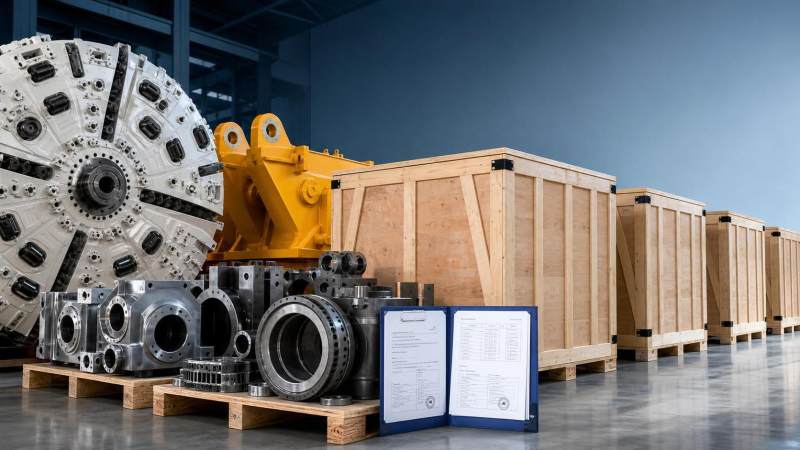
Before any vendor reaches a shortlist, supplier capability evaluation export experience needs to be tested as a combined risk issue, not as two separate boxes. In heavy equipment, infrastructure supply, and strategic sourcing, the cheapest quote can still become the most expensive choice when production discipline, documentation control, and international delivery practice are weak. A reliable supplier is usually defined by what it can repeatedly build, certify, ship, and support under real project pressure.
This matters even more in sectors connected to TBM systems, mining equipment, crawler cranes, road machinery, and heavy haulage. These categories involve complex parts, strict schedules, and cross-border compliance. In that environment, supplier capability evaluation export experience helps reduce avoidable delays, cost leakage, and performance disputes long before a purchase order is issued.
Why capability and export readiness must be assessed together
A supplier may have a strong factory and still fail overseas delivery. Another may know export paperwork well but lack stable process control. Shortlisting should filter out both types of weakness.
In practical terms, supplier capability evaluation asks whether the vendor can meet technical, quality, volume, and schedule requirements. Export experience asks whether that same vendor can move goods across borders without compliance gaps or execution surprises.
For global heavy industry, the link is direct. A tunnel boring machine component, crane assembly, or mining truck subsystem can be technically acceptable in the workshop yet commercially unusable if packing, labeling, customs codes, or destination standards are mishandled.
That is why supplier capability evaluation export experience should be treated as a single decision framework. It reveals whether a supplier can support not only production, but the entire contract path from specification to site arrival.
What supplier capability really includes
Capability is broader than installed machines or a polished presentation. It includes the systems that turn engineering requirements into consistent output.
Manufacturing depth
Check whether critical processes are performed in-house or outsourced. Heat treatment, welding, machining tolerance control, coating, testing, and final assembly often determine risk levels.
A supplier with shallow process ownership may struggle when design changes, urgent rework, or traceability demands appear during execution.
Quality management under pressure
Ask how nonconformities are recorded, how root causes are corrected, and how inspection data is retained. Strong suppliers explain their process clearly and support it with records.
Certification matters, but documented routines matter more. A certificate alone does not prove that quality decisions remain stable during peak production.
Engineering response
Complex sourcing often involves drawing updates, material substitutions, or interface coordination. Review whether engineers can answer technical queries quickly and in usable detail.
This is especially relevant for sectors tracked by TF-Strategy, where equipment performance depends on matching physical parameters with construction conditions and operating loads.
Capacity realism
Nominal capacity is often overstated. Verify actual throughput, bottleneck processes, labor stability, and peak season loading. A supplier that accepts every order may not deliver any of them well.
What export experience should prove
Export experience is not simply a history of overseas sales. It should show repeatable competence in destination compliance, logistics coordination, and commercial document accuracy.
When supplier capability evaluation export experience is done well, export history becomes evidence of operational maturity, not a marketing claim.
Where risk usually hides during vendor shortlisting
Most sourcing failures do not begin with dramatic breakdowns. They begin with small mismatches that were ignored during prequalification.
- The sample quality is excellent, but mass production control is unproven.
- The supplier exported before, but only low-complexity goods to nearby markets.
- Documentation is handled by one person, creating a single point of failure.
- Sub-suppliers provide critical parts, yet traceability stops at the first tier.
- Delivery promises ignore port congestion, oversized cargo rules, or destination inspections.
In heavy equipment supply chains, these issues grow quickly. One missing test record or one poorly protected component can affect commissioning, warranty, and project cash flow.
This is also why market intelligence has value. Platforms such as TF-Strategy help connect technical realities, project timing, and commercial signals, making supplier screening more evidence-based.
A practical framework for evaluating vendors
A useful review model should combine documents, interviews, factory evidence, and market references. No single source is enough.
1. Start with requirement fit
Define the technical scope first. That includes materials, tolerances, standards, testing, packaging, shipment mode, and service expectations.
Without this baseline, supplier capability evaluation export experience becomes vague and easy to manipulate.
2. Screen for relevant project evidence
Ask for cases that match complexity, not just size. A supplier of standard fabricated parts may not be ready for precision TBM subsystems or mining fleet components.
Look for repeat export projects, customer retention, and evidence of handling deviations without losing schedule control.
3. Verify the execution chain
Map the path from raw material intake to final shipment. Identify who controls quality gates, export documents, packaging release, and customer communication.
The more fragmented the chain, the more important ownership and escalation discipline become.
4. Test responsiveness
Use live questions. Ask about material alternatives, lead-time recovery, inspection witness procedures, or destination labeling requirements.
Response speed, clarity, and consistency often reveal more than brochures or certificates.
How this applies across sourcing scenarios
The same logic works across industries, but the stress points differ by application.
For TBM and underground projects, dimensional accuracy, metallurgy, and spare parts continuity are usually central. For open-pit mining, wear life, uptime support, and field replacement speed often matter more.
In crawler crane and lifting systems, safety documentation, weld quality, and transport configuration become critical. For road machinery and haulage equipment, climate adaptation and service logistics can become decisive.
Across all of them, supplier capability evaluation export experience remains the common filter. It shows whether a vendor can perform within the real operating context, not only within the factory gate.
What to do before the shortlist is finalized
A shortlist should be built on comparative evidence, not on initial impression. Keep the evaluation tight and consistent across candidates.
- Use a weighted scorecard covering production, quality, export execution, and service support.
- Separate mandatory requirements from preferred strengths.
- Request destination-specific export documents in sample form.
- Validate references from projects with similar technical and geographic demands.
- Plan a factory audit or remote verification for high-value packages.
The next step is to compare gaps, not just scores. A supplier with a slightly higher price but stronger export discipline may offer better project value over the full delivery cycle.
If the sourcing scope involves strategic machinery, long lead items, or multi-country deployment, refine the shortlist using supplier capability evaluation export experience as the main decision lens. That approach usually creates a cleaner bid process, stronger delivery confidence, and fewer surprises after award.
Related News
 Oct 12, 2026How to Assess a High-Altitude Mining Equipment Manufacturer for Remote ProjectsHigh altitude mining manufacturer assessment guide: compare derating, cold-climate reliability, remote service, parts resilience, and lifecycle risk for smarter project decisions.
 Oct 11, 2026What Drives TBM Cutter Head Material Cost and Life-Cycle Value?Cutter head material cost explained: compare TBM alloys, wear protection, downtime risk, and life-cycle value to choose the most reliable, cost-effective solution.
 Oct 12, 2026How to Read Mining Equipment Performance Reviews Beyond Headline MetricsMining equipment performance reviews explained: learn to assess productivity, availability, maintenance risk, site conditions, and total ownership cost for smarter fleet decisions.
 Oct 11, 2026Payload Management Systems: Preventing Overloads Without Slowing ProductionPayload management helps prevent overloads, protect equipment, and keep production moving. Learn how accurate targets, pass planning, alerts, and calibration improve every load.


Ms. Elena Rodriguez
Weekly Insights
Stay ahead with our curated technology reports delivered every Monday.