
Petrochemical Lifting Solutions Price Breakdown: What Drives Total Project Cost?
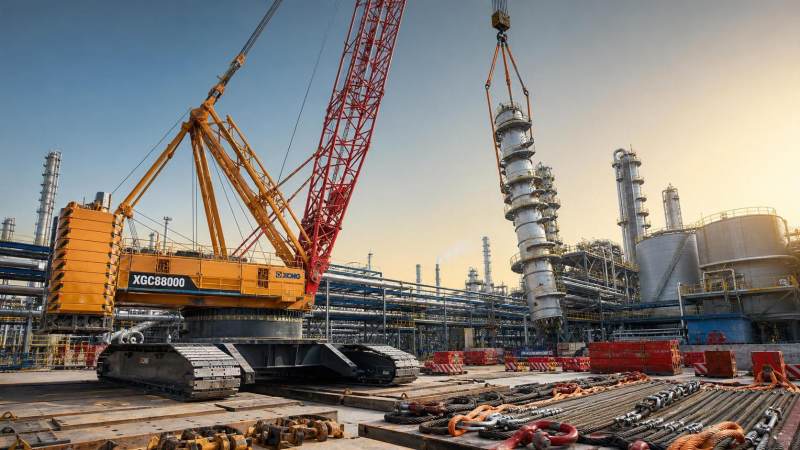
Petrochemical Lifting Solutions Price Breakdown: What Drives Total Project Cost?
For budget owners, petrochemical lifting solutions price is rarely just a crane line item.
The headline rental rate matters, but it never tells the whole cost story.
In refinery and petrochemical work, lifting cost is shaped by engineering depth, site limits, safety controls, and schedule pressure.
That is why two bids with similar cranes can still land far apart in total project value.
A useful review starts with one question.
What exactly is included in the petrochemical lifting solutions price, and what remains exposed?
This matters even more when projects involve reactors, columns, modules, pipe racks, or turnaround replacement work.
Each lift carries its own risk profile, resource demand, and potential cost ripple.
A clear cost breakdown helps compare suppliers on total delivered value, not just advertised day rates.
Why Petrochemical Lifting Costs Often Surprise Buyers
Heavy lifting in petrochemical sites is different from general construction lifting.
The work happens in congested layouts, under strict permit systems, with low tolerance for incident risk.
As a result, petrochemical lifting solutions price often includes layers of preparation that are easy to miss in early reviews.
A supplier may price the crane competitively, then recover margin through transport, mats, supervision, or standby exposure.
Another supplier may look expensive upfront, yet include engineering, lifting plans, and site coordination that reduce change orders later.
That difference is where procurement decisions often succeed or fail.
The Main Elements Behind Petrochemical Lifting Solutions Price
Most total cost comes from seven practical drivers.
1. Crane Type and Lift Capacity
Capacity is still the starting point for petrochemical lifting solutions price.
Crawler cranes, hydraulic cranes, and ring cranes carry very different ownership and operating cost structures.
The required load chart at actual radius matters more than nominal tonnage.
A 600-ton lift on paper may require a much larger machine once boom length, tail swing, and site geometry are considered.
2. Lift Complexity and Engineering Study
Complex lifts need more than equipment.
They need method statements, rigging calculations, transport path checks, and contingency planning.
If the scope includes engineered lift studies, the petrochemical lifting solutions price will rise early but often save money later.
This is especially true for tandem lifts, live-unit work, and retrofits inside operating plants.
3. Mobilization, Demobilization, and Assembly
Mobilization is one of the most underestimated parts of petrochemical lifting solutions price.
Large cranes may require dozens of truckloads, escort planning, route permits, and support cranes for assembly.
Remote sites, port access issues, or customs delays can push costs higher very quickly.
When approvals slip, idle assembly crews and parked transport assets add hidden spend.
4. Ground Conditions and Temporary Works
Ground bearing pressure can reshape the full budget.
Weak surfaces often require steel plates, timber mats, civil preparation, or engineered foundations.
In many cases, these support measures are not obvious from the first quote.
Yet they are central to the final petrochemical lifting solutions price.
5. Safety Compliance and Site Rules
Petrochemical operators expect high documentation and training standards.
That includes operator certification, lift supervisor coverage, gas testing protocols, induction time, and permit coordination.
Where standards are tighter, petrochemical lifting solutions price naturally carries a compliance premium.
It is a real cost, but usually cheaper than a shutdown delay or incident response.
Schedule Risk Is a Major Cost Multiplier
From a financial view, schedule risk is often the biggest variable inside petrochemical lifting solutions price.
Turnaround windows are tight.
Weather exposure, permit timing, unit access, and late fabrication can all trigger standby charges.
Those charges may be daily, hourly, or milestone-based.
Either way, they can move a budget far more than the base rental rate.
More important, a delayed lift can affect scaffold teams, welding crews, insulation scope, and commissioning sequence.
That ripple effect is why strong planners examine total installed cost, not isolated lifting cost.
Typical Cost Categories to Check in Every Quote
A disciplined comparison sheet should separate direct and indirect components.
- Crane rental or package rate
- Rigging gear and spreader systems
- Lift engineering and third-party review
- Mobilization and demobilization
- Assembly and dismantling support cranes
- Ground preparation and temporary works
- Operators, riggers, supervisors, and HSE staff
- Standby, delay, and overtime conditions
- Insurance, permits, and access restrictions
- Night work, shutdown premiums, or emergency response coverage
When these items are itemized, petrochemical lifting solutions price becomes easier to compare on a like-for-like basis.
How to Evaluate a Low Price Without Creating a Higher Final Cost
A low quote is not automatically a good buy.
Sometimes it reflects an efficient fleet position or strong local presence.
Sometimes it simply omits cost that will return as variation orders.
In practical procurement, three checks are especially useful.
- Test the quote against the actual lift path, radius, and plant congestion.
- Review what assumptions trigger standby or scope change.
- Check whether engineering responsibility is clearly assigned.
If those points are vague, the quoted petrochemical lifting solutions price is probably incomplete.
That incompleteness usually shows up later as delay, rework, or claims.
Questions That Improve Cost Control Before Award
Better buying decisions usually come from better questions.
- What lift studies are included in the petrochemical lifting solutions price?
- What site data must be confirmed before the rate is fixed?
- Which delays are billable, and at what unit cost?
- Who supplies mats, access roads, and civil support?
- What are the crew ratios for normal and critical lifts?
- Is there local fleet availability, or will equipment be imported from another region?
- How are weather downtime and permit holds treated commercially?
These questions reduce ambiguity before execution, when cost control becomes much harder.
A Smarter Way to Read Petrochemical Lifting Solutions Price
The best reading of petrochemical lifting solutions price is commercial, technical, and operational at the same time.
A number alone does not show whether the lift can be delivered smoothly inside a live industrial environment.
A stronger quote usually explains assumptions, defines exclusions, and shows clear accountability across planning and execution.
That transparency is often the real signal of lower financial risk.
For complex refinery and petrochemical projects, the cheapest visible rate can become the most expensive final outcome.
The more reliable path is to compare total scope, schedule resilience, safety readiness, and change-order exposure.
When that discipline is applied early, petrochemical lifting solutions price becomes a decision tool, not just a procurement figure.
Related News
 Oct 12, 2026How to Assess a High-Altitude Mining Equipment Manufacturer for Remote ProjectsHigh altitude mining manufacturer assessment guide: compare derating, cold-climate reliability, remote service, parts resilience, and lifecycle risk for smarter project decisions.
 Oct 11, 2026What Drives TBM Cutter Head Material Cost and Life-Cycle Value?Cutter head material cost explained: compare TBM alloys, wear protection, downtime risk, and life-cycle value to choose the most reliable, cost-effective solution.
 Oct 12, 2026How to Read Mining Equipment Performance Reviews Beyond Headline MetricsMining equipment performance reviews explained: learn to assess productivity, availability, maintenance risk, site conditions, and total ownership cost for smarter fleet decisions.
 Oct 11, 2026Payload Management Systems: Preventing Overloads Without Slowing ProductionPayload management helps prevent overloads, protect equipment, and keep production moving. Learn how accurate targets, pass planning, alerts, and calibration improve every load.

Structural Load Expert
Weekly Insights
Stay ahead with our curated technology reports delivered every Monday.