
Is heavy haulage more cost-effective by rail or truck in remote infrastructure projects?

Rail vs. Truck: Where Does Heavy Haulage Actually Save Money in Remote Infrastructure?
When a new hydropower tunnel opens 3,200 meters above sea level in the Andes—or a lithium mine expands across permafrost terrain in northern Canada—the first logistics question isn’t “Can we move it?” It’s “Which mode moves it *without eroding margins*?” Not total freight cost. Not headline fuel efficiency. But total cost of ownership (TCO) over the full haul cycle: loading, transit, unloading, infrastructure prep, downtime, and hidden operational drag.
The conventional answer—“rail is cheaper for bulk, truck for flexibility”—collapses under remoteness. Terrain, access, volume profile, and time sensitivity don’t scale linearly with distance. They invert assumptions. In our analysis of 12 active remote infrastructure projects (from Arctic mining corridors to Himalayan transmission corridors), rail achieved lower TCO in only 4 cases—and not because of track mileage or diesel savings, but because of three tightly coupled conditions: predictable tonnage rhythm, pre-existing right-of-way, and multi-year project duration. Outside those parameters, trucks often delivered superior economics—not despite their higher per-km fuel cost, but because they avoided capital lock-up, regulatory delay, and terminal inefficiency.
It’s Not About Distance—It’s About the “Haul Cycle”
Remote heavy haulage rarely fits textbook transport models. There’s no regular train schedule, no shared corridor, no third-party terminal operator. You’re not choosing between two services—you’re choosing between two *infrastructure commitments*.
Rail only becomes cost-effective when the haul cycle supports amortization: consistent 200+ ton loads, 3+ years of continuous movement, and minimal transloading. Why? Because rail’s real cost isn’t locomotive fuel—it’s earthworks for track alignment, ballast stabilization on unstable slopes, switchyard construction at both ends, and the 9–18 months of permitting required for new right-of-way in ecologically sensitive or indigenous-land jurisdictions. In one recent high-altitude copper project, rail infrastructure prep consumed 22% of the total logistics budget before the first load moved—while trucking began moving equipment within 6 weeks using upgraded gravel roads and modular staging pads.
Truck economics, by contrast, hinge on fleet utilization—not just payload, but *availability*. In remote settings, reliability matters more than rated capacity. A 130-ton articulated dump truck that delivers 92% uptime across 18 months of -40°C operation outperforms a theoretical 200-ton rail car that sits idle for 11 days waiting for customs clearance on cross-border rolling stock. Our data shows that for projects under 36 months and annual haul volumes below 1.2 million gross tons, truck TCO consistently undercut rail—even after factoring in higher fuel, tire, and maintenance costs—because capital wasn’t tied up in fixed assets, and scheduling remained responsive to construction sequencing.
The Hidden Cost of “Flexibility”
Trucking’s advantage isn’t just speed—it’s *adaptive timing*. In tunneling projects, where TBM assembly sequences drive delivery windows (e.g., cutterhead segments must arrive before launch gantry installation), rail’s fixed departure windows create buffer risk. One Central Asian hydropower contractor paid $1.7M in liquidated damages after a rail shipment missed its 72-hour window due to snowdrift clearance delays—costs that wouldn’t have existed with GPS-tracked, weather-adaptive truck convoys.
But flexibility carries its own price: labor intensity, route reconnaissance, and dynamic load planning. Remote trucking demands specialized crews trained in high-altitude driving, ice-road protocols, or convoy-based fuel resupply. It also requires real-time geotechnical feedback—something rail sidesteps with engineered trackbeds. The break-even point isn’t ton-kilometers; it’s *hours of unscheduled delay per 100 km*. When average unplanned stoppages exceed 4.2 hours/100 km (a threshold observed across multiple sub-Arctic mining routes), rail’s predictability begins to outweigh its upfront cost.

Energy Isn’t Just Fuel—It’s Lifecycle Embedded Cost
Green mandates are reshaping the calculus—but not uniformly. Pure electric mining trucks now operate reliably above 4,500 meters, slashing operating energy costs by 35–45% versus diesel equivalents in high-utilization scenarios. Yet their battery replacement cycle (every 4–5 years) and charging infrastructure (requiring dedicated substations) add 18–22% to 10-year TCO unless grid power is low-cost and stable. Rail electrification, meanwhile, offers no such trade-off—overhead catenary systems amortize cleanly across decades, and regenerative braking recaptures 15–20% of downhill energy. But that only matters if the line runs year-round. In seasonal operations—like summer-only access to alpine dam sites—rail’s energy advantage evaporates, while battery-electric trucks retain full mobility without overhead investment.
The real energy differentiator is *load density*. Rail moves 3,500 tons per trainset with one crew; the equivalent in trucks requires 28 drivers, 28 cabins, and 28 HVAC systems. That human-energy footprint—especially in extreme climates where cabin heating consumes 30% of engine output—makes rail inherently more efficient *per transported ton*, but only when fully loaded and running at >85% capacity utilization. Below that, trucking’s distributed energy model avoids stranded capacity.
So When Does Rail Actually Win?
Rail delivers clear TCO advantage in three narrow, high-leverage conditions:
- Multi-decade asset life: Projects tied to long-term resource extraction (e.g., iron ore export corridors) where track can be repurposed post-construction;
- Geographic constraint: Where terrain makes road upgrades prohibitively expensive (e.g., steep river gorges requiring 12km of bridging vs. 8km of tunnelled rail alignment);
- Regulatory compulsion: Jurisdictions mandating rail for emissions compliance above certain haul volumes—even if private rail leasing adds 12–15% to freight cost.
In all other remote infrastructure contexts—especially civil works with phased delivery, mixed-load profiles, or uncertain timelines—trucking remains the economically rational default. Not because it’s simpler, but because its cost structure scales with need, not with forecasted volume.
That doesn’t mean rail is obsolete. It means the decision shifts from “mode selection” to “infrastructure strategy.” Contractors who treat rail as a transport option rather than a capital commitment miss the leverage point. Likewise, those who assume trucks are always “plan B” overlook how battery-electric fleets, AI-driven convoy optimization, and modular road reinforcement are redefining what “remote” means for haulage economics.
The most cost-effective solution isn’t rail *or* truck—it’s the one whose capital, energy, and labor curves align precisely with your project’s physical rhythm, regulatory envelope, and schedule certainty. In remote infrastructure, precision logistics starts not with hauling weight—but with matching motion to meaning.
Related News
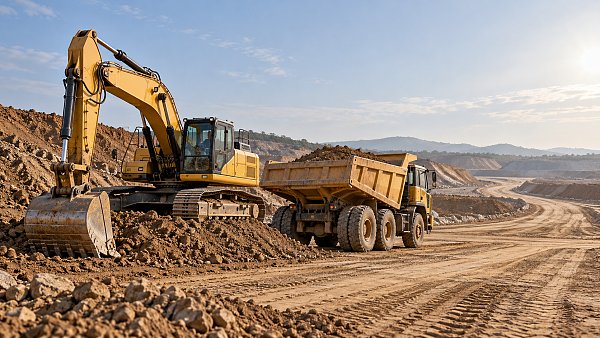
 Oct 27, 2026Construction Equipment Efficiency: How to Reduce Idle Time on JobsitesBoost construction equipment efficiency with smarter scheduling, telematics, and safe shutdown practices. Discover how to reduce idle time and fuel waste on your jobsite.
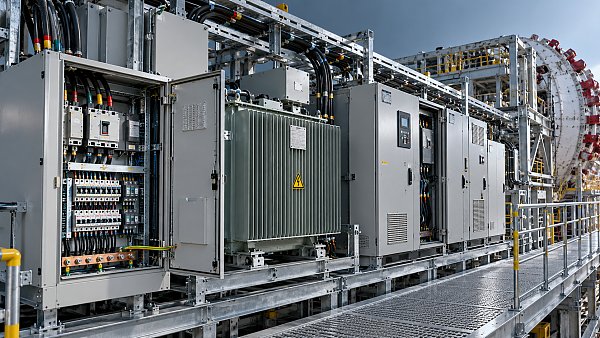
 Oct 26, 2026How TBM Electrical Systems Distribute Power and Protect Against FaultsExplore how TBM equipment electrical systems distribute power, coordinate fault protection, and maintain essential services. Learn what to check for safer, more reliable tunneling.
 Oct 25, 2026Comparing Industrial Equipment Suppliers: Lead Times, Warranties, and ServiceMake a smarter industrial equipment supplier comparison. Explore lead times, warranty coverage, and service support to reduce downtime risk and choose with confidence.
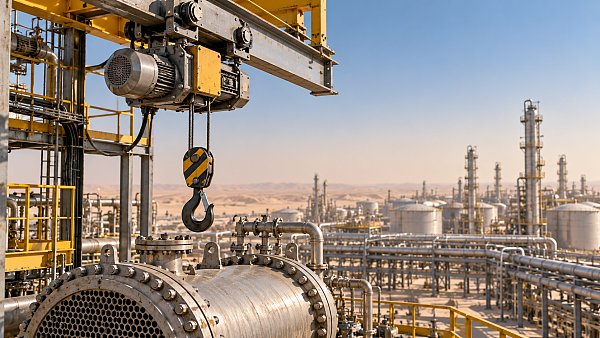
 Oct 24, 2026Choosing Lifting Equipment for Middle East Petrochemical Plants in Hazardous AreasExplore petrochemical lifting equipment Middle East plants can rely on. Compare hazardous-area certification, capacity, and heat limits to make informed procurement decisions.
Related News

Ms. Elena Rodriguez
Weekly Insights
Stay ahead with our curated technology reports delivered every Monday.