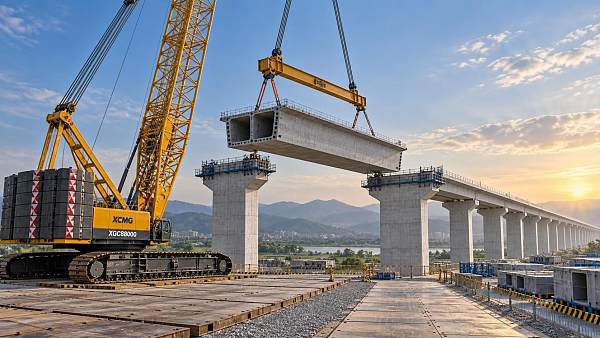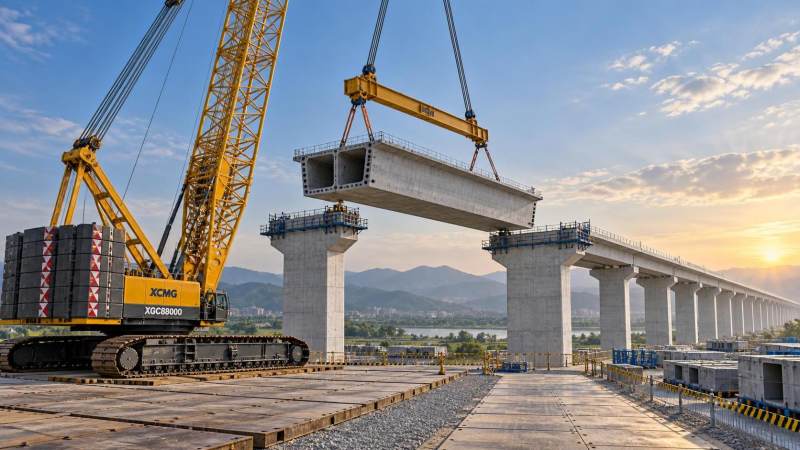
Selecting lifting machinery for bridges requires more than matching crane capacity to a headline load. Project managers must assess geometry, site conditions, sequencing, and risk.
The central decision is whether the selected lifting system can safely place every component at its actual radius, throughout every planned construction stage.
For project leaders, the best choice balances lifting certainty, schedule reliability, mobilisation cost, site disruption, and contingency exposure rather than choosing the largest available crane.
What Project Teams Really Need From Lifting Machinery for Bridges
Searchers evaluating lifting machinery for bridges usually need a defensible equipment selection method, not a generic catalogue of cranes, launchers, gantries, and transport systems.
They want to know whether one machine can cover the full erection sequence, where its operational limits appear, and which constraints could delay installation.
Bridge projects commonly fail in planning when teams assess the heaviest girder alone but overlook radius growth, rigging weight, access geometry, and temporary works.
A sound decision begins by translating the bridge design into a lifting envelope. This includes component mass, pickup position, travel path, placement elevation, and final orientation.
The equipment must also fit the construction method. A crawler crane, truck crane, launching gantry, overhead gantry, or strand-jack system serves different installation logic.
Project managers should therefore treat equipment selection as a construction-engineering decision with commercial consequences, rather than a procurement exercise based on rated capacity.
The right machine can shorten closure windows, reduce temporary works, protect adjacent assets, and improve certainty around critical-path girder or segment installation activities.
The wrong machine may still complete isolated lifts, yet create repeated relocations, unstable ground preparations, oversized crews, or unacceptable exposure to weather delays.
Start With the Actual Lift, Not the Nominal Component Weight
Every equipment review should begin with a lift register covering each unique bridge component, including girders, pier caps, crossheads, precast segments, bearings, steelwork, and form travellers.
Record the verified fabrication weight rather than relying only on preliminary design estimates. Small weight changes can materially affect crane capacity at long operating radii.
The gross lifted load includes the component, lifting beams, spreader bars, slings, shackles, hooks, lifting frames, and any attached temporary restraints or installation hardware.
Rigging can add several tonnes to a large precast or steel erection lift. Its weight must be included at the crane hook, not treated separately.
Determine the centre of gravity before choosing a machine. An eccentric load can require stronger lifting beams, longer rigging, more headroom, and tighter control measures.
Consider dynamic effects where loads must be accelerated, slewed, lowered through restricted zones, or landed onto bearings with narrow tolerances and limited correction space.
Use the equipment manufacturer’s current load chart for the exact boom length, counterweight, jib arrangement, crawler width, outrigger configuration, and operating radius.
A headline capacity such as 500 tonnes is not the usable project capacity. At a long radius, the same machine may lift only a fraction.
Match Crane Capacity to Radius, Height, and Bridge Span
Span affects lifting machinery selection because it changes where equipment can stand, how far it must reach, and whether the load can be placed from one position.
For a simple overpass, a crane may lift girders from beside the abutment. For a long viaduct, repeated access positions may become impractical.
Calculate radius from the crane’s slewing centre to the load centre at every critical point. Pickup radius and set-down radius are often different.
A crane may pick a girder comfortably near its transport trailer, then approach its limit while landing the far end over a pier or traffic corridor.
Height also matters. Hook height must accommodate the lift path, rigging length, component depth, boom clearance, and the clearance needed to rotate or align the element.
Longer bridge spans can make dedicated erection systems more attractive. Launching gantries or overhead systems can advance along the deck without repeated ground-based crane repositioning.
However, specialised systems require assembly space, engineered support conditions, commissioning time, and a sufficiently repetitive bridge layout to justify their mobilisation cost.
Model each lift in plan and elevation. A simple three-dimensional lift study often reveals clashes with booms, piers, overhead lines, scaffolding, falsework, or completed deck sections.
Choose the Equipment Type Around the Construction Method
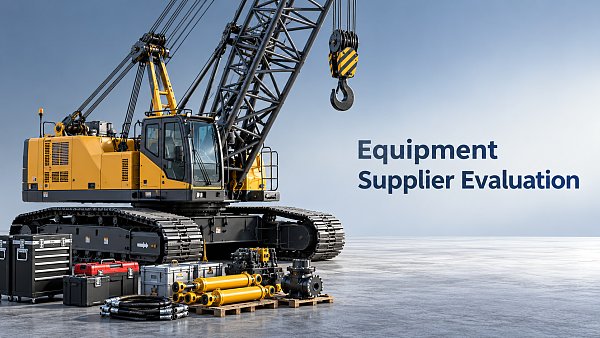
Crawler cranes are often effective for bridge erection because they offer high capacity, strong mobility on prepared routes, and flexibility across changing lift positions.
They are particularly suitable where the project has broad work fronts, stable engineered platforms, and enough space for assembly, counterweight handling, and travel.
Truck-mounted and all-terrain cranes can reduce mobilisation complexity where road access is good. They work well for shorter-duration lifts and constrained urban projects.
Outrigger reactions, setup time, and repeated repositioning must be evaluated carefully. Roadway occupation can become a larger programme issue than lifting capacity itself.
Launching gantries are designed for repetitive precast segment or girder erection. They can minimise ground-level disruption where access below the bridge is difficult or prohibited.
They become commercially compelling on long viaducts with repeated spans, but less so for highly variable geometries, complex transitions, or limited assembly areas.
Gantry cranes, strand jacks, and hydraulic lifting systems may suit special situations, including heavy pier caps, incremental launching, marine interfaces, or restricted vertical clearances.
Selection should follow the preferred erection sequence. Do not force a conventional crane method onto a project whose geometry clearly favours a purpose-built system.
Verify Ground Bearing Capacity and Temporary Works Requirements
Ground conditions are frequently the governing constraint for lifting machinery for bridges. A machine can meet load-chart requirements but remain unsuitable because support conditions are inadequate.
Obtain geotechnical information for every crane position, travel route, assembly area, transport standing area, and temporary support location before finalising the lifting plan.
For crawler cranes, assess maximum track pressure during lifting, travelling with boom, turning, and operating near excavations, embankments, buried services, or recently placed fill.
For mobile cranes, calculate outrigger reactions for the exact configuration. Timber mats, steel plates, engineered crane pads, or piled platforms may be necessary.
Temporary works should not be treated as an afterthought. Their design, construction, inspection, and approval can determine whether the planned lifting window is achievable.
Drainage matters as much as nominal bearing pressure. Saturated fill, surface water, and changing groundwater conditions can reduce support reliability during a multi-day operation.
Review nearby structures and utilities. Crane loads can affect culverts, underground chambers, retaining walls, existing bridge decks, tunnels, and utility corridors.
A lower-capacity machine with a simpler support solution can outperform a larger crane requiring expensive foundations, extended preparation, or uncertain temporary works approvals.
Plan Around Access, Traffic, and Restricted Site Geometry
Access constraints often decide the best lifting solution before capacity does. Urban bridge sites may have narrow approaches, low clearances, restricted turning space, and continuous traffic demands.
Map the delivery route from the fabrication yard to the final standing location. Check bridge restrictions, roundabout geometry, gradients, overhead obstructions, and permit requirements.
Large precast girders require room for trailers, support vehicles, lifting crews, rigging preparation, and controlled release from transport restraints without conflicting movements.
Where lane closures are limited, assess whether lifts can be completed during short possession windows. Setup, inspection, rigging, lifting, placement, and demobilisation must all fit.
Rail, highway, waterway, and airport interfaces require additional coordination. Operators may impose possession periods, exclusion distances, communication protocols, and independent safety oversight.
Consider crane assembly separately from crane operation. A machine might physically reach the lift position but lack enough space nearby for safe boom installation.
In constrained environments, smaller coordinated cranes may be feasible for tandem lifts. This option demands detailed engineering, shared control procedures, and conservative risk management.
Tandem lifting should not be used merely to avoid planning limitations. It increases coordination complexity and should be justified by a clear technical or access benefit.
Build Wind, Weather, and Environmental Limits Into the Programme
Bridge erection often occurs in exposed corridors, valleys, coastal areas, and elevated work zones where wind conditions differ significantly from nearby weather-station forecasts.
Each lifting system has defined wind limits, but those limits may vary by boom configuration, suspended load area, operating radius, and whether the crane is travelling.
Long steel girders and precast elements can act as sails. Their surface area and aerodynamic behaviour may govern the lift before their mass reaches capacity limits.
Establish stop-work thresholds in the lift plan and define how wind will be measured. Site measurements should be taken at relevant elevation and exposure.
Allow programme contingency for weather-related cancellations. A single missed possession can create major cost exposure when traffic management, rail access, or marine support is involved.
Rain, lightning, fog, ice, heat, and poor visibility also affect safe execution. These conditions influence rigging work, communication, ground support, and alignment accuracy.
Environmental restrictions may limit working hours, noise, lighting, access routes, or river activities. Include these constraints when comparing seemingly similar lifting alternatives.
A realistic programme identifies weather-sensitive lifts early and reserves fallback windows. This is more valuable than presenting an optimistic schedule with no recovery capacity.
Evaluate Cost as Total Installed Cost, Not Daily Hire Rate
Equipment hire rate is visible, but it rarely represents the true cost of a bridge lifting strategy. Project managers should compare total installed cost and schedule risk.
Include transport, assembly, counterweights, operators, riggers, supervision, engineered lift plans, crane pads, traffic control, permits, escorts, and standby time in the comparison.
A larger crane may cost more per day but eliminate tandem lifting, reduce relocations, shorten road closures, and create greater certainty during critical installations.
Conversely, a specialised launching system may have high mobilisation cost but provide lower unit installation cost across dozens of repetitive spans and difficult terrain.
Quantify the impact of programme delay. The cost of a missed rail possession or prolonged highway closure can exceed the apparent saving from selecting smaller machinery.
Include risk allowances for weather, access failure, unplanned ground improvement, equipment substitution, and component weight variation. These are recurring sources of budget escalation.
Ask suppliers for configuration-specific proposals rather than broad capability statements. Their quotation should state assumptions, exclusions, setup requirements, and operational limitations clearly.
The preferred option is usually the lowest credible whole-project cost with acceptable safety and programme confidence, rather than the lowest initial equipment invoice.
Use a Structured Decision Process Before Committing Equipment
Create a decision matrix that scores each candidate system against capacity, radius, access, ground conditions, erection speed, weather resilience, safety complexity, and total cost.
Weight the criteria according to the project’s critical constraints. A city-centre replacement bridge may prioritise closure duration, while a viaduct prioritises repetitive installation efficiency.
Require a preliminary lift study before award for all major lifts. This should include load charts, rigging assumptions, ground reactions, travel routes, and sequence drawings.
Bring the bridge designer, temporary works designer, crane supplier, erection contractor, traffic manager, and safety lead into the review before procurement commitments are irreversible.
Check interfaces between permanent and temporary conditions. Bearing access, diaphragm installation, deck stability, pier completion, and temporary bracing may change the lifting sequence materially.
Confirm equipment availability early. High-capacity crawler cranes, launching gantries, specialist rigging crews, and transport equipment can have long lead times in active markets.
Set clear hold points for ground verification, machine inspection, rigging certification, weather confirmation, exclusion-zone setup, and final pre-lift approval before execution begins.
Documenting these decisions creates an auditable basis for management approval and helps prevent late changes driven by incomplete site or configuration information.
Conclusion: Select for the Full Erection Envelope
Effective lifting machinery for bridges is selected against the complete erection envelope: load, radius, height, span, ground support, access, weather, sequencing, and commercial exposure.
Project managers should reject capacity-only comparisons and test every candidate against actual lift positions, temporary works requirements, operational restrictions, and recovery options.
When the equipment strategy supports the construction method from the beginning, bridge teams gain safer lifts, fewer disruptions, more reliable schedules, and stronger cost control.