
Commercial Insights
Supply Chain Lead Times and Customization Feasibility for Heavy-Duty Dredging Systems in 2026 Infrastructure Tender Bids
dredging equipment manufacturer insights on 2026 lead times & customization limits for heavy-duty dredging systems—maximize bid success with proven feasibility.
Lead Time Realities and Customization Limits for Heavy-Duty Dredging Systems in 2026 Infrastructure Bids
Procurement teams evaluating heavy-duty dredging systems for upcoming infrastructure tenders—especially those tied to national waterway rehabilitation, port expansion, or mining tailings management—face a narrowing window where technical feasibility, delivery certainty, and customization scope must align. Unlike standard civil equipment, dredging systems operate under tightly coupled mechanical, hydraulic, and environmental constraints. A tender issued in Q1 2025 targeting Q3 2026 commissioning leaves little margin for supply chain delays or late-stage design revisions. This isn’t theoretical: recent tenders for Yangtze River sediment control and inland coal transport canal upgrades have seen bids disqualified due to non-compliant lead time commitments—not performance specs.
Why Lead Time Is a Technical Constraint, Not Just a Logistics Metric
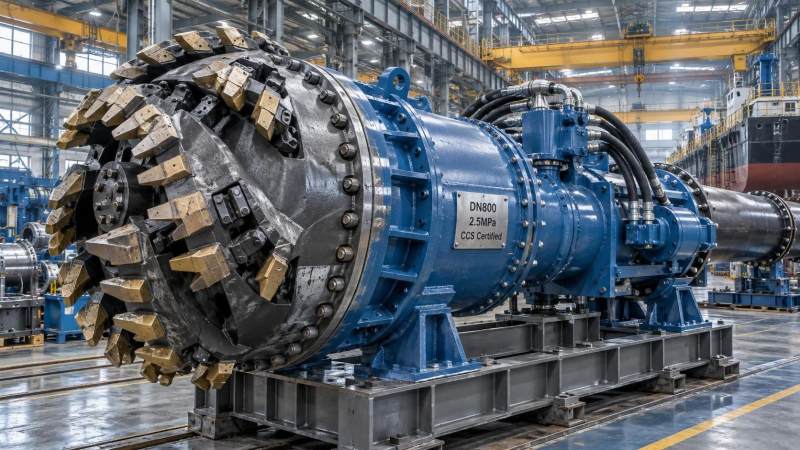
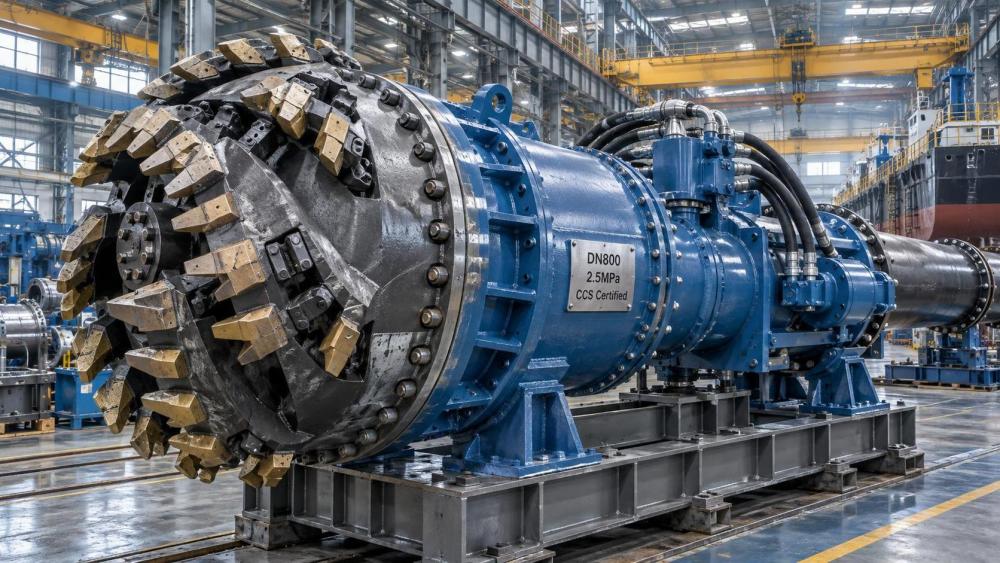
Heavy-duty dredging systems—particularly cutter suction, trailing suction hopper, and bucket ladder configurations—require coordinated fabrication of high-wear components (cutter heads, drag arms, slurry pumps), custom hydraulic power units, and site-specific control integration. Castings for 800 mm+ diameter impellers often require 14–18 weeks from pattern approval to heat-treated delivery. Welded structural frames for 300-ton barge-mounted systems undergo mandatory ultrasonic testing and stress-relieving cycles that cannot be accelerated without compromising fatigue life. Inventory buffers are minimal: few manufacturers stock complete, certified dredge pontoons or 2 MW submersible drives off-the-shelf. What appears as a “12-week lead time” in a catalog may assume all engineering drawings are finalized, materials are available, and no marine classification society re-review is triggered by a minor spec change.
This matters directly to procurement officers because bid submissions now routinely require binding delivery schedules backed by production capacity statements—not just commercial terms. Tender documents from the Asian Development Bank and China’s Ministry of Transport explicitly require proof of concurrent order book capacity and component traceability logs for critical subsystems. Submitting an optimistic 10-week timeline without verifying casting furnace availability or gearbox gear-cutting slot bookings invites post-award renegotiation—or worse, liquidated damages.
Customization Feasibility Depends on Where the Line Is Drawn
“Customization” spans a wide spectrum—from minor interface adaptations (flange dimensions, cable gland types) to full mechanical redesign (submerged drive layout, cutter head geometry for abrasive laterite). Procurement teams often conflate these tiers, leading to scope creep and unmet expectations.
- **Tier 1 (Low Risk, Minimal Delay)**: Electrical interface alignment (voltage/frequency matching to local grid), basic corrosion protection upgrades (e.g., duplex stainless cladding on pump casings), or control system language localization. These typically add ≤2 weeks and require no re-certification.
- **Tier 2 (Moderate Risk, Requires Validation)**: Hydraulic circuit modifications for higher head pressure, revised boom articulation angles for constrained workspaces, or material substitutions (e.g., Ni-Hard 4 castings instead of ASTM A532 Class II). These demand updated FEA reports, revised class society documentation, and 4–6 weeks of additional validation—often overlapping with final assembly.
- **Tier 3 (High Risk, Schedule-Critical)**: Structural redesign of the dredge ladder or complete re-engineering of the slurry transport system for ultra-fine tailings dewatering. Such changes trigger full re-certification by classification bodies (e.g., CCS, DNV), require new type-test reports, and typically extend lead time by 16–24 weeks. Few tender timelines accommodate this.
The key decision point lies not in whether customization is *possible*, but whether it shifts the system from “off-the-shelf with adaptation” to “prototype-grade development.” Procurement officers should request documented evidence—not marketing claims—of prior execution for similar modifications, including test reports and commissioning logs.
Mining vs. Waterway Projects: How Application Dictates Delivery Trade-offs
Dredging equipment manufacturer capabilities diverge significantly across application domains. Mining projects—especially tailings management—demand extreme abrasion resistance, continuous 24/7 operation, and integration with automated process control systems. Waterway maintenance tends to prioritize mobility, rapid deployment, and adaptability to fluctuating sediment composition (clay vs. gravel vs. organic silt).
These differences impact lead time and customization paths:
- Mining-spec systems often rely on proprietary wear-part geometries and hardened alloy compositions. Replacing a standard 450 HB chrome-moly cutter tooth with a 650 HB tungsten-carbide composite insert requires tooling changes, new heat-treat profiles, and extended QA sampling—adding 3–5 weeks minimum.
- Waterway dredges face tighter regulatory scrutiny on noise, emissions, and turbidity control. Adding real-time suspended solids monitoring or closed-loop hydraulic cooling may require third-party environmental certification, extending delivery by 6–8 weeks unless pre-approved modules exist.
Procurement teams must map required features against proven, pre-certified modules—not theoretical capability. A manufacturer’s ability to deliver a 300 m³/h cutter suction dredge in 20 weeks says little about their capacity to deliver the same unit with integrated AI-based sediment density feedback and ISO 14001-compliant exhaust scrubbing within the same window.
What Procurement Officers Should Verify Before Bid Submission
- **Component Traceability**: Request batch-level material certs for wear parts—not just mill certs. Confirm whether critical castings are sourced in-house or from external foundries with verified furnace logs.
- **Certification Pathway Clarity**: Ask for the exact classification society approval status of the base model—and whether the proposed customization falls within existing type-approval boundaries. Avoid “pending approval” assumptions.
- **Production Slot Confirmation**: Require written confirmation of reserved production slots, not just “capacity available.” Slot reservations should reference specific calendar weeks and include contingency clauses for raw material shortages.
- **Interface Documentation Completeness**: Verify that mechanical, electrical, and control interfaces are fully documented—not just described in brochures. Incomplete I/O lists or ambiguous hydraulic schematics delay site integration.
- **Spare Parts Readiness**: Heavy-duty dredges fail most often at the interface—not the core unit. Confirm availability of first-fit spares (seals, bearings, control valves) matched to the delivered configuration, not generic catalog items.
Selecting a Partner Beyond Brochure Claims
When evaluating a dredging equipment manufacturer, focus less on fleet size or global presence and more on evidence of repeatable execution under comparable constraints: identical classification requirements, similar customization depth, and aligned delivery windows. Review actual project documentation—not case studies—for signs of structured engineering change control, validated test protocols, and transparent communication during schedule variances.
For 2026 infrastructure tenders, the difference between on-time commissioning and costly delay penalties often rests on how rigorously procurement teams interrogate lead time assumptions—and whether they treat customization as an engineering discipline, not a sales concession.
Related News
 Oct 24, 2026Choosing Lifting Equipment for Middle East Petrochemical Plants in Hazardous AreasExplore petrochemical lifting equipment Middle East plants can rely on. Compare hazardous-area certification, capacity, and heat limits to make informed procurement decisions.
 Oct 23, 2026Selecting Lifting Equipment for Nuclear Component Transport: Key Safety CriteriaSelecting lifting machinery for nuclear component transport? Discover essential safety criteria, load control checks, and supplier requirements to guide confident procurement.
 Oct 22, 2026Tunnel Boring Machines in Southeast Asia: EPB vs. Slurry for Soft GroundCompare tunnel boring machines Southeast Asia projects rely on: EPB vs. slurry for soft ground. Discover how groundwater, settlement risks, and spoil handling shape the right choice.
 Oct 21, 2026Choosing Tunneling Equipment for the Middle East: Rock, Soil, and GroundwaterCompare underground tunneling equipment Middle East projects need. Explore rock, soil, groundwater, and TBM options to reduce risk and make confident procurement decisions.

Ms. Elena Rodriguez
Weekly Insights
Stay ahead with our curated technology reports delivered every Monday.