
Does projected global infrastructure spending growth in 2026 increase demand for intelligent rollers?
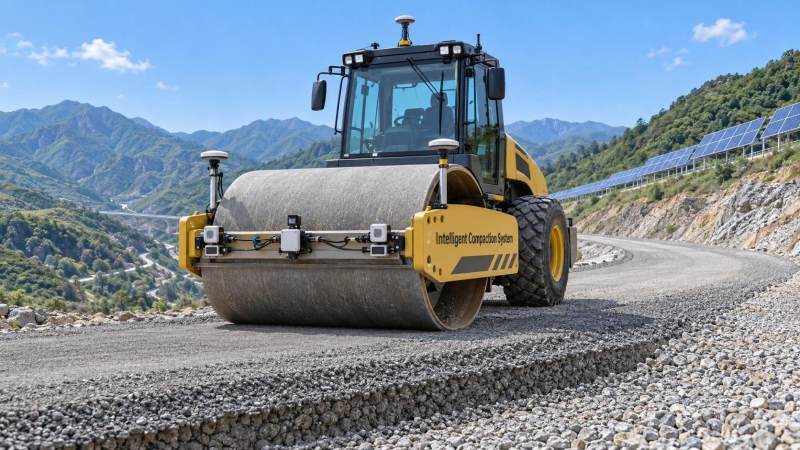
Yes—projected global infrastructure spending growth in 2026 does increase demand for intelligent rollers, but not uniformly across geographies, project types, or compaction applications. The correlation is strong where fiscal commitments align with engineering constraints that conventional rollers cannot resolve: layered soil heterogeneity in urban transit corridors, moisture-sensitive subgrades beneath wind turbine foundations, and time-bound density verification requirements in high-altitude mining access roads. In these contexts, intelligent rollers are no longer premium add-ons—they become functional prerequisites.
Where Spending Momentum Translates to Roller Adoption
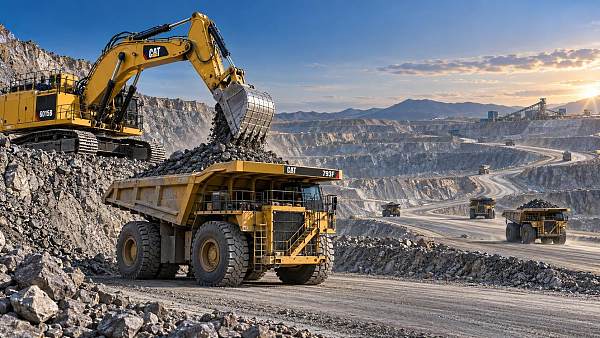
Infrastructure investment surges are concentrated in three domains where intelligent roller deployment has shifted from pilot testing to specification-mandated practice: (1) metro expansion projects in Southeast Asia and the Middle East requiring real-time, layer-specific density validation beneath station boxes; (2) green energy logistics corridors—particularly those supporting solar farm aggregation and battery mineral transport—where unsealed haul routes must achieve CBR >12% over variable lateritic and alluvial strata; and (3) ultra-large open-pit mine ramp developments, where compaction sequencing must synchronize with blast-cycle timing and haul truck fleet availability.
In each case, the driver isn’t raw spending volume—it’s the precision enforcement mechanism embedded in intelligent roller systems. GNSS-guided pass mapping alone doesn’t trigger adoption. What does is the integration of dynamic compaction measurement (DCM), asphalt temperature profiling, and onboard density prediction calibrated against in-situ nuclear gauge benchmarks. Projects in Saudi Arabia’s NEOM transport network now require roller telemetry feeds to be ingested directly into the BIM execution plan—enabling automatic rework flagging when predicted density deviates by more than ±2.3% from design targets at 15 cm depth.
Why Conventional Rollers Fall Short in High-Stakes Compaction
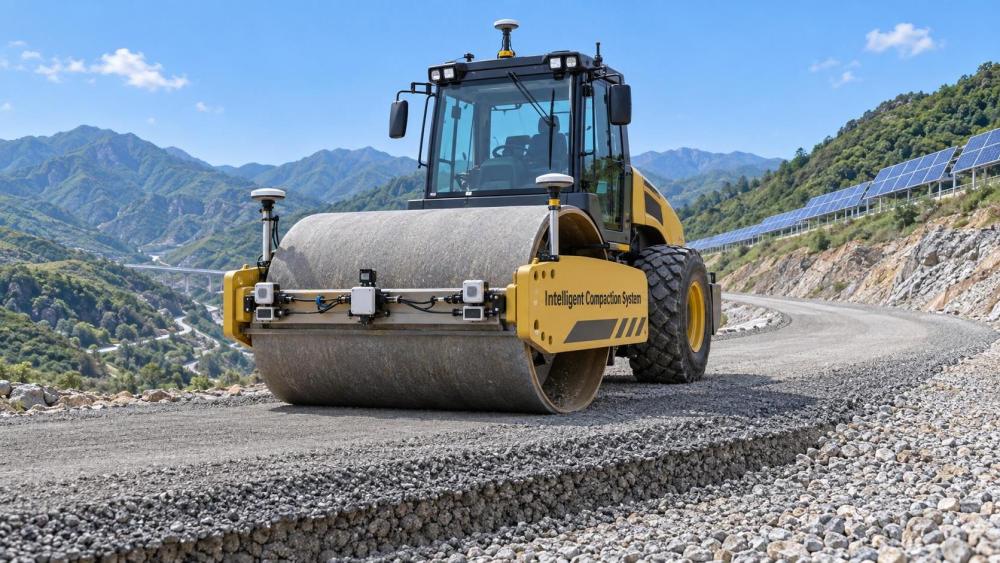
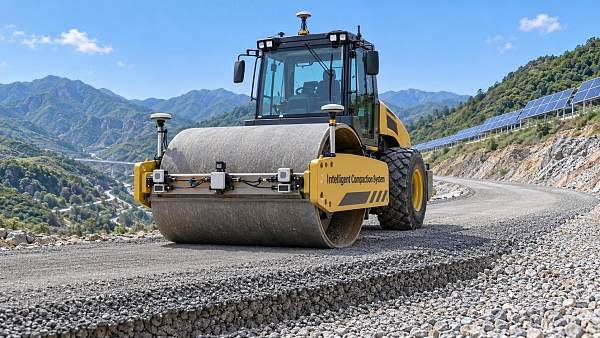
Standard vibratory rollers rely on operator judgment for pass count, amplitude selection, and speed modulation—variables that scale poorly when working across 12 km of mountainous solar access road with elevation changes exceeding 1,800 meters. At altitudes above 3,000 m, air density drops ~30%, reducing hydraulic motor torque delivery and altering vibration frequency response. Intelligent rollers compensate dynamically: onboard pressure transducers detect real-time amplitude attenuation, while GNSS-coupled inclinometers adjust drum oscillation phase to maintain resonant energy transfer into the lift—even as slope angle shifts from 2° to 14° within 200 meters.
More critically, they resolve a fundamental misalignment between procurement logic and field physics. Infrastructure tenders often specify “95% Proctor density” without defining test method (ASTM D698 vs. D1557), moisture content tolerance (±2% vs. ±0.8%), or vertical sampling interval (every 15 cm vs. every 5 cm). Intelligent rollers bypass this ambiguity by delivering continuous density profiles—not point measurements. Their value lies not in replacing lab tests, but in eliminating the spatial gaps between them: where traditional verification samples 0.0007% of total compacted volume, intelligent rollers sample 100%.
Technology Differentiation Is Not About Sensors Alone
The competitive edge among intelligent roller platforms hinges less on GNSS accuracy or accelerometer resolution—and more on how tightly control logic binds mechanical actuation to material response. For example, when compacting stabilized base layers containing 8–12% cementitious binder, premature densification can cause micro-cracking that compromises long-term flexural strength. Some systems apply fixed-frequency vibration until density thresholds are met; others use spectral analysis of drum rebound harmonics to detect early-stage particle interlock—and automatically shift to lower-frequency, higher-amplitude modes only after initial matrix stabilization.
This distinction matters operationally. In Chilean copper mine haul road rehabilitation, one OEM’s AI-driven roller reduced rework incidence by 68% not because it measured better—but because its control algorithm recognized the acoustic signature of “cement hydration lag” in the first 90 seconds of compaction and delayed final pass sequencing by 11 minutes. That delay allowed sufficient time for early hydration bonds to form before full load application.
Adoption Thresholds Are Project-Specific, Not Market-Wide
Global spending forecasts suggest a 7.2% YoY increase in infrastructure CAPEX in 2026—but intelligent roller uptake will remain clustered where three conditions converge: (1) contractual density liability rests with the contractor (not the owner); (2) subgrade variability exceeds ±15% in moisture content or ±20% in gradation across 100-meter segments; and (3) schedule compression forces density verification into the same shift as placement. In low-risk highway widening projects with uniform clay loam subgrades and relaxed density tolerances, conventional rollers remain cost-optimal—even amid rising global investment.
The inflection point occurs not at a macroeconomic level, but at the lift-by-lift interface: when the cost of a single missed density violation (including re-excavation, haul-back, re-compaction, and delay penalties) exceeds the daily rental differential between conventional and intelligent units. That threshold crossed in Q3 2025 for projects with contract values >USD 420 million and compaction volumes >1.8 million m³.
Material Behavior Dictates System Requirements
Intelligent rollers behave differently on asphalt versus granular base versus chemically stabilized subbase—not because of software settings, but due to inherent viscoelastic and particle rearrangement dynamics. Asphalt compaction demands thermal-aware control: roller speed must decelerate as mat temperature drops below 125°C to avoid surface tearing, yet accelerate above 145°C to prevent aggregate segregation. Granular layers respond to frequency sweep protocols—starting at 28 Hz to initiate particle mobility, then shifting to 42 Hz to lock interlock. Stabilized soils require dwell-time modulation: maintaining drum contact for 3.2 seconds per meter at 4.8 km/h to allow pore water migration before final densification.
These are not configurable presets. They emerge from empirical calibration against local material triaxial data—and explain why intelligent roller deployments in South African platinum mines failed initially: imported control algorithms assumed North American quartzite gradation, not local serpentine-rich aggregates with 40% lower internal friction angle. Successful adaptation required on-site recalibration of vibration decay coefficients using field-acquired seismic refraction profiles.
Demand growth in 2026 is therefore not a function of spending headlines—but of how deeply infrastructure programs embed compaction fidelity into their technical specifications, contractual risk allocation, and digital twin validation workflows. Where those elements align, intelligent rollers transition from optional instrumentation to non-negotiable process enablers.
Related News
 Sep 16, 2026Infrastructure Equipment Market Reference: Demand, Pricing, and Supplier BenchmarksInfrastructure equipment market reference for buyers: assess demand signals, total cost, pricing risks, and supplier benchmarks for tunnels, mining, cranes, and road projects.
 Sep 15, 2026How to Evaluate Infrastructure Equipment Suppliers for Complex Project RequirementsInfrastructure equipment solutions supplier evaluation guide for complex projects: assess technical fit, lifecycle cost, reliability, local support, and contract risk.
 Sep 14, 2026What Drives Surface Mining Equipment Cost Across a Mine’s Operating Life?Surface mining equipment cost depends on fleet matching, fuel, wear, maintenance, availability, and rebuild timing. Explore lifecycle strategies that protect output and margins.
 Sep 13, 2026Crawler Crane Application Analysis for Wind Farms, Bridges, and Confined SitesCrawler crane application analysis for wind farms, bridges, and confined sites—optimize lift paths, ground conditions, access, and schedules for safer project delivery.
Pavement Process Engineer
Weekly Insights
Stay ahead with our curated technology reports delivered every Monday.