
Product Application Guidance: Matching Products to Operating Conditions
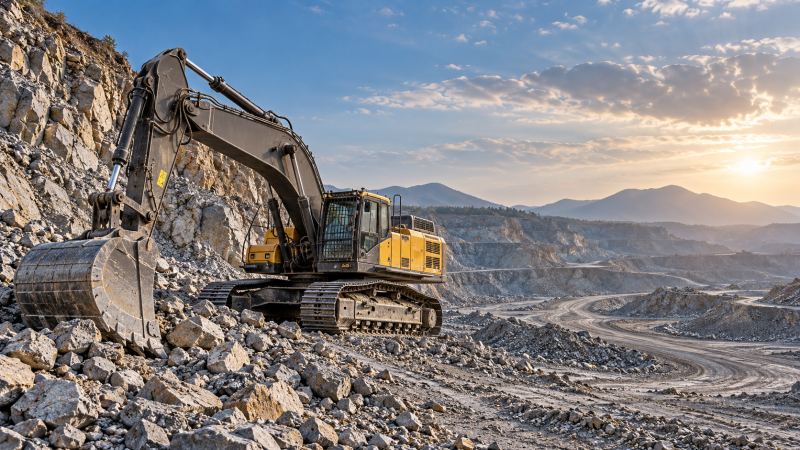
Effective product application guidance starts with a clear understanding of the conditions in which heavy equipment must operate. Rated capacity alone does not establish suitability.
For technical evaluators, ground conditions, duty cycles, climate, access constraints, safety requirements, and total cost of ownership all influence the final equipment decision.
This guide provides a practical framework for comparing tunnel boring machines, excavators, crawler cranes, road machines, and mining trucks against demanding project conditions.
Start With the Operating Conditions, Not the Product Rating
The best equipment choice is the configuration that meets project requirements across the expected operating envelope, including credible adverse conditions, with manageable risk and cost.
Begin by defining the work: required output, operating hours, material characteristics, site geometry, environmental exposure, project duration, and the consequences of interrupted production.
Separate mandatory constraints from preferences. A crane that cannot safely access the lift position, for example, is unsuitable regardless of its nominal maximum capacity.
Document both typical and limiting conditions. Average haul-road gradients or average rock strength can hide short sections that determine whether a machine can perform safely.
Use manufacturer ratings only within their stated assumptions. Payload, reach, power, speed, and productivity values depend on configurations and conditions that may differ substantially from yours.
Where site information is uncertain, define a range and test the equipment against each credible scenario. Request supporting calculations rather than relying on general assurances.
Build a Comparable Application Specification
A consistent application specification lets suppliers respond to the same requirements and makes technical differences visible before commercial negotiations obscure important limitations.
Describe the location, work sequence, planned shifts, target production, material volumes, operating life, and interface requirements. Identify applicable local regulations and project standards.
Provide measurements with units and sources. Distinguish verified site data from estimates, and record when additional investigation could materially change equipment selection.
For each critical requirement, ask suppliers to identify the proposed configuration, operating limits, expected performance, assumptions, exclusions, and evidence supporting their response.
Request a site-specific duty analysis where appropriate. Generic brochures can establish initial feasibility, but they rarely demonstrate performance across the complete project operating envelope.
Use a common comparison table covering suitability, safety, productivity, support, and cost. Keep noncompliant bids visible rather than allowing attractive pricing to mask technical gaps.
Which Ground and Material Conditions Control Selection?
Ground and material properties affect machine loading, wear, stability, traction, and production. Their influence varies by application, so collect data relevant to the actual work.
For tunneling, evaluate geological variability, rock strength, abrasivity, groundwater pressure, fault zones, and the likelihood of mixed-face conditions along the alignment.
For mining and excavation, assess fragmentation, density, moisture, stickiness, and abrasivity. These properties influence bucket fill, digging resistance, payload, tire wear, and maintenance intervals.
For lifting and road construction, examine bearing capacity, settlement, slope, drainage, and surface condition. Equipment stability or paving quality can depend on local ground preparation.
Sampling should represent spatial variation, not just convenient locations. Where data are limited, identify the decisions affected and price additional investigations against potential downtime.
Ask suppliers to state which material properties underpin their performance estimates. Treat any extrapolation beyond tested conditions as a documented technical risk.
How Should You Match a TBM to the Ground?
A tunnel boring machine must suit the ground, groundwater regime, tunnel geometry, and required support method. Machine type alone does not resolve every geological risk.
Compare open, shielded, earth-pressure-balance, and slurry configurations against the predicted alignment. The appropriate choice depends on face stability, permeability, water pressure, and project constraints.
Review cutterhead design, cutter accessibility, conditioning systems, and wear protection against both expected and adverse ground. Check provisions for inspection and intervention under pressure.
Assess excavation diameter, thrust, torque, turning capability, segment handling, and backup systems together. A machine that fits the tunnel must also support the planned construction sequence.
Estimate advance rates separately for distinct ground zones, including cutter changes, ring building, maintenance, and interventions. Daily excavation potential is not the same as sustained progress.
Require a response plan for unexpected conditions, including available machine adaptations, spare parts, specialist support, and the contractual treatment of geological uncertainty.
How Should Excavators and Mining Trucks Be Matched?
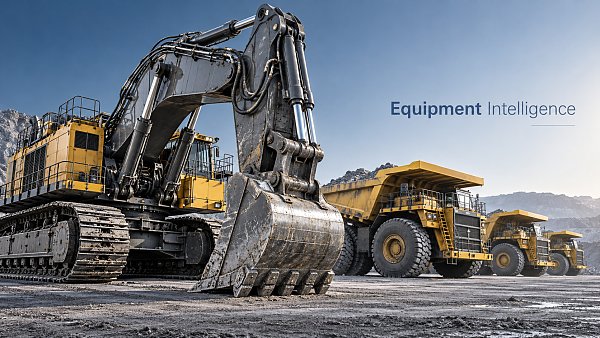
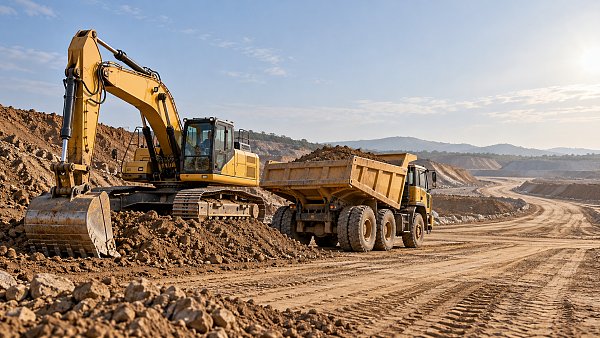
Excavator and truck selection should begin with the complete loading and hauling cycle, not the largest available bucket or highest advertised payload.
For excavators, compare digging geometry, reach, breakout capability, stability, undercarriage requirements, and attachment options with bench height and actual working position.
Check bucket capacity against material density and fill factor. A bucket suitable for loose, light material may overload the machine when handling dense or cohesive material.
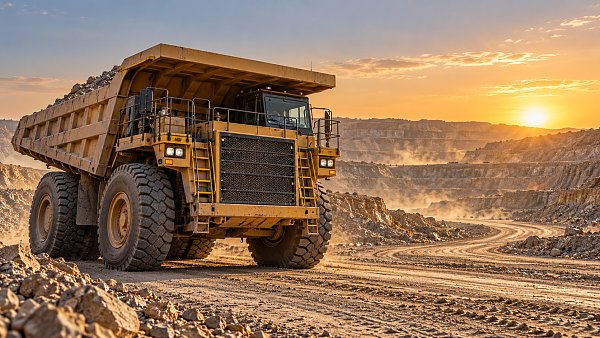
For trucks, model payload, rolling resistance, gradients, road condition, turning space, altitude, and ambient temperature. These factors determine cycle time and available production.
Match truck capacity to excavator loading passes while respecting payload limits. An apparently convenient pass count is not useful if it routinely produces overloads.
Calculate fleet productivity using realistic cycle times and availability assumptions. Include queuing, shift changes, road maintenance, weather delays, and planned service windows.
Test bottlenecks beyond the machines themselves, including shovel access, dump capacity, fueling or charging, maintenance facilities, and the capacity of haul-road intersections.
For electric trucks, verify route energy demand, charging or trolley infrastructure, grid capacity, thermal performance, and contingency arrangements before comparing energy costs.
Can the Crane Perform the Actual Lift?
For crawler cranes, maximum advertised lifting capacity is rarely the governing figure. The relevant question is capacity at the required radius and configuration.
Define each load, including rigging and lifting accessories, and confirm the load weight, center of gravity, pick point, landing point, and movement path.
Check the manufacturer’s load chart for the exact boom, jib, counterweight, radius, and operating configuration. Account for applicable derating and site-specific lift-plan requirements.
Evaluate ground bearing pressure and support design using the crane configuration and ground investigation. Verify mats or other foundations through competent engineering assessment.
Confirm assembly space, transport access, overhead clearances, exclusion zones, and wind limits. A technically capable crane may still be impractical at the proposed location.
For critical or complex lifts, use a qualified lift planner and follow applicable regulations, manufacturer instructions, and independently reviewed engineering where required.
What Determines Road Machinery Suitability?
Road equipment must match layer specification, paving width, material supply, surface preparation, and required output. The paving train should be assessed as an integrated system.
For pavers, review screed width, grade-control compatibility, material handling, and attainable production at the specified layer thickness and mix characteristics.
For rollers, examine compaction method, operating weight, frequency or amplitude where applicable, and the ability to meet density and surface requirements without damaging the layer.
Check the capacity and timing of trucks, mixing plant, paver, and rollers together. Irregular material delivery can compromise consistency even when individual machines are adequate.
Use trial sections and project specifications to validate rolling patterns, density, smoothness, and temperature control. Manufacturer guidance should inform, not replace, field verification.
How Do Climate, Altitude, and Access Change the Decision?
Extreme temperatures, humidity, dust, and elevation can reduce available performance or increase maintenance demand. Ask suppliers for limits and corrections specific to the proposed configuration.
At altitude, engine output, cooling performance, and operator comfort may be affected. Verify expected derating and its consequences for cycle time, productivity, and emissions compliance.
In cold climates, assess starting systems, hydraulic fluids, battery performance, heating, and material handling. In heat, review cooling capacity and limits on sustained operation.
Dust and water exposure influence filtration, sealing, electrical protection, and service intervals. Corrosive environments may require additional materials or protective treatments.
Transport restrictions can determine whether a machine reaches the site at all. Check dimensions, component weights, permits, bridge limits, assembly equipment, and delivery schedules.
Also evaluate maintenance access after installation. A component that is difficult to remove in a confined tunnel or remote mine can create disproportionate downtime.
Compare Productivity and Total Cost of Ownership
Build a common cost model over the planned operating period. Include purchase or rental, transport, assembly, energy, labor, consumables, maintenance, and end-of-life costs.
Estimate cost per completed unit using expected total cost divided by expected compliant output. Use tonnes moved, meters advanced, lifts completed, or paved area as appropriate.
Include downtime and utilization explicitly. A high-capacity machine may produce less than a smaller alternative if parts availability, access, or duty-cycle limitations reduce productive hours.
Separate scheduled maintenance from unplanned repairs, and state assumptions for component life, wear rates, spare inventory, service labor, and supplier response times.
Run sensitivity cases for the variables with the greatest uncertainty, such as abrasive ground, fuel price, haul distance, cutter consumption, or energy availability.
Compare financial assumptions consistently, including project duration, financing, residual value, and any applicable discount rate. Avoid treating supplier estimates as guaranteed outcomes.
Consider the cost of failure as well as average cost. A machine that delays a critical tunnel breakthrough or major lift may expose the project to substantial consequences.
What Evidence Should Suppliers Provide?
Request configuration-specific technical documents, operating envelopes, maintenance schedules, component capacities, and site-specific performance calculations. Confirm that promised options are included in the quotation.
Ask for relevant operating references under comparable conditions, while recognizing that differences in geology, material, climate, and operating practice can limit direct comparisons.
Clarify warranty coverage, exclusions, response times, local technician capability, spare-parts lead times, and responsibilities for commissioning and operator training.
Where performance matters commercially, define measurable acceptance criteria and test conditions. Record how deviations, unavailable inputs, and changes to operating assumptions will be handled.
Review safety systems, visibility, emergency procedures, and applicable regulatory conformity. Confirm that proposed monitoring and control systems integrate with site procedures and infrastructure.
Make the Final Decision With a Documented Risk Review
First eliminate configurations that fail mandatory safety, access, regulatory, or performance requirements. Then compare the remaining options using weighted criteria agreed before final scoring.
Record the evidence behind each score, identify unresolved assumptions, and assign an owner and deadline for closing information gaps before procurement or deployment.
Revisit the assessment when site data, production targets, equipment configuration, or construction sequence changes. An initially suitable machine may become unsuitable under revised conditions.
Effective product application guidance connects equipment capability to the actual job, supported by verifiable assumptions and a practical risk review. The strongest selection is demonstrably suitable throughout its intended operating life.
Have questions about this sector analysis, or seeking best practices specific to your niche? Drop us a line below and let the senior consultants at TF-Strategy assist you.
Related News
 Oct 31, 2026Product Application Guidance: Matching Products to Operating ConditionsProduct application guidance for matching heavy equipment to site conditions, improving safety, productivity, and total cost decisions. Explore the practical guide.
 Oct 30, 2026Selecting Mining Equipment for Extreme Heat in the Middle EastChoosing extreme temperature mining equipment Middle East sites can rely on? Compare cooling, dust protection and lifecycle costs to make a confident choice.
 Oct 28, 2026Choosing a Heavy Equipment Market Intelligence Database: Coverage and Data QualityChoosing a heavy equipment market intelligence database? Compare coverage, data quality, source transparency, and updates to find reliable insights for smarter commercial decisions.
 Oct 27, 2026Construction Equipment Efficiency: How to Reduce Idle Time on JobsitesBoost construction equipment efficiency with smarter scheduling, telematics, and safe shutdown practices. Discover how to reduce idle time and fuel waste on your jobsite.
Ms. Elena Rodriguez
Weekly Insights
Stay ahead with our curated technology reports delivered every Monday.