
Choosing Equipment Capacity for Different Workloads and Applications

The right equipment capacity is the smallest practical size that can meet the required workload under the conditions that will govern the job. A machine’s rated capacity is a starting point, but the selection depends on how much productive time is available, how the material or load behaves, and whether the rest of the operation can keep pace.
For technical evaluators, the most useful comparison is between realistic operating scenarios, not headline ratings alone. A larger machine may provide valuable schedule protection where peak demand is frequent and the site can support it. It may also add cost without increasing output if haul roads, lifting radius, ground conditions or downstream processes impose the real limit.
Start with the workload the equipment must deliver
Define the required output over the period that matters to the project. A mine may need a sustained volume over a shift; a paving contractor may need to maintain a continuous placement rate; a crane may need to lift one component safely at a specific radius. These are different capacity problems, even if each can be expressed as a maximum rating.
For production equipment, begin with the quantity to be completed and the time genuinely available. Then separate the average requirement from peak demand. An average can conceal a difficult shift pattern, seasonal restriction or sequence in which several activities compete for the same machine. Conversely, sizing an entire fleet for an occasional peak can leave expensive capacity idle for most of the project.
Pay particular attention to the unit of measure. Excavated volume may be stated in bank, loose or compacted cubic metres; haulage may be specified by mass or loose volume. Material density, swelling after excavation and moisture can change the relationship between those measures. Comparing an excavator’s bucket volume directly with a truck’s payload, for example, requires a consistent material basis and an allowance for how fully the bucket can be loaded.
A useful workload description should establish:
- The required quantity, operating period and acceptable variation in output.
- The material or load characteristics that affect the cycle, including density, abrasiveness, size distribution or load dimensions.
- The frequency and duration of peak demand, along with the consequences of missing it.
- The interfaces that may constrain production, such as muck removal, haulage, lifting access or material supply.
This gives equipment application by capacity a practical basis: a candidate is suitable only if its usable capacity matches the work that must be done, at the point in the process where it must be done.
Translate rated capacity into usable output
Manufacturer ratings are valuable for screening machines, but their conditions must be understood before they are used in a project calculation. A rating may depend on a specified material, attachment, machine configuration or operating geometry. Ask what the figure measures, what it excludes and whether the stated conditions resemble the proposed application.
For cyclic production equipment, a first estimate can be built from the usable quantity per cycle multiplied by the number of cycles achievable during productive time. The estimate should reflect loading, travel, positioning, dumping or other steps that apply to the machine. It should also account for interruptions that reduce productive time within the shift.
Keep availability and utilization separate. Availability describes whether the machine is ready for use; utilization describes how much of the available time is spent working under the chosen definition. Waiting for trucks, access or material can reduce utilization even when the machine is mechanically available. Evaluators should agree on the definitions before comparing proposals so that downtime is not omitted or counted twice.
For illustration, suppose an operation needs to move 4,800 tonnes in a 12-hour shift. If planning assumptions allow eight productive hours, the equipment system must average 600 tonnes per productive hour. Dividing the target by the full shift would give 400 tonnes per hour and leave no allowance for the other four hours. The eight-hour assumption is illustrative; the appropriate figure depends on the shift plan, operating conditions and maintenance arrangements.
That calculation is still only a screening estimate. Test it against a slower cycle, lower payload or longer delay, then examine whether the remaining capacity can recover lost production. Use a range of assumptions rather than a single average, especially when ground conditions or travel distances are uncertain.
Capacity means different things in different applications
Tunnelling: match excavation to the entire advance cycle
A tunnel boring machine’s excavation capability cannot be assessed independently of the ground and the support process. Rock strength and abrasiveness, groundwater, changing geology, cutter wear and the support required behind the face all influence achievable advance. A high excavation rate during boring does not automatically produce a high advance rate over a full shift.
Compare candidates using the expected distribution of ground conditions and the time needed for activities such as cutter inspection, lining installation, muck removal and maintenance. The selected machine must also fit the tunnel diameter, alignment and launch or retrieval constraints. If muck handling or segment delivery cannot support the planned cycle, additional cutterhead power alone may do little for completed tunnel length.
Where geological uncertainty is material, evaluate how each option handles the credible range of conditions and how much time the schedule allows for intervention. The preferred capacity may be the one that maintains a workable advance across varied ground, rather than the one with the strongest rating under favourable conditions.
Open-pit excavation and haulage: size the system, not a single machine
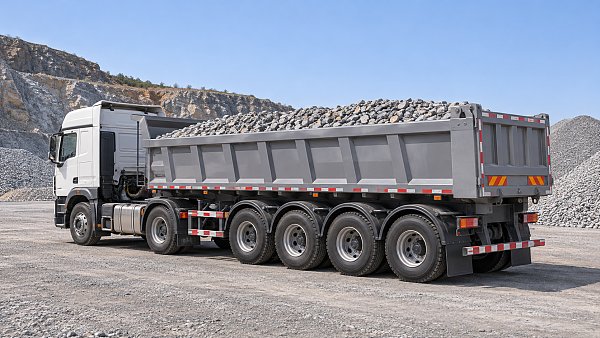
For an excavator, bucket capacity must be considered with fill, cycle time, material density and diggability. For a mining truck, payload is limited by both mass and body volume: dense material may reach the mass limit before the body is full, while lighter material may fill the body first. Road grade, rolling resistance, altitude and temperature can also affect travel time and usable performance.
The loading and hauling units should be assessed together. Too few trucks can leave the excavator waiting; too many can create queues at the loader or dump point. Truck travel time changes as the pit develops, so a fleet balanced for an early phase may become constrained later. A larger truck may reduce the number of loading events but require different road widths, turning space or loading arrangements.
Check the number of passes needed to load each truck against the proposed bucket and material conditions. Pass matching is useful for comparing alternatives, but an exact pass count should not override payload limits, cycle time or the ability to maintain consistent loading. The objective is reliable tonnes moved through the complete cycle.
Heavy lifting: capacity is defined by the lift configuration
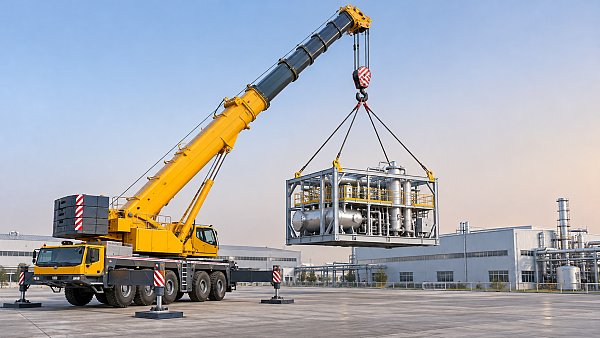
A crawler crane’s advertised maximum capacity does not establish what it can lift at the required working radius. The applicable load chart depends on the crane configuration, including boom and jib arrangement, counterweight and other specified conditions. Capacity can change substantially as radius or configuration changes.
Develop the lift around the load’s actual mass and dimensions, pick and set positions, available space, rigging and lifting accessories. Include the weight of the hook block and other items as required by the applicable load chart and lifting procedure. Ground bearing capacity, support arrangements, access, wind limits and the path of the load can determine whether a nominally sufficient crane is usable.
A crane with spare chart capacity may still be unsuitable if it cannot be assembled within the available area or positioned on adequate ground. The lift plan and ground assessment should be reviewed by competent personnel using the exact machine configuration and site conditions.
Road construction: protect continuity and the required finish
For paving, nominal placement capacity matters only if the plant, trucks, paver and rollers can work at compatible rates. A paver that regularly waits for material may interrupt the paving process, while material delivered faster than it can be placed creates queues and temperature management problems.
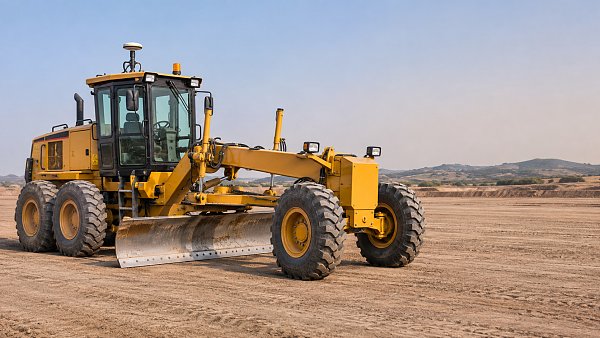
Estimate the required placement rate from paving width, compacted thickness, material quantity and planned working time, using consistent units and the appropriate density assumptions. Then check whether material supply, haulage, site access and compaction can sustain that rate. Rolling capacity and the time available for compaction may determine the workable paving speed even when the paver itself can travel faster.
Choose a capacity margin that solves a specific problem
Capacity margin is useful when it protects a critical activity against credible variability. It should be tied to a reason: an uncertain haul cycle, a restricted work window, difficult material or limited opportunity to recover lost time. A blanket increase applied to every machine can be costly and can shift the bottleneck elsewhere.
Consider three cases for each credible option: expected conditions, a demanding but plausible operating case, and the consequences of a significant interruption. In the demanding case, identify whether the operation can still meet its minimum commitment or whether the schedule needs recovery time. For an interruption, consider whether a standby unit, an alternative work sequence or access to replacement parts offers better protection than buying a larger primary machine.
The answer depends on duration as well as severity. A short peak may justify rental or a revised sequence; a recurring peak may justify permanent capacity. Where failure to meet a lifting or ground-support requirement would make the operation unsafe, capacity and operating limits must be satisfied for the planned conditions rather than managed as an average production shortfall.
Compare cost per completed unit and check the constraints
Once technically feasible options have been identified, compare their expected cost against the amount of work each can actually complete. Include acquisition or rental, energy, labour, maintenance, wear parts, transport, assembly and the supporting equipment each option requires. Use a common project period and consistent assumptions for residual value or end-of-hire costs where those are relevant.
Cost per tonne, per metre advanced or per square metre placed can make alternatives easier to compare, provided quality and schedule requirements remain the same. A larger machine may lower unit cost if it completes more work without a proportional rise in operating cost. If it waits for trucks, material or site access, its higher theoretical output may never be realised.
Before making the selection, test the leading option against the constraints that could invalidate the calculation:
- Physical fit: Can the equipment reach, travel, turn, assemble and operate within the available space?
- Ground and infrastructure: Can the working surface, roads, utilities and support facilities accommodate its loads and operating requirements?
- System balance: Can upstream supply and downstream removal sustain the proposed output?
- Duty and support: Can the machine perform the planned cycle with the available maintenance time, parts and personnel?
- Schedule sensitivity: If output falls below the estimate, is there enough time or alternative capacity to recover?
The decision should record both the selected capacity and the assumptions that make it viable. If the haul distance, ground profile, lift geometry or shift plan changes, those assumptions can be revisited before the equipment becomes a constraint on the work.
Have questions about this sector analysis, or seeking best practices specific to your niche? Drop us a line below and let the senior consultants at TF-Strategy assist you.
Related News
 Nov 11, 2026Choosing Equipment Capacity for Different Workloads and ApplicationsExplore equipment application by capacity to match machines to real workloads, reduce bottlenecks and choose cost-effective solutions with confidence.
 Nov 10, 2026Crane Performance Comparison: Load Capacity, Reach and Lifting SpeedCrane performance comparison made practical: evaluate load capacity, reach and lifting speed to choose the right crane for your site and work sequence.
 Nov 09, 2026Heavy Equipment Technology Systems: Telematics, GPS and Machine ControlExplore heavy equipment technology systems, from telematics and GPS to machine control, and learn how to choose the right tools for your fleet and site.
 Nov 10, 2026Selecting a Four-Axle Rear Dump Semi-Trailer for Aggregate HaulingExplore dump special trailers for aggregate hauling. Learn how to compare legal payload, body durability and tipping safety before choosing a four-axle rear dump semi-trailer.

Ms. Elena Rodriguez
Weekly Insights
Stay ahead with our curated technology reports delivered every Monday.