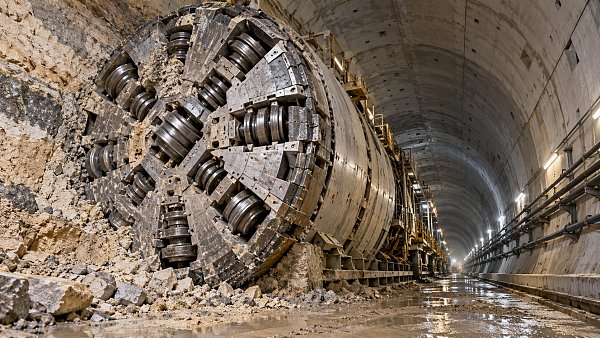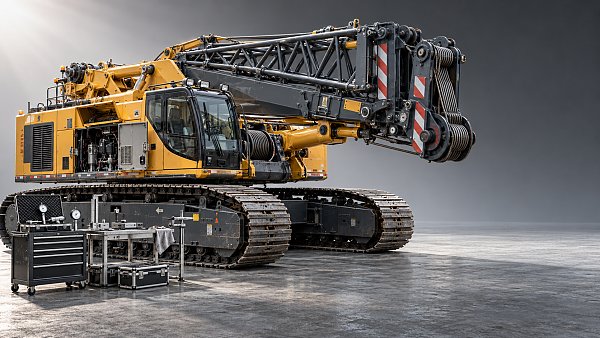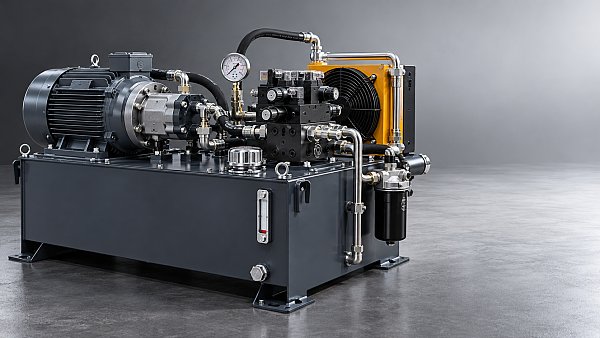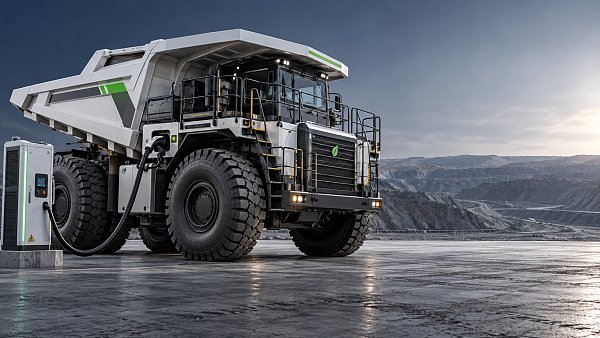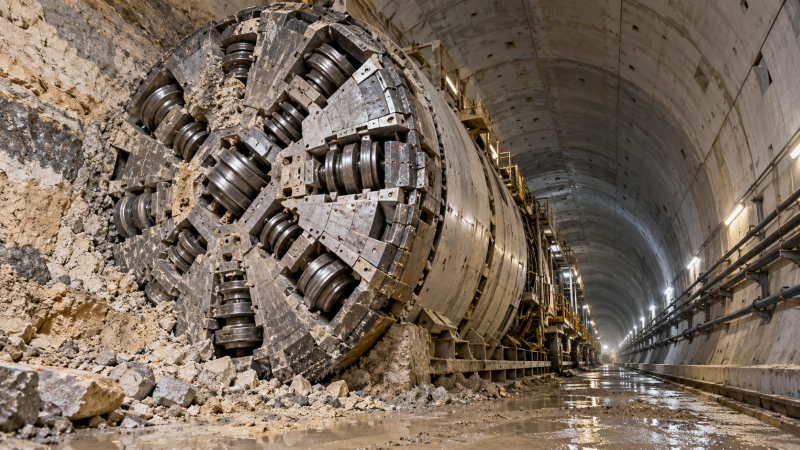
Selecting the underground tunneling equipment Middle East projects demand starts with understanding the ground, groundwater, and allowable movement above the alignment before comparing machine specifications.
The central decision is whether excavation can proceed with an unsupported face or requires controlled support, then which excavation and spoil systems can maintain that control.
Abrasive rock, mixed faces, permeable soils, and pressurized aquifers can change that decision within one drive. Regional labels alone cannot establish a defensible machine specification.
For technical evaluators, this guide connects investigation results to equipment requirements, maintenance access, and ownership costs, helping teams identify unacceptable risks before procurement commitments harden.
Which ground conditions should drive the equipment shortlist?
Middle Eastern tunnel alignments may encounter limestone, dolomite, sandstone, crystalline rock, alluvium, coastal deposits, or evaporites. Their engineering behavior varies significantly between sites and depths.
Start by dividing the alignment into engineering ground units, each describing anticipated face conditions, groundwater behavior, instability mechanisms, and uncertainty rather than simply geological formation names.
For each unit, document both expected conditions and credible adverse cases. A short saturated sand lens or fractured zone can govern machine capability across an otherwise favorable drive.
Pay particular attention to transitions between rock and soil, weathered and intact material, or confined and unconfined groundwater. These boundaries often produce disproportionate operational disruption.
Shallow urban cover adds another constraint: allowable settlement may require continuous pressure control even where the material itself appears strong enough to excavate without support.
Evaluate equipment against the most demanding credible operating conditions, while testing whether exceptional zones are better managed through treatment, alignment changes, or a different construction method.
What investigation evidence is needed before selecting a machine?
Borehole logs and compressive strength results provide a starting point, but equipment selection also requires evidence about discontinuities, permeability, particle grading, abrasivity, and groundwater connectivity.
In rock, assess strength variability, tensile behavior where relevant, fracture spacing, weathering, and abrasive mineral content. These influence cutting efficiency, block release, wear, and support demand.
For soils, establish grading curves, fines content, plasticity, permeability, and conditioning response. Representative laboratory trials can reveal whether excavated material will form a controllable EPB paste.
Investigate groundwater through piezometers and suitable permeability or pumping tests. Seasonal variation, tidal influence, and hydraulic connections may matter more than one recorded water level.
Where carbonate dissolution or cavities are plausible, combine targeted drilling with appropriate geophysics and probe drilling plans. Treat unconfirmed anomalies as uncertainties requiring explicit management.
Translate findings into a geotechnical baseline and risk register. State where evidence is sparse, because procurement decisions become fragile when assumptions masquerade as measured conditions.
When do hard-rock TBMs, EPB machines, and slurry shields fit?
Machine families provide an initial shortlist, not a universal selection rule. Final suitability depends on face stability, hydraulic conditions, excavated material behavior, and intervention requirements.
An open hard-rock TBM needs more than high rock strength. Fracturing, squeezing behavior, water inflows, and the ability to install support can determine practical feasibility.
Single-shield and double-shield configurations offer different thrust and lining arrangements. Assess these against rock mass behavior, segment installation, gripper suitability, and potential shield immobilization mechanisms.
EPB performance depends on maintaining a workable excavation chamber material and controlled discharge. Ground conditioning can extend applicability, but requires validation against actual soil and water conditions.
Slurry shields can provide effective support in permeable ground, provided the support medium develops appropriate resistance to infiltration. Coarse open ground may require additional measures.
Roadheaders or drill-and-blast may remain appropriate for short, irregular, or cavernous excavations. Compare their support cycles, vibration constraints, ventilation needs, and production assumptions against mechanized alternatives.
How should rock strength and abrasivity change the specification?
Do not select cutterhead power from average compressive strength alone. Required thrust, torque, cutter loading, and achievable penetration depend on interacting rock and machine characteristics.
Abrasive minerals can accelerate wear even where strength appears moderate. Specify suitable cutter arrangements, wear protection, replaceable components, and inspection access using representative testing and experience.
Mixed faces require particular attention because cutters encounter unequal resistance across the face. Impact loading, vibration, uneven wear, and excavation control may become limiting factors.
Assess cutter spacing, opening ratio, bucket geometry, and muck flow together. A head that cuts effectively can still underperform if fragments cannot leave the face reliably.
In clay-bearing or weathered formations, clogging may restrict production despite adequate installed power. Review flushing provisions, conditioning systems, and access for clearing accumulated material safely.
Request wear and production predictions as ranges with stated assumptions. Comparable project records are useful only when geology, diameter, operating mode, and maintenance conditions are comparable.
Can the system maintain face pressure throughout the drive?
Groundwater selection questions extend beyond maximum water pressure. Evaluators must establish the support-pressure range that controls inflow and instability without causing unacceptable ground displacement or losses.
The lower operating boundary reflects face stability and hydraulic requirements. The upper boundary must consider cover, ground resistance, nearby structures, and potential hydraulic fracture or breakout.
This operating window changes with chainage and construction stage. Define it through project-specific geotechnical assessment, then verify whether the complete machine system can maintain it.
For EPB machines, examine chamber sensing, screw conveyor configuration, discharge regulation, seals, and shutdown behavior. Pressure control must remain credible during interruptions and restart sequences.
For slurry machines, evaluate circulation capacity, pressure regulation, density control, separation performance, and response to losses. Karst openings can challenge support even with adequate installed pressure capacity.
Also assess tail seals, segment gaskets, annular grouting, and shaft interfaces. Face pressure control does not eliminate leakage pathways elsewhere in the tunnel construction system.
How will crews inspect and maintain the cutting tools?
A machine may excavate the predicted ground yet remain commercially unsuitable if crews cannot inspect cutters or replace worn tools under the expected groundwater conditions.
Specify intervention scenarios early, including routine inspections, blocked tools, damaged cutters, and unexpected obstructions. Establish whether access requires atmospheric conditions, ground treatment, or hyperbaric procedures.
High-pressure interventions can introduce specialist personnel, decompression requirements, medical provisions, and significant scheduling constraints. Their feasibility must be established with qualified specialists before equipment selection.
Remote monitoring and accessible wear indicators can improve maintenance planning, but they do not automatically remove entry requirements. Verify exactly which tasks remain dependent on chamber access.
Compare expected tool life with realistic intervention opportunities along the alignment. Planned treatment zones or accessible locations may materially change the preferred machine and construction strategy.
Include contingency provisions for failed interventions and unexpected wear. Spare parts availability, specialist mobilization, and recovery arrangements should have defined owners and credible lead times.
Will muck handling and site utilities sustain the predicted advance?
Excavation capacity has limited value if spoil transport cannot match it. Check the entire route from cutterhead openings to disposal, including transfer points and storage.
EPB spoil behavior changes with conditioning and geology. Assess conveyor or rail handling, water release, additive compatibility, and acceptance requirements at the intended disposal facility.
Slurry systems need adequate separation, water management, and space for equipment. Fine particles may govern treatment capacity and waste volumes even when coarse material separates readily.
For hard-rock drives, evaluate fragment size, conveyor durability, dust control, and transfer reliability. Oversized blocks and abrasive spoil can constrain output far behind the cutterhead.
High ambient temperatures can increase cooling demands on electrical equipment, hydraulics, and site services. Validate performance against project temperatures and actual underground heat loads throughout operation.
Dust, saline water, and potentially aggressive groundwater also warrant attention. Specify filtration, compatible materials, corrosion protection, and maintainable cooling systems where investigation and operating conditions justify them.
How should technical evaluators compare bids and ownership costs?
Normalize supplier proposals against a shared ground model, operating schedule, lining scope, and logistics plan. Otherwise, apparently better productivity may simply reflect more optimistic assumptions.
Separate instantaneous penetration from utilization and completed advance. Include segment erection, support installation, tool changes, maintenance, spoil interruptions, and planned investigations in the production model.
Compare total cost per completed tunnel meter, including equipment, consumables, energy, treatment, labor, disposal, and downtime. Define included scope clearly to prevent misleading comparisons between proposals.
Test credible adverse scenarios such as elevated wear, cavity treatment, separation bottlenecks, and prolonged interventions. Use sensitivity analysis to identify which uncertainties could change the ranking.
Ask suppliers to support critical claims with applicable references, calculations, and operating limits. Proposed mitigations should identify required equipment, personnel, consumables, and expected operational consequences.
Acceptance requirements should cover pressure control, instrumentation, alarms, maintainability, and integrated systems performance where practicable. Define the evidence needed before shipment and during site commissioning.
Make the selection defensible before procurement
The strongest equipment recommendation connects each material ground risk to a verified machine capability or construction measure, with residual uncertainty clearly assigned for further investigation.
Before approval, evaluators should confirm four essentials: a credible geological model, a workable support-pressure envelope, feasible maintenance access, and an integrated production and cost assessment.
For teams comparing underground tunneling equipment Middle East projects may require, the decisive question is whether the proposed system can sustain controlled excavation through credible adverse conditions.
TF-Strategy’s evaluation perspective links physical machine parameters with construction methods and infrastructure delivery needs. That connection helps turn equipment comparison into a defensible procurement decision.