
Which Heavy Machinery Maintenance Standards Apply to Your Construction Fleet?
Which Heavy Machinery Maintenance Standards Apply to Your Construction Fleet?
Which heavy machinery maintenance standards actually apply to your construction fleet—and which are guidance rather than legal obligations? The answer depends on equipment type, operating jurisdiction, site conditions, and manufacturer instructions. A crawler crane working on a wind project does not have the same inspection framework as a mining dump truck, even when both belong to the same contractor.
The practical task is to connect three things: what the law requires, what relevant technical standards cover, and what the original equipment manufacturer (OEM) specifies for that machine. A generic preventive-maintenance checklist rarely makes those connections clearly enough. It may demonstrate that servicing occurred while leaving a statutory inspection, structural defect, or safety-critical test unresolved.
Start with the obligation, not the standard number
There is no single international maintenance standard covering every construction asset. Requirements come from different sources, and their legal status matters.
- Legislation and regulations establish enforceable duties within their jurisdiction. These may address equipment condition, inspection, competent personnel, isolation, and record retention.
- Technical standards provide requirements or methods within a defined scope. They may be voluntary, incorporated into legislation, or made binding through a contract.
- OEM instructions establish machine-specific service intervals, limits, procedures, and inspection requirements. Their legal significance depends on local rules, but disregarding them requires more than a supervisor’s preference.
- Project and owner specifications can impose additional obligations, such as independent examinations or particular inspection methods. They cannot waive statutory duties.
Do not assume that the newest edition of a standard is automatically the legally applicable edition. A regulation or contract may reference a particular version. Record both the applicable edition and the basis for using it.
Likewise, machine conformity documentation is not evidence of continuing fitness for service. CE marking, where applicable, addresses product conformity; it does not replace inspections after years of abrasive operation, structural repairs, or component changes.
Jurisdiction changes the maintenance framework
United States: distinguish construction from mining
For US construction activities, OSHA requirements are a starting point. 29 CFR 1926.600 contains general equipment requirements, while equipment-specific provisions add detail. Cranes and derricks covered by Subpart CC have inspection requirements under 1926.1412, including shift, monthly, and annual/comprehensive inspections, alongside inspections triggered by specified events.
These are not interchangeable tasks. A daily operator checklist does not substitute for an annual/comprehensive crane inspection. Qualification and documentation requirements also vary with the inspection category.
For mine fleets, establish whether MSHA jurisdiction applies rather than carrying over a construction-site checklist. Surface metal and nonmetal mines, for example, have equipment inspection and maintenance provisions in 30 CFR Part 56. Coal operations have different provisions. The operating activity and jurisdiction—not simply the machine’s model—determine the starting point.
Great Britain: maintenance and thorough examination are separate
Under PUWER, work equipment must be maintained in an efficient state, efficient working order, and good repair. Inspection duties also arise where safety depends on installation conditions or deterioration could create danger. Lifting equipment may additionally fall under LOLER.
Under LOLER, periodic thorough examination is generally required every six months for equipment lifting people and for lifting accessories, and every twelve months for other lifting equipment, unless a competent person’s examination scheme specifies otherwise. Other triggers, including exceptional circumstances liable to jeopardise safety, also matter. The HSE guidance on thorough examination explains these distinctions.
A service visit is not automatically a thorough examination. Combining appointments can be practical, but the scope, competence, findings, and records must still meet each obligation.
Use technical standards for the questions they actually answer
A long list of ISO references can look reassuring while saying little about maintenance quality. The useful question is narrower: which document supports this inspection, acceptance criterion, or engineering decision?
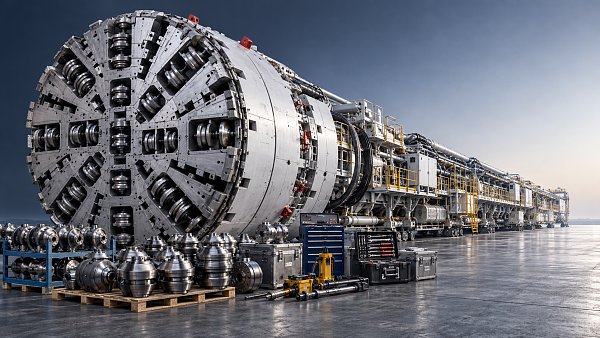
For tunnel boring machines, EN 16191 addresses safety requirements for tunnelling machinery within its scope. It is relevant when reviewing machine safety provisions, but it does not supply a complete maintenance programme for every cutterhead, screw conveyor, main bearing, and backup system. Confirm scope and edition before placing it in a compliance register.
ISO 9001 or ISO 45001 certification may support confidence in an organisation’s management systems. Neither certifies that an individual crane, TBM, or dump truck is mechanically fit for its next shift.
Translate requirements into the machine’s actual duty
Two identical machines can need different maintenance interventions without having different legal obligations. Dust exposure, gradients, shock loading, water ingress, and ambient temperature affect deterioration. The adjustment should follow OEM severe-duty instructions and a documented engineering assessment—not an arbitrary fleet-wide percentage reduction in service intervals.
Crawler cranes: configuration and history matter
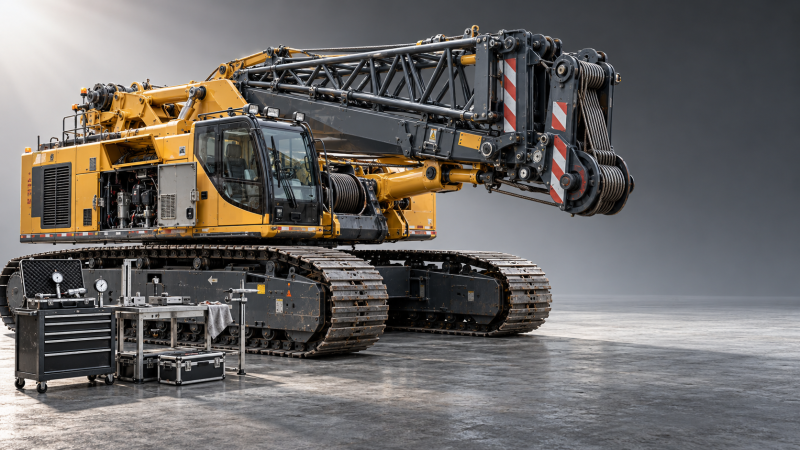
For a crawler crane relocated between projects, check what inspection is required after assembly and before use under the applicable rules. Review boom and jib configuration, reeving, safety devices, and records of repairs or alterations. An annual inspection report does not settle whether a newly assembled configuration has been checked correctly.
Structural cracking needs a defined engineering disposition. Welding a damaged member and closing the work order is not enough; repair authority, procedure, examination, and release requirements must be established.
Mining trucks and excavators: prioritise loss-of-control hazards
On haul trucks, brakes, steering, tyres, wheel assemblies, and fire risks deserve explicit inspection and acceptance criteria. On large excavators, attachment structures, pins, hydraulic hoses, access systems, and stored-energy controls need similar attention. Engine oil analysis alone cannot establish machine safety.
Battery-electric equipment introduces additional requirements for electrical isolation, verification of a safe state, battery damage assessment, and personnel competence. Diesel maintenance qualifications should not be treated as automatic authorisation for high-voltage work.
TBMs and road machinery: maintenance depends on access
A TBM cutter intervention may involve pressurised working conditions, restricted access, and stored mechanical or hydraulic energy. The maintenance procedure must connect with the relevant pressure-work, access, and isolation arrangements; a cutter replacement checklist alone is insufficient.
For pavers and rollers, distinguish production-quality adjustments from safety maintenance. Screed calibration may protect paving quality, while braking, guarding, visibility aids, and safe access address different risks. Both belong in the maintenance system, but they need different acceptance criteria.
Build a compliance matrix that can release—or stop—a machine
The most useful compliance matrix is organised by asset and task, not by a folder of standards. Each requirement should identify the machine, source document and edition, applicable clause, inspection trigger, responsible competence, acceptance criterion, evidence location, and action when the result is unacceptable.
For a crawler-crane hoist rope, that means recording the rope identity, applicable OEM instructions and assessment criteria, inspection frequency and event triggers, findings, and the person authorised to decide continued use. “Wire rope checked” is not an adequate substitute for that decision trail.
Keep three kinds of evidence distinguishable:
- Task completion: what was inspected, serviced, measured, or replaced.
- Condition assessment: measured results, defect location, photographs where useful, and comparison with acceptance limits.
- Return-to-service authority: who accepted the condition, any restrictions, and when further action is due.
Telematics can help schedule interventions and reveal abnormal trends. It cannot establish compliance merely because the dashboard shows no alarms. Sensor coverage, calibration, data quality, and failure modes outside the monitoring system still need consideration.
Resolve gaps before extending intervals
When evaluating a fleet, sample complete maintenance histories rather than checking only the newest certificates. Look for unresolved defects carried across shifts, replacement components without traceable specifications, inspections signed outside the person’s competence, and service intervals extended without approval. These gaps can matter more than the maintenance software being used.
For TF-Strategy’s coverage of tunnelling, open-pit mining, heavy lifting, and road construction, the useful connection is between machine parameters, construction methods, and lifecycle decisions. A lower-cost maintenance plan is not necessarily economical if it leaves inspection access, specialist competence, or statutory downtime out of the estimate.
Before approving a fleet maintenance framework, ask one concrete question: can the team show why each safety-critical asset is permitted to operate today? The answer should lead to applicable requirements, current condition evidence, and an accountable release decision—not simply a green service-status icon.
Related News
 Oct 20, 2026Which Heavy Machinery Maintenance Standards Apply to Your Construction Fleet?Discover which heavy machinery maintenance standards apply to your fleet. Clarify legal duties, OEM requirements, and inspection rules to reduce risk and keep equipment ready for work.
 Oct 19, 2026Sizing Industrial Hydraulic Power Packs: Pressure, Flow, and Duty CycleSize industrial hydraulic power packs with confidence. Learn how pressure, flow, and duty cycle affect performance, energy costs, and heat control—and avoid costly sizing mistakes.
 Oct 18, 2026How Equipment Specifications Affect Purchase, Installation, and Operating CostsExplore equipment specification planning cost factors that shape purchase, installation, and operating budgets. Compare lifecycle costs, avoid oversizing, and buy with confidence.
 Oct 17, 2026Tunnel Boring Machine Supplier List: Compare TBM Types and Service CoverageExplore our tunnel boring machinery supplier list to compare EPB, slurry and hard rock TBMs, assess service coverage and lifecycle costs, and build a smarter procurement shortlist.
Ms. Elena Rodriguez
Weekly Insights
Stay ahead with our curated technology reports delivered every Monday.