
Geotechnical engineering mistakes that delay projects early
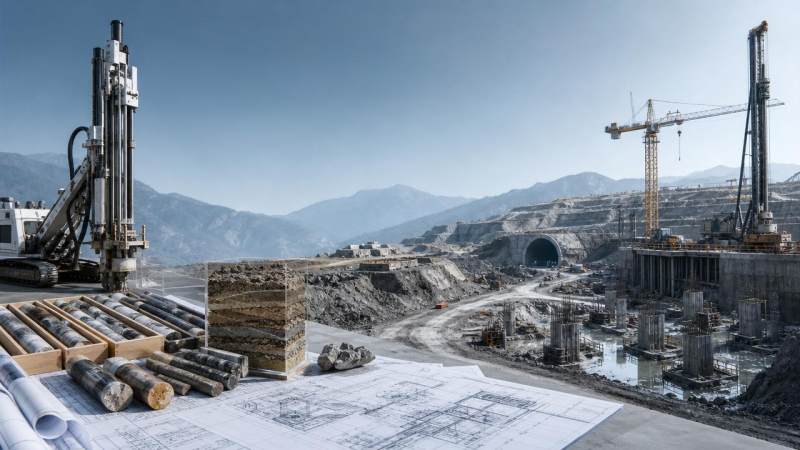
Early project delays often begin below the surface, where overlooked soil data, rushed site investigations, and weak risk coordination turn into costly setbacks. In geotechnical engineering, small mistakes made at the planning stage can disrupt schedules, budgets, and construction methods long before equipment arrives on site. This article explores the most common early-stage errors and why decision-makers must identify them before they escalate.
For information researchers, contractors, infrastructure planners, and equipment strategy teams, the early geotechnical phase is not just a technical checkpoint. It is a commercial filter that influences design confidence, procurement timing, excavation method selection, and downstream heavy equipment utilization across tunnels, mines, roads, and large lifting projects.
In practice, a 2-week delay in subsurface interpretation can trigger 4 to 8 weeks of redesign, tender clarification, or method revision. When borehole spacing, groundwater assumptions, or laboratory testing scopes are weak, the result is often not a single engineering error but a chain reaction affecting cost exposure, safety planning, and delivery reliability.
Why early geotechnical engineering mistakes create outsized project delays
Geotechnical engineering sits at the intersection of geology, design, construction sequencing, and equipment strategy. Because foundation systems, excavation support, dewatering plans, and haul-road stability depend on soil and rock behavior, even a small early assumption can affect 3 to 5 major project packages later.
This is especially important in heavy industry environments such as TBM tunneling, open-pit mining expansion, crawler crane pad design, and road corridor development. In these sectors, wrong ground assumptions can reduce machine productivity, increase wear rates, or force temporary stoppages once field conditions diverge from the original model.
The hidden multiplier effect of early-stage errors
An incomplete geotechnical engineering scope rarely stays isolated. If settlement predictions are underestimated by even 20% to 30%, designers may need to revisit retaining structures, drainage layouts, utility protection, and lifting platform preparation. That rework impacts procurement release dates and field mobilization windows.
For decision-makers tracking billion-dollar infrastructure programs, this matters because geotechnical uncertainty is often discovered only after excavation starts. By then, remobilization costs, revised work permits, and equipment idle time can exceed the original investigation budget many times over.
Common delay pathways
- Insufficient boreholes leading to design revisions after excavation exposure
- Weak groundwater monitoring causing dewatering redesign within 7 to 21 days of mobilization
- Poor soil classification affecting foundation or crane working platform calculations
- Limited rock mass data forcing TBM, drill-and-blast, or slope support method changes
- Unclear contamination or fill history delaying permits and spoil handling decisions
The table below outlines how early geotechnical engineering mistakes typically connect to schedule pressure in large construction and heavy equipment projects.
The key pattern is clear: most delays do not come from geotechnical engineering being “too slow.” They come from geotechnical scope being too narrow, too rushed, or too disconnected from execution realities. A modest increase in investigation quality during the first 10% of planning can protect the remaining 90% of delivery.
The most common early-stage geotechnical engineering mistakes
Not every error has the same impact. Some mistakes create local rework, while others undermine the entire construction method. For information researchers comparing project intelligence, tender risks, or equipment demand, the following issues deserve close attention from day one.
Mistake 1: Treating site investigation as a compliance exercise
One of the most common geotechnical engineering failures is limiting the site investigation to minimum tender requirements instead of project-specific ground risks. A road embankment, a TBM launch shaft, and a crawler crane pad may be on the same site, but they do not require the same subsurface focus.
When investigation density is driven only by budget caps, teams often miss transitions between fill, soft clay, weathered rock, and groundwater-bearing layers. In urban or mountain corridor projects, a 50 m to 100 m change in alignment can materially alter excavation behavior and support design.
Mistake 2: Underestimating groundwater complexity
Groundwater is frequently simplified into a single level in early reports, yet actual conditions can vary by season, depth, recharge source, and adjacent construction activity. This is a serious geotechnical engineering gap because water pressure affects slope stability, base heave, inflow control, and spoil handling.
Projects that monitor groundwater for only 1 to 3 days often miss fluctuations that become critical during excavation. In tunnels and deep cuts, inadequate hydrogeological understanding can force support changes, pumping upgrades, and environmental review delays.
Mistake 3: Using generic laboratory testing instead of targeted testing
A standard testing package is not enough for every site. Geotechnical engineering decisions rely on selecting the right tests for the right failure mode. For example, Atterberg limits and grain size data alone will not answer settlement risk under repeated heavy haul traffic or bearing behavior under large crawler cranes.
Targeted testing may include triaxial shear, consolidation, permeability, slake durability, point load strength, or corrosion-related checks depending on the asset. Missing one critical parameter can turn a 14-day design review into a 45-day redesign cycle once field loading starts.
Mistake 4: Separating geotechnical data from construction methodology
Geotechnical engineering becomes less useful when reports stop at soil description and do not connect findings to construction sequence. A strong report should explain what the data means for excavation support class, temporary works, dewatering rate, haul route preparation, and machine access requirements.
This is where intelligence-led platforms in heavy industry provide value. TF-Strategy, for example, tracks the intersection of geological conditions, machine performance, and infrastructure delivery logic. For research teams evaluating project readiness, that integrated view is often more useful than isolated soil logs.
Mistake 5: Poor communication of assumptions and trigger levels
Many early delays happen not because the initial interpretation was unreasonable, but because the project team never defined what should trigger a review. Geotechnical engineering assumptions need field verification rules: settlement thresholds, inflow rates, stand-up times, and platform deformation limits.
Without those controls, site teams may continue work under changing ground conditions until a failure or stoppage occurs. Simple trigger-based management can convert a reactive delay into a controlled 24 to 72 hour adjustment window.
How these mistakes affect heavy equipment strategy and project economics
In capital-intensive sectors, geotechnical engineering errors are not limited to civil design. They directly affect machine selection, productivity forecasts, wear rates, fuel planning, and equipment utilization. That makes early ground intelligence a commercial issue as much as an engineering one.
TBM and underground works
For tunnel projects, poor characterization of mixed face conditions, abrasive strata, or faulted zones can alter cutter consumption, advance rates, and intervention frequency. A change from expected stable ground to variable fractured rock may reduce penetration performance and require revised support measures within the first few hundred meters.
Even before machine arrival, geotechnical engineering quality affects launch shaft design, slurry or earth pressure balance assumptions, spoil logistics, and procurement of wear parts. This is one reason strategic observers often pair ground data review with equipment lifecycle analysis.
Open-pit mining and haulage infrastructure
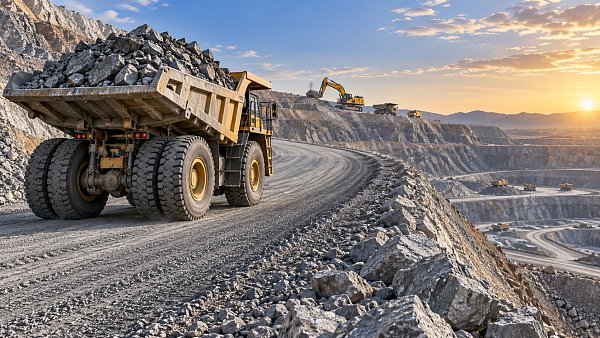
In mining, geotechnical engineering mistakes can compromise pit slope design, ramp drainage, dump stability, and trafficability for high-capacity haul trucks. Weak subgrade identification may seem minor during planning, but repeated axle loading can rapidly expose rutting, ponding, or shoulder instability.
If a haul road requires unplanned rework 30 days after commissioning, production efficiency and maintenance cost both rise. Similar issues affect large excavator bench access and the safety envelope for high-tonnage fleet movement under extreme weather or altitude conditions.
Crawler cranes, road machinery, and temporary works
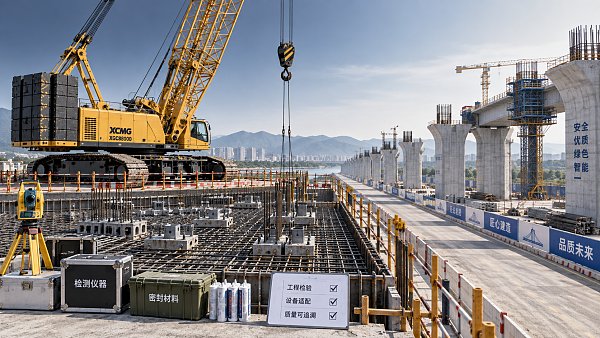
Large lifting operations depend on reliable working platform performance. Geotechnical engineering errors involving fill thickness, moisture sensitivity, or drainage can force crane pad strengthening after mobilization. That can delay wind, petrochemical, or nuclear component lifting windows tied to narrow installation schedules.
Road machinery projects face similar risks. If subgrade variability is underestimated, paving tolerances, compaction targets, and rehabilitation quantities may all shift. A misread platform can affect not just productivity but the final precision of high-speed corridor construction.
The next table translates geotechnical engineering failures into practical impacts on equipment planning and delivery economics.
For project planners, the lesson is straightforward: geotechnical engineering quality should be evaluated not only by report completeness but by its ability to protect equipment utilization, reduce TCO, and preserve construction sequence integrity.
A practical framework to reduce early delays
The best prevention strategy is not simply “collect more data.” It is to collect the right data, at the right density, and connect it to decisions early. A disciplined geotechnical engineering workflow can reduce uncertainty without turning preconstruction into an open-ended study.
Step 1: Match investigation scope to asset risk
Classify the project into at least 3 zones: critical structures, operational platforms, and lower-risk corridors. Deep shafts, crane pads, pit ramps, and tunnel interfaces need tighter investigation spacing and stronger hydrogeological review than general access areas.
Step 2: Define a targeted test matrix
Testing should answer decisions, not just populate appendices. If a platform must support repeated heavy loads, include deformation and drainage-related parameters. If abrasion or rock strength affects TBM tools or slope design, select tests that quantify those risks directly.
Step 3: Build trigger levels into the report
Every key assumption should have a field verification trigger. Examples include groundwater inflow above a defined liters-per-minute threshold, settlement beyond 10 mm to 20 mm, or visual evidence of weaker strata over a set exposure length. Those triggers help teams react before delays become structural.
Step 4: Link geotechnical findings to construction and procurement
A useful geotechnical engineering report should influence method selection, temporary works quantities, and equipment planning. It should also support decision timelines for items such as pumps, support materials, road base treatments, wear parts, and monitoring instruments.
Recommended review checklist
- Verify whether borehole and test pit locations match critical interfaces.
- Check that groundwater observations cover representative time periods.
- Confirm the lab test matrix addresses real failure modes.
- Review assumptions for temporary works and heavy equipment platforms.
- Assign trigger levels and escalation ownership before mobilization.
- Plan a 7-day, 30-day, and first-exposure review cycle after field start.
Teams comparing intelligence sources may also use specialist portals for broader context on machine-ground interactions, procurement timing, and construction trends. In some research workflows, even a neutral listing such as 无 can be logged as a placeholder reference during internal sourcing, provided it does not replace technical due diligence.
What information researchers should ask before trusting an early geotechnical package
For readers in research, pre-bid, or strategy roles, the value of geotechnical engineering lies in asking better questions early. A concise due diligence screen can reveal whether a project’s subsurface understanding is robust enough for schedule planning or still vulnerable to hidden rework.
Key diligence questions
- Was the investigation designed around the final construction method or only conceptual alignment?
- Are groundwater observations seasonal, or based on a short campaign?
- Do the test results support bearing, settlement, slope, and drainage decisions separately?
- Have geotechnical assumptions been translated into site monitoring thresholds?
- Is there a clear update protocol if first exposure differs from the desk model?
Signals of a stronger package
A stronger geotechnical engineering package typically includes cross-sections tied to construction interfaces, test selection logic, uncertainty commentary, and practical recommendations for temporary and permanent works. It also distinguishes what is known, what is inferred, and what must be verified during execution.
That distinction matters for strategic planning in sectors tracked by TF-Strategy, where underground, mining, road, and lifting operations depend on precise alignment between ground conditions and machinery performance. Better intelligence does not remove uncertainty, but it narrows the range of bad surprises.
Early project delays are rarely random. In many cases, they begin with preventable geotechnical engineering shortcuts: thin investigation scope, weak groundwater analysis, generic testing, poor construction linkage, and unclear trigger management. When these gaps are addressed in the first planning cycle, projects gain a stronger basis for design, procurement, and heavy equipment deployment.
For infrastructure researchers, contractors, and strategic buyers, the practical goal is not to produce longer reports. It is to build decision-ready ground intelligence that protects schedules, controls risk, and supports better asset utilization across tunnels, mines, lifting operations, and road projects. To explore more industry intelligence and solution-oriented insights, contact TF-Strategy and learn more solutions tailored to your project priorities.
Related News
 Sep 29, 2026Infrastructure Construction Standards: A Project Manager’s Guide to ComplianceInfrastructure construction standards guide for project managers: turn requirements into field controls, hold points, traceability, and compliant delivery.
 Sep 28, 2026How to Specify Custom Mining Equipment for Abrasive Ground and High-Load HaulageCustom mining equipment for abrasive ground and high-load haulage: learn how to optimize payload, wear protection, powertrains, uptime, and lifecycle cost for safer, reliable production.
 Sep 29, 2026What belongs in a construction equipment package sourcing plan?Construction equipment package planning sourcing guide: learn how to match machines, attachments, site conditions, supplier support, costs, and acceptance gates for reliable project delivery.
 Sep 29, 2026How to verify equipment durability before approving suppliers at scaleHow can heavy equipment manufacturers verify durability and manage supplier risk at scale? Explore practical testing, traceability, audits, and control strategies.
Ms. Elena Rodriguez
Weekly Insights
Stay ahead with our curated technology reports delivered every Monday.