
Why infrastructure construction bids fail on hidden risks
Why infrastructure construction bids fail on hidden risks
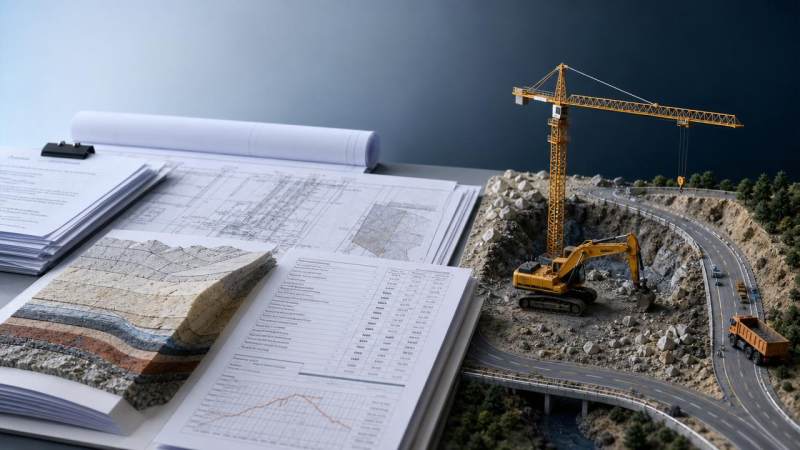
Infrastructure construction bids often fail not because of price or scope alone, but because hidden risks distort cost assumptions, timelines, and delivery confidence. In infrastructure construction, small omissions can become major claims, stalled mobilization, or unusable technical commitments after award.
A bid may look competitive on paper, yet still collapse under geotechnical surprises, logistics constraints, equipment mismatch, or regulatory delays. The real issue is not only underpricing. It is weak risk visibility during commercial and technical evaluation.
For large civil works, mining access roads, tunnels, ports, energy foundations, and heavy lifting packages, infrastructure construction depends on assumptions being tested early. When those assumptions remain hidden, bid failure becomes expensive and predictable.
Why a checklist approach matters in infrastructure construction
Hidden risks rarely appear as one dramatic error. They accumulate across design notes, method statements, supplier lead times, weather windows, and interface gaps. A checklist creates a disciplined way to expose them before contract award.
In infrastructure construction, this matters because projects combine long supply chains, field uncertainty, heavy equipment dependencies, and strict milestone logic. Missing one weak point can invalidate an otherwise attractive bid strategy.
A structured review also helps compare bidders fairly. Instead of judging promises alone, it tests whether schedule logic, plant selection, risk allowances, and execution methods can survive real site conditions.
Core checklist for uncovering hidden bid risks
- Verify ground data against the proposed method, because incomplete boreholes, weak hydrogeology interpretation, or outdated surveys often undermine excavation rates and support design assumptions.
- Test productivity claims with actual equipment capacity, shift patterns, maintenance downtime, and haul distance rather than relying on brochure output or best-case benchmark figures.
- Check logistics routes for oversized components, fuel supply, spare parts access, and customs timing, especially when infrastructure construction depends on imported heavy machinery.
- Review temporary works in detail, since access roads, crane pads, dewatering systems, power supply, and laydown areas are common omissions in aggressive bids.
- Confirm interface ownership across civil, mechanical, electrical, and utility packages, because unclear handover points often become delay claims after mobilization starts.
- Examine schedule float honestly by mapping permit approvals, environmental windows, test procedures, and commissioning dependencies instead of accepting headline completion dates.
- Validate subcontractor depth, local labor availability, and specialist crew readiness, since labor assumptions fail quickly in remote, regulated, or politically sensitive locations.
- Assess raw material volatility for steel, explosives, cement, bitumen, and wear parts, particularly where long-duration infrastructure construction faces currency or freight pressure.
- Inspect safety and compliance assumptions, including lifting studies, blasting controls, tunnel ventilation, and emissions rules, because shortcuts here usually reappear as stoppages.
- Demand a risk pricing narrative that explains contingency logic, exclusions, and trigger events, so commercial numbers can be linked to technical reality.
How hidden risks appear in different project scenarios
Tunnel and underground works
In tunnels, the biggest hidden risk is often geological variability between boreholes. A bidder may assume stable advance rates, then face abrasive rock, water ingress, mixed face conditions, or difficult spoil handling.
This is where specialized intelligence becomes valuable. Insights similar to those tracked by TF-Strategy can help link cutterhead wear, support class changes, and excavation method limits to bid realism, including references such as 无.
Open-pit mining and heavy earthworks
For haul roads, stripping works, and mine infrastructure construction, equipment selection often looks adequate until altitude, temperature, gradient, or cycle congestion reduces output below the bid model.
Bids also fail when maintenance support is treated as secondary. A fleet plan without tire availability, hydraulic service coverage, or operator capability may win evaluation but lose delivery performance.
Cranes, lifts, and industrial installation
On wind, petrochemical, and power projects, hidden risk often sits in lift planning. Ground bearing pressure, boom configuration, weather limits, and transport sequencing can all invalidate low-cost offers.
If the bid excludes crane mat preparation, escort permits, or night transport restrictions, cost certainty is weaker than it appears. In infrastructure construction, these details determine whether milestones are realistic.
Road and transport corridor projects
Road packages frequently hide risk in traffic management, drainage relocation, utility diversions, and asphalt supply stability. The paving train may be well specified, but corridor readiness may not be.
Another recurring issue is assuming ideal weather windows. Rainfall patterns, subgrade moisture, and seasonal haul restrictions can quickly disrupt linear infrastructure construction and increase rework rates.
Commonly ignored items that sink otherwise strong bids
Incomplete site access assumptions
Many bids assume immediate access to all fronts. In reality, land handover, community constraints, and parallel contractors can reduce workable areas and destroy the production curve.
Overconfidence in imported equipment timelines
Heavy equipment shipping, assembly, and commissioning are often compressed unrealistically. Customs inspection, port congestion, and specialist technician availability create hidden schedule exposure.
Weak spare parts and consumables planning
A competitive rate means little if cutters, filters, undercarriage parts, tires, or hydraulic components cannot be replaced fast enough to sustain output during critical phases.
Unclear exclusions in temporary infrastructure
Water treatment, camp expansion, fuel storage, workshop setup, and backup power are often left ambiguous. Later, they appear as variation claims rather than planned execution costs.
Insufficient local compliance mapping
Environmental monitoring, quarry permits, labor rules, and transport escorts vary sharply across regions. Ignoring them makes a bid look efficient while hiding real delivery friction.
Practical execution steps before bid award
- Build a risk register that ties each assumption to cost, schedule, method, and owner.
- Request evidence for production rates, not only summary charts or generic reference projects.
- Stress-test the baseline program using delayed permits, weather loss, and reduced equipment availability.
- Map all imported and critical components by lead time, customs path, and backup source.
- Compare exclusions side by side so low bids do not hide future claim positions.
- Use sector intelligence sources to benchmark equipment suitability and supply chain realism, including selected references like 无.
Conclusion and next action
Infrastructure construction bids fail on hidden risks when assumptions remain unchallenged. Price alone does not reveal whether a bidder can absorb geological variance, logistics friction, compliance delays, or equipment underperformance.
The strongest evaluation process uses a checklist, tests evidence, and links commercial numbers to field execution. That approach reduces avoidable claims, protects delivery confidence, and improves long-term project value.
Start with the ten-point checklist above, then adapt it to the project’s geology, lifting profile, corridor conditions, and equipment strategy. In infrastructure construction, disciplined risk visibility before award is cheaper than correction after failure.
Related News
 Sep 29, 2026Infrastructure Construction Standards: A Project Manager’s Guide to ComplianceInfrastructure construction standards guide for project managers: turn requirements into field controls, hold points, traceability, and compliant delivery.
 Sep 28, 2026How to Specify Custom Mining Equipment for Abrasive Ground and High-Load HaulageCustom mining equipment for abrasive ground and high-load haulage: learn how to optimize payload, wear protection, powertrains, uptime, and lifecycle cost for safer, reliable production.
 Sep 29, 2026What belongs in a construction equipment package sourcing plan?Construction equipment package planning sourcing guide: learn how to match machines, attachments, site conditions, supplier support, costs, and acceptance gates for reliable project delivery.
 Sep 29, 2026How to verify equipment durability before approving suppliers at scaleHow can heavy equipment manufacturers verify durability and manage supplier risk at scale? Explore practical testing, traceability, audits, and control strategies.


Ms. Elena Rodriguez
Weekly Insights
Stay ahead with our curated technology reports delivered every Monday.