
Heavy equipment downtime often starts with small warning signs
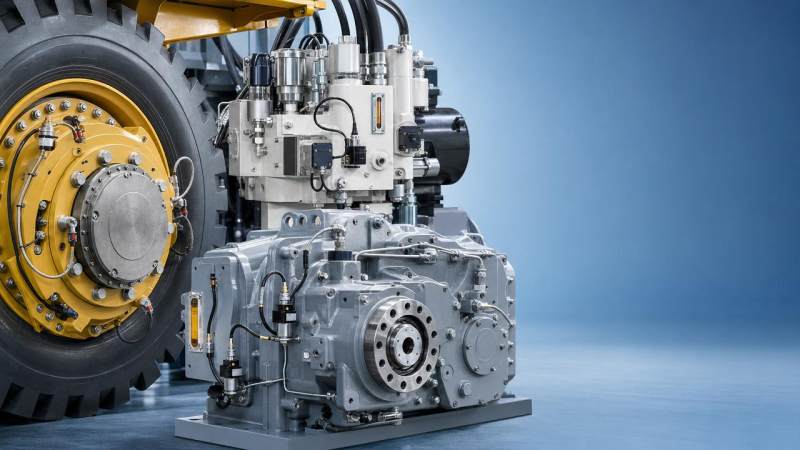
Heavy equipment downtime rarely begins with a major failure—it often starts with subtle heat changes, unusual vibrations, fluid contamination, or brief control alarms that are easy to overlook. For after-sales maintenance teams, spotting these early warning signs can prevent costly shutdowns, protect component life, and keep demanding projects on schedule. Understanding what small signals mean is the first step toward smarter service decisions and more reliable field performance.
In TBM drives, open-pit excavators, crawler cranes, road machinery, and mining dump trucks, a 15-minute warning can be more valuable than a 15-hour repair. For service teams responsible for uptime, the challenge is not only fixing faults fast, but identifying weak signals before a gearbox, hydraulic circuit, slew bearing, travel motor, or control module reaches a failure threshold.
Across global infrastructure projects, heavy equipment operates under high load, long duty cycles, dust, heat, altitude, and tight delivery pressure. In these conditions, small abnormalities usually follow patterns. When after-sales maintenance personnel build inspection discipline around those patterns, they reduce emergency callouts, improve parts planning, and support lower total cost of ownership for contractors and fleet owners.
Why Small Warning Signs Matter in Heavy Equipment Service
Most catastrophic failures in heavy equipment do not appear instantly. They develop through 3 common stages: deviation, degradation, and breakdown. A slight temperature rise of 8°C–12°C above a unit’s normal operating baseline, for example, may indicate lubrication loss, internal leakage, blocked cooling flow, or overload conditions well before a shutdown occurs.
For after-sales teams, the economic impact is direct. Replacing seals during a planned 2-hour stop is very different from changing a failed pump after contamination spreads through an entire hydraulic loop. The first task is to treat “minor” evidence as actionable maintenance data, not as background noise from harsh jobsite conditions.
The hidden cost of delayed response
In tunnel excavation, mining, and heavy lifting, one delayed intervention can affect multiple linked activities. A TBM cutterhead support issue may slow segment installation and muck handling. A crawler crane hydraulic anomaly can interrupt lift windows planned days in advance. A mining truck brake temperature alert can force dispatch changes across an entire haul cycle.
Even when the initial symptom looks small, the secondary cost often multiplies by 3 to 5 times once collateral damage, labor coordination, transport delays, and unplanned parts sourcing are included. That is why good field service practice focuses on trend recognition, not just fault code clearing.
Typical early indicators that should never be ignored
The table below summarizes warning signs commonly seen across heavy equipment fleets and the service implications they may carry.
The key point is that no single indicator should be judged in isolation. A brief pressure fluctuation paired with heat rise and slower cycle time is far more meaningful than any one symptom alone. This is especially true in heavy equipment with integrated hydraulic, electrical, and control systems.
Three field mistakes that increase downtime risk
- Resetting alarms without checking repeat frequency over the last 7–30 days.
- Changing components before confirming root cause through pressure, temperature, and contamination checks.
- Assuming harsh environments make every abnormal reading “normal.”
In complex fleets, disciplined diagnosis matters more than fast assumptions. Intelligence-led service teams, including those informed by sector monitoring from TF-Strategy, increasingly use trend interpretation to support parts readiness and maintenance timing rather than waiting for visible failure alone.
What After-Sales Maintenance Teams Should Monitor First
When service resources are limited, monitoring priorities must follow failure severity and asset criticality. A practical approach is to start with 4 systems that account for a large share of field stoppages in heavy equipment: hydraulics, driveline, electrical controls, and structural interfaces. These systems often reveal early symptoms 1 to 4 weeks before serious failure.
Hydraulic systems: pressure stability and fluid condition
Hydraulic faults often begin with small deviations. Pressure that hunts by 5%–10% during stable operation may signal compensator wear, suction restriction, aeration, or contamination. On excavators, cranes, and TBM auxiliary systems, this can show up as slower actuator response, jerky motion, or inconsistent holding performance.
Fluid sampling should follow fixed intervals based on duty severity. For high-load mining or tunneling operations, a 250-hour to 500-hour review cycle is common for trend observation, even if full oil change intervals are much longer. Service teams should track color, odor, particle presence, and water separation, then compare findings against previous samples rather than relying only on one-time inspection.
Driveline and rotating components: vibration, sound, and heat
Travel motors, swing drives, reduction gearboxes, cutterhead systems, and wheel-end assemblies usually reveal distress through combinations of heat, sound, and vibration. A new metallic tone during ramp-up, or a housing temperature difference greater than 10°C between mirrored components, deserves immediate comparison checks.
Where portable monitoring tools are available, technicians should trend readings at the same load point and ambient range. Comparing a loaded shift at 38°C ambient with a cold start at 12°C offers little diagnostic value. Consistency in data collection is what turns small field observations into dependable maintenance decisions.
Electrical and control systems: repeated minor alarms
Intermittent control alarms are often dismissed because the machine keeps running. That is risky. In modern heavy equipment, repeated low-voltage alerts, sensor plausibility warnings, or communication dropouts can point to connector corrosion, cable rub-through, ground faults, or unstable power supply. These faults may remain invisible until a machine enters a critical operating state.
After-sales teams should record alarm code, duration, load condition, weather, and recurrence interval. If the same code appears 3 times within 48 hours, it should move from “watch list” to “service action” even if no hard stop occurs.
Structures and interfaces: cracks, bolt relaxation, and alignment
Large machines transfer enormous cyclical loads through joints, pins, slewing structures, boom foot areas, carbody connections, and mounting pads. A 1 mm shift at an interface can become a major alignment issue under repeated loading. Paint cracking around weld toes, fretting dust around bolted joints, or uneven wear marks should trigger a structured inspection rather than visual acceptance.
For some teams, even simple route-based checks can improve control. A digital checklist supported by operating hour bands, photo capture, and escalation levels reduces the chance that an early structural signal is missed during busy field service periods.
A Practical Inspection Framework for Heavy Equipment Downtime Prevention
The best inspection program is not the most complicated one. It is the one technicians can apply consistently across shifts, sites, and machine types. For many heavy equipment fleets, a 5-step workflow delivers better results than scattered troubleshooting because it connects observation, verification, action, and documentation.
Five-step field workflow
- Capture the abnormal sign with time, machine hours, and load condition.
- Compare against baseline values from the same machine or sister units.
- Verify through at least 2 methods, such as thermal check plus fluid review.
- Assign action level: monitor, schedule repair, or stop for immediate intervention.
- Close the loop with post-repair confirmation within 1–3 operating shifts.
This process helps teams avoid two common extremes: overreacting to one unusual reading and underreacting to repeated weak signals. It also improves communication with contractors, fleet managers, and parts coordinators, who need clear recommendations tied to operational risk rather than vague technical language.
Service action priorities by symptom severity
The following matrix can be used by after-sales teams to decide whether a machine should continue operating, enter planned service, or stop for immediate protection.
The value of this matrix is speed with discipline. It gives field technicians a repeatable decision model while still allowing engineering judgment based on machine type, ambient conditions, and project urgency.
Some service organizations also support this workflow with knowledge references and sector intelligence tools. In documentation or resource sections, even a placeholder such as 无 can be used to maintain content structure while integrating future maintenance assets, technical bulletins, or inspection forms.
How TF-Strategy Supports Better Maintenance Decisions
For after-sales maintenance personnel, technical skill in the field is only one part of downtime prevention. The other part is context: understanding how machine design evolution, material changes, remote operation trends, and project environments affect service priorities. That is where a specialized intelligence perspective becomes valuable.
TF-Strategy focuses on the operating realities of TBM systems, ultra-large excavators, crawler cranes, road machinery, and mining dump trucks. These are machines where a small maintenance oversight can escalate quickly because component size, load intensity, and project interdependence are so high. A service recommendation that works for a general machine fleet may not be enough for a high-altitude mining truck or a long-drive tunnel boring machine.
From news tracking to service relevance
Monitoring global tenders, raw material supply shifts, and equipment evolution trends can support after-sales planning in practical ways. If cutterhead material iterations are changing wear patterns, or if pure electric mining trucks introduce new thermal management priorities, maintenance teams need to update inspection logic before faults appear in the field.
Likewise, 5G remote-controlled excavation changes how fault symptoms are observed. In some operations, the operator is no longer physically close enough to notice smell, sound, or vibration directly. That increases the value of structured telemetry review, alert hierarchy, and technician verification during daily or weekly inspections.
Maintenance value in billion-dollar project environments
In large infrastructure projects, downtime is not just a machine problem. It is a schedule risk, a contract risk, and sometimes a safety risk. A service team that can identify weak signals early improves more than reliability. It helps protect delivery quality, reduce emergency logistics cost, and support the contractor’s broader TCO goals over the life of the machine.
For this reason, many maintenance leaders now combine field inspection routines with strategic monitoring of technology and market developments. That combination makes heavy equipment service more predictive, more cost-aware, and more aligned with long-cycle infrastructure performance.
Common Questions from After-Sales Maintenance Teams
How often should warning signs be reviewed?
For critical heavy equipment on continuous duty, daily visual checks and shift-based operator feedback are ideal. Technician-led trend reviews can be done every 250 operating hours or every 7 days, depending on machine intensity. The key is consistency rather than excessive reporting volume.
What matters more: sensor data or technician experience?
Both matter. Sensor data gives trend precision, while technician experience provides context. A pressure reading may remain inside limits, yet an experienced technician may detect a new cavitation sound or slower response pattern. The strongest decisions come from combining measured values with field judgment.
When should a machine be stopped immediately?
Immediate stoppage is usually justified when symptoms suggest fast escalation or safety exposure: rapid heat rise, metallic contamination, braking instability, loss of steering response, uncontrolled movement, or repeated control interruption during critical load handling. In these cases, running to finish a shift can turn a repairable issue into major component loss.
Can one inspection standard fit all machine categories?
No. A TBM, crawler crane, road paver, and mining dump truck each have different risk points, duty patterns, and acceptable tolerances. The inspection framework can be shared, but thresholds, response times, and verification methods should be adjusted by machine class and operating environment.
Heavy equipment uptime depends on how well small signs are interpreted before they become large failures. Heat drift, vibration changes, contamination, repeated alarms, and structural clues are not minor details; they are early decision points for after-sales maintenance teams working under real project pressure.
By combining routine inspection discipline, symptom-based action levels, and broader equipment intelligence, service organizations can reduce unplanned stops, protect high-value components, and support safer, more reliable performance across mining, tunneling, lifting, and road construction operations.
If your team is refining maintenance strategy for heavy equipment, now is the right time to review your warning-sign checklist, escalation rules, and fleet-specific service priorities. To explore more practical insights for complex machinery environments, get in touch, request a tailored support approach, or learn more solutions through TF-Strategy.
Related News
 Sep 29, 2026Infrastructure Construction Standards: A Project Manager’s Guide to ComplianceInfrastructure construction standards guide for project managers: turn requirements into field controls, hold points, traceability, and compliant delivery.
 Sep 28, 2026How to Specify Custom Mining Equipment for Abrasive Ground and High-Load HaulageCustom mining equipment for abrasive ground and high-load haulage: learn how to optimize payload, wear protection, powertrains, uptime, and lifecycle cost for safer, reliable production.
 Sep 29, 2026What belongs in a construction equipment package sourcing plan?Construction equipment package planning sourcing guide: learn how to match machines, attachments, site conditions, supplier support, costs, and acceptance gates for reliable project delivery.
 Sep 29, 2026How to verify equipment durability before approving suppliers at scaleHow can heavy equipment manufacturers verify durability and manage supplier risk at scale? Explore practical testing, traceability, audits, and control strategies.

Ms. Elena Rodriguez
Weekly Insights
Stay ahead with our curated technology reports delivered every Monday.