
How mining dump trucks help cut overload and tire risk
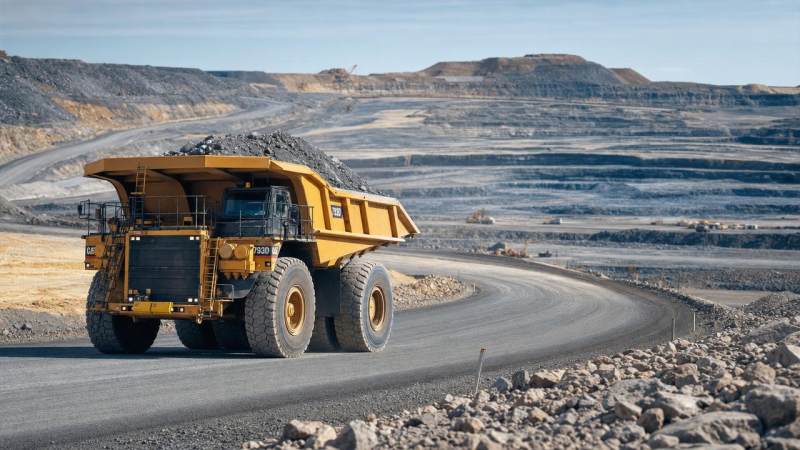
Mining dump trucks are becoming a frontline control tool for overload and tire risk
In high-output mining operations, mining dump trucks now influence far more than haulage volume.
They directly affect overload control, tire life, fuel efficiency, cycle stability, and site safety.
As production pressure rises, payload mistakes create hidden costs long before a visible failure appears.
A few extra tons can distort tire temperature, braking performance, frame stress, and road wear.
This is why mining dump trucks are increasingly managed as data-driven assets, not simple carriers.
Across heavy industry, safer haulage depends on balancing machine capacity, route conditions, and operational discipline.
That shift matters to mines, contractors, infrastructure planners, and intelligence platforms tracking equipment performance.
Current signals show tighter control of payload, tire heat, and route discipline
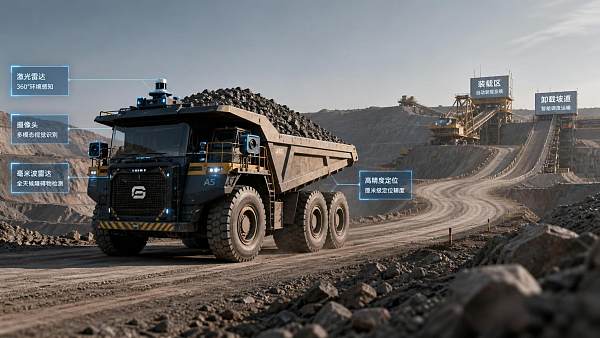
Open-pit operations are moving toward precision loading and real-time fleet visibility.
The reason is simple: overload risk no longer appears acceptable in high-cost production environments.
Mining dump trucks work under steep grades, abrasive surfaces, long cycles, and changing weather.
Under those conditions, tire failure rarely comes from one cause alone.
It usually starts with a chain of small deviations.
Uneven loading, speed variation, poor berm quality, underinflation, and hot ambient conditions amplify each other.
As electrification, automation, and remote monitoring expand, this chain becomes easier to detect early.
That is why advanced mining dump trucks are central to modern risk reduction strategies.
Why the trend is accelerating
How mining dump trucks help cut overload before it turns into a tire problem
The first protection layer is payload accuracy.
When mining dump trucks carry loads within design limits, stress remains closer to predictable operating windows.
That protects tires, suspensions, dump bodies, and braking systems at the same time.
Many overload events are not extreme.
They are frequent minor exceedances that accumulate damage over weeks.
Modern payload monitoring helps identify those hidden patterns.
- Onboard payload systems compare actual mass with safe truck capacity.
- Load distribution data reveals left-right or front-rear imbalance.
- Cycle reports show which loading points create repeated overload.
- Integrated fleet software links payload with route, speed, and tire events.
This allows operations to correct behavior at the shovel, not after a roadside incident.
It also supports a stronger total cost strategy, similar to intelligence-led planning seen at 无.
Balanced payload matters as much as total payload
A legal payload can still be dangerous if it is not evenly placed.
Off-center loading pushes one tire line harder during turns, braking, and uneven road contact.
That creates localized heat and irregular wear.
Over time, the result may appear as sidewall fatigue, shoulder separation, or casing failure.
Tire risk in mining dump trucks is shaped by the road, not only by the tire
A strong tire program fails if haul roads are ignored.
Mining dump trucks depend on road geometry and surface condition for stable contact and heat control.
Poor maintenance raises rolling resistance and forces tire deflection beyond ideal limits.
That means more energy is lost as heat.
Heat is often the bridge between overload and failure.
- Ruts increase sidewall flex and cut resistance margins.
- Loose rock creates puncture and impact hazards.
- Excessive grade drives brake heat into surrounding components.
- Tight curves intensify scrubbing, especially with uneven loads.
- Standing water hides sharp debris and weak base conditions.
For this reason, overload reduction and road management should never be separated.
Mining dump trucks perform safely when tire policy and road policy are designed together.
The wider business impact reaches uptime, energy use, and project confidence
The value of safer mining dump trucks goes beyond fewer tire incidents.
It changes how an operation forecasts availability and controls cost per ton.
Unplanned tire events disrupt loading plans, road occupancy, and downstream processing.
Even a short stoppage can cascade across the mine.
Better overload discipline stabilizes cycle time and reduces emergency maintenance exposure.
It can also improve fuel burn or battery efficiency because resistance stays more predictable.
For strategic observers in heavy equipment, this is part of a broader move toward measurable operational resilience.
That perspective aligns with the intelligence-centered approach associated with 无.
Where the impact is most visible
What deserves closer attention as mining dump trucks evolve
Several focus areas now deserve constant review.
- Payload verification at every loading zone, not only at dispatch level.
- Tire pressure and temperature tracking by shift and by route section.
- Road condition scoring linked to truck events and weather changes.
- Driver behavior patterns such as harsh cornering or overspeed on descent.
- Body design and material flow that influence load centering.
- Alignment between production targets and actual tire operating limits.
These areas matter because future mining dump trucks will operate with more sensors and higher decision transparency.
Data alone, however, will not solve overload or tire risk.
Sites need clear response rules when risk indicators move outside target range.
Practical judgment and response steps can reduce incidents quickly
A useful response plan starts with simple priorities and measurable triggers.
The strongest results usually come from combined action, not a single technical fix.
When mining dump trucks, roads, and tire policies are reviewed together, risk becomes easier to predict and reduce.
The next step is building a safer haulage system around mining dump trucks
Operations that want fewer overload events should start with a three-part review.
- Measure where overload begins: loading face, dispatch rule, or route habit.
- Map tire failures against temperature, payload pattern, and road section.
- Set operating limits that reflect real site conditions, not ideal assumptions.
This approach turns mining dump trucks into a control point for safety and cost improvement.
In a market defined by productivity pressure and asset sensitivity, that control point is increasingly strategic.
The mines that respond early will likely gain stronger uptime, longer tire life, and more resilient haulage performance.
Related News
 Sep 29, 2026Infrastructure Construction Standards: A Project Manager’s Guide to ComplianceInfrastructure construction standards guide for project managers: turn requirements into field controls, hold points, traceability, and compliant delivery.
 Sep 28, 2026How to Specify Custom Mining Equipment for Abrasive Ground and High-Load HaulageCustom mining equipment for abrasive ground and high-load haulage: learn how to optimize payload, wear protection, powertrains, uptime, and lifecycle cost for safer, reliable production.
 Sep 29, 2026What belongs in a construction equipment package sourcing plan?Construction equipment package planning sourcing guide: learn how to match machines, attachments, site conditions, supplier support, costs, and acceptance gates for reliable project delivery.
 Sep 29, 2026How to verify equipment durability before approving suppliers at scaleHow can heavy equipment manufacturers verify durability and manage supplier risk at scale? Explore practical testing, traceability, audits, and control strategies.

Heavy Haulage Strategist
Weekly Insights
Stay ahead with our curated technology reports delivered every Monday.