
Geotechnical engineering red flags that affect foundation bids
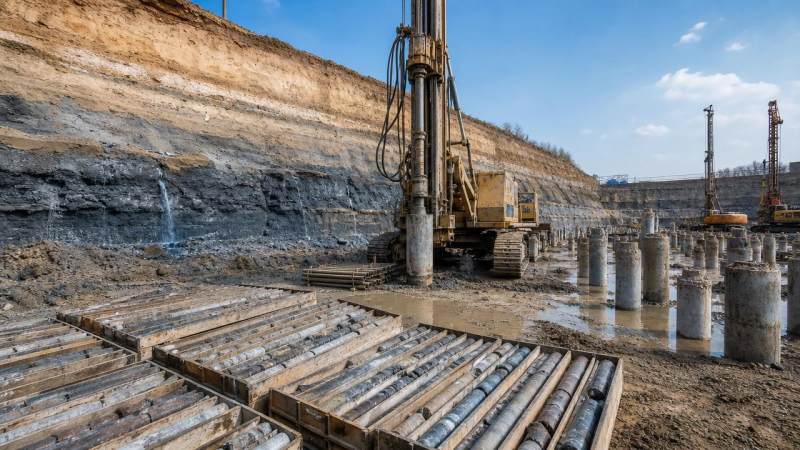
In foundation procurement, overlooking geotechnical engineering red flags can distort bids, inflate risk, and trigger costly change orders. For buyers evaluating contractors, site data is more than a technical appendix—it is a pricing signal that shapes scope, contingency, and constructability. This article highlights the warning signs that most directly affect foundation bids, helping procurement teams compare proposals with greater confidence and fewer surprises.
Why geotechnical engineering red flags matter more in today’s bid environment
Foundation bidding has changed. Across infrastructure, industrial plants, logistics parks, energy facilities, and transport corridors, procurement teams are being asked to lock in prices earlier while ground uncertainty remains high. At the same time, contractors are facing tighter margins, more volatile material costs, stricter safety expectations, and greater scrutiny over delivery certainty. In that environment, geotechnical engineering is no longer a specialist input that stays buried in the design file. It has become a front-end commercial signal that directly affects bid spread, exclusions, contingency loading, and post-award claims behavior.
The practical implication is clear: when subsurface conditions are incomplete, inconsistent, or difficult to interpret, bidders rarely respond the same way. Some price aggressively and rely on qualifications. Others build in heavy risk premiums. The result is not just uneven pricing but poor comparability. For procurement professionals, the most important question is often not which bid is cheapest, but which assumptions about the ground are driving the difference.
The market signals showing a shift in foundation bid risk
Several industry signals explain why geotechnical engineering red flags are moving higher on procurement agendas. First, many projects are entering denser urban sites or more geologically variable corridors where legacy records are incomplete. Second, owners are accelerating tender schedules, sometimes issuing packages before interpretive geotechnical reports are mature. Third, foundation systems themselves are becoming more performance-sensitive as projects seek taller structures, heavier equipment pads, deeper excavations, or lower embodied carbon through optimized designs. Fourth, digital modeling and remote site investigation tools are improving visibility, but they also expose inconsistencies more quickly. Buyers now see, earlier than before, where the data gaps are.
For portals and intelligence-led platforms such as TF-Strategy, this shift aligns with a broader heavy-industry pattern: physical parameters drive strategic outcomes. Whether the subject is a TBM crossing mixed ground, a crawler crane bearing on temporary working platforms, or a mining facility built on variable fill, subsurface intelligence influences cost, schedule, and safety simultaneously. Procurement teams that treat geotechnical engineering as a decision input rather than a compliance document are better positioned to avoid false savings.
The red flags that most often distort foundation bids
Not every geotechnical issue has the same commercial weight. Buyers should focus on the red flags that change means, methods, quantities, or risk transfer. These are the conditions that most often lead to bid divergence and downstream disputes.
- Sparse borehole coverage relative to site size, structural load concentration, or terrain variability.
- Conflicting logs, unusual variability between adjacent borings, or unexplained changes in stratigraphy.
- Groundwater data that is seasonal, outdated, or collected during abnormal weather conditions.
- Evidence of uncontrolled fill, buried obstructions, former industrial use, or undocumented utilities.
- Weak layers, collapsible soils, highly plastic clays, peat, karst, boulders, or mixed-face conditions.
- Limited laboratory testing, especially where settlement, aggressivity, permeability, or shear strength govern design.
- A factual report without a clear interpretive model linking data to likely construction behavior.
- Foundation recommendations that appear generic, copied, or disconnected from actual structural loading.
Each of these red flags affects geotechnical engineering judgment in a different way, but the commercial outcome is similar: bidders must make assumptions. Once assumptions replace verified ground understanding, bid alignment deteriorates.
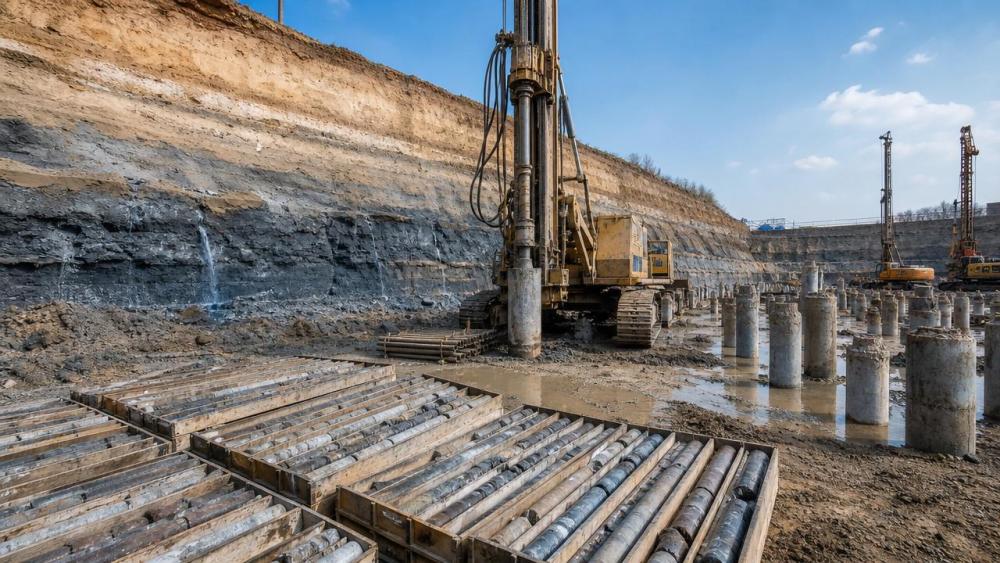
A practical trend table for procurement review
The table below summarizes how common geotechnical engineering warning signs are being interpreted in today’s bid market and why they matter during contractor evaluation.
Why these red flags are becoming more expensive
The cost of geotechnical engineering uncertainty is rising because the consequences now cascade through more parts of the project. A groundwater miss can affect excavation support, haul roads, crane access, concrete placement windows, and environmental compliance. Unexpected rock strength or obstruction frequency can change drilling tools, productivity assumptions, spoil handling, and maintenance cycles. On industrial or heavy-equipment sites, bearing performance can influence not only permanent foundations but also assembly yards and temporary lifting platforms.
There is also a contractual reason. Owners increasingly seek lump-sum certainty, while contractors push back when subsurface data quality is weak. That tension often appears in qualifications hidden in bid clarifications, exception schedules, and unit-rate backstops. Procurement teams that fail to read these geotechnical engineering signals may award to a lower initial number that later proves commercially unstable.
How different bidders react to the same geotechnical engineering data
One of the most useful procurement insights is that geotechnical engineering red flags do not produce a single market response. Specialist foundation contractors, general contractors, and design-build teams may interpret identical site data very differently based on fleet capability, local experience, balance sheet strength, and claims appetite.
A contractor with strong piling expertise may see variable strata as manageable but price higher for casing wear or rig standby. Another contractor may avoid deep foundation risk by qualifying the design or excluding obstruction handling. A design-build bidder may propose an alternative foundation system to reduce exposure, while a traditional bidder may simply insert a broader contingency. This is why evaluation should go beyond bid totals and ask: what ground model is each bidder actually pricing?
The procurement checkpoints that reveal hidden risk early
In a trend environment where subsurface uncertainty is translating into sharper bid behavior, buyers need a more disciplined review framework. The aim is not to turn procurement into a geotechnical design office. It is to identify where commercial comparison is unreliable unless assumptions are normalized.
- Check whether bidders used the same groundwater elevation, excavation stability assumptions, and founding depth ranges.
- Review exclusions related to rock excavation, dewatering, disposal classification, obstruction removal, and contaminated spoil.
- Ask whether proposed construction methods depend on unverified ground continuity or access conditions.
- Confirm if temporary works pricing reflects actual site constraints, not generic productivity norms.
- Separate design optimization from underpricing; some alternatives are valid innovations, others are risk deferrals.
These checkpoints are especially important in sectors linked to heavy civil and energy infrastructure, where foundation performance affects later installation of major equipment. A low foundation bid can become very expensive if it disrupts lifting sequences, commissioning milestones, or logistics windows for high-value machinery.
What is changing in geotechnical engineering expectations from owners
Owner expectations are also evolving. Many procurement teams now expect geotechnical engineering information to support not only design adequacy but bid transparency. That means better factual coverage, clearer interpretive narratives, and explicit statements of uncertainty. The strongest tender packages increasingly distinguish between confirmed conditions, inferred zones, and contractor-assumed scenarios. This is a healthier market practice because it reduces the temptation to push ambiguity downstream.
At the same time, digital collaboration is raising the standard for pre-award review. When borehole logs, laboratory data, terrain models, and utility records are easier to cross-reference, inconsistent assumptions stand out faster. Procurement professionals do not need to master every technical detail, but they do need the discipline to ask why one bidder sees routine conditions while another sees extraordinary risk.
A decision table for buyers comparing foundation bids
The following table can help procurement teams turn geotechnical engineering observations into practical bid review actions.
Where procurement teams should focus next
Looking ahead, the best response is not simply to demand more data in every case. It is to demand the right geotechnical engineering data for the commercial decision being made. On some sites, a few targeted additional borings near critical load zones may reduce uncertainty more effectively than a broad but shallow campaign. On others, groundwater monitoring, geophysics, or better interpretation of existing logs may deliver greater value. The key is to connect investigation scope with bid-critical risk.
Procurement teams should also coordinate earlier with design, construction, and operations stakeholders. Foundation risk does not stop at excavation. It can affect equipment alignment, vibration performance, maintenance access, and future expansion. In complex industrial settings, geotechnical engineering decisions influence the reliability of the whole asset, not just the footing detail.
FAQ for buyers reviewing geotechnical engineering risk
Does more geotechnical data always lead to lower bids?
Not always. Better geotechnical engineering data may reveal harder conditions and raise pricing. But it usually improves bid comparability and reduces claim-driven uncertainty later, which is often more valuable than a lower headline number.
What is the most underestimated red flag?
In many projects, it is not a dramatic soil anomaly but an incomplete interpretive model. When data exists but is not translated into likely construction behavior, bidders fill the gap with their own assumptions, and pricing becomes inconsistent.
How should buyers respond to a very low bid?
Use geotechnical engineering assumptions as a verification tool. Ask the bidder to state founding levels, groundwater basis, obstruction expectations, temporary works approach, and any excluded conditions. If those assumptions differ materially from peers, the low price may not represent the same scope.
Final judgment signals before award
The strongest procurement decisions come from recognizing that geotechnical engineering red flags are not only technical issues; they are market signals. They reveal where price certainty is weak, where schedule resilience may be overstated, and where risk transfer language could fail under real site conditions. In the current bid environment, buyers should pay closest attention to incomplete site characterization, ambiguous groundwater interpretation, hidden temporary works exposure, and bid qualifications that quietly reassign subsurface risk.
If your team wants to judge how these trends affect a live tender, focus on four questions: Which ground assumptions are fixed, which are inferred, which are excluded, and which could change construction method? Those answers will do more to improve foundation bid decisions than price comparison alone. For organizations tracking heavy civil, mining, tunneling, and large-equipment infrastructure, that kind of geotechnical engineering discipline is becoming a competitive procurement capability rather than a technical afterthought.
Related News
 Sep 22, 2026How to Evaluate a High-Altitude Mining Solutions Manufacturer for Remote ProjectsEvaluate a high-altitude mining solutions manufacturer with proven derating, cooling, service logistics, and lifecycle-cost support for remote projects.
 Sep 21, 2026Industrial Supplier Evaluation: A Risk-Based Scorecard for Quality, Capacity, and DeliveryIndustrial supplier evaluation made practical: use a risk-based scorecard to assess quality, capacity, and delivery reliability, reduce project risk, and select suppliers with confidence.
 Sep 20, 2026Comparing Heavy Equipment Warranty Suppliers: Coverage, Claims, and Downtime RiskSupplier comparison for heavy equipment warranty: evaluate coverage, claims speed, service networks, and downtime risk to protect uptime and project costs.
 Sep 19, 2026Mining Truck Technology Trends: What Fleet Managers Should Prioritize for 2026Mining truck technology trends for 2026: prioritize electrification, autonomy, predictive maintenance, and road intelligence to improve fleet uptime, safety, and cost control.



Ms. Elena Rodriguez
Weekly Insights
Stay ahead with our curated technology reports delivered every Monday.