
Why tunnel boring machine slurry problems escalate underground
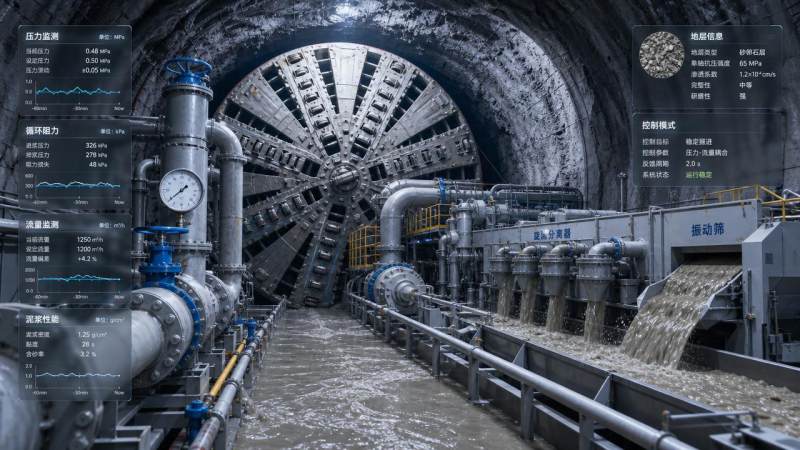
When a tunnel boring machine faces slurry instability underground, minor pressure shifts can quickly turn into cutter wear, blocked circulation, reduced advance rates, and costly downtime. For operators and field users, understanding why slurry problems escalate is essential to maintaining face support, protecting equipment, and keeping excavation safe, efficient, and predictable in complex ground conditions.
Why slurry problems are becoming a bigger operational risk
Across urban tunneling, mountain crossings, utility corridors, and mixed-ground drives, slurry instability is no longer viewed as a minor maintenance issue. It has become a strategic operating risk for every tunnel boring machine working below groundwater level or in variable geology. The change is driven by a clear industry pattern: projects are moving into denser cities, deeper alignments, tighter environmental limits, and more geologically inconsistent ground. Under these conditions, slurry circuits must do more than transport spoil. They must stabilize the face, protect tools, manage pressure, and keep the entire tunnel boring machine within a narrow operating window.
For operators, this means slurry problems escalate faster than they used to. A pressure reading that looks only slightly abnormal can signal face imbalance, poor separation efficiency, recirculated fines, rising torque, and a growing risk of clogging. In older project settings, crews might have had more tolerance for interruptions or manual correction. Today, faster schedules, stricter settlement controls, and more instrumented jobs leave far less room for slurry instability to develop unnoticed.
This shift matters because the tunnel boring machine is now expected to deliver not only excavation progress, but also predictable risk control. Slurry behavior directly affects that expectation. Once the underground environment starts amplifying a slurry imbalance, the machine, the crew, and the surrounding ground all begin to respond at the same time.
The trend signals operators are seeing in the field
Field users increasingly report a similar sequence of warning signs before a larger disruption appears. These signals are operationally small at first, but they rarely stay isolated for long. On a modern tunnel boring machine, underground slurry issues often build through interaction rather than through one single failure point.
The important operational trend is that these signs now appear earlier in more projects. A tunnel boring machine advancing through interbedded sand, clay, gravel, weathered rock, or fractured water-bearing zones is especially sensitive. Instead of a stable slurry circuit for long sections, crews often face repeated adjustment cycles. That increases the need for continuous judgment at the operator level, not just engineering review after a stoppage.
Why slurry instability escalates so quickly underground
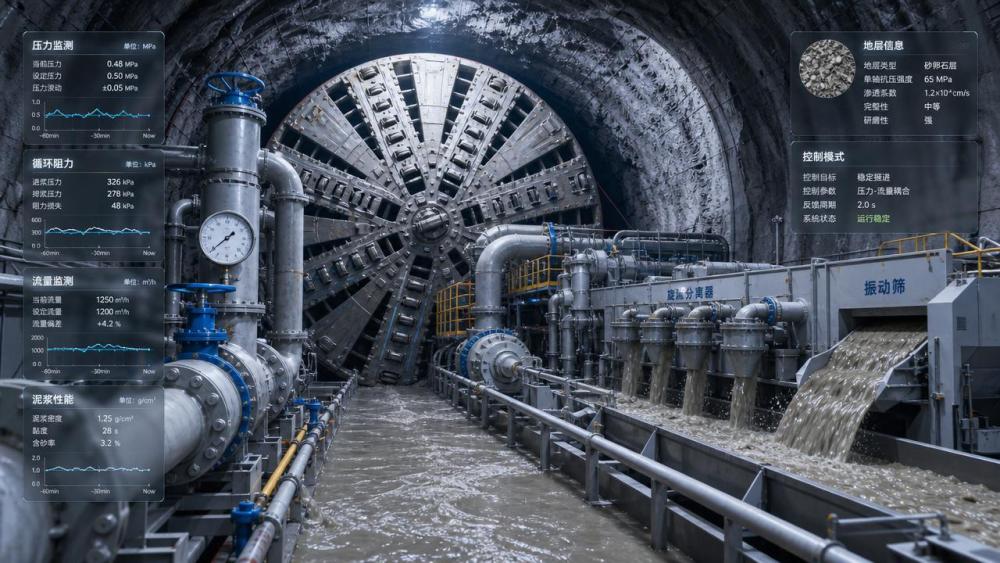
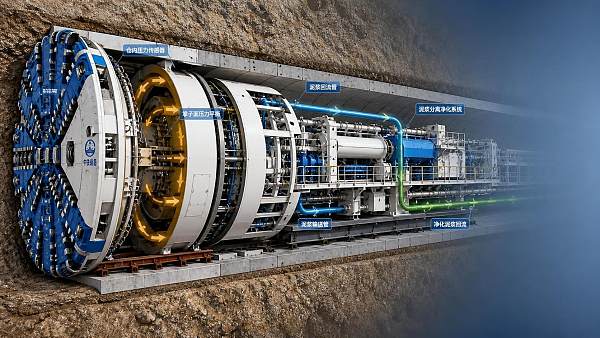
The underground environment magnifies every imbalance because a slurry tunnel boring machine works as a connected system. Face support pressure, chamber behavior, slurry density, spoil transport, separation plant efficiency, and pump performance are not independent. If one part drifts, the rest respond almost immediately. That is why slurry problems often seem to accelerate instead of progressing slowly.
The first driver is confinement. Underground, the tunnel boring machine cannot simply spread risk across open space. Pressure must be maintained in a closed and changing geological envelope. If slurry density falls too low, the face may lose support. If it rises too high, circulation becomes inefficient and spoil transport suffers. Small deviations are therefore amplified by the physical limits of the excavation chamber and pipe network.
The second driver is geology transition. Mixed-face conditions, cobbles, fractured zones, soft-hard interfaces, and high groundwater inflow alter slurry behavior rapidly. A tunnel boring machine may be tuned for one section and then enter another where particle size distribution, water chemistry, or abrasiveness changes within a few rings. Operators often experience this as a sudden mismatch between expected and actual chamber response.
The third driver is recirculation of fines. When separation is incomplete, fine particles stay in the loop. This changes density, rheology, wear patterns, and pump demand. Over time, the slurry no longer behaves like a controlled support medium. It becomes a variable mixture that is harder to predict and harder to correct while the tunnel boring machine remains under production pressure.
The fourth driver is delay in interpretation. Modern systems generate more data, but more data does not always mean faster decisions. If crews see pressure, flow, torque, and density shifts as separate alerts rather than linked symptoms, the response comes late. By then, the tunnel boring machine may already be consuming tools faster, losing penetration, or approaching a blockage event.
What is changing in project conditions and why operators should care
The operating environment around the tunnel boring machine is changing in ways that directly raise slurry sensitivity. Urban tunneling now frequently passes below active roads, rail assets, utilities, buildings, and environmentally protected zones. Surface tolerance for settlement or fluid loss is extremely low. As a result, slurry control is no longer only a production issue. It is a compliance, safety, and stakeholder issue as well.
At the same time, project owners expect higher machine utilization and tighter schedules. This creates a practical tension. Crews are asked to sustain advance rates while ground conditions become less forgiving. In that environment, operators may feel pressure to keep the tunnel boring machine moving despite early slurry warning signs. Yet many of the most expensive stoppages start with exactly that choice: treating a developing circulation problem as a temporary nuisance instead of a systems issue.
There is also a technology shift. More tunnel boring machine platforms now include richer sensor packages, remote monitoring, and integrated diagnostics. This is positive, but it changes the skill requirement. Operators must increasingly interpret trends, not just react to alarms. The competitive advantage on site is moving toward crews who can connect slurry data to geology, machine behavior, and separator performance in real time.
The main drivers behind escalating slurry problems
Several drivers are pushing slurry instability from a technical concern into a broader operational trend. These drivers affect not only tunnel boring machine performance, but also maintenance planning, consumable cost, and project predictability.
Who feels the impact most when slurry performance deteriorates
The effects of slurry instability spread far beyond the chamber. For tunnel boring machine users, the most visible result may be reduced advance rate, but the deeper impact touches multiple roles and business decisions.
Operators face the immediate burden. They must manage unstable parameters, changing face conditions, and production expectations at the same time. Maintenance teams feel the next wave through accelerated wear, blocked pipelines, separator overload, and unplanned interventions. Project managers then experience the schedule effect, because intermittent slurry issues rarely stay intermittent; they accumulate into lost shifts and reduced predictability. Commercial teams see the final impact in higher consumable spend, rising repair cost, and reduced confidence in delivery milestones.
This is why the tunnel boring machine slurry question has become more strategic in recent years. It links field operations directly to project economics. A job with frequent slurry corrections may still appear technically manageable, yet its hidden cost profile can deteriorate quickly if those corrections are reactive rather than systematic.
What good crews are doing differently now
The most effective tunnel boring machine teams are changing their approach in three ways. First, they treat slurry performance as a predictive signal, not a downstream symptom. Instead of waiting for a blockage, they track linked changes in face pressure, line velocity, separator behavior, and wear trends. Second, they shorten the feedback loop between geology observations and slurry adjustments. A mixed-ground section is not handled with yesterday’s settings simply because the machine was stable two rings earlier. Third, they make separator performance part of front-end decision making. If the separation plant is underperforming, the chamber and pumps will eventually show it.
Another emerging practice is cross-role interpretation. The tunnel boring machine operator, slurry engineer, maintenance lead, and geotechnical staff must read the same pattern together. Escalation often occurs when each role sees only its own symptom: the operator sees pressure drift, maintenance sees wear, and the plant crew sees dirty returns. The strongest sites connect these signs early and act before circulation quality collapses.
Practical judgment points for the next phase of TBM operations
Looking ahead, users of any tunnel boring machine working in slurry mode should watch for a few decision signals. If geology becomes more variable ahead of the face, expect the acceptable operating window to narrow. If recirculated fines begin to rise, do not assume the issue is only at the plant; review the full circuit and chamber response. If cutter wear increases unexpectedly, question whether slurry transport and separation are allowing abrasive material to stay in the system too long. If advance rate falls while energy demand rises, treat that as a system warning rather than a production inconvenience.
For contractors and field leaders, the practical direction is clear: build decision routines around trend recognition, not just emergency correction. A tunnel boring machine performs best when slurry is managed as a dynamic control medium tied to geology, machine load, and spoil handling quality. That means setting clearer thresholds for intervention, improving communication between face and plant teams, and reviewing whether current monitoring actually supports fast operator judgment.
FAQ: what operators often ask about escalating slurry issues
Why can a small slurry change create a major tunnel boring machine stoppage?
Because the slurry circuit is interconnected. A small density or pressure change can alter face support, spoil transport, pump load, and separator efficiency at the same time. Underground, there is very little buffer before one issue reinforces another.
Is the main cause usually bad slurry chemistry or difficult ground?
Usually it is the interaction between them. Difficult ground exposes weaknesses in slurry conditioning, circulation control, and separation. On a tunnel boring machine, escalation often comes from a mismatch between the actual formation and the operating setup.
What is the most useful early warning sign?
Not one single parameter, but a pattern: unstable face pressure combined with slower circulation, rising wear, or poorer discharge quality. The tunnel boring machine tells the story through linked changes, not isolated numbers.
A grounded action perspective for users and project teams
The direction of the industry is clear: slurry control is moving from a support function to a central performance discipline for the tunnel boring machine. As projects become deeper, denser, and less tolerant of disruption, slurry problems will continue to escalate faster when crews rely on delayed correction. The better response is to read slurry behavior as an early strategic signal of ground change, equipment stress, and process imbalance.
If your team wants to judge how this trend affects current or upcoming drives, focus on a few core questions: Are slurry and geology data being interpreted together? Are separation limits visible before wear and blockage appear? Are intervention thresholds defined clearly enough for operators? And does the tunnel boring machine team have a shared view of what “stable” really means in changing ground? Those are the questions that turn slurry management from reactive troubleshooting into stronger underground control.
Related News
 Sep 22, 2026How to Evaluate a High-Altitude Mining Solutions Manufacturer for Remote ProjectsEvaluate a high-altitude mining solutions manufacturer with proven derating, cooling, service logistics, and lifecycle-cost support for remote projects.
 Sep 21, 2026Industrial Supplier Evaluation: A Risk-Based Scorecard for Quality, Capacity, and DeliveryIndustrial supplier evaluation made practical: use a risk-based scorecard to assess quality, capacity, and delivery reliability, reduce project risk, and select suppliers with confidence.
 Sep 20, 2026Comparing Heavy Equipment Warranty Suppliers: Coverage, Claims, and Downtime RiskSupplier comparison for heavy equipment warranty: evaluate coverage, claims speed, service networks, and downtime risk to protect uptime and project costs.
 Sep 19, 2026Mining Truck Technology Trends: What Fleet Managers Should Prioritize for 2026Mining truck technology trends for 2026: prioritize electrification, autonomy, predictive maintenance, and road intelligence to improve fleet uptime, safety, and cost control.

Geological Boring Fellow
Weekly Insights
Stay ahead with our curated technology reports delivered every Monday.