
Heavy equipment resale value drops for reasons owners overlook
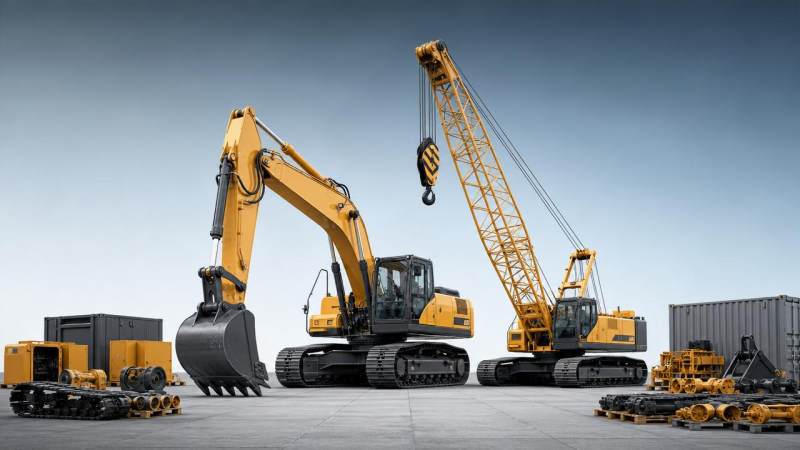
Why does heavy equipment lose resale value faster than expected, even when service records look solid? For business valuation professionals, the answer often lies beyond age and hours. Overlooked factors such as specification mismatch, market timing, maintenance quality, and regional demand can quietly erode asset worth. This article highlights the hidden drivers behind resale declines to support sharper valuation, disposal, and investment decisions.
What resale value really means in heavy equipment analysis
In business valuation, resale value is not simply the price a seller hopes to achieve. It is the market’s current judgment about future usefulness, operating risk, compliance viability, transport practicality, and buyer confidence. In the heavy equipment sector, that judgment can shift quickly because assets are expensive, technically complex, and closely tied to project cycles in mining, tunneling, lifting, and road construction.
This is why heavy equipment often behaves differently from light commercial assets. A machine may appear strong on paper, with acceptable age, documented repairs, and reasonable operating hours, yet still trade below expectations. For valuation professionals, the key issue is that depreciation in heavy equipment is rarely driven by one variable. It is shaped by a combination of technical specification, local demand, lifecycle reputation, rebuild quality, emissions rules, and the timing of disposal.
For sectors followed closely by TF-Strategy—such as TBM systems, ultra-large excavators, crawler cranes, road machinery, and mining dump trucks—resale outcomes can also be linked to strategic infrastructure trends. A machine aligned with current project demand may hold value well, while a highly capable but narrowly configured asset can weaken rapidly if the market changes.
Why the industry pays close attention to hidden value loss
Heavy equipment represents tied-up capital, financing exposure, insurance consideration, and replacement planning. A lower-than-expected resale number affects more than a single transaction. It changes fleet net worth, borrowing capacity, impairment assumptions, lease-end negotiations, and the economics of equipment rotation. For valuation teams, missed drivers of decline can distort reports and weaken investment decisions.
The current industry environment makes this even more important. Global infrastructure spending is uneven across regions. Mining cycles remain sensitive to commodity prices. Green transition policies are changing engine preferences. Remote-control technology, electrification, and digital diagnostics are improving some asset classes while making older configurations less desirable. In that setting, heavy equipment value must be judged not only by physical condition but also by market relevance.
Owners often focus on what they can easily see: paint, undercarriage wear, recent servicing, or major component replacements. Buyers and appraisers, however, increasingly price in hidden commercial realities. A machine that is operationally sound may still be difficult to place if it no longer fits common project standards or buyer financing preferences.
The overlooked reasons heavy equipment resale value drops
Several factors repeatedly reduce heavy equipment resale value, yet owners tend to underestimate them during holding and disposal planning.
Specification mismatch with the active market
A machine can be technically impressive and still be commercially misaligned. Oversized booms, uncommon attachments, special track shoes, customized controls, or unusual transport dimensions may have suited the original project, but they narrow the buyer pool later. In heavy equipment markets, liquidity matters almost as much as capability. The more specialized the configuration, the more pricing pressure appears during resale.
Poor timing relative to project and commodity cycles
Mining trucks, excavators, and crawler cranes are highly exposed to project timing. If multiple owners release similar heavy equipment during a market slowdown, auction values can fall quickly. This does not necessarily reflect inferior condition. It reflects temporary oversupply, weak contractor confidence, and constrained financing appetite among buyers.
Maintenance quality, not just maintenance frequency
Service logs are valuable, but sophisticated buyers look deeper. They ask who performed the work, whether parts were OEM or lower-grade alternatives, whether contamination trends were monitored, and whether repairs solved root causes or only symptoms. In heavy equipment, poor repair practices can remain hidden until inspection, then sharply discount the price. A thick file of invoices does not guarantee strong residual value.
Regional compliance and transport barriers
Emissions standards, safety requirements, axle load restrictions, and shipping complexity all influence value. Equipment that moves easily across borders and between projects generally retains broader appeal. Heavy equipment that requires costly modification, complex disassembly, or special permitting often suffers a narrower resale market and lower realized proceeds.
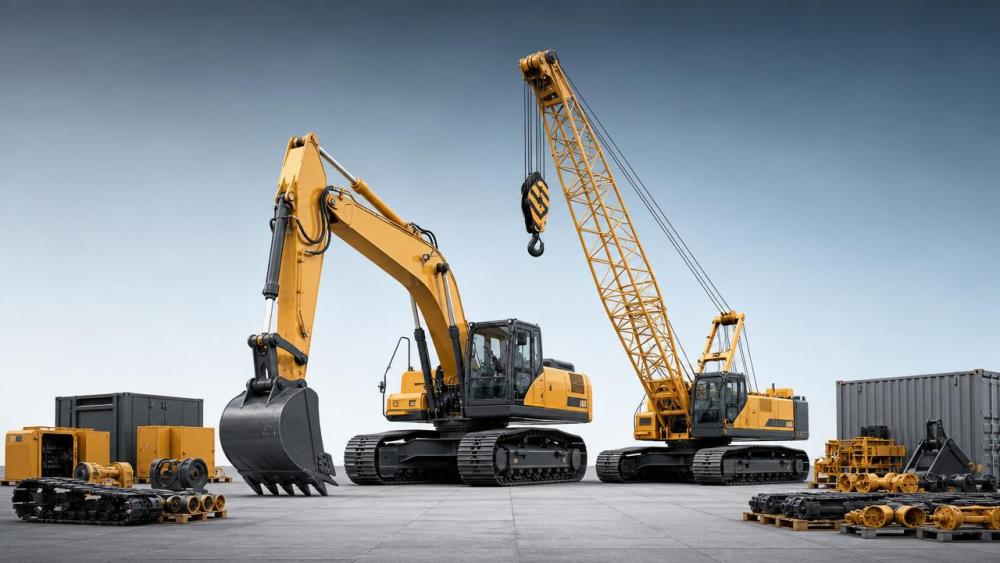
Industry overview: where value pressure is strongest
Not all heavy equipment depreciates for the same reasons. The table below outlines how value pressure commonly appears across key asset groups relevant to global infrastructure and extractive industries.
How overlooked issues affect business valuation professionals
For appraisal and valuation specialists, the practical challenge is separating book assumptions from market behavior. Heavy equipment values are often modeled from age, hours, and baseline condition, but those metrics can hide risk. A machine with moderate hours may have spent its life under severe duty cycles. Another may have low annual use but long idle periods that created hydraulic, electrical, or sealing problems. A third may be structurally fine but unattractive because the configuration no longer fits mainstream contracts.
This means valuation work should include a commercial usability lens. Can the equipment be deployed immediately by the next owner? Does it fit common jobsite requirements? Is there demand in more than one geography? Can finance providers, insurers, and operators accept it without unusual conditions? These questions often explain price gaps better than a simple physical inspection summary.
In addition, heavy equipment resale value is influenced by information quality. Transparent documentation improves confidence, but inconsistent serial records, undocumented component swaps, and vague rebuild claims create doubt. In the second-hand market, doubt becomes discount. The burden of proof is high because transaction values are large and post-sale failures are expensive.
Typical situations where owners misread resale potential
Some patterns appear repeatedly across sectors. Owners may assume a premium attachment package adds equal resale value, when in reality the next buyer prefers a standard setup. They may believe a recent repaint improves pricing, but buyers give more weight to oil analysis, structural inspection, and electronic fault history. They may also overestimate the benefit of major repairs completed without recognized technical standards or traceable parts sourcing.
Another common mistake is ignoring local market depth. A unit that is attractive in one country may be difficult to sell in another due to engine regulations, operator familiarity, dealer support, or transport cost. Heavy equipment is never valued in a vacuum. The same machine can carry materially different resale outcomes depending on region, season, logistics access, and current infrastructure spending.
A practical framework for stronger heavy equipment valuation
A disciplined approach helps reduce surprises. Valuation professionals can assess heavy equipment through five connected lenses:
1. Technical fit
Review whether the machine’s configuration matches current market demand, not just original operating requirements.
2. Condition credibility
Examine inspection quality, parts traceability, rebuild evidence, and fault history rather than relying only on general service records.
3. Market timing
Compare the disposal window with project cycles, contractor demand, auction supply, and commodity conditions affecting the relevant equipment class.
4. Deployment friction
Consider transport, permitting, emissions compliance, and dealer support. Heavy equipment with lower deployment friction generally commands better liquidity.
5. Strategic relevance
Connect the asset to broader infrastructure trends. Machines aligned with urban tunneling, renewable energy lifting, high-efficiency mining, or digitally managed earthworks may sustain stronger interest than less adaptable units.
Applied recommendations for disposal, reporting, and investment planning
For owners and valuation teams, the best defense against unexpected value loss is earlier preparation. Standardize documentation before a sale process starts. Capture repair evidence in a buyer-friendly format. Record major component life, software updates, calibration status, and inspection results. If the equipment is unusually configured, identify target buyer segments in advance rather than treating the market as universal.
It is also wise to separate value-preserving maintenance from value-creating maintenance. Not every expense improves resale. Some spending only keeps heavy equipment operational for the current owner, while other interventions broaden buyer acceptance. Business valuation professionals should recognize that distinction when reviewing capitalized repairs and forecasting recovery values.
For firms active in cross-border projects, intelligence matters. Monitoring regional tender activity, replacement cycles, and raw material trends can reveal where specific heavy equipment classes are becoming more or less liquid. That strategic perspective is especially relevant in sectors such as open-pit mining, TBM-related works, and mega-lift construction, where market demand is shaped by large infrastructure decisions rather than routine local transactions.
Closing perspective
Heavy equipment loses resale value for many reasons owners overlook because the market evaluates more than condition and age. It prices adaptability, evidence quality, compliance, timing, and confidence. For business valuation professionals, understanding these hidden drivers leads to more reliable appraisals, better disposal strategy, and stronger capital planning.
In a global equipment environment shaped by infrastructure expansion, energy transition, and operational digitization, accurate heavy equipment assessment increasingly depends on informed market intelligence as much as physical inspection. Organizations that combine both are better positioned to protect asset value, negotiate from strength, and make decisions that hold up under real market scrutiny.
Related News
 Sep 22, 2026How to Evaluate a High-Altitude Mining Solutions Manufacturer for Remote ProjectsEvaluate a high-altitude mining solutions manufacturer with proven derating, cooling, service logistics, and lifecycle-cost support for remote projects.
 Sep 21, 2026Industrial Supplier Evaluation: A Risk-Based Scorecard for Quality, Capacity, and DeliveryIndustrial supplier evaluation made practical: use a risk-based scorecard to assess quality, capacity, and delivery reliability, reduce project risk, and select suppliers with confidence.
 Sep 20, 2026Comparing Heavy Equipment Warranty Suppliers: Coverage, Claims, and Downtime RiskSupplier comparison for heavy equipment warranty: evaluate coverage, claims speed, service networks, and downtime risk to protect uptime and project costs.
 Sep 19, 2026Mining Truck Technology Trends: What Fleet Managers Should Prioritize for 2026Mining truck technology trends for 2026: prioritize electrification, autonomy, predictive maintenance, and road intelligence to improve fleet uptime, safety, and cost control.

Ms. Elena Rodriguez
Weekly Insights
Stay ahead with our curated technology reports delivered every Monday.