
Open-pit mining expansion plans hinge on haul road reality
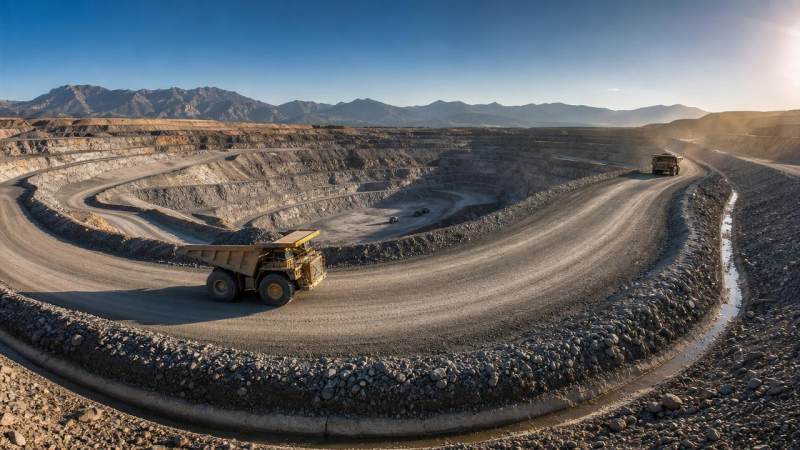
Open-pit mining expansion may look straightforward on paper, but haul road performance often determines whether output targets, cost control, and equipment utilization can truly scale. For decision-makers, understanding road geometry, gradient limits, maintenance burden, and truck-cycle efficiency is essential to turning expansion plans into reliable operational gains.
For enterprise leaders evaluating open-pit mining growth, a checklist-based approach is more useful than a broad strategic discussion. Expansion plans often fail not because reserves are insufficient or trucks are undersized, but because haul roads become the hidden bottleneck between the loading face, dump point, crusher, and workshop. A practical review should therefore begin with what can be measured, stressed, and improved: road width, gradient, turning radius, drainage, rolling resistance, maintenance intervals, and the effect of all these variables on cycle time.
Why haul road reality must be checked before approving open-pit mining expansion
In large-scale open-pit mining, every added bench, shovel, and dump truck depends on a road network that can absorb higher traffic volume without pushing safety risk and operating cost out of control. Decision-makers should view haul roads as productive assets, not just supporting infrastructure. If the road system cannot sustain target payloads at planned speeds, production forecasts become theoretical.
A strong haul road review helps answer five board-level questions: Can output rise without forcing truck derating? Will fuel burn increase faster than tonnage? Can tire life remain acceptable? Will maintenance crews keep up during wet seasons? And can the mine avoid congestion as pit depth increases? These are not small operational details. They directly affect capital efficiency, unit cost, and project credibility.
Priority checklist: what to confirm first in open-pit mining road planning
Before approving any expansion package, executives should require a concise road-readiness checklist. The following items are the minimum screening standard for serious open-pit mining planning:
- Confirm whether current haul road width matches the truck fleet mix, including passing, berm allowance, and shoulder stability rather than nominal design width alone.
- Check sustained gradient, not just peak gradient. A short steep segment may be manageable, but long uphill ramps can sharply reduce loaded speed and increase engine and brake stress.
- Measure rolling resistance by road segment and season. Expansion economics should reflect actual road condition, not laboratory assumptions.
- Review intersection design, queue points, and dump area circulation to identify non-obvious delays in truck cycles.
- Assess drainage performance, especially under storm events, freeze-thaw conditions, or fine-material contamination.
- Verify maintenance resource capacity, including graders, water trucks, compaction assets, and material availability for wearing course replacement.
- Compare road design assumptions with OEM guidance for truck payload, speed, braking limits, and tire operating conditions.
- Stress-test future traffic density after expansion instead of evaluating today’s traffic volume only.
If even two or three of these checks fail, the expansion case in open-pit mining should be revised before additional fleet capital is committed.
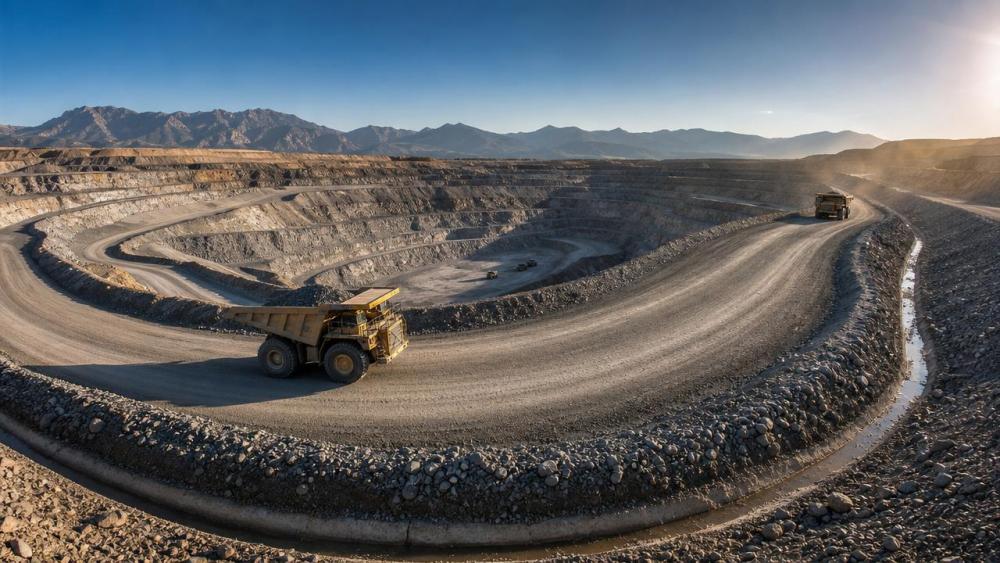
Core judgment standards: how to tell whether the haul road can support growth
The most effective way to review road readiness is to use judgment standards that connect engineering details to business outcomes. The table below summarizes the key dimensions executives should request from mine planning and operations teams.
Scenario-based checks for different open-pit mining expansion paths
Not all open-pit mining expansions create the same road pressure. Decision-makers should distinguish between at least three common scenarios.
1. Deeper pit development
As pit depth increases, haul distances and sustained uphill travel usually rise together. This means the road issue is not only road condition but also haulage energy intensity. Ask whether the cycle time model includes speed loss at altitude, temperature-related engine performance, and brake cooling requirements on return routes. In deeper pits, even small increases in rolling resistance can erase expected productivity gains.
2. Higher production from the same fleet class
If the plan is to move more material with the same truck type, the road network must support higher utilization without faster deterioration. In this case, priority checks include traffic congestion, overtaking restrictions, and how often graders must intervene. The key question is whether the road can carry more cycles per day without creating a hidden maintenance backlog.
3. Fleet upsizing or electrification
When open-pit mining operators shift to larger trucks or battery-electric platforms, road assumptions often become outdated. Larger fleets require stricter turning design and better surface consistency. Electric trucks may change speed behavior, charging logistics, and regeneration profiles on downhill sections. The road review must therefore be integrated with energy strategy and dispatch planning, not treated as a separate civil matter.
Common blind spots that weaken expansion returns
Many expansion studies in open-pit mining are technically competent yet commercially optimistic because they overlook recurring road constraints. The most common blind spots include:
- Using design speed instead of achievable speed under loaded, wet, or congested conditions.
- Treating road maintenance as a fixed support cost rather than a variable cost that scales with tonnage and climate stress.
- Ignoring the compounding effect of poor drainage on rolling resistance, tire damage, and rehandling delays.
- Assuming crusher, dump, and road upgrades can be staged independently without throughput penalties.
- Overlooking the interaction between operator behavior, dispatch controls, and road wear patterns.
- Failing to align mine plan sequencing with the practical time needed to build, widen, or rehabilitate ramps.
For executives, these blind spots matter because they do not appear immediately in reserve models, yet they quickly show up in cost per tonne, tire budgets, and missed production guidance.
Execution checklist: what management teams should request before approval
A decision-ready open-pit mining expansion package should include more than a high-level ramp-up narrative. Management teams should request the following evidence before releasing capital:
- A route-by-route haul road map showing current and planned geometry, traffic density, critical bottlenecks, and seasonal risk areas.
- A truck-cycle model built on measured road resistance and realistic loading, waiting, travel, and dumping times.
- A maintenance plan covering grading frequency, material consumption, drainage cleaning, dust control, and equipment availability.
- A sensitivity analysis showing how fuel, tire life, and productivity change if road condition degrades by a defined margin.
- A safety review focused on berm adequacy, visibility, curve management, interaction with light vehicles, and emergency response access.
- A phased implementation schedule that links road works to pit advance, fleet arrival, and production milestones.
This checklist is especially useful for board members, CFOs, operations directors, and procurement leaders who need to challenge assumptions without becoming buried in technical detail.
How TF-Strategy frames the decision for enterprise leaders
For a platform such as TF-Strategy, the value lies in connecting equipment capability, road engineering, and strategic execution. In open-pit mining, haul roads are where machine specification meets operational reality. A truck’s nominal payload, a shovel’s loading rate, and a mine’s expansion target only create value if road conditions allow those systems to work together at scale.
This is why decision-makers should compare OEM limits, site conditions, and expansion sequencing as one integrated system. Intelligence on truck performance, road machinery support, and mine logistics should not be reviewed in isolation. The strongest projects are those that recognize road capacity as a strategic lever for TCO reduction, productivity stability, and safer growth.
Final action guide for open-pit mining expansion
If your organization is preparing an open-pit mining expansion, the first practical step is to separate reserve optimism from road reality. Start by validating the haul network against actual truck performance, weather exposure, maintenance capability, and future traffic demand. Then test whether projected gains still hold when road condition is modeled conservatively rather than ideally.
If further validation is needed, management should prioritize discussions around these points: required road width and gradient limits by truck class, expected cycle-time changes at greater pit depth, drainage and surface material strategy, annual road maintenance cost under expansion load, bottleneck locations, and the timeline for road works relative to production targets. Those questions will do more to protect expansion returns than any headline tonnage forecast alone.
Related News
 Sep 22, 2026How to Evaluate a High-Altitude Mining Solutions Manufacturer for Remote ProjectsEvaluate a high-altitude mining solutions manufacturer with proven derating, cooling, service logistics, and lifecycle-cost support for remote projects.
 Sep 21, 2026Industrial Supplier Evaluation: A Risk-Based Scorecard for Quality, Capacity, and DeliveryIndustrial supplier evaluation made practical: use a risk-based scorecard to assess quality, capacity, and delivery reliability, reduce project risk, and select suppliers with confidence.
 Sep 20, 2026Comparing Heavy Equipment Warranty Suppliers: Coverage, Claims, and Downtime RiskSupplier comparison for heavy equipment warranty: evaluate coverage, claims speed, service networks, and downtime risk to protect uptime and project costs.
 Sep 19, 2026Mining Truck Technology Trends: What Fleet Managers Should Prioritize for 2026Mining truck technology trends for 2026: prioritize electrification, autonomy, predictive maintenance, and road intelligence to improve fleet uptime, safety, and cost control.

Ms. Elena Rodriguez
Weekly Insights
Stay ahead with our curated technology reports delivered every Monday.