
Heavy Equipment Market Intelligence in Europe: Key Demand Signals Buyers Should Track
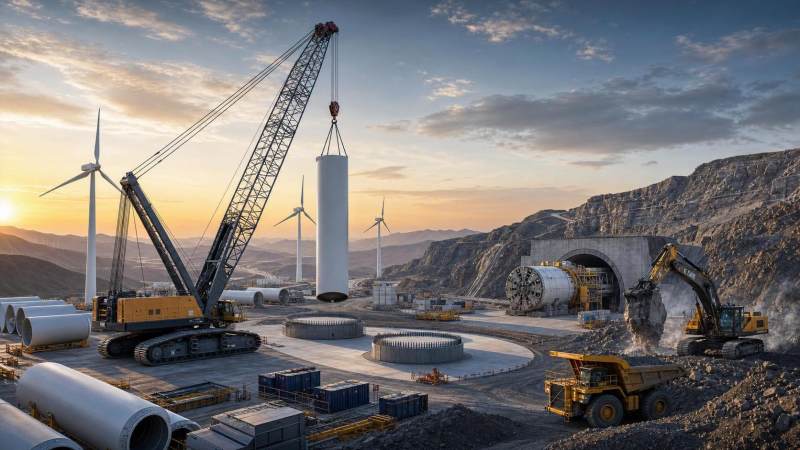
Europe’s equipment cycle is no longer driven by broad construction sentiment alone. In transport tunnels, renewable energy sites, quarries, mines, and highway upgrades, demand now forms around specific project timing, compliance pressure, and operating economics.
That is why heavy equipment market intelligence Europe matters. It helps separate headline activity from bankable demand, especially when orders for TBMs, crawler cranes, mining trucks, excavators, and road machinery depend on financing, permits, grid policy, labor availability, and fleet replacement logic.
For TF-Strategy, this is familiar ground. The platform follows the physical and commercial realities behind earth engineering, linking machine capability, project method, and infrastructure strategy into a clearer demand picture across Europe’s changing industrial landscape.
What market intelligence really means in this segment
In heavy industry, intelligence is not just price tracking or shipment news. It is the disciplined reading of signals that show whether a project is likely to convert into procurement, rental demand, service contracts, or delayed capital expenditure.
In practice, heavy equipment market intelligence Europe combines tender visibility, contractor positioning, fleet age data, emissions regulation, component supply, and end-market funding conditions. The value lies in context, not in isolated data points.
A new rail tunnel announcement matters less if geotechnical work is incomplete. A wind project matters more when crane pads, turbine specifications, and installation schedules are already moving toward execution.
Why Europe deserves close attention now
Europe is a complex demand zone because several transitions are happening at once. Energy security, decarbonization, transport modernization, defense-related logistics, and mining resilience are reshaping where heavy equipment spending concentrates.
The result is uneven but meaningful demand. Some countries are accelerating tunnel, grid, and offshore-linked work. Others are cautious on greenfield investment yet active in rebuilding fleets to meet stricter emissions and safety standards.
This makes heavy equipment market intelligence Europe especially useful for evaluating whether demand is structural, cyclical, or simply temporary. That distinction affects pricing, inventory planning, aftermarket strategy, and long-term entry decisions.
The demand signals that deserve the most weight
Project pipelines with real execution depth
Not all pipelines are equal. Strong signals usually include confirmed funding, named contractors, visible permitting progress, and technical specifications that imply machine class, lifting capacity, haul profile, or tunneling method.
This is especially relevant for TBMs and crawler cranes. Large underground works and heavy lifts need long lead planning, so procurement activity often becomes visible well before equipment mobilization.
Energy transition spending
Wind farms, grid corridors, hydrogen facilities, and selected nuclear programs all influence machine demand. Crawler cranes benefit from larger turbine components, while road machinery and earthmoving fleets support site preparation and transport access.
The useful question is not whether energy transition is growing. It is where spending has reached the stage where equipment hours, maintenance demand, and replacement cycles become measurable.
Fleet renewal and compliance pressure
Europe’s regulatory environment often turns deferred spending into unavoidable replacement. Emissions rules, digital safety systems, operator visibility requirements, and site reporting standards can accelerate retirement of older assets.
That matters even where new project starts are modest. A flat market can still produce equipment demand if aging fleets are no longer economical to keep compliant or productive.
Commodity and quarry activity
Open-pit mining and aggregates remain essential for construction materials and strategic resource supply. Demand for ultra-large excavators and mining dump trucks depends on strip ratios, haul distances, energy costs, and local permitting certainty.
Short-term price spikes alone are not enough. Durable equipment demand appears when operators commit to pit expansion, contract mining, electrification trials, or productivity upgrades tied to multi-year output plans.
How the signal changes by equipment category
Heavy equipment market intelligence Europe becomes more useful when it is segmented. Different machine families respond to different triggers, even when they serve the same macro theme.
This equipment-specific view is central to TF-Strategy’s approach. The same region may look weak in one category and highly attractive in another, depending on project structure and technical requirements.
Where intelligence creates business value
Better timing is the first advantage. Entering too early can lock capital into idle inventory. Entering too late often means thinner margins, fewer service contracts, and weaker negotiating leverage with local partners.
The second advantage is a more realistic total cost picture. Demand is not just about machine purchase volume. It also includes wear parts, cutter head materials, hydraulic systems, remote control upgrades, tires, and field service intensity.
The third is risk filtering. In Europe, nominal demand can be undermined by slow environmental approvals, grid connection delays, labor bottlenecks, or regional political changes. Good intelligence identifies those constraints early.
How to read the market without overreacting to noise
A disciplined review usually works better than a headline-driven one. Several indicators should be checked together before treating any trend as a genuine purchasing signal.
- Track tender progression, not just project announcements.
- Compare machine demand with financing and permitting maturity.
- Watch component lead times for engines, hydraulics, steel structures, and control systems.
- Review local emissions and safety rules that can force fleet renewal.
- Map where rental demand may substitute for outright ownership.
- Check whether electrification interest is pilot-stage or procurement-stage.
This is where heavy equipment market intelligence Europe becomes practical rather than theoretical. It supports scenario testing, market entry sequencing, and category prioritization based on evidence rather than sentiment.
A closer look at the next layer of indicators
Technology adoption
Digital control, remote operation, fleet telemetry, and low-emission drivetrains are no longer side topics. They increasingly shape procurement criteria, especially in mining, tunneling, and high-spec infrastructure delivery.
When TF-Strategy evaluates trends such as 5G remote excavation or electric haulage, the real question is commercial readiness. Technical promise matters less than adoption timing, site suitability, and payback logic.
Aftermarket resilience
In mature European markets, service depth can be as important as original equipment sales. A region with slow new-unit growth may still be attractive if installed fleets are large, aging, and technically demanding.
Cross-border supply dynamics
European demand is interconnected. A project in one country can depend on fabrication, financing, engineering, or transport capacity located elsewhere. That means local readings need a wider continental frame.
What to evaluate next
Useful heavy equipment market intelligence Europe should end in a sharper decision. That may mean ranking countries by conversion probability, comparing equipment classes by margin durability, or identifying which projects deserve deeper monitoring.
A practical next step is to build a signal matrix around three layers: executable projects, compliance-driven fleet renewal, and technology-linked replacement demand. That structure usually reveals where momentum is real and where visibility is still too thin.
For organizations following tunnels, mining, heavy lifting, and road construction, the strongest advantage comes from combining technical reading with commercial discipline. Europe still offers meaningful opportunity, but only for those tracking the right signals with enough depth to act early and selectively.
Related News
 Oct 13, 2026OEM Equipment Suppliers in Europe: Vetting Quality, Lead Times, and SupportCompare OEM equipment Europe suppliers on quality, lead times, and after-sales support. Discover practical vetting steps to reduce downtime and buy heavy equipment with confidence.
 Oct 12, 2026How to Assess a High-Altitude Mining Equipment Manufacturer for Remote ProjectsHigh altitude mining manufacturer assessment guide: compare derating, cold-climate reliability, remote service, parts resilience, and lifecycle risk for smarter project decisions.
 Oct 11, 2026What Drives TBM Cutter Head Material Cost and Life-Cycle Value?Cutter head material cost explained: compare TBM alloys, wear protection, downtime risk, and life-cycle value to choose the most reliable, cost-effective solution.
 Oct 14, 2026When Does Mining Hauling Equipment Need Repair, Rebuild, or Full Overhaul?Mining hauling equipment repair and overhaul market insights: learn when to choose repair, rebuild, or full overhaul to improve safety, uptime, and lifecycle value.


Ms. Elena Rodriguez
Weekly Insights
Stay ahead with our curated technology reports delivered every Monday.