
How to Use a Heavy Equipment Technical Manual for Troubleshooting and Preventive Maintenance
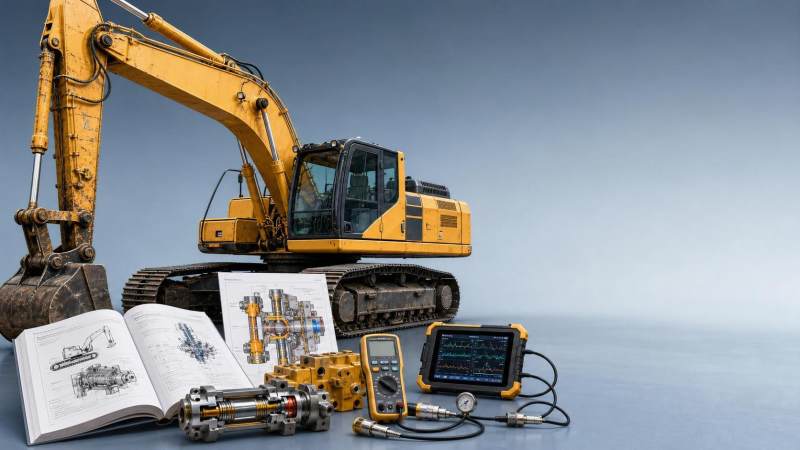
How to Use a Heavy Equipment Technical Manual for Troubleshooting and Preventive Maintenance
For after-sales maintenance work, a heavy equipment technical manual is not just paperwork. It is the quickest route to accurate fault isolation and disciplined preventive maintenance.
When the machine is a TBM, crawler crane, mining truck, or large excavator, guesswork gets expensive very fast. Downtime, repeat failures, and unsafe repairs often start with skipped manual steps.
A good heavy equipment technical manual shows the exact sequence to inspect, test, adjust, and confirm. It also helps teams plan service intervals before a failure interrupts production.
In real field conditions, that matters even more. Harsh dust, long duty cycles, remote sites, and mixed operator habits can hide the true cause of mechanical or hydraulic trouble.
Start with the right section of the heavy equipment technical manual
Many service delays come from reading the wrong chapter first. A heavy equipment technical manual usually separates operation, diagnostics, repair, lubrication, wiring, and scheduled service.
Before touching the machine, confirm four basics:
- Machine model, serial number, and production batch
- Engine, transmission, and hydraulic system variant
- Applicable revision of the heavy equipment technical manual
- Any field modifications, software updates, or component replacements
This step sounds basic, but it prevents a common mistake. Teams often follow a diagnostic flowchart that belongs to a different valve block, sensor range, or control software version.
From a service efficiency standpoint, correct identification is the foundation. Without it, even a detailed heavy equipment technical manual can point a team toward the wrong pressure setting or wiring path.
Read the manual like a troubleshooting map
The most useful parts of a heavy equipment technical manual are usually the symptom tables, fault trees, and diagnostic flowcharts. They are designed to narrow causes in a logical order.
Instead of replacing parts first, match the complaint to the manual language. “Slow boom response,” “abnormal cutterhead vibration,” or “high coolant temperature” should lead the process.
Then move through the checks in sequence. Do not skip directly to the hardest component. Most heavy equipment technical manual procedures start with simple, high-probability causes for a reason.
- Verify the symptom under the same operating condition.
- Check safety locks, visible damage, fluid levels, and alarms.
- Measure actual values against manual specifications.
- Inspect related circuits, hoses, filters, and connectors.
- Only then isolate the suspected component.
That sequence reduces unnecessary parts use. It also improves first-time fix rates, especially in open-pit mining fleets and tunneling projects where replacement logistics are slow and costly.
Use specifications to separate symptoms from root causes
A heavy equipment technical manual is valuable because it turns vague observations into measurable checks. Temperature, pressure, flow, torque, clearance, voltage, and wear limits all matter.
For example, low hydraulic speed does not always mean a weak pump. The heavy equipment technical manual may point to contamination, bypass leakage, incorrect oil viscosity, or a faulty control signal.
The same applies to engine overheating. A manual-guided check may show radiator fouling, fan clutch issues, derated operating logic, or sensor drift before any major teardown is justified.
Use a simple comparison method during diagnosis:
This is where the heavy equipment technical manual becomes a decision tool, not a static document. It gives the numbers needed to prove or eliminate each possible cause.
Turn service intervals into preventive maintenance routines
Troubleshooting is only half the job. A heavy equipment technical manual also defines inspection intervals, lubrication points, fluid grades, filter cycles, and condition-based replacement rules.
In practice, preventive maintenance works best when the manual is translated into a site-specific routine. Duty cycle, altitude, ambient temperature, and material abrasiveness can all shift maintenance priorities.
A useful routine usually includes:
- Daily checks tied to visible wear, leaks, and safety systems
- Weekly checks for fastener torque, filter condition, and hose routing
- Monthly trending of pressures, temperatures, and fluid cleanliness
- Major interval tasks based on engine hours and manual thresholds
This approach is especially relevant for TBM support systems, mining dump trucks, and crawler cranes. These machines often fail progressively, with warning signs appearing long before complete shutdown.
When teams use the heavy equipment technical manual to build repeatable inspections, they catch drift early. That lowers emergency repair frequency and protects component life across high-value assets.
Record findings in the same language as the manual
One overlooked advantage of a heavy equipment technical manual is consistency in reporting. If notes follow manual terminology, the next technician can continue the job without rebuilding the diagnosis.
Write down measured values, test conditions, fault codes, and corrective actions exactly. Avoid vague comments like “checked okay” or “probably electrical.” Those notes rarely help on the second visit.
Better records should capture:
- Operating hours and machine load condition
- Relevant page or section from the heavy equipment technical manual
- Measured values before and after repair
- Parts replaced, adjustments made, and verification result
This discipline creates a stronger service history. Over time, patterns become clearer, especially in fleets facing repeated contamination, heat stress, vibration, or operator-induced overload.
Common mistakes when using a heavy equipment technical manual
Even experienced teams can misuse a heavy equipment technical manual. The problem is usually not the document itself, but how quickly people try to shortcut it under production pressure.
The most common mistakes are:
- Using an outdated heavy equipment technical manual revision
- Ignoring test preconditions such as oil temperature or engine speed
- Skipping baseline checks and replacing expensive parts too early
- Mixing field memory with manual values from another machine series
- Finishing the repair without a final confirmation test
More clearly than before, modern equipment demands precision. Electrified subsystems, smart controls, and remote diagnostics make the heavy equipment technical manual even more central to service quality.
That also means manual literacy is now a practical skill. It affects safety, uptime, warranty compliance, and total cost of ownership across global infrastructure operations.
Build a manual-first maintenance habit
A heavy equipment technical manual works best when it becomes part of daily service behavior, not an emergency reference used only after a major breakdown.
Open the manual before diagnosis begins. Use it again during measurement, adjustment, and final verification. Then bring those findings into the preventive maintenance schedule.
This habit improves troubleshooting speed and keeps maintenance decisions consistent across teams. It also supports better planning for parts, labor, and machine availability.
For complex assets in mining, tunneling, lifting, and road construction, the heavy equipment technical manual remains one of the most practical tools on site. Used properly, it turns service work into a controlled process.
The next time a fault appears or a service interval approaches, start with the heavy equipment technical manual. Read the symptom, follow the sequence, confirm the numbers, and let preventive maintenance do the rest.
Related News
 Oct 13, 2026OEM Equipment Suppliers in Europe: Vetting Quality, Lead Times, and SupportCompare OEM equipment Europe suppliers on quality, lead times, and after-sales support. Discover practical vetting steps to reduce downtime and buy heavy equipment with confidence.
 Oct 12, 2026How to Assess a High-Altitude Mining Equipment Manufacturer for Remote ProjectsHigh altitude mining manufacturer assessment guide: compare derating, cold-climate reliability, remote service, parts resilience, and lifecycle risk for smarter project decisions.
 Oct 11, 2026What Drives TBM Cutter Head Material Cost and Life-Cycle Value?Cutter head material cost explained: compare TBM alloys, wear protection, downtime risk, and life-cycle value to choose the most reliable, cost-effective solution.
 Oct 13, 2026Mining Haulage Services Procurement Checklist for Uptime and Cost ControlMining haulage services procurement checklist for stronger uptime, safer fleet selection, transparent pricing, and better cost control across changing mine conditions.



Ms. Elena Rodriguez
Weekly Insights
Stay ahead with our curated technology reports delivered every Monday.