
How to Choose Equipment for Large-Scale Construction Projects: Capacity, Uptime, and Fleet Fit
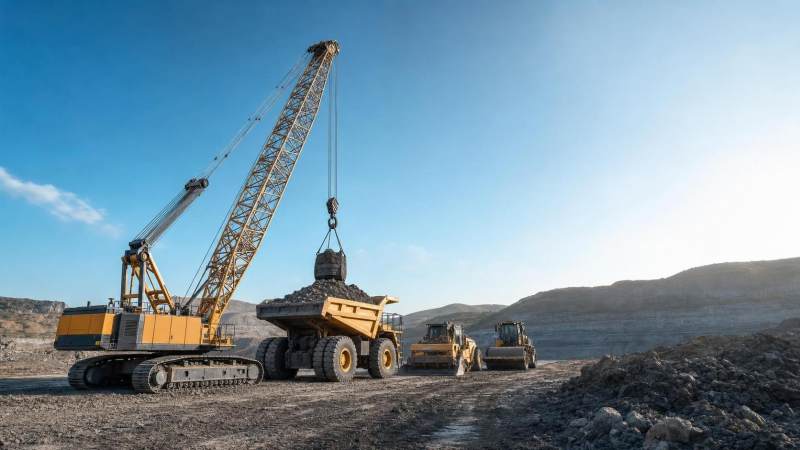
Choosing the right large-scale construction projects equipment now requires more than matching a machine to a headline production target. In major tunnel, mining, lifting, roadbuilding, and heavy haulage programs, equipment decisions shape schedule confidence, operating continuity, fuel profile, maintenance exposure, and even contract risk. The strongest decisions usually come from viewing capacity, uptime, and fleet fit as one connected system rather than three separate checks.
That shift matters because global infrastructure work has become larger, more specialized, and less tolerant of downtime. A crawler crane delayed by parts, a TBM with the wrong cutter strategy, or haul trucks mismatched to loading tools can slow an entire site. For organizations tracking these patterns, TF-Strategy’s focus on heavy machinery intelligence reflects a broader market reality: physical performance only creates value when it aligns with project method, supply conditions, and long-term operating logic.
What equipment choice really means on major projects
In practice, large-scale construction projects equipment selection is a portfolio decision. Each asset must perform on its own, but it also has to work within a broader production chain. Excavation, lifting, transport, paving, and support operations are linked, so an oversized or undersized machine can create hidden bottlenecks.
This is why machine size alone is a weak starting point. Rated payload, boom length, installed power, or cutting diameter matter, but only in context. What counts is usable output under real site conditions, including geology, weather, haul distance, shift pattern, and maintenance access.
For example, a mining dump truck with strong nominal payload may underperform in high altitude heat if cycle times stretch and tire wear rises. A road machine with excellent paving accuracy may still become a poor fit if parts support is thin in a remote corridor. The procurement question is less about maximum specification and more about dependable production at the required pace.
Why capacity should be measured as delivered output
Capacity is often treated as a static number. On complex jobs, it is better understood as delivered output per shift, per week, and across the intended campaign life. That distinction prevents overbuying and also reduces the risk of selecting equipment that looks efficient on paper but struggles under site constraints.
Key variables behind true capacity
- Material conditions, including rock hardness, moisture, density, and fragmentation profile.
- Cycle time drivers such as travel distance, swing radius, loading pattern, and traffic interaction.
- Site geometry, especially tunnel diameter, bench height, turning space, and lift path limits.
- Shift design, operator availability, and time lost during refueling, repositioning, or inspections.
- Supporting equipment balance across loaders, trucks, conveyors, cranes, or road crews.
This is where large-scale construction projects equipment assessment benefits from disciplined benchmarking. A useful benchmark compares expected site production against manufacturer data, similar project records, and service reports from comparable climates or altitudes. It also accounts for ramp-up time, because many heavy assets do not hit steady performance immediately after commissioning.
Capacity planning should also reflect future operating phases. A machine chosen only for peak demand may become inefficient once the workfront narrows. In contrast, a slightly lower headline capacity with stronger flexibility can preserve utilization across more stages of the project.
Uptime is often the decisive cost factor
Many heavy equipment purchases are justified through output models, but uptime usually decides whether those models hold. On billion-dollar infrastructure works, one critical machine can anchor an entire chain of labor, transport, subcontractors, and penalties. A small increase in availability may be worth more than a large increase in rated performance.
Uptime should be reviewed across three layers: machine reliability, service responsiveness, and maintainability on site. A technically advanced unit may still create risk if diagnostic support is weak, wear parts travel slowly, or specialist technicians are hard to mobilize.
Questions that reveal uptime risk
- What is the mean time between failures in similar operating conditions?
- Which components are known wear points, and what is their replacement lead time?
- Can key maintenance tasks be completed on site without major disassembly?
- Is remote monitoring available, and does it meaningfully reduce unplanned stoppages?
- How strong is the local dealer, distributor, or OEM field support network?
This is one reason intelligence-led procurement is gaining importance. Platforms such as TF-Strategy do not simply collect product headlines. By connecting equipment parameters, technology shifts, tender activity, and field evolution, they help teams read where uptime risk may rise, whether from material changes, supply pressure, or new control systems.
Digitalization adds another layer. Remote diagnostics, 5G-enabled control environments, predictive maintenance, and operating data integration can improve uptime, but only if those systems are supported in the region and compatible with the wider fleet. Technology without field execution can add complexity rather than resilience.
Fleet fit is where isolated good choices become strong project choices
A machine can be individually impressive and still fail the project. Fleet fit asks whether the new asset aligns with the current operating ecosystem, including support tools, transport logistics, operator skill base, fuel strategy, software environment, and spare parts structure.
In large-scale construction projects equipment planning, fleet fit often protects total cost of ownership better than a lower purchase price. Commonality across filters, hydraulic components, controls, tires, attachments, and service interfaces can reduce downtime, simplify training, and improve stock planning.
Fleet fit is becoming even more important as mixed-power fleets expand. Pure electric mining trucks, hybrid support units, and digitally connected road machinery can offer strategic upside, but only where charging, load planning, data handling, and maintenance capability are mature enough to support them.
How project type changes the decision model
Different project environments push different priorities. There is no universal scoring model for large-scale construction projects equipment because the penalty for mismatch changes by application.
Typical priority patterns
- TBM programs usually prioritize geological adaptability, cutter life, segment logistics, and specialist service access.
- Open-pit mining favors loading-haul balance, tire strategy, fuel efficiency, and endurance under continuous duty.
- Crawler crane projects depend on lift planning accuracy, transportability, assembly time, and safety-critical reliability.
- Large road machinery decisions hinge on paving precision, material consistency, automation support, and production continuity.
- Extreme haulage environments need thermal resilience, altitude performance, braking confidence, and strong component support.
This is where market intelligence helps separate a strong fit from a familiar choice. A proven machine family may still face new constraints if raw material quality shifts, environmental rules tighten, or regional service conditions deteriorate. Procurement discipline means reading both the machine and the surrounding market.
A practical framework for comparing options
A workable evaluation process does not need to be overly complex, but it does need structure. The most reliable reviews combine engineering data, operating assumptions, service evidence, and commercial terms into one decision view.
A useful comparison sequence
- Define the production target in real operating terms, not only nominal output.
- Map critical site constraints that can reduce theoretical machine performance.
- Score uptime support using parts lead time, diagnostics, and field service capacity.
- Test fleet fit across maintenance commonality, training load, and digital integration.
- Model total cost over the expected campaign, including downtime sensitivity.
- Review strategic signals such as emissions direction, energy transition, and supplier stability.
This approach keeps large-scale construction projects equipment decisions grounded in operating reality. It also creates a stronger internal record for approvals, because the recommendation is tied to project conditions rather than brand preference or headline discounting.
What deserves closer attention now
Several trends are changing how equipment should be evaluated. Digital monitoring is making hidden downtime more visible. New energy platforms are changing cost curves. Supply chain volatility is raising the value of regional service depth. Meanwhile, infrastructure owners are asking for better safety, lower emissions, and more predictable delivery.
For that reason, the next equipment decision should not begin with a brochure comparison. It should begin with a clear view of operating conditions, production dependencies, and support realities. From there, large-scale construction projects equipment can be compared on what matters most: sustainable output, recoverability when problems occur, and compatibility with the fleet already carrying the project.
A useful next step is to build a short decision matrix around capacity, uptime, and fleet fit, then test each option against site-specific constraints and lifecycle assumptions. That process usually reveals whether a machine is merely impressive, or genuinely right for the work ahead.
Related News
 Oct 11, 2026Payload Management Systems: Preventing Overloads Without Slowing ProductionPayload management helps prevent overloads, protect equipment, and keep production moving. Learn how accurate targets, pass planning, alerts, and calibration improve every load.
 Oct 09, 2026Ultra-Large Excavator Bucket Size: Capacity, Width, and Site Fit ExplainedUltra large excavator bucket size explained: compare capacity, width, payload, truck matching, and site conditions to select a reliable, high-productivity bucket.
 Oct 08, 2026How to Evaluate a Heavy Machinery Information Platform for Project Equipment SourcingHeavy machinery information platform guide: compare equipment fit, source reliability, lifecycle costs, supplier capability, and compliance to make smarter sourcing decisions.
 Oct 07, 2026How to Evaluate a Hydraulic System Component Supplier for Heavy Equipment UptimeChoose a hydraulic system component supplier with proven quality, technical fit, and reliable delivery to reduce heavy equipment downtime and lifecycle costs.
Ms. Elena Rodriguez
Weekly Insights
Stay ahead with our curated technology reports delivered every Monday.