
TBM Applications in Railway Tunnels: Ground Conditions, Alignment, and Build Method
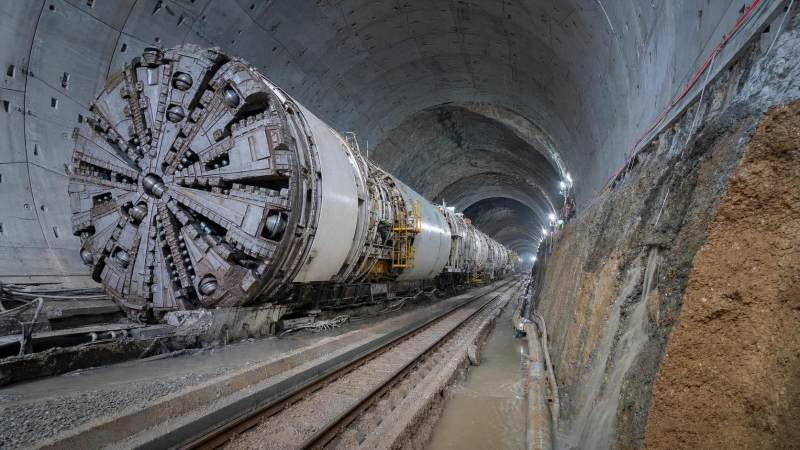
Why TBM Applications in Railway Tunnels Change from One Project to Another
TBM applications in railway tunnels are rarely defined by thrust and diameter alone. Real project outcomes depend on how geology, alignment, and construction logic interact under site-specific constraints.
In railway work, the tunnel is part of a transport system with strict tolerance, drainage, safety, and lifecycle expectations. That makes TBM selection a strategic engineering decision, not a simple equipment comparison.
The practical challenge is that two tunnels with similar lengths may require very different TBM applications in railway tunnels. One may favor smooth continuous boring, while another demands mixed-face control, complex logistics, or staged excavation support.
This is also where intelligence-led evaluation matters. Within the TF-Strategy view of heavy infrastructure, useful judgment comes from linking machine parameters with ground behavior, build method, and long-term delivery risk.
Ground Conditions Usually Set the First Boundary
In actual TBM applications in railway tunnels, geology shapes the first major decision. Stable rock, squeezing ground, fractured fault zones, and water-bearing strata do not ask the machine to do the same job.
For competent hard rock, the focus often shifts toward penetration rate, cutter wear, and muck handling. In this setting, a hard rock TBM can offer predictable advance if the rock mass remains relatively uniform.
Mixed ground is more demanding. When the face includes both rock and soft material, instability tends to appear unevenly. The machine must maintain face control while avoiding excessive settlement, overbreak, or cutterhead imbalance.
Water inflow changes the judgment again. Railway projects passing through karst, alluvium, or fractured saturated rock often need pressure-balanced solutions, pre-grouting, or more conservative advance planning.
A common misread is to classify geology too broadly. Saying a route is “mainly rock” hides the intervals that usually drive delay, intervention, and cost escalation.
What Ground-Driven Evaluation Should Actually Check
- Face stability under expected groundwater pressure
- Abrasion level and probable cutter consumption
- Fault frequency and transition length between strata
- Risk of squeezing, swelling, or sudden inflow
- Compatibility between spoil condition and conveyor or slurry removal
Alignment Can Turn a Suitable Machine into a Difficult Fit
Many discussions about TBM applications in railway tunnels focus on subsurface conditions first. That is necessary, but alignment often determines whether the chosen machine can work efficiently across the full route.
Long straight drives usually favor production stability. Segment supply, ventilation, spoil transport, and maintenance planning become easier to standardize, especially when access shafts are limited.
Curved alignments introduce different pressure points. Tight horizontal curves affect backup train configuration, segment handling, guidance control, and sometimes the lining design itself.
Steep gradients also matter. In railway tunnels, gradient is not only a track issue. It affects water control, logistics flow, emergency access, and the efficiency of muck evacuation over long distances.
Cross passages, caverns, emergency shafts, and station interface zones further complicate TBM applications in railway tunnels. These local enlargements may interrupt the rhythm of otherwise continuous excavation.
Where Alignment Changes the Decision Logic
Build Method Often Decides Whether the TBM Plan Is Realistic
TBM applications in railway tunnels are also shaped by how the project intends to build, support, line, and service the tunnel. A technically suitable TBM can still underperform if the build method is poorly matched.
Segmental lining projects usually prioritize ring build speed, gasket reliability, and consistent annular grouting. Here, the machine and lining system must behave as one integrated process.
In drill-and-blast interface zones or hybrid excavation sections, transition planning becomes more important than nominal machine capacity. The question is not only how the TBM advances, but how the whole sequence remains stable.
Twin-bore railway tunnels introduce another layer. Ventilation, emergency egress, cross-passage timing, and shared logistics corridors can alter the ideal launch order and machine deployment strategy.
Urban railway routes may require low-settlement excavation near utilities or structures. Mountain railway tunnels may accept larger work zones but impose harder rescue, access, and long-haul transport challenges.
Typical Build Contexts and Their Different Needs
- Urban rail corridors usually value settlement control, noise limits, and precise interface management.
- Mountain crossings often place more weight on geology variability, long-distance logistics, and rescue access.
- High-speed rail tunnels require tighter geometric discipline and dependable lining quality.
- Mixed construction packages need careful handover rules between TBM zones and conventional excavation zones.
Different Scenarios Do Not Fail for the Same Reasons
One reason TBM applications in railway tunnels are frequently misjudged is that similar projects hide different failure paths. Delay in one tunnel may come from cutter wear. In another, it comes from ring build interruptions.
Soft ground urban sections often fail at the interface between machine control and settlement response. Hard rock mountain sections more often suffer from underestimating intervention time, spare parts access, or fault zone disruption.
Mixed-face drives are especially easy to underestimate. They may look manageable in preliminary logs, yet create repeated speed loss because boring, stabilization, and inspection cannot be separated cleanly.
Another common mistake is to compare TBM applications in railway tunnels mainly by procurement cost. Over the full project, downtime, cutter change conditions, grout performance, and spoil handling often decide the true TCO.
Frequent Oversights Before Final Selection
- Treating short adverse zones as minor because they occupy little route length
- Assuming similar railway alignments create identical lining and logistics requirements
- Ignoring maintenance access during long continuous drives
- Underestimating how groundwater changes intervention risk
- Choosing by maximum output claims instead of average recoverable progress
A Practical Way to Match TBM Applications in Railway Tunnels
A more reliable approach is to test TBM applications in railway tunnels against a combined matrix. Ground condition, alignment complexity, and build method should be reviewed together, not in isolated technical notes.
In practice, that means defining the dominant risk by route segment. One section may be governed by face pressure control. Another may be governed by curve navigation or limited intervention space.
This is the kind of integrated comparison increasingly used across strategic heavy-industry analysis. It aligns with the TF-Strategy perspective that machine choice only becomes meaningful when physical parameters are tied to construction methodology and delivery risk.
For early-stage evaluation, a short decision sequence is usually more useful than broad specification sheets.
- Map the route by geotechnical transition zones, not by average ground description.
- Check where alignment geometry affects steering, lining, or logistics.
- Confirm how the chosen build method handles interfaces, access, and support timing.
- Estimate lifecycle cost from production interruptions, not only machine purchase.
- Set trigger points for redesign if groundwater, wear, or settlement exceed forecast bands.
What to Clarify Before Moving Forward
The strongest TBM applications in railway tunnels come from disciplined matching, not from selecting the most powerful machine on paper. Ground behavior, route geometry, and construction sequence need to be read as one operating environment.
Before finalizing a tunnel strategy, it is worth clarifying the difficult segments, the likely intervention conditions, the lining requirements, and the logistics limits over the full drive length.
That process creates a better basis for comparing hard rock, EPB, slurry, or hybrid approaches in real railway conditions. It also reduces the risk of treating similar-looking tunnels as identical delivery problems.
The next useful step is to build a project-specific screening matrix for TBM applications in railway tunnels, then test it against cost, schedule, maintenance access, and ground-response scenarios before procurement or final method approval.
Related News
 Oct 11, 2026Payload Management Systems: Preventing Overloads Without Slowing ProductionPayload management helps prevent overloads, protect equipment, and keep production moving. Learn how accurate targets, pass planning, alerts, and calibration improve every load.
 Oct 09, 2026Ultra-Large Excavator Bucket Size: Capacity, Width, and Site Fit ExplainedUltra large excavator bucket size explained: compare capacity, width, payload, truck matching, and site conditions to select a reliable, high-productivity bucket.
 Oct 08, 2026How to Evaluate a Heavy Machinery Information Platform for Project Equipment SourcingHeavy machinery information platform guide: compare equipment fit, source reliability, lifecycle costs, supplier capability, and compliance to make smarter sourcing decisions.
 Oct 07, 2026How to Evaluate a Hydraulic System Component Supplier for Heavy Equipment UptimeChoose a hydraulic system component supplier with proven quality, technical fit, and reliable delivery to reduce heavy equipment downtime and lifecycle costs.
Ms. Elena Rodriguez
Weekly Insights
Stay ahead with our curated technology reports delivered every Monday.