
How to Evaluate Infrastructure Equipment Suppliers for Complex Project Requirements
How to Evaluate Infrastructure Equipment Suppliers for Complex Project Requirements
Selecting an infrastructure equipment solutions supplier for a complex project is not a conventional purchasing exercise. A low acquisition price can look attractive in a tender comparison, yet become irrelevant when a tunnel boring machine loses productive shifts because cutters are unavailable, a crawler crane cannot be mobilized within the lifting sequence, or mining haul trucks consume more fuel and tyres than the operating plan allowed for.
For procurement teams, the central question is not simply whether a supplier can provide a machine. It is whether that supplier can support the equipment’s performance, maintainability, logistics, safety, and commercial predictability throughout the conditions the project will actually face. Those conditions may include abrasive geology, altitude, limited laydown space, extreme temperatures, restricted transport corridors, unstable power supply, or a construction schedule with almost no recovery margin.
The evaluation must therefore connect machine parameters with construction methodology and project risk. This is particularly important for capital-intensive categories such as TBMs, ultra-large excavators, crawler cranes, large road machinery, and mining dump trucks. These assets do not operate in isolation. They sit inside an operating system of crews, consumables, maintenance planning, site access, OEM support, digital controls, and contractual obligations.
Start With the Project’s Failure Points, Not the Equipment Brochure
A supplier assessment should begin with a disciplined review of what could interrupt the project. This sounds obvious, but many procurement packages still start from generic equipment specifications and only later consider operating constraints. By then, the most consequential assumptions may already be embedded in the bid comparison.
For a hard-rock tunnel, the critical questions may concern geological variability, water inflow, cutterhead access, muck handling interfaces, and the supplier’s ability to respond if actual ground conditions differ from the baseline. A TBM that is well suited to one alignment can be a poor commercial choice on another if the chosen supplier has limited engineering capacity for intervention planning or weak access to wear parts.
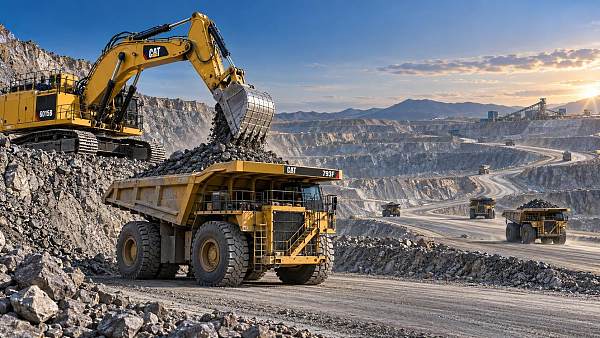
For open-pit mining, the purchasing decision often turns on more than payload. Haul-road gradients, rolling resistance, ambient temperature, operator practice, maintenance windows, tyre strategy, and fuel or charging infrastructure can materially alter the equipment’s real operating cost. A large excavator and a fleet of dump trucks must also be evaluated as a matched production system. Buying each machine category from the lowest bidder without checking compatibility can create bottlenecks that no individual supplier is contractually motivated to solve.
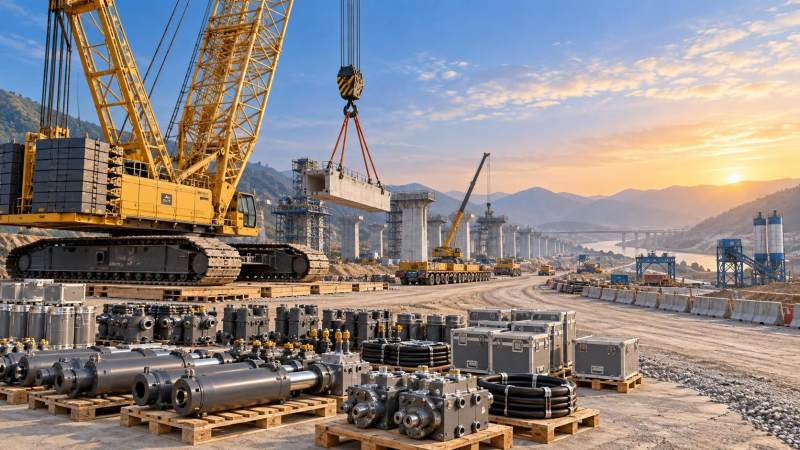
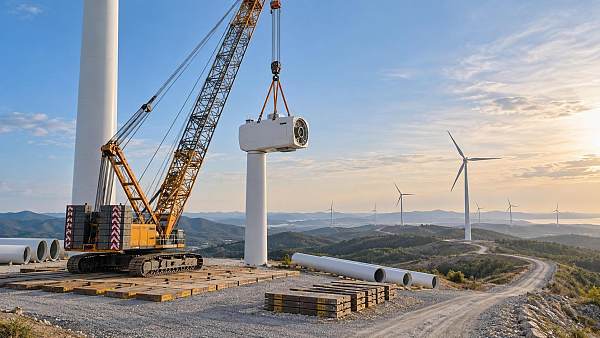
In heavy lifting, crane capacity charts are only the starting point. Ground-bearing conditions, boom configuration, transport weights, assembly requirements, available counterweight handling, wind limits, lift path constraints, and the sequence of other trades all matter. For wind, petrochemical, or nuclear-related scopes, a crane supplier’s planning support may be nearly as valuable as the crane itself.
Before issuing an RFQ, define the project’s “non-negotiables”: required operating envelope, site restrictions, recovery expectations, maximum tolerable downtime, local compliance needs, and critical interfaces. This gives suppliers something meaningful to respond to and prevents a technically polished but operationally unsuitable offer from appearing competitive.
Test Technical Fit Beyond Headline Capacity
Headline specifications are useful for screening, but they do not prove suitability. Rated lifting capacity, engine output, bucket volume, paver width, or nominal truck payload must be interpreted in the context of the project. Procurement teams should ask suppliers to state their assumptions clearly rather than accept broad claims of suitability.
A productive technical review looks for the boundary conditions behind the numbers. What material properties are assumed for a cutterhead or wear package? Under which boom and radius configuration does a crawler crane meet the required load? What is included in the paver’s automation package, and how does it interface with the project’s paving control process? What derating assumptions apply at altitude or high ambient temperature for mining equipment?
It is also worth separating equipment design maturity from feature count. New digital systems, remote operation functions, electrified drivetrains, and advanced monitoring tools can be valuable, but they introduce dependencies. A remote-controlled excavator requires reliable communications, training, cyber controls, and a workable fallback procedure. An electric mining truck requires a charging or trolley strategy that fits production cycles. The right question is not whether the technology is advanced; it is whether the project can operate and maintain it without creating another fragile link in the chain.
Request a compliance matrix that identifies each requirement as compliant, partially compliant, excluded, or subject to clarification. Require references to drawings, data sheets, method statements, or calculations where appropriate. A supplier that answers difficult requirements with specific assumptions is generally easier to manage than one that responds with blanket assurances.
Evaluate Reliability as a Supply-System Question
Equipment reliability is often discussed as if it resides entirely in the machine. On real sites, reliability is also shaped by how quickly faults are diagnosed, whether technicians can reach the site, whether consumables are available, and whether the supplier has authority to make decisions when a major component fails.
Ask where the proposed equipment has operated in conditions comparable to yours, but do not treat a reference list as proof on its own. Probe the support model behind those installations. Was support delivered directly by the manufacturer, through a distributor, or by a subcontracted service company? Which parts were stocked locally? What type of commissioning presence was provided? How were major unplanned interventions handled?
For TBMs, critical spares may include components associated with cutterhead wear, hydraulics, electrical systems, guidance, and segment handling. For mining fleets, the availability of filters, hoses, drivetrain components, tyres, and field service capacity can determine whether planned maintenance remains planned. For crawler cranes, the practical availability of specialist rigging support, boom components, and qualified assembly personnel deserves equal scrutiny.
A useful procurement exercise is to ask each bidder to walk through two or three realistic disruption scenarios. For example: a critical hydraulic failure in a remote mine, abnormal cutter consumption in mixed ground, or a crane component delay shortly before a planned heavy lift. The objective is not to demand impossible guarantees. It is to understand escalation routes, decision rights, lead-time assumptions, and what the supplier expects the contractor to provide.
Compare Lifecycle Cost, Not Just Delivered Price
The cheapest offer can be the most expensive choice when operating costs, lost production, and risk transfer are taken seriously. Total cost of ownership should include more than purchase price or rental rate. It should capture the cost drivers that remain after the purchase order is issued.
Suppliers should be asked to disclose assumptions behind cost models. A fuel-consumption estimate without duty cycle assumptions is not a useful comparison. Nor is a maintenance estimate that excludes labour, travel, consumables, or major component risk. Procurement teams do not need every bidder to use the same proprietary model, but they do need a common comparison basis.
Be careful with optimistic availability language. A stated target may be commercially meaningful only if the contract defines measurement method, planned maintenance treatment, operator-related exclusions, reporting access, and remedies. Otherwise, the number may function more as a sales statement than a risk-control mechanism.
Check Global Reach Against Local Reality
Global manufacturing scale is valuable, particularly for large equipment with long lead times and specialized components. But global reach should not be confused with local readiness. A supplier may have an impressive international footprint while relying on a thin service structure in the project country or region.
Verify the local operating model: legal entity or distributor, trained field personnel, workshop capacity, customs experience, warehousing arrangements, language capability, and access to emergency transport. In remote or politically complex locations, the ability to move a part across a border can matter more than a nominal regional inventory position.
The same applies to documentation. Installation manuals, lifting plans, electrical information, maintenance procedures, and training materials must be suitable for the project team and aligned with applicable local requirements. Where equipment will be used across jurisdictions, clarify responsibility for certification, registration, transport permits, and machine modifications early. These issues are rarely glamorous, but they are frequent sources of delay.
Look Closely at Commercial Terms and Interface Ownership
Complex equipment contracts tend to fail in the gaps between parties. A supplier may provide the machine but exclude foundations, power connections, commissioning consumables, operator training, software integration, site lifting, or performance testing. None of these exclusions is automatically unreasonable. The risk arises when no party has priced, scheduled, or accepted responsibility for them.
The commercial review should identify who owns each major interface. For a TBM package, that could include segment logistics, ventilation, backup-system integration, power supply, slurry or muck handling, and site acceptance procedures. For road equipment, it may include grade-control systems, plant coordination, material delivery rhythm, and calibration responsibility. In heavy lifting, ground preparation and engineering of temporary works are often decisive interfaces.
Payment milestones should correspond to verifiable deliverables rather than vague progress descriptions. Warranty terms need similar attention: what starts the warranty clock, what counts as misuse, whether travel is included, and whether replaced components receive further coverage. A procurement team should also understand the consequences of design changes, delayed access to site, or client-driven schedule shifts. These are normal project realities, not edge cases.
Use Independent Intelligence to Challenge the Bid Narrative
Supplier proposals are indispensable, but they are written from the supplier’s perspective. Major purchases benefit from a second source of industry intelligence that connects machine design, project methodology, supply-chain conditions, and wider market direction.
This is where specialist intelligence platforms can be useful. TF-Strategy, for example, follows the equipment ecosystems around tunnel boring, open-pit mining, ultra-large lifting, road construction, and heavy haulage. Its focus on geological boring, hydraulic power, material development, remote-control applications, and the commercial logic of electrified mining equipment reflects a practical procurement reality: equipment decisions are increasingly affected by technology transitions that cannot be assessed through price sheets alone.
Independent research should not replace technical due diligence or contractual review. It can, however, help procurement teams identify questions they may otherwise miss: whether a cutterhead material strategy fits the expected geology, whether a remote-operation feature has demanding communications dependencies, whether a supplier’s supply chain is exposed to a specialized raw-material category, or whether the proposed equipment is aligned with where the contractor intends to deploy it next.
Make the Final Choice Defensible
A defensible award decision does not always go to the supplier with the lowest price, the largest installed base, or the most sophisticated technology. It goes to the supplier whose offer presents the clearest and most manageable balance of technical fit, lifecycle cost, delivery confidence, support capability, and contractual accountability for the project at hand.
The final evaluation record should make that reasoning visible. Document assumptions, unresolved risks, scope exclusions, and the mitigation actions expected after award. If a lower-priced bidder is selected despite a weaker local service model, state how that risk will be covered. If a higher-priced solution is chosen because it reduces schedule exposure or interface uncertainty, quantify the logic where the project information allows it.
For heavy infrastructure equipment, procurement is not finished when the contract is signed. The quality of the decision becomes visible during mobilization, commissioning, the first abnormal operating condition, and the first urgent request for a part or specialist technician. Evaluate suppliers with those moments in mind, and the comparison becomes far more useful than a simple price ranking.
Related News
 Sep 15, 2026How to Evaluate Infrastructure Equipment Suppliers for Complex Project RequirementsInfrastructure equipment solutions supplier evaluation guide for complex projects: assess technical fit, lifecycle cost, reliability, local support, and contract risk.
 Sep 14, 2026What Drives Surface Mining Equipment Cost Across a Mine’s Operating Life?Surface mining equipment cost depends on fleet matching, fuel, wear, maintenance, availability, and rebuild timing. Explore lifecycle strategies that protect output and margins.
 Sep 13, 2026Crawler Crane Application Analysis for Wind Farms, Bridges, and Confined SitesCrawler crane application analysis for wind farms, bridges, and confined sites—optimize lift paths, ground conditions, access, and schedules for safer project delivery.
 Sep 12, 2026Open-Pit Mining in North America: Key Project Risks and Planning PrioritiesOpen-pit mining North America: uncover key risks and planning priorities for geology, permitting, water, fleet strategy, and resilient project delivery.

Ms. Elena Rodriguez
Weekly Insights
Stay ahead with our curated technology reports delivered every Monday.