
How to Use an Infrastructure Equipment Catalog to Compare Specs, Applications, and Vendor Options
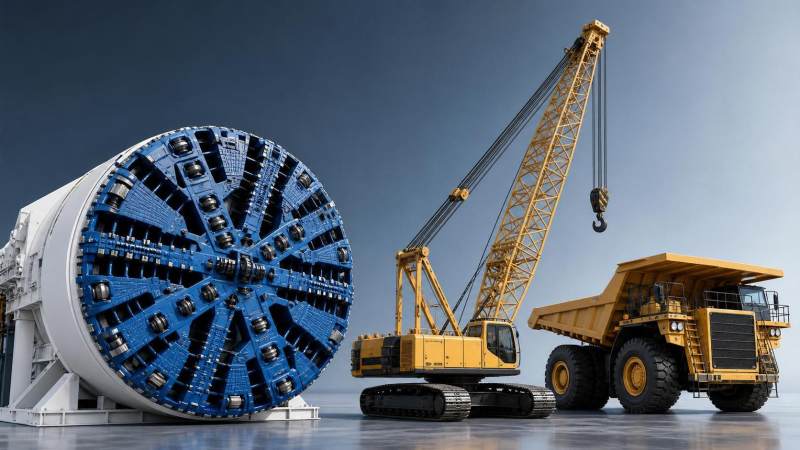
Choosing equipment for a tunnel drive, mine expansion, lift plan, or paving package rarely fails because of one missing number. It usually fails when specifications, site conditions, and vendor claims are reviewed in isolation. An infrastructure equipment catalog creates a common frame for comparison, helping decisions move beyond headline capacity and initial price.
That matters more now because heavy infrastructure projects are under pressure from tighter schedules, energy transition targets, safety scrutiny, and volatile supply chains. In this environment, a well-built infrastructure equipment catalog is not just a reference file. It becomes a working tool for matching machine capability to engineering reality.
Across sectors followed by TF-Strategy, from TBM systems to ultra-large excavators, crawler cranes, road machinery, and mining dump trucks, the same pattern appears. Better outcomes come from structured comparison. Catalog intelligence links machine parameters, construction methods, and project constraints before expensive commitments are made.
What an infrastructure equipment catalog should really contain
A useful infrastructure equipment catalog is more than a list of models and brochures. It should combine technical data, operating envelopes, application fit, compliance details, and vendor context in one place.
In practical terms, catalog quality depends on whether it helps answer three questions. Can the machine do the job? Can it do the job in this environment? Can the supplier support the job through delivery and operation?
For heavy equipment, the answer often sits in details that are easy to overlook. Ground pressure may matter more than engine power. Cutterhead torque may matter more than installed power. Transport dimensions may block deployment even when production capacity looks ideal.
Core data fields worth tracking
- Physical dimensions, transport configuration, and assembly requirements.
- Rated output, duty cycle limits, and performance under continuous load.
- Ground, gradient, altitude, temperature, and geology suitability.
- Energy source, fuel efficiency, electrification status, and emissions profile.
- Maintenance intervals, wear parts, digital monitoring, and remote diagnostics.
- Lead time, regional service coverage, spare parts support, and training access.
Once those fields are standardized, the infrastructure equipment catalog stops being promotional material and starts supporting engineering judgment.
Why catalog comparison has become more important
Heavy equipment selection used to rely more heavily on known brands, local dealer relationships, and past fleet habits. Those factors still matter, but current projects are less forgiving.
A tunnel package may involve mixed geology, urban settlement limits, and strict spoil management. A mine may face altitude derating, extreme temperatures, and pressure to reduce diesel consumption. A crane package may depend on modular transport, narrow weather windows, and exact lift path constraints.
In each case, the infrastructure equipment catalog helps expose where nominal specifications hide real operating differences. Two machines can share similar rated output yet perform very differently once site friction, duty cycle, automation level, or service response is considered.
That is why intelligence-led platforms such as TF-Strategy have growing value. By connecting project tenders, raw material dynamics, machine evolution, and commercial signals, they help users read catalog data in context rather than as isolated facts.
How to compare specs without misreading them
The first rule is simple. Compare like with like. Vendors often present best-case figures under different assumptions, and those assumptions change the meaning of every number.
For example, excavator breakout force may look strong on paper, but bucket configuration and hydraulic settings can shift the result. Crane capacity depends on radius, boom combination, and wind limitations. TBM advance rate claims mean little without geology class, cutter consumption, and downtime assumptions.
A practical comparison structure
This is where an infrastructure equipment catalog earns its place. It keeps the evaluation anchored to normalized criteria rather than presentation style.
Reading application fit, not just machine size
Application fit is often the most decisive layer in catalog work. A larger machine is not automatically a better machine. It may create transport bottlenecks, unstable ground loading, overspecified energy demand, or excessive maintenance complexity.
Consider how this plays out across major infrastructure categories. TBMs must align with tunnel diameter, geology variability, groundwater conditions, and segment logistics. Mining dump trucks must be matched to haul profile, loading tool compatibility, and tire support. Road machinery must reflect paving width, compaction targets, and digital grade control requirements.
A strong infrastructure equipment catalog should therefore include application notes, not just machine data. It should explain where a model performs best, where it is constrained, and which supporting systems are required for stable output.
Signals that application fit is weak
- The model meets capacity targets but needs unusual site preparation.
- Production claims depend on ideal material or weather conditions.
- Local service teams have limited experience with the configuration.
- Wear components or critical consumables have uncertain supply routes.
- Digital features exist, but project systems cannot absorb the data.
Comparing vendor options with more discipline
Vendor comparison should not be reduced to reputation or discounting. The infrastructure equipment catalog should capture how each supplier supports delivery quality over the full operating period.
This means looking at commissioning depth, operator training, spare parts strategy, software support, field diagnostics, and escalation speed. For complex machines, these factors shape uptime as much as the hardware itself.
It is also useful to read vendor claims against broader market signals. If one supplier promotes fast electrification, check whether charging or grid infrastructure exists. If another highlights advanced remote operation, verify whether the project can support connectivity, cybersecurity, and control room workflows.
TF-Strategy’s focus on evolutionary trends is relevant here. Shifts such as 5G remote-controlled excavation, new cutterhead materials, and electric haulage change how catalog comparisons should be weighted. The best option may be the one with better integration into emerging operating models, not only the strongest current specification sheet.
Using catalog data in a real evaluation workflow
In actual use, the infrastructure equipment catalog works best when it supports a staged review. Start with project constraints, then narrow the machine list, then test vendor fit, and only then move into price negotiations.
That order matters. If pricing enters too early, teams tend to defend a short list built on incomplete assumptions. A structured catalog keeps screening criteria visible and makes tradeoffs easier to defend internally.
A workable sequence
- Define mission-critical site conditions and non-negotiable limits.
- Shortlist models by verified application fit.
- Normalize key specifications into one comparison sheet.
- Score lifecycle cost, uptime support, and delivery readiness.
- Review future-fit factors such as automation or energy transition alignment.
- Use the remaining differences to guide technical clarification with vendors.
At this stage, the infrastructure equipment catalog becomes a decision record as well. It shows why one option was rejected, where assumptions were tested, and which risks were accepted knowingly.
What to refine next
A strong catalog process does not end with model selection. It should feed back into future evaluations through performance benchmarking, maintenance outcomes, and supplier responsiveness.
For organizations tracking global infrastructure opportunities, the next step is to connect the infrastructure equipment catalog with project intelligence, tender patterns, and technology adoption signals. That is where static comparison becomes strategic advantage.
In practical terms, begin by tightening the fields that most often distort decisions: operating assumptions, application notes, service capability, and total cost drivers. Once those are visible, comparisons become clearer, vendor discussions become sharper, and machine selection becomes far more resilient.
Related News
 Oct 06, 2026Selecting Petrochemical Overhead Cranes for Hazardous Areas and Heavy Process LoadsPetrochemical overhead cranes for hazardous areas: learn how to match capacity, duty, controls, corrosion protection, and maintenance access for safer, reliable lifts.
 Oct 05, 2026Tunneling Equipment Specification Planning: Key Criteria for Ground and Project RisksEquipment specification planning tunneling: learn how to match TBM systems to ground risks, geometry, safety, logistics, and lifecycle cost for more reliable project delivery.
 Oct 04, 2026Nuclear Lifting Equipment Cost: Budgeting for Compliance, Testing, and Lifecycle RiskNuclear lifting equipment cost explained: budget for compliance, proof-load testing, installation, documentation, and lifecycle risk to make confident procurement decisions.
 Oct 03, 2026How to Assess TBM Manufacturers for Hard-Rock Tunneling Projects?Choose the right tunnel boring machine manufacturer for hard-rock projects. Explore key criteria for design, lifecycle cost, factory quality, and service support.

Ms. Elena Rodriguez
Weekly Insights
Stay ahead with our curated technology reports delivered every Monday.