
Surface Mining Equipment Solutions: How to Match Loading, Hauling, and Drilling to Site Conditions
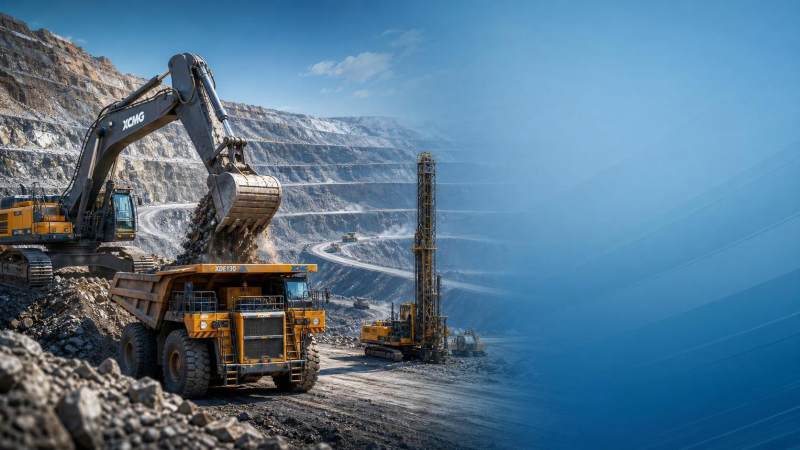
Why surface mining equipment decisions change from site to site
Mining equipment solutions surface mining operations rely on are shaped by the ground first, and by machine catalogues only after that.
A soft overburden strip mine, a hard rock copper pit, and a high-altitude coal project may all move similar tonnage.
Their loading rhythm, haul resistance, drilling burden, and maintenance exposure are still very different.
That is why effective mining equipment solutions surface mining planners use begin with geology, bench geometry, haul profile, weather, and target output.
In practical terms, the best fleet is rarely the biggest fleet.
It is the combination that keeps loading units busy, trucks properly matched, and drills aligned with fragmentation goals.
For TF-Strategy, this is a familiar heavy-industry question.
Across open-pit mining, ultra-large excavators, and mining dump trucks, site productivity comes from connecting machine parameters to real operating conditions.
That same intelligence-led view matters when choosing mining equipment solutions surface mining projects can sustain over years, not just at commissioning.
In shallow, wide pits, loading speed often matters more than peak digging force
Some surface operations work broad benches with short truck cycles and relatively easy digging.
Here, the temptation is to overspecify excavator size and assume more bucket volume solves everything.
Usually, the better question is whether the loader can keep truck dispatch smooth without increasing queue time.
Wheel loaders often perform well where faces stay accessible and rehandling is limited.
Hydraulic excavators become stronger options when selective digging, tighter face control, or uneven floor conditions appear.
In this setting, mining equipment solutions surface mining teams evaluate should focus on pass matching.
A four-to-six-pass loading target is commonly more efficient than chasing maximum bucket size with poor truck alignment.
Short hauls also change truck logic.
If cycles are brief, more trucks do not automatically raise output.
The site may become loader-constrained, turning haul units into idle capital.
What usually deserves closer attention here
- Loader breakout force versus actual material looseness after blasting
- Truck body capacity relative to bucket fill factor and payload policy
- Bench width for safe spotting, turning, and simultaneous movement
- Tyre wear and rolling resistance on short but frequent cycles
As pits deepen, hauling starts to dominate the equipment mix
A deeper open pit changes the economics quickly.
Grades, ramps, switchbacks, and longer travel distances make haulage the controlling cost center.
At that point, mining equipment solutions surface mining operations need are judged less by nominal truck payload and more by effective tons per hour uphill.
This is where dump truck selection becomes a strategic issue, not a simple fleet expansion exercise.
High payload trucks can reduce driver count and unit fleet size.
Still, they require wider ramps, stronger road maintenance, and disciplined loading accuracy.
If road geometry is tight or the mine plan changes frequently, a slightly smaller class may deliver steadier utilization.
Electric drive trucks, trolley assist options, and fuel strategy also matter more in deep pits.
TF-Strategy regularly tracks these shifts because haulage performance now intersects with energy transition, total cost of ownership, and digital dispatch.
For many sites, the right mining equipment solutions surface mining planning involves include future ramp depth, not just today’s haul profile.
Where blasting quality is unstable, drilling choice affects everything downstream
Many equipment discussions start with excavators and trucks, but weak drilling decisions often create the larger bottleneck.
Poor hole accuracy, inconsistent burden, or an unsuitable bit setup can produce oversize rock, uneven muckpiles, and slower loading cycles.
That means drilling should be selected with the downstream fleet in mind.
Rotary drills suit large-diameter production work in many hard rock mines.
DTH systems may be preferable when hole straightness and fragmentation control become more critical in variable formations.
The practical judgment is not only penetration rate.
It is whether the drilling system supports a blast result that loaders can handle without excess tooth wear, floor damage, or secondary breakage delays.
In that sense, mining equipment solutions surface mining planners compare should connect drilling cost to haul and loading performance, not isolate it.
A useful field-level check before locking the drill fleet
- Bench height versus drill reach and hole deviation tolerance
- Rock hardness variability across phases of the pit
- Explosive supply consistency and blast timing discipline
- Desired fragmentation for the planned loading tool
Harsh climates and remote locations change the right answer
A fleet that performs well in temperate regions can struggle in desert heat, tropical dust, or high-altitude cold.
This is one of the most common reasons mining equipment solutions surface mining buyers select on paper fail in operation.
At altitude, engines may derate enough to stretch haul cycles and reduce drilling productivity.
In freezing conditions, lubrication, battery performance, hydraulic response, and tyre integrity all shift.
Remote sites add another layer.
A technically advanced machine is only an advantage if parts availability, technician access, and diagnostic support are realistic.
TF-Strategy’s broader heavy-equipment perspective is relevant here because remote mining fleets share decision logic with cranes, road machinery, and other mission-critical assets.
Reliability planning often matters more than peak specification.
Sites facing long logistics lead times usually benefit from fewer equipment models, stronger parts commonality, and conservative component loading.
The main differences are usually operational, not just technical
Two mines may order similar machines and still experience very different results.
That happens because the real difference sits in operating rhythm, road quality, blasting control, and maintenance discipline.
When comparing mining equipment solutions surface mining teams should look at, the following distinctions are usually more useful than headline horsepower.
- Consistent material and fixed routes favor larger, highly optimized fleets.
- Changing pit phases and mixed geology favor adaptable loading and drilling combinations.
- Stable infrastructure supports high-capacity haul trucks with tighter dispatch planning.
- Weak roads or seasonal weather call for a more forgiving truck class and stronger road maintenance budget.
- Power or decarbonization targets may justify electric or hybrid haul strategies, but only with charging or energy planning in place.
Misjudgments that quietly raise cost per ton
One repeated mistake is choosing equipment by isolated specification sheets.
A truck may carry more payload, but if the ramp cannot support its cycle speed, the gain disappears.
Another mistake is treating similar pits as identical.
Orebody hardness variation, water management, or blast fragmentation can alter the right fleet choice more than annual tonnage figures suggest.
A third issue is ignoring life-cycle effects.
Mining equipment solutions surface mining projects adopt should be tested against tyre consumption, GET wear, fuel burn, structural fatigue, and maintenance staffing.
Digital readiness is often overlooked too.
Fleet health monitoring, dispatch visibility, and drill data capture increasingly shape uptime and planning accuracy.
Without those systems, even a strong physical fleet can underperform.
A practical way to narrow the right mining equipment solutions surface mining sites need
Start with the production chain, not with individual machines.
Map the site by material type, bench plan, average haul distance, ramp grade, climate exposure, and maintenance logistics.
Then test whether drilling, loading, and hauling are balanced across current and future pit stages.
A workable next-step framework usually includes:
- Define the material and fragmentation target before selecting loader size.
- Model haul cycles using real grades, weather effects, and queue assumptions.
- Check pass matching between loading tools and truck bodies.
- Review maintenance access, parts commonality, and technician skill requirements.
- Compare capital cost with long-run TCO, including energy, tyres, wear parts, and downtime exposure.
The most reliable mining equipment solutions surface mining operations depend on are those matched to actual site behavior, not assumed averages.
When the conditions are clear, equipment selection becomes less about chasing the largest unit and more about building a durable, measurable production system.
Related News
 Oct 06, 2026Selecting Petrochemical Overhead Cranes for Hazardous Areas and Heavy Process LoadsPetrochemical overhead cranes for hazardous areas: learn how to match capacity, duty, controls, corrosion protection, and maintenance access for safer, reliable lifts.
 Oct 05, 2026Tunneling Equipment Specification Planning: Key Criteria for Ground and Project RisksEquipment specification planning tunneling: learn how to match TBM systems to ground risks, geometry, safety, logistics, and lifecycle cost for more reliable project delivery.
 Oct 04, 2026Nuclear Lifting Equipment Cost: Budgeting for Compliance, Testing, and Lifecycle RiskNuclear lifting equipment cost explained: budget for compliance, proof-load testing, installation, documentation, and lifecycle risk to make confident procurement decisions.
 Oct 03, 2026How to Assess TBM Manufacturers for Hard-Rock Tunneling Projects?Choose the right tunnel boring machine manufacturer for hard-rock projects. Explore key criteria for design, lifecycle cost, factory quality, and service support.
Ms. Elena Rodriguez
Weekly Insights
Stay ahead with our curated technology reports delivered every Monday.