
Ultra Large Excavator Sizing: Which Operating Weight and Bucket Capacity Fit Your Mine Plan?
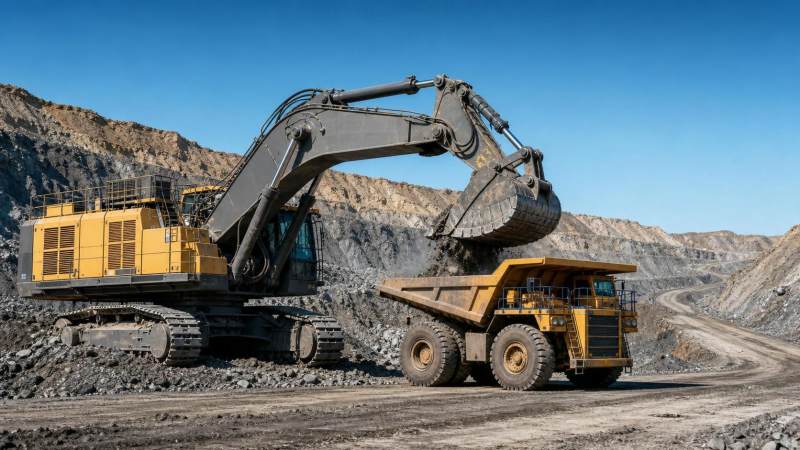
Getting ultra large excavator sizing right is rarely a matter of choosing the biggest machine available. In open-pit mining, operating weight and bucket capacity have to match the mine plan, not just the production ambition.
That is why this topic keeps moving higher on the agenda across heavy industry. When excavator size aligns with haul road geometry, bench height, material density, stripping ratio, and truck payload, cycle efficiency improves and fleet friction falls.
At the same time, poor sizing decisions tend to stay expensive for years. They distort loading passes, fuel burn, tire life, maintenance planning, and even future pit sequencing.
For a platform such as TF-Strategy, which tracks open-pit mining alongside TBM, crawler cranes, road machinery, and mining trucks, ultra large excavator sizing sits at the center of a wider equipment intelligence problem: physical parameters only create value when they fit the operating system around them.
What ultra large excavator sizing really means
In practical terms, ultra large excavator sizing is the process of matching machine scale to the mine’s actual loading task. The headline figures are operating weight and bucket capacity, but the decision is broader.
Operating weight affects ground pressure, structural stability, travel behavior, undercarriage wear, and how the machine interacts with bench conditions. Bucket capacity shapes payload per pass, dig resistance, cycle time, and truck matching.
These two values are linked, yet they should not be read in isolation. A larger bucket on paper can still underperform if the material is fragmented poorly, the swell factor is high, or the truck body cannot accept the bucket profile cleanly.
That is why effective ultra large excavator sizing starts with the mine plan and works backward into equipment specification, not the other way around.
Why the issue matters more now
Mining operations are under pressure from several directions at once. Ore bodies are changing, fuel and labor costs remain volatile, and decarbonization targets are starting to influence fleet design.
Meanwhile, truck classes are evolving, autonomous hauling is expanding, and remote operations are forcing planners to think more carefully about equipment consistency. A sizing error now affects not only productivity, but also digital integration and energy strategy.
TF-Strategy follows these shifts closely because they connect machine physics to strategic capital allocation. In this environment, ultra large excavator sizing becomes a board-level efficiency question rather than a narrow equipment selection exercise.
The mine plan should lead the sizing decision
A useful sizing review begins with a simple question: what exactly must the excavator do over the life of the pit stage being designed?
Production targets matter, but so do stripping campaigns, ore-waste variation, cut geometry, blasting quality, and haulage distances. The best-sized unit for a short, high-volume waste push may be inefficient in a tighter ore zone.
Several mine-plan inputs usually have the strongest influence:
- Annual and monthly movement targets by material type
- Bench height, face width, and dig geometry
- In situ density, swell factor, and fragmentation quality
- Truck payload class and pass-match objective
- Haul road layout, turning space, and relocation frequency
- Expected utilization, maintenance windows, and standby strategy
Without this context, ultra large excavator sizing easily drifts into catalog comparison, which is rarely enough for high-value fleet decisions.
Operating weight is about more than machine mass
Operating weight often gets treated as a proxy for capability. It does indicate class and stability, but it also carries consequences that planners need to price in early.
A heavier excavator can support larger attachments, sustain harder digging, and maintain a steadier platform in demanding conditions. That can be valuable in tough overburden or deep benches.
However, more weight can also mean higher transport complexity, stricter ground preparation needs, slower relocation, and greater structural demand on working areas. In wet seasons or weak formations, those constraints become operational risks.
This is where ultra large excavator sizing becomes a tradeoff exercise. Extra mass only pays back when the mine can consistently use the machine’s digging force and loading rate.
Where operating weight changes the economics
Bucket capacity must fit the material and the truck
Bucket size is the visible side of ultra large excavator sizing, because it directly affects payload per cycle. Yet capacity alone can mislead.
The real question is how much usable mass each bucket delivers in the actual material state. Loose density, moisture, fragmentation, and fill factor all change effective payload.
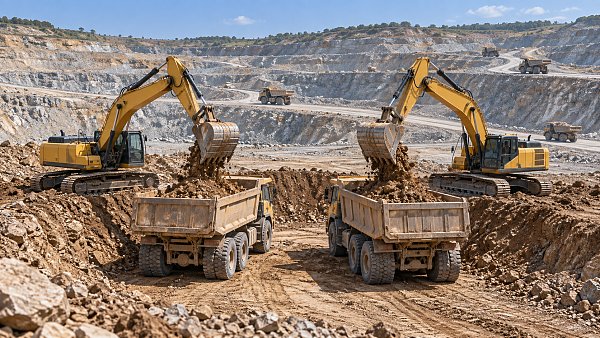
Truck matching then becomes critical. Too small a bucket raises pass count and queue time. Too large a bucket may create uneven loading, body impact, spillage, or underutilized truck fleets if the pass target becomes awkward.
Many operations still aim for an efficient pass match, often four to six passes depending on truck class, material behavior, and loading control. That principle remains useful, but it should be tested against actual cycle variance rather than copied from another mine.
A practical bucket capacity lens
When reviewing bucket capacity, focus on these questions:
- What is the average effective fill factor by material zone?
- How often does fragmentation force partial fills?
- Can the truck body receive the bucket cleanly and repeatedly?
- Does the target pass count support queue discipline?
- Will a larger bucket increase stress on structures or tires?
Typical mine scenarios call for different sizing logic
Not every operation should evaluate ultra large excavator sizing through the same lens. The right answer depends on how the mine makes money and where the bottlenecks sit.
This is also where cross-equipment intelligence matters. A mine that is investing in electric trucks, remote dispatch, or new shovel-truck coordination tools should not size excavators as if the rest of the fleet were static.
Common mistakes behind oversized and undersized choices
One common error is choosing for peak demand only. Mines need surge capacity, but sizing the core fleet around rare extremes can lock in poor average economics.
Another mistake is copying a successful fleet from a different region without adjusting for rock mechanics, altitude, haul profile, or maintenance capability. Similar ore output does not mean identical equipment logic.
There is also a tendency to overvalue nominal bucket capacity and undervalue availability, spot time, and relocation impact. On many sites, the better business case comes from a machine that loads slightly less per pass but stays productive more consistently.
In that sense, ultra large excavator sizing is less about maximum specification and more about sustained system performance.
How to structure a better sizing review
A strong review combines technical and commercial data. It should compare candidate sizes against mine-plan scenarios, not just against each other.
A practical review sequence usually includes:
- Map production demand by pit phase and material class
- Test truck-excavator match with real density assumptions
- Model cycle efficiency under different pass counts
- Check relocation needs, pad conditions, and road constraints
- Price maintenance access, parts strategy, and downtime cost
- Review future fit with autonomy, electrification, and remote operation plans
This broader lens reflects the kind of intelligence approach TF-Strategy emphasizes across heavy equipment categories. Machine selection performs best when operational detail and strategic direction are reviewed together.
Where to focus next
The best next step is not to search for a universal ideal size. It is to define the few mine variables that most strongly drive the loading system and test excavator classes against them.
For many operations, that means revisiting density assumptions, truck pass targets, bench geometry, and mobility demands before issuing equipment preferences. Those inputs usually reveal whether a larger operating weight or a different bucket capacity will truly improve results.
Ultra large excavator sizing works best when it is treated as a mine-planning decision with fleet consequences, not as a standalone purchase choice. That shift produces clearer tradeoffs, better capital discipline, and a more resilient production system over the life of the asset.
Related News
 Oct 06, 2026Selecting Petrochemical Overhead Cranes for Hazardous Areas and Heavy Process LoadsPetrochemical overhead cranes for hazardous areas: learn how to match capacity, duty, controls, corrosion protection, and maintenance access for safer, reliable lifts.
 Oct 05, 2026Tunneling Equipment Specification Planning: Key Criteria for Ground and Project RisksEquipment specification planning tunneling: learn how to match TBM systems to ground risks, geometry, safety, logistics, and lifecycle cost for more reliable project delivery.
 Oct 04, 2026Nuclear Lifting Equipment Cost: Budgeting for Compliance, Testing, and Lifecycle RiskNuclear lifting equipment cost explained: budget for compliance, proof-load testing, installation, documentation, and lifecycle risk to make confident procurement decisions.
 Oct 03, 2026How to Assess TBM Manufacturers for Hard-Rock Tunneling Projects?Choose the right tunnel boring machine manufacturer for hard-rock projects. Explore key criteria for design, lifecycle cost, factory quality, and service support.

Hydraulic Power Analyst
Weekly Insights
Stay ahead with our curated technology reports delivered every Monday.