
Infrastructure Construction Standards: A Project Manager’s Guide to Compliance
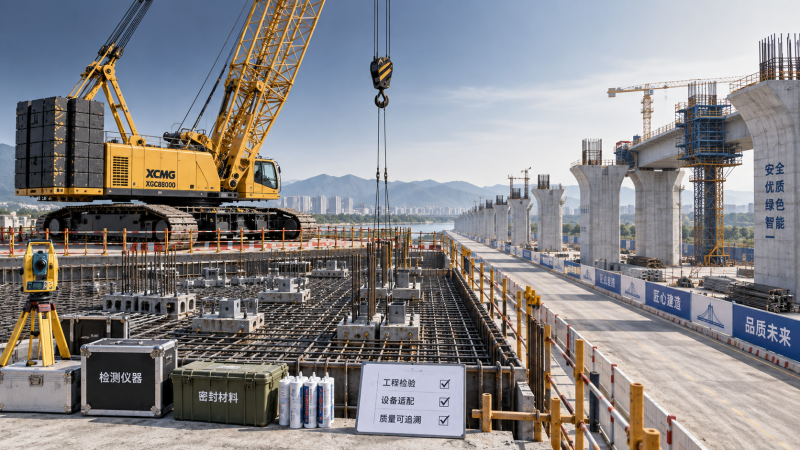
Infrastructure construction standards only protect a project when they are converted into decisions, hold points, and evidence that can be checked in the field. A specification sitting in a contract folder does not prevent an unstable excavation, an unsafe lift, pavement failure, or a rejected handover. Compliance becomes effective when the technical requirements, local approvals, equipment capability, work methods, and inspection records all describe the same job.
That is why infrastructure construction standards should be treated as a delivery control system, not a late-stage documentation exercise. The practical question is not, “Which standards apply?” in isolation. It is: Which requirements govern this activity, how will the team prove conformity before work is covered or irreversible, and who has authority to stop work when conditions change?
Start with a requirements hierarchy, not a list of documents
Major infrastructure works are governed by overlapping sources: statutory requirements, permit conditions, client specifications, design documents, recognized technical standards, equipment instructions, and contractor procedures. They do not always align neatly. A project can be compliant with a general industry practice and still fail a contract requirement, permit condition, or project-specific design constraint.
Create a requirements hierarchy at the start of the project and apply it to each work package. This is especially important where heavy equipment, unusual ground conditions, public interfaces, or environmental sensitivities are involved. The hierarchy should establish which document takes precedence when two requirements conflict and who is responsible for resolving the conflict before work proceeds.
A usable register does more than name documents. For each requirement, it should identify the affected activity, the acceptance criterion, the verification method, the required record, the responsible party, and the point at which approval is needed. “Comply with applicable standards” is too vague to manage. “Verify reinforcement placement and embedment before concrete placement, with signed inspection evidence” is actionable.
Projects often lose control when standards are copied into method statements without being translated into measurable site controls. The result is a professional-looking package that supervisors cannot use during a shift. The field team needs to know what must be checked, what tolerances or conditions matter, what evidence is required, and what to do when the result falls outside the approved range.
Separate design compliance from construction compliance
Design compliance confirms that the asset has been engineered to meet its intended purpose, loading conditions, safety requirements, and applicable approvals. Construction compliance confirms that the asset is built as designed, using controlled materials, competent methods, appropriate equipment, and verified workmanship. One cannot replace the other.
A common mistake is assuming that approved drawings settle the compliance question. They do not address every execution risk. A tunnel alignment may be approved, but face conditions can change. A crane lift plan may be technically sound, but the bearing capacity of the actual working platform may not support the planned configuration. A road design may specify the finished layers, yet poor moisture control or unverified compaction can undermine the completed pavement.
The strongest projects connect the two through formal change control. When geology, weather, access, material supply, equipment configuration, or sequencing differs from the approved assumptions, the team should determine whether the change is operational only or whether it alters design intent. Unrecorded field adaptation is one of the fastest routes to nonconforming work because it creates a gap between what was approved and what was built.
Use hold points where the cost of being wrong is highest
Not every activity deserves the same intensity of inspection. Infrastructure construction standards are most useful when they focus attention on work that will be hidden, cannot be economically reversed, or can create severe safety and performance consequences.
Typical examples include foundation preparation before concrete placement, waterproofing before backfill, tunnel segment installation before advance, ground treatment before excavation, reinforcement and embedded items before pour, lifting-platform preparation before a major lift, and layer condition before the next course is placed on a road project. The exact controls vary by asset, but the management principle is stable: verify the critical condition before the next activity makes verification difficult or impossible.
A hold point should not become an administrative delay. It needs a clear release condition and a named reviewer with the competence and authority to accept or reject the work. If a hold point merely requires a signature, without a defined inspection basis, it adds paperwork without controlling risk.
Underground works require condition-based compliance
Tunnelling is a useful example because the ground rarely behaves exactly as predicted. Standards, design criteria, and approved excavation procedures establish the baseline, but site compliance also depends on continuous observation of face conditions, support performance, water ingress, settlement indicators, and machine behavior. A tunnel boring machine may have the correct technical capability on paper, yet cutterhead intervention, segment handling, slurry or spoil management, and emergency arrangements must suit the geology and operating environment actually encountered.
For underground projects, the key control is often the decision threshold: what observation requires increased monitoring, a change in support, a revised operating parameter, or escalation to the designer? Teams should define those thresholds before production pressure builds. Waiting until a problem is visible to everyone is not an effective monitoring strategy.
Heavy lifting compliance begins below the crane
Large crawler-crane operations can fail through planning weaknesses that have little to do with the crane’s rated capacity. The lift configuration, boom and counterweight arrangement, radius, component geometry, rigging compatibility, wind limits, exclusion zones, communication method, travel path, and ground bearing conditions must operate as one controlled system.
The working platform deserves particular attention. A platform that appears firm may still be unsuitable where buried services, variable fill, drainage changes, edge effects, or repeated track movements alter support conditions. The lift plan should identify the actual crane configuration and site arrangement, rather than relying on a generic plan prepared for a similar lift. Changes to radius, rigging, route, or ground conditions should trigger review before the lift resumes.
Do not treat equipment certification as project compliance
Equipment documentation is necessary, but it proves only part of the case. A machine may be inspected, maintained, and certified for its intended use while the project still uses it in an unsuitable configuration or environment. This distinction matters for excavators operating near unstable benches, mining dump trucks moving through constrained haul routes, road machinery compacting unsuitable material, and lifting equipment working on poorly prepared ground.
Project compliance requires a match between four things: the equipment’s approved condition, the planned task, the operating environment, and the competence of the people controlling the work. A mismatch in any one area can invalidate otherwise sound planning.
For example, selecting roadbuilding equipment by production rate alone can create a quality problem. The relevant issue is whether the machine can achieve the required placement, compaction, surface control, and repeatability under the material, temperature, access, and sequencing conditions on site. Likewise, a mining haulage plan should account for route geometry, gradients, visibility, traffic separation, and maintenance access, not simply fleet capacity.
Build traceability before procurement decisions become irreversible
Traceability is often treated as a handover requirement, which is too late. It should begin when materials and critical equipment are selected. Substitutions made to protect cost or schedule can be legitimate, but they must be evaluated against the original performance requirement, interface conditions, installation method, durability expectation, and approval route.
The highest-risk substitutions are not always the most visible ones. A different waterproofing component may alter compatibility at joints. A revised cutter tool may change intervention frequency or operational behavior. A different aggregate source may affect placement and compaction behavior. A modified lifting accessory may affect geometry or load distribution. These choices should be reviewed as technical changes, not handled as routine purchasing decisions.
Material control should allow the project to answer simple questions quickly: What was installed? Where was it installed? Was it accepted before use? Which test or inspection supports acceptance? Can the record be linked to the as-built location? If those answers require reconstruction from emails and delivery tickets, the control system is already weak.
Environmental and safety controls must be integrated into the work method
Environmental compliance is frequently separated from production planning, then reintroduced after an incident or inspection finding. That approach is inefficient because many environmental controls are inseparable from the construction method. Dewatering affects ground behavior and discharge management. Spoil handling affects dust, traffic, water runoff, and disposal routes. Equipment selection affects noise, emissions, fuel handling, and maintenance exposure. Blasting, lifting, excavation, and hauling all require controlled interfaces with nearby people, assets, and ecosystems.
The practical test is whether the work package describes these controls in the sequence they are needed. A statement that “dust will be controlled” is not equivalent to defining water availability, application points, weather-response measures, haul-road maintenance, and responsibility for stopping unsuitable operations. Similarly, emergency plans should reflect credible project scenarios, such as confined-space incidents, tunnel evacuation, crane instability, fuel releases, or loss of dewatering, rather than a generic site template.
Use inspection data to manage the work, not just close the file
Inspection and test plans are most valuable when their results influence production decisions. A failed result should lead to a defined disposition: remove and replace, repair under an approved method, perform further assessment, or accept a justified deviation through the appropriate authority. Quietly correcting a defect without recording the cause may restore appearance, but it prevents the project from identifying recurring failures in materials, crews, sequencing, or supervision.
Trend review is especially useful on repetitive work. Repeated issues with compaction, segment alignment, concrete finish, bolt tension, equipment availability, or haul-road condition may indicate that the work method is not robust under actual site conditions. Looking only at individual pass-or-fail records conceals that pattern.
Digital records can improve traceability, but software does not create compliance by itself. The system must use controlled document versions, accessible field forms, clear approval status, and disciplined ownership. A digital checklist completed after the fact is no stronger than a paper checklist completed after the fact.
Make external intelligence part of early compliance planning
Complex projects benefit from information that connects equipment capability, construction methodology, supply constraints, and changing technical practice. This is particularly relevant for tunnel boring machines, large excavators, crawler cranes, road machinery, and mining haulage fleets, where a procurement or methodology decision can shape safety, quality, and environmental performance long before mobilization.
TF-Strategy’s focus on heavy-equipment intelligence can be useful at this early stage: not as a replacement for project approvals or engineering review, but as a source of context when comparing machine configurations, construction methods, material developments, and operational trends. The useful outcome is a better question set before commitments are made: does the equipment fit the ground and access constraints, what operational dependencies does it introduce, and what standards-related evidence will the project need from suppliers and operators?
Four checks before authorizing a critical activity
- Confirm the governing requirement. Identify the applicable design, contract, regulatory, safety, environmental, and manufacturer requirements. Resolve conflicts before the crew mobilizes.
- Test the field condition against the plan. Check whether ground, weather, access, interfaces, materials, and equipment configuration still match the assumptions used to approve the method.
- Verify competency and authority. Ensure the people performing, inspecting, and releasing the work understand both the procedure and the condition that requires escalation.
- Protect the evidence trail. Capture acceptance records at the time of work and link them to location, material, activity, and approved changes.
Compliance is strongest when it is built into planning, procurement, sequencing, and site supervision. A project that waits for final inspection to discover whether it met infrastructure construction standards has already surrendered control over cost, schedule, and quality. The better approach is to make every critical decision traceable while there is still time to correct it.
Related News
 Sep 29, 2026Infrastructure Construction Standards: A Project Manager’s Guide to ComplianceInfrastructure construction standards guide for project managers: turn requirements into field controls, hold points, traceability, and compliant delivery.
 Sep 28, 2026How to Specify Custom Mining Equipment for Abrasive Ground and High-Load HaulageCustom mining equipment for abrasive ground and high-load haulage: learn how to optimize payload, wear protection, powertrains, uptime, and lifecycle cost for safer, reliable production.
 Sep 29, 2026What belongs in a construction equipment package sourcing plan?Construction equipment package planning sourcing guide: learn how to match machines, attachments, site conditions, supplier support, costs, and acceptance gates for reliable project delivery.
 Sep 29, 2026How to verify equipment durability before approving suppliers at scaleHow can heavy equipment manufacturers verify durability and manage supplier risk at scale? Explore practical testing, traceability, audits, and control strategies.


Ms. Elena Rodriguez
Weekly Insights
Stay ahead with our curated technology reports delivered every Monday.