
What belongs in a construction equipment package sourcing plan?
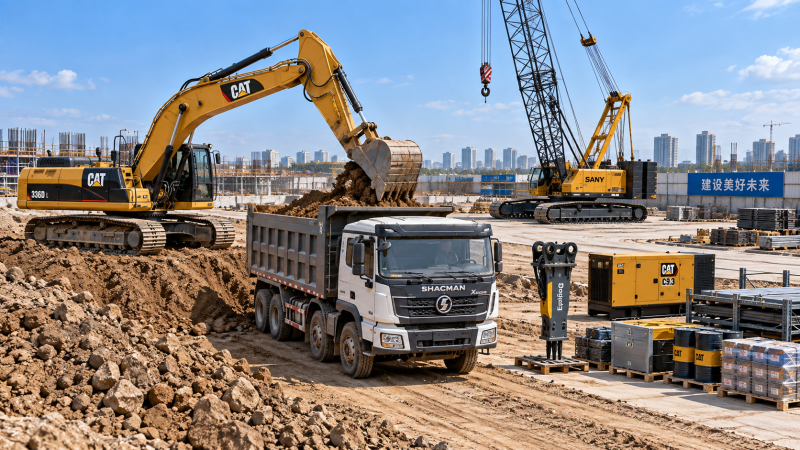
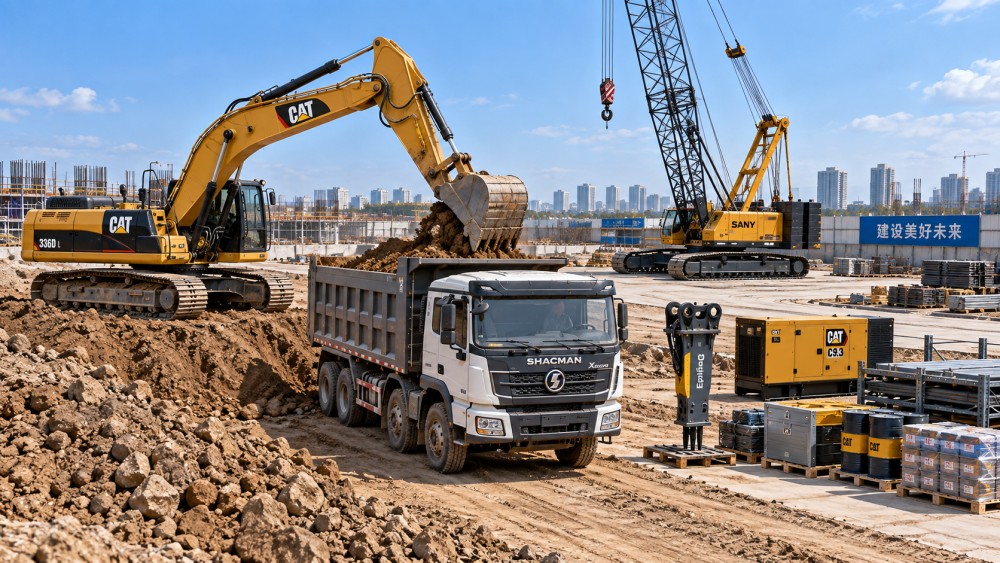
A construction equipment package sourcing plan should define the equipment system required to complete the work, not simply assemble a list of individual machines. Excavators, cranes, haul trucks, pavers, compactors, attachments, support units, and temporary power assets must be selected as a coordinated package with compatible capacities, working ranges, cycle times, transport constraints, and maintenance needs.
The first decision is to establish the production requirement that the package must support. A machine with a high nominal output can still underperform when its bucket size, boom reach, lifting chart, truck body volume, or discharge rate does not match the rest of the work sequence. The sourcing plan should therefore begin with the physical work to be performed: material type, planned quantities, haul distances, lift geometry, tunnel profile, paving width, compaction target, access restrictions, and expected operating hours.
A useful plan records both the required result and the conditions under which it must be achieved. “Excavate rock” is not a sufficient equipment requirement. The plan should distinguish between weathered rock and abrasive hard rock, shallow trenching and deep basements, unrestricted bench work and constrained urban sites. These conditions affect machine class, undercarriage configuration, attachment selection, fuel or power demand, wear-part consumption, and the practical availability of service support.
Define the Work Package Before Naming Equipment
Equipment selection becomes unreliable when machine types are named before the work package is quantified. Start by dividing the scope into equipment-dependent activities, such as bulk excavation, rock breaking, loading, hauling, lifting, material placement, fine grading, paving, compaction, dewatering, and site support. Each activity needs a production assumption, a working window, and an interface with the preceding and following activity.
For example, the required excavator fleet is shaped by the haul system. A large excavator loading undersized dump trucks can create excessive waiting time, impact damage at loading points, and inconsistent truck payloads. Conversely, trucks matched to a large loading tool may be unsuitable for narrow haul roads, temporary bridges, or soft ground. The plan should identify the intended loader-to-hauler relationship, target passes per truck, queue allowance, turning space, and whether loading occurs on level ground or a bench with uneven elevation.
Lifting equipment requires the same discipline. A crawler crane should not be selected from maximum rated capacity alone. The relevant lift is the actual load at the actual radius, including rigging, hook block, lifting beam, wind area, installation tolerances, and the effect of boom and jib configuration. Ground bearing pressure and crane travel paths also belong in the package definition. A crane that meets the chart but cannot be assembled, positioned, or moved between lift locations does not meet the site requirement.
Where underground works are included, the package must connect excavation method to ground behavior and logistics. Tunnel boring equipment, conveyors, muck handling, segment handling, grout systems, ventilation support, and backup transport form an operating chain. Selecting the primary machine without documenting spoil removal capacity, cutter intervention access, spare-part storage, electrical supply, and launch or retrieval constraints leaves major scope outside the sourcing decision.
Translate Site Conditions Into Technical Requirements
Technical specifications should state the conditions that govern performance, rather than collecting the largest available values from brochures. Operating weight, engine power, bucket capacity, line pull, travel speed, lifting capacity, and compaction force are useful only when connected to the actual task.
Ground conditions are particularly easy to underestimate. Soft or saturated ground can limit equipment weight, require wider tracks, change haul-road design, or prevent equipment from working at the planned location. In hard rock applications, the relevant question is not merely breaker impact energy; tool geometry, carrier hydraulic flow, return-line back pressure, wear steel protection, and access for changing consumables influence daily output. Abrasive materials can shorten the life of bucket teeth, cutting edges, conveyor components, and crusher liners, so the plan should identify expected wear points and the route for replenishment.
Climate and altitude deserve their own entry in the requirement sheet. High ambient temperature affects cooling capacity and hydraulic oil performance. Severe cold changes warm-up needs, battery reliability, fuel handling, and lubrication behavior. High altitude reduces engine output and can alter cooling margins. Dusty environments demand filtration capacity and cleaning intervals that may exceed ordinary construction conditions. These are not generic operating notes; they influence the selected configuration, planned downtime, spare filters, fluids, and service schedule.
Parameters That Need Context
Build the Package Around Interfaces
A sourcing plan should make interfaces visible because many failures occur between machines rather than within a single machine. The loading fleet interfaces with the hauling fleet; hauling interfaces with dumping and spreading; cranes interface with transport trailers, lifting frames, and access roads; paving equipment interfaces with asphalt production, delivery timing, and rollers. Each interface should state the expected flow, physical connection, ownership of temporary works, and the consequence of a delay.
Attachments often belong in the core package, not as late additions. A hydraulic quick coupler, grading bucket, rock bucket, breaker, pulverizer, grapple, compaction wheel, trenching attachment, or lifting device changes the useful range of a base machine. Yet attachment procurement requires confirmation of hydraulic circuit capacity, hose routing, pin dimensions, working pressure, electrical controls, machine stability, and transport weight. An attachment that physically fits may still reduce cycle performance or exceed the carrier's approved lifting or hydraulic limits.
Temporary equipment should be treated with equal care. Generators, cable reels, lighting towers, pumps, water trucks, fuel storage systems, air compressors, welders, service trucks, and mobile workshops may not appear on the primary production schedule, but their absence can stop the primary fleet. A plan should identify whether these assets are supplied with the main package, sourced locally, rented separately, or provided through site logistics.
Set a Commercial Basis That Reflects the Actual Operating Cost
Purchase price, lease rate, or rental rate should be separated from the cost of putting equipment into productive service. The commercial comparison needs a common scope for transport, unloading, assembly, commissioning, training where required, attachments, consumables, routine maintenance materials, telematics access, service labor, demobilization, and damage responsibilities.
Lifecycle cost assessment does not need speculative precision to be useful. It should identify the major cost drivers that differ among package options: fuel or electricity consumption, scheduled maintenance, high-wear components, tire or track wear, cutter tools, hydraulic attachments, engine aftertreatment needs, lubrication, standby equipment, and expected relocation effort. A lower daily rate can become expensive when the machine requires frequent transport permits, long setup periods, special assembly crews, or proprietary consumables with uncertain delivery lead times.
Ownership and rental decisions should also follow the work profile. Equipment assigned to sustained, predictable production may justify a different commercial structure from equipment needed for a short lift campaign, a one-time rock-breaking phase, or seasonal support work. The sourcing plan should record the planned utilization period, expected idle intervals, redeployment prospects, and whether a substitute unit is available if the selected asset is out of service.
Assess Supplier Capacity Beyond the Proposal
A technically suitable offer is incomplete until delivery and support capability are tested against the schedule. The plan should require confirmation of machine location, readiness status, configuration lead time, shipping sequence, port or border documentation responsibilities, transport dimensions, assembly duration, and site acceptance conditions. Large crawler cranes, oversized mining equipment, and tunnel systems can involve dismantling, special trailers, route studies, lifting support, and staged arrival. These activities must be linked to the construction sequence rather than left as a general delivery commitment.
Support evaluation should focus on the equipment elements that can halt the work. For a hydraulic excavator, that may include pumps, control valves, track components, cylinders, and electronic control modules. For a paver, screed heating, conveyor drives, augers, and control systems may be more consequential than the base engine. For a tunnel machine, cutter tools, seals, bearings, electrical components, and backup-system parts may require special planning. The sourcing document should distinguish between stocked consumables, critical spares held at site, parts held regionally, and parts ordered only after a failure.
Service arrangements need practical detail. Record service coverage during planned working hours, diagnostic capability, access to technical documentation, responsibility for fault isolation, required tools, warranty exclusions, and the process for approving replacement equipment. A response promise without defined mobilization conditions does not protect the schedule.
Protect the Delivery Schedule With Acceptance Gates
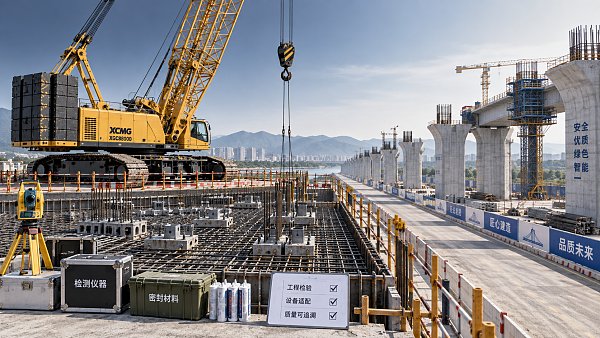
Equipment arrival is not the same as equipment readiness. The package plan should set acceptance gates that confirm the correct configuration before work starts. These gates can include serial-number and attachment verification, transport damage inspection, fluid and filter checks, calibration of machine-control systems, load-chart verification, safety-device testing, functional trials, documentation review, and confirmation that required consumables and spare parts are present.
Commissioning criteria should be tied to the intended work. A haul truck test should reflect the planned route, grade, loading arrangement, and dumping operation. A crane trial should verify the planned configuration and support conditions, not merely engine start-up. For road machinery, trial placement should show that the material transfer, screed response, grade control, and compaction sequence work together. This approach exposes mismatched assumptions while alternatives and technical support are still available.
The schedule should include a recovery path for late or rejected equipment. It may involve a substitute machine class, a short-term rental unit, resequencing of non-dependent work, or a temporary change in production method. The alternative does not need to duplicate every feature of the preferred package, but its limitations should be known before the disruption occurs.
Keep a Controlled Equipment Decision Record
The final sourcing plan should contain a concise decision record for every major asset: required duty, selected configuration, capacity basis, interfaces, commercial scope, delivery date, acceptance criteria, maintenance responsibility, critical spares, and replacement route. Assumptions should be visible, especially those involving ground conditions, material properties, working hours, haul distance, lift radius, or production targets.
Changes require the same discipline. A revised excavation depth, heavier precast component, longer haul route, altered tunnel geology, or reduced site access can invalidate part of the original package even when the named machines remain unchanged. Revisiting the linked requirements prevents a small scope change from turning into a fleet bottleneck after mobilization.
Related News
 Sep 29, 2026Infrastructure Construction Standards: A Project Manager’s Guide to ComplianceInfrastructure construction standards guide for project managers: turn requirements into field controls, hold points, traceability, and compliant delivery.
 Sep 28, 2026How to Specify Custom Mining Equipment for Abrasive Ground and High-Load HaulageCustom mining equipment for abrasive ground and high-load haulage: learn how to optimize payload, wear protection, powertrains, uptime, and lifecycle cost for safer, reliable production.
 Sep 29, 2026What belongs in a construction equipment package sourcing plan?Construction equipment package planning sourcing guide: learn how to match machines, attachments, site conditions, supplier support, costs, and acceptance gates for reliable project delivery.
 Sep 29, 2026How to verify equipment durability before approving suppliers at scaleHow can heavy equipment manufacturers verify durability and manage supplier risk at scale? Explore practical testing, traceability, audits, and control strategies.

Ms. Elena Rodriguez
Weekly Insights
Stay ahead with our curated technology reports delivered every Monday.