
How to Specify Custom Mining Equipment for Abrasive Ground and High-Load Haulage
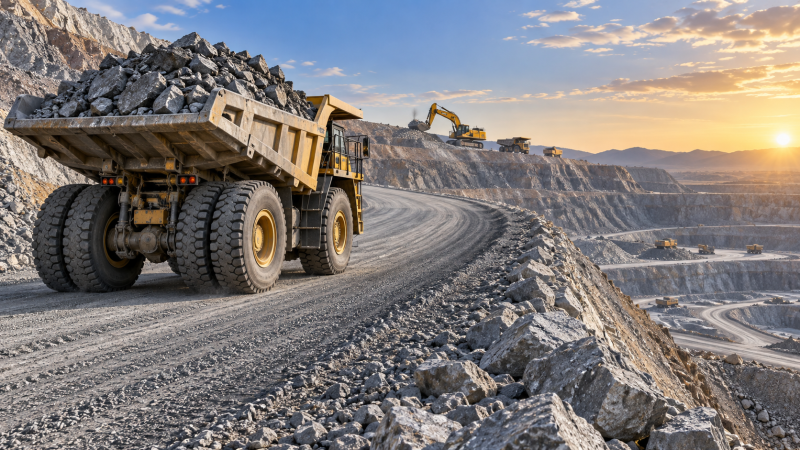
How to Specify Custom Mining Equipment for Abrasive Ground and High-Load Haulage
Specifying custom mining equipment for abrasive ground and high-load haulage requires more than selecting bigger machines. Project managers must align geology, payload targets, haul profiles, wear protection, powertrain performance, and lifecycle cost before procurement begins.
The central decision is whether a proposed configuration will sustain required production without creating unacceptable downtime, maintenance exposure, fuel consumption, or safety risk across its planned operating life.
For open-pit projects, the best specification is rarely the machine with the highest headline capacity. It is the equipment package that performs predictably under actual ground, climate, loading, and haul-road conditions.
Start With the Operating Environment, Not the Equipment Catalog
Many procurement failures begin when teams choose a truck, excavator, or loading tool before converting site conditions into measurable design requirements and operating constraints.
Abrasive ground should be described through more than general labels such as hard rock or gravel. Specify rock strength, silica content, fragmentation size, moisture, fines generation, and expected contamination.
These conditions determine wear rates on buckets, bodies, liners, tire treads, undercarriages, hydraulic components, and material-handling interfaces. They also influence loading time and equipment availability.
Project managers should request geological and production teams to provide representative material data rather than relying only on early exploration summaries or contractor assumptions.
Important inputs include unconfined compressive strength, abrasivity indices, particle-size distribution, density variation, blasting results, and expected changes between benches, ore zones, and waste zones.
Where laboratory testing is limited, use operating evidence from comparable pits. Historical liner life, tooth consumption, tire failures, and haul-road maintenance records often reveal practical risks.
The specification should identify the worst credible operating case, not merely average conditions. Equipment designed around average material frequently becomes unreliable during seasonal or geological transitions.
Define the Production Target as a System Requirement
Custom mining equipment must support a production system, not an isolated machine purchase. The starting point is required annual tonnes, operating hours, shift structure, and planned availability.
Translate the annual target into hourly material movement after accounting for weather delays, blasting windows, planned maintenance, operator changes, traffic restrictions, and plant interruptions.
This calculation exposes whether higher payload, faster cycle time, greater fleet size, or improved reliability provides the most economical path to target output.
For high-load haulage, payload targets should be expressed as a controlled operating range rather than a theoretical maximum. Consistent payload discipline protects structural components and tire life.
Overloading may raise short-term tonnes per trip, yet it can accelerate frame fatigue, increase braking demand, worsen road damage, and create expensive unplanned downtime.
Underloading also matters because it reduces fleet productivity while leaving fuel, labor, and fixed ownership cost largely unchanged. Payload measurement and loading accuracy deserve specification attention.
Ask suppliers to model the complete loading-and-hauling circuit using site-specific assumptions. Generic productivity tables are useful only after their assumptions have been independently reviewed.
Match Payload Class to Haul Profile and Road Design
Truck payload selection should begin with the haul route. Grade, distance, rolling resistance, curve geometry, elevation, road width, and dump-point conditions all affect equipment performance.
A larger truck is not automatically more efficient on narrow, steep, poorly maintained, or frequently changing haul roads. Restricted routes can erase the expected productivity benefit.
High-load haulage requires enough engine power and continuous retarding capability to control loaded descents without excessive brake temperature, component stress, or unsafe operating practices.
Evaluate the full cycle: loading position, spotting, acceleration, uphill loaded travel, downhill empty return, queuing, dumping, and refueling. One bottleneck can determine fleet output.
Rolling resistance deserves particular attention in abrasive operations because loose fines, sharp aggregates, rutting, and insufficient drainage can materially change fuel burn and cycle duration.
Road design and equipment selection must be coordinated. Suitable berms, crossfall, drainage, curve radii, and maintenance standards can improve haulage economics as much as additional horsepower.
Include expected future route changes in the requirement. Deepening pits often introduce longer hauls and steeper ramps, making a fleet that works today unsuitable for later project phases.
Specify Wear Protection Where It Creates Measurable Value
In abrasive ground, wear protection is a production control measure rather than an optional accessory. The objective is to extend useful life without adding unnecessary dead weight.
Bucket and body specifications should identify high-wear zones, impact zones, target material thickness, liner material, replacement method, and maximum acceptable weight increase.
Harder liners are not always better. A material that resists abrasion well may crack under repeated impact, while an overly heavy package can reduce payload and increase fuel consumption.
Request a wear map from the supplier based on material flow and loading method. It should show where abrasion, gouging, impact, and material adhesion are expected.
For truck bodies, consider whether a custom body design can improve material release, reduce carryback, maintain payload capacity, and protect structural members from direct rock contact.
Carryback has broader consequences than lost capacity. Frozen or compacted material can distort payload readings, increase tipping risk, and impose repeated cleaning delays during shifts.
Wear components should be selected with replacement logistics in mind. Standardized interfaces, accessible fasteners, lifting provisions, and local inventory can reduce maintenance-related production losses.
Choose a Powertrain for Real Duty Cycles and Site Conditions
Powertrain selection should reflect actual duty cycles, not only rated engine output. High altitude, ambient temperature, grade severity, and payload variation can materially change available performance.
At altitude, reduced air density affects combustion and cooling. Equipment should be evaluated using derated performance curves rather than sea-level ratings printed in general product literature.
In extreme heat, cooling capacity becomes a limiting factor. Radiator design, fan control, filtration, fluid temperature monitoring, and service access all influence sustained availability.
Cold-weather projects need equally specific requirements for starting, fuel treatment, hydraulic warm-up, cab heating, battery capacity, and safe operation during freeze-thaw road conditions.
Mechanical-drive, electric-drive, hybrid, and battery-electric haulage options should be compared through lifecycle scenarios. Each can be attractive when matched to site infrastructure and operating profile.
Electric-drive trucks can provide strong retarding performance on long descents, while battery-electric solutions may reduce ventilation or fuel exposure where charging and energy planning are viable.
Do not assume a lower-emission option automatically lowers total cost. Assess grid capacity, charging downtime, energy prices, maintenance skills, spare parts, and production consequences during power interruptions.
Design for Availability, Serviceability, and Maintenance Safety
Availability targets should be written into the custom mining equipment specification alongside payload and horsepower requirements. A productive fleet depends on maintainable machines, trained personnel, and timely parts.
Ask suppliers to separate planned maintenance assumptions from unplanned failure assumptions. Combining them can obscure whether high availability depends on unrealistic repair or staffing expectations.
Critical maintenance questions include access to filters, hoses, lubrication points, powertrain components, sensors, body pins, braking systems, and wear items requiring frequent inspection.
Serviceability has a direct safety dimension. Elevated work areas, awkward lifting tasks, poorly located isolation points, and inadequate platforms increase maintenance duration and incident exposure.
Specify onboard condition monitoring for major systems, including engine health, hydraulic pressure, brake temperature, tire condition, payload, structural fatigue indicators, and electrical faults.
However, data collection alone does not create value. The project needs escalation rules, diagnostic ownership, response time commitments, and workflows that convert alerts into planned maintenance actions.
For remote sites, assess supplier support in practical terms: field technicians, component exchange programs, local warehouse coverage, remote diagnostics, training capacity, and response during major failures.
Evaluate Total Cost of Ownership Instead of Purchase Price
Project managers should compare options using total cost of ownership, not initial capital cost. The lowest purchase price can become the most expensive choice in abrasive, high-load conditions.
A useful model includes acquisition cost, financing, fuel or electricity, tires, wear parts, labor, maintenance, rebuilds, downtime, road upkeep, resale value, and production loss.
Downtime should be valued using the constrained system output, not simply the unavailable machine. If one truck shortage delays the loading fleet, the financial impact can multiply.
Use sensitivity analysis for uncertain variables such as fuel price, tire life, haul distance, equipment utilization, payload compliance, and expected component life under changing material conditions.
This approach helps management distinguish meaningful cost advantages from estimates that depend on optimistic operating assumptions. It also clarifies which risks should be transferred contractually to suppliers.
Commercial proposals should state included wear packages, warranty conditions, consumable exclusions, rebuild assumptions, software subscriptions, training, commissioning support, and availability guarantees in clear terms.
Where production risk is substantial, consider performance-linked agreements. These can align supplier incentives with availability, fuel efficiency, payload consistency, and response time instead of delivery alone.
Use a Structured Procurement and Acceptance Process
A detailed request for proposal should convert operating needs into weighted evaluation criteria. Avoid specifications that list features without explaining the production, safety, or lifecycle outcome required.
Separate mandatory requirements from preferred options. Mandatory items may include payload range, braking capacity, service access, ambient operating range, safety systems, and local support capability.
Preferred criteria can include automation readiness, energy-transition compatibility, telemetry integration, operator comfort, advanced wear solutions, and optional fleet-management functions with measurable business cases.
Before award, validate supplier claims through references at comparable mines. Ask specifically about component life, actual availability, operator acceptance, warranty disputes, and support responsiveness.
Factory acceptance testing should verify configuration compliance before shipment. Site acceptance testing should then confirm performance on representative material, grades, temperatures, and loading conditions.
Define baseline measurements for cycle time, fuel use, payload accuracy, retarding temperature, tire condition, maintenance hours, and wear rates during commissioning. These support later performance reviews.
Acceptance criteria should allow adjustment periods without weakening accountability. Early operating data may justify tuning payload settings, body liners, tire selection, software parameters, or operator practices.
Build Flexibility Into the Final Specification
Mining projects change as pits deepen, ore bodies vary, and infrastructure evolves. A rigid specification can create unnecessary replacement costs when future operating conditions depart from initial forecasts.
Specify upgrade paths where credible future needs exist, including autonomous operation interfaces, dispatch integration, battery conversion readiness, improved cooling packages, or modular body and liner systems.
Flexibility should not become uncontrolled option buying. Each upgrade provision needs a realistic scenario, an incremental cost, an implementation requirement, and a defined decision point.
Standardization across the fleet remains valuable. Common components, diagnostic platforms, tires, lubricants, and training procedures reduce inventory complexity and improve maintenance planning across multiple units.
At the same time, avoid forcing complete standardization where task differences are material. A short-haul waste fleet may need a different body, tire, or powertrain approach than ore haulage.
The strongest custom mining equipment strategy balances consistency with purposeful variation. Every customization should solve a documented operating problem or protect a measurable economic outcome.
Project leaders should revisit the specification after commissioning and annually thereafter. Field evidence from wear, fuel, availability, and cycle data is the best foundation for future fleet decisions.
Conclusion: Specify for Controlled Production, Not Maximum Capacity
For abrasive ground and high-load haulage, effective equipment specification begins with measurable site conditions and ends with verified lifecycle performance under representative operating loads.
Project managers should prioritize the relationship between geology, haul profile, payload control, wear management, powertrain suitability, maintenance access, and total cost of ownership.
The right custom mining equipment configuration does not simply move more material per trip. It sustains production with predictable availability, manageable maintenance exposure, safer operations, and defensible project economics.
When procurement decisions are based on site data, whole-system modeling, and disciplined acceptance criteria, heavy equipment becomes a controlled infrastructure asset rather than a recurring operational risk.
Related News
 Sep 29, 2026Infrastructure Construction Standards: A Project Manager’s Guide to ComplianceInfrastructure construction standards guide for project managers: turn requirements into field controls, hold points, traceability, and compliant delivery.
 Sep 28, 2026How to Specify Custom Mining Equipment for Abrasive Ground and High-Load HaulageCustom mining equipment for abrasive ground and high-load haulage: learn how to optimize payload, wear protection, powertrains, uptime, and lifecycle cost for safer, reliable production.
 Sep 29, 2026What belongs in a construction equipment package sourcing plan?Construction equipment package planning sourcing guide: learn how to match machines, attachments, site conditions, supplier support, costs, and acceptance gates for reliable project delivery.
 Sep 29, 2026How to verify equipment durability before approving suppliers at scaleHow can heavy equipment manufacturers verify durability and manage supplier risk at scale? Explore practical testing, traceability, audits, and control strategies.
Ms. Elena Rodriguez
Weekly Insights
Stay ahead with our curated technology reports delivered every Monday.