
Infrastructure Equipment Market Reference: Demand, Pricing, and Supplier Benchmarks
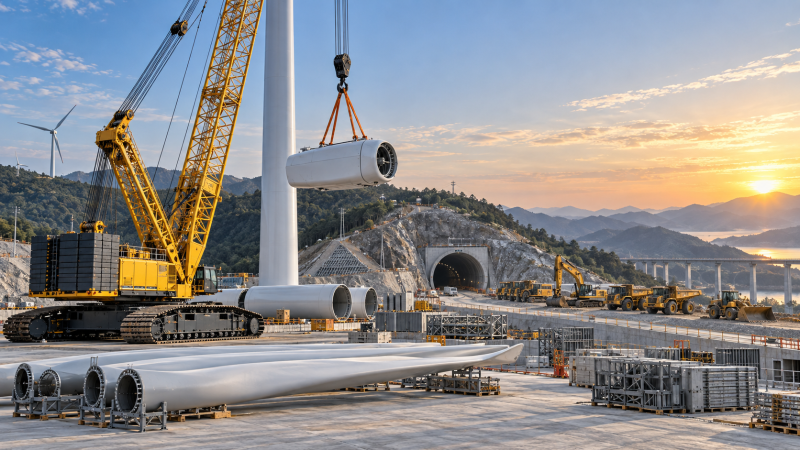
An infrastructure equipment market reference is no longer a simple list of machine specifications and supplier names. For business evaluators, it is a working framework for judging where demand is real, where pricing is defensible, and where a supplier’s capability will still hold up once a project moves from tender documents to difficult ground conditions, high-utilization shifts, or remote-site maintenance.
This matters because the heavy-equipment market is being reshaped by several forces at once: urban rail expansion, renewable-energy construction, mineral supply-chain investment, road modernization, safety regulation, and the gradual electrification of mining fleets. A crawler crane selected for a wind project, a tunnel boring machine specified for a metro crossing, or a mining dump truck deployed at altitude may all sit within the same broad infrastructure cycle. Yet the purchasing logic, cost drivers, delivery risks, and supplier benchmarks are very different.
For evaluators comparing capital-intensive equipment categories, the strongest decisions begin by connecting physical machine parameters with the commercial reality around them: project schedules, geology, fuel or power access, operator availability, parts logistics, financing conditions, and residual value. The machine is only one part of the investment case.
Demand is becoming more selective, not simply larger
Global infrastructure spending can create an impression of broad-based equipment demand. In practice, demand is increasingly concentrated in specific applications where capacity, reliability, and project timing matter more than headline construction activity.
Tunnel boring machines illustrate this clearly. Metro systems, rail tunnels, hydropower works, water-transfer projects, and mountain crossings can generate substantial TBM demand, but orders do not flow evenly. They depend on route approvals, geological surveys, financing closure, procurement rules, and civil-contractor consortium decisions. A delayed environmental permit or a revised alignment can postpone a major machine order for years. As a result, TBM demand should be assessed through the project pipeline, not through general construction forecasts alone.
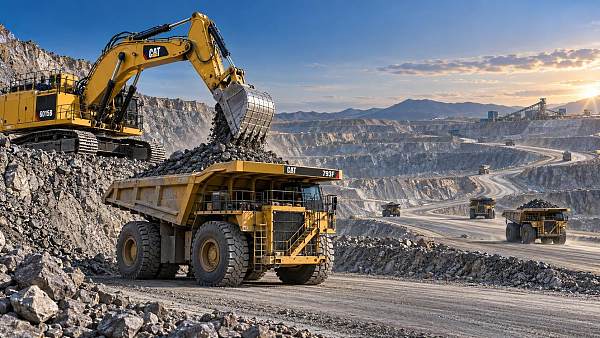
The same pattern applies to ultra-large excavators and mining dump trucks. Their market is linked less to ordinary earthmoving activity than to mine expansion plans, stripping ratios, commodity economics, fleet replacement cycles, haul-road design, and the availability of power or diesel at site. A mine operator may extend the life of a current fleet when commodity prices are uncertain, then accelerate replacement once production targets or emissions requirements become more pressing.
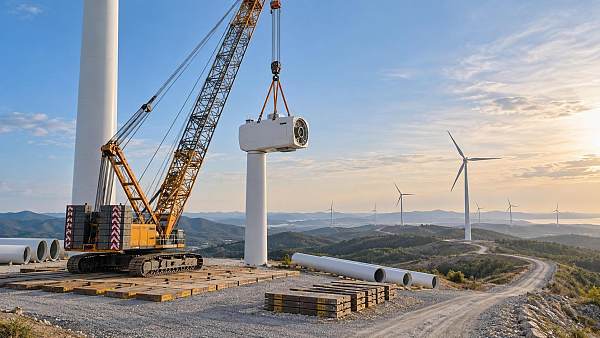
For crawler cranes, demand often follows the build-out of wind farms, petrochemical facilities, nuclear projects, ports, modular construction yards, and large industrial plants. The relevant question is not merely whether investment is growing. It is whether the next group of projects requires lifting capacity beyond the local rental fleet, whether transport routes can accommodate large crane components, and whether trained assembly and lifting teams are available.
Road machinery has a somewhat different rhythm. Pavers, milling machines, compactors, asphalt plants, and related equipment benefit from highway maintenance programs as well as new road construction. This can make demand more recurring, but it also exposes buyers to local specifications, asphalt supply conditions, emissions rules, and contractor utilization rates. A machine with attractive purchase pricing may be less competitive if its paving-control system cannot integrate with the digital workflow required by a public-road contract.
Read the market through project triggers
A useful market reference starts with the event that unlocks equipment demand. Business evaluators should track the following triggers rather than relying on generalized market sentiment:
- Contract awards and notice-to-proceed dates: These are stronger signals than early project announcements, especially for specialized machines with long production lead times.
- Design maturity: Equipment selection often changes when geological, lifting, or haulage assumptions are validated in detailed engineering.
- Fleet replacement windows: Mining and road contractors may purchase around maintenance thresholds, warranty expiration, or changes in operating cost.
- Energy and emissions requirements: Electrified, hybrid, and lower-emission machinery becomes more relevant when site infrastructure and regulation support it.
- Supply-chain bottlenecks: Availability of cutters, high-strength steel, hydraulic components, batteries, tires, and skilled service labor can alter both delivery timing and final cost.
This approach is especially important in heavy industry, where a “strong market” can still contain weak opportunities. A project may be visible and well funded, yet unsuitable for a supplier because of localization requirements, transport constraints, tender qualifications, or an installed competitor service base that is difficult to displace.
Pricing: why the purchase price rarely tells the whole story
Heavy equipment pricing is often discussed as though it were a published list price adjusted by negotiation. In reality, the delivered economics can shift materially depending on configuration, project risk, service scope, transport, commissioning, and contractual liability.
For a tunnel boring machine, the base machine cost is only a starting point. The price may be shaped by cutterhead design, shield configuration, diameter, pressure requirements, backup systems, conveyor arrangements, automation features, spares packages, site acceptance terms, and the allocation of geological risk. A reference price without these details can be misleading. Two machines in the same diameter class may have radically different commercial profiles because they are designed for different ground conditions and operational methods.
In open-pit mining, excavator and haul-truck pricing must be considered alongside payload matching, fuel burn, tire consumption, maintenance intervals, digital fleet-management compatibility, and expected availability. The less visible variables can be decisive. A lower-cost truck may create higher costs if it requires frequent parts imports, delivers poor dispatch data, or does not match existing loading equipment efficiently.
For crawler cranes, the acquisition or rental rate is only one layer of the calculation. Mobilization, assembly, site preparation, counterweight logistics, crane operator availability, wind restrictions, insurance, and lift-planning requirements can all become major cost items. On congested sites, a crane that reduces setup complexity or improves lift-cycle confidence may justify a higher initial quote.
A practical total-cost lens
When comparing offers, evaluators should separate price into four commercial layers:
The resulting total cost of ownership should be tested against utilization assumptions. A machine expected to run continuously in a mine or tunnel needs a different service and spares model from equipment used in intermittent civil works. Evaluators should also distinguish between a cost that is contractually fixed and one that remains exposed to foreign exchange, freight, energy, consumables, or project schedule changes.
Supplier benchmarks should go beyond brand recognition
In infrastructure equipment procurement, a recognized brand can signal engineering maturity, but it should not close the evaluation. The right supplier is the one whose technical design, commercial terms, regional support, and risk-bearing capacity fit the project.
A balanced supplier benchmark begins with equipment performance. For TBMs, relevant measures may include applicable geology, cutter intervention methodology, thrust and torque range, guidance accuracy, slurry or earth-pressure capability, and backup-system integration. For large excavators, the focus may shift toward bucket capacity, cycle time, structural durability, hydraulic efficiency, operator environment, and maintainability. In crane procurement, lifting charts, boom configurations, transportability, assembly procedure, and remote diagnostics deserve close attention.
However, technical performance alone is not enough. A machine can be excellent on paper and still become a difficult asset if the supplier lacks qualified field engineers, local inventory, training capacity, or authority to approve urgent technical changes. This is particularly relevant on isolated mining sites, cross-border tunnel projects, and large-energy developments operating under demanding schedules.
Business evaluators can use five benchmark questions:
- Does the supplier understand the operating environment? Ask for evidence of experience in comparable geology, climate, altitude, lifting conditions, or haulage duty cycles.
- How complete is the delivery scope? Clarify what is included in engineering support, commissioning, operator training, tooling, software, and initial consumables.
- What happens when the machine stops? Review response commitments, remote diagnostic capability, critical-spares availability, escalation channels, and service staffing.
- Can the equipment work within the existing fleet ecosystem? Integration with fleet-management platforms, site power systems, transport arrangements, and maintenance practices may outweigh isolated machine advantages.
- How transparent is the commercial risk allocation? Examine warranty definitions, performance conditions, exclusions, liquidated damages, force majeure language, and change-order procedures.
Technology trends that are changing the benchmark
Digitalization is changing what buyers should expect from infrastructure equipment. Remote monitoring, machine-health analytics, payload optimization, automated guidance, and semi-autonomous operation are moving from optional demonstrations toward practical tools for managing uptime and safety. Their value is not identical across categories. In a high-volume mine, fleet data can directly improve dispatch decisions and fuel efficiency. In tunneling, condition monitoring may help anticipate cutter wear or hydraulic-system issues before they affect excavation progress.
Electrification is another important market signal, though it should be evaluated carefully. Pure electric mining trucks, battery-electric support vehicles, grid-connected road equipment, and hybrid systems can offer meaningful advantages where power supply, duty cycle, charging strategy, and maintenance capability align. They are not universal replacements for diesel equipment in every remote or high-output setting. The commercial question is whether the energy system, operational pattern, and regulatory trajectory make the transition credible over the asset’s working life.
Materials science also matters. TBM cutterhead materials, wear-resistant components, high-strength crane structures, advanced hydraulic systems, and battery thermal management are not abstract engineering details. They influence reliability, maintenance windows, operating limits, and ultimately the confidence with which contractors can commit to schedules.
Where market comparisons commonly go wrong
One frequent mistake is treating all large equipment as comparable by capacity alone. A nominally similar excavator may perform differently because of bucket design, hydraulic tuning, operator visibility, and service access. A crane’s maximum rated capacity says little about its usefulness at the required radius, configuration, and site condition. A TBM’s diameter does not reveal whether it is suited to mixed-face ground, high water pressure, or demanding settlement-control requirements.
Another error is benchmarking a global supplier against a regional supplier without accounting for local support. A lower quoted price can lose its appeal when customs clearance, technician travel, language support, or parts lead times create operational exposure. Conversely, a local supplier should not be favored solely for proximity if its engineering depth or quality-control process cannot meet the project’s requirements.
Finally, evaluators sometimes underestimate the value of timing. In sectors with long manufacturing cycles, securing a technically appropriate production slot can be more valuable than extracting a modest reduction in unit price. This is especially true when a delayed machine would hold up a tunnel drive, a mine expansion, or a major energy installation.
Building a more useful infrastructure equipment market reference
The most effective reference tool is a living record, not a one-time report. It should combine project pipeline intelligence, supplier capability profiles, configuration-level pricing assumptions, service coverage, technology trends, and known risk factors. Updates should be triggered by changes in tender status, commodity conditions, energy policy, major component availability, and regional logistics.
For evaluators responsible for investment cases or supplier selection, the goal is not to predict every market movement. It is to make uncertainty visible before it becomes expensive. That means recognizing the difference between announced demand and executable demand, between an attractive quote and a workable lifecycle cost, and between a well-known manufacturer and a supplier prepared to support the machine where it will actually operate.
TF-Strategy approaches this landscape through the connected realities of power, precision, and project execution. By following tunnel boring machines, ultra-large excavators, crawler cranes, road machinery, and mining dump trucks alongside the infrastructure and energy transitions that shape their use, decision-makers can build a sharper view of the market. A well-structured infrastructure equipment market reference does not replace technical due diligence. It gives that diligence a stronger commercial context—and helps ensure that major equipment decisions remain resilient long after the contract is signed.
Related News
 Sep 16, 2026Infrastructure Equipment Market Reference: Demand, Pricing, and Supplier BenchmarksInfrastructure equipment market reference for buyers: assess demand signals, total cost, pricing risks, and supplier benchmarks for tunnels, mining, cranes, and road projects.
 Sep 15, 2026How to Evaluate Infrastructure Equipment Suppliers for Complex Project RequirementsInfrastructure equipment solutions supplier evaluation guide for complex projects: assess technical fit, lifecycle cost, reliability, local support, and contract risk.
 Sep 14, 2026What Drives Surface Mining Equipment Cost Across a Mine’s Operating Life?Surface mining equipment cost depends on fleet matching, fuel, wear, maintenance, availability, and rebuild timing. Explore lifecycle strategies that protect output and margins.
 Sep 13, 2026Crawler Crane Application Analysis for Wind Farms, Bridges, and Confined SitesCrawler crane application analysis for wind farms, bridges, and confined sites—optimize lift paths, ground conditions, access, and schedules for safer project delivery.
Ms. Elena Rodriguez
Weekly Insights
Stay ahead with our curated technology reports delivered every Monday.