
Infrastructure Project Intelligence in North America: What Buyers Should Compare Before Investing
Infrastructure Project Intelligence in North America: What Buyers Should Compare Before Investing
In a market shaped by megaproject risk, supply chain volatility, and fast-changing equipment technologies, infrastructure project intelligence North America has become essential for serious buyers.
Before investing, buyers should compare project pipelines, contractor demand, machinery fit, lifecycle cost, and regional policy signals.
That reduces the chance of costly mismatch.
It also improves timing, asset utilization, and long-term return.
For companies tracking heavy equipment, this is no longer optional research.
It is part of capital discipline.
Why Infrastructure Project Intelligence North America Matters Now
North America is not one uniform market.
Project economics differ sharply across the United States, Canada, and Mexico.
Funding models, permitting timelines, labor conditions, and logistics capacity all move differently.
That is why infrastructure project intelligence North America must go beyond headline spending numbers.
Buyers need to know where demand is real, where it is delayed, and where equipment specifications are shifting.
Recent changes make this even clearer.
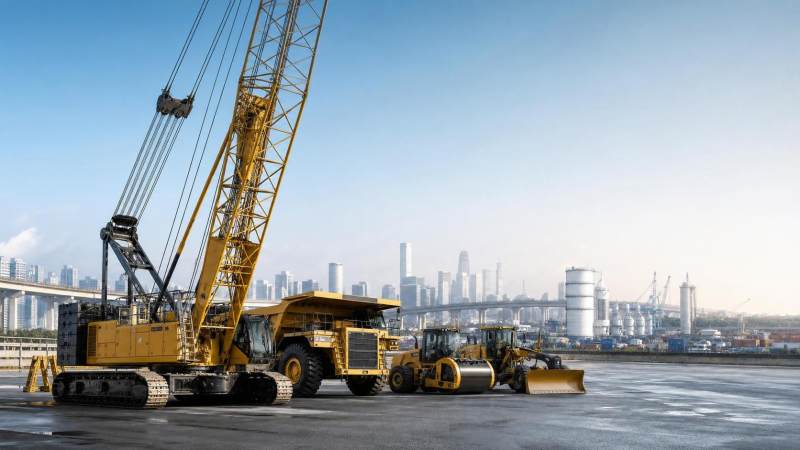
Energy transition projects are raising demand for crawler cranes, road machinery, and specialized haulage support.
Urban transit upgrades are renewing interest in TBM planning and underground construction methods.
Mining investment is also reshaping open-pit equipment choices.
A buyer who compares only unit price will miss the bigger signal.
A buyer who compares intelligence across project, equipment, and policy layers will usually see risk earlier.
Start with the Project Pipeline, Not the Equipment Catalog
The first comparison point is project visibility.
Infrastructure project intelligence North America should map active, funded, delayed, and speculative projects separately.
Those categories should never be blended.
In practice, the key questions are simple:
- Which projects have secured budget approval?
- Which tenders are moving into execution within twelve to twenty-four months?
- Which segments show repeatable equipment demand?
- Which regions depend on unstable political or commodity cycles?
This step matters because heavy machinery procurement is slow, expensive, and exposed to idle time.
A large machine without a reliable project lane becomes a balance sheet problem.
A strong pipeline, by contrast, supports financing, staffing, spare parts planning, and resale assumptions.
For intelligence-led buyers, pipeline quality always comes before machine branding.
Compare Contractor Demand and Delivery Models
The next layer is contractor behavior.
Not every project owner buys equipment directly.
Many rely on EPC firms, specialized subcontractors, rental fleets, or joint ventures.
That changes what a good investment looks like.
Infrastructure project intelligence North America should reveal who controls the equipment decision and how quickly specifications can change.
This is especially important in tunnel, mining, and energy projects.
Some contractors prioritize acquisition cost.
Others prioritize uptime, operator training, digital monitoring, or maintenance support.
Those differences shape winning offers.
A useful comparison framework includes:
- Buyer type: public owner, private miner, utility developer, or prime contractor.
- Delivery structure: direct purchase, lease, rental, service-backed contract, or mixed fleet model.
- Procurement trigger: expansion, replacement, compliance need, or new technology adoption.
- Decision speed: urgent deployment or long prequalification cycle.
Once those points are clear, investment decisions become much sharper.
Match Machinery to Ground Conditions and Work Method
Equipment fit is where many buying mistakes begin.
Infrastructure project intelligence North America should connect machine parameters with actual construction conditions.
That means geology, terrain, haul distance, altitude, weather exposure, and lifting profile.
For TBM-related projects, cutter head design, ground pressure strategy, slurry or EPB suitability, and maintenance access all matter.
For open-pit mining, payload consistency, tire management, fuel profile, and dispatch integration matter more than brochure horsepower.
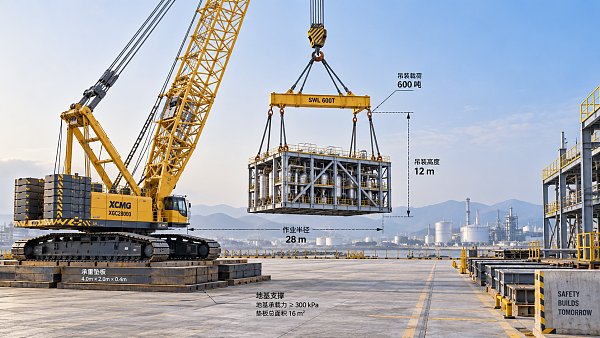
For crawler cranes, lift path, site congestion, component weight, and wind limitations define real productivity.
The same applies to road machinery and dump trucks.
Method fit is as important as machine size.
A smaller unit with better availability may outperform a larger unit with weak service support.
This is where TF-Strategy’s intelligence model is useful.
It links physical machine data, engineering methods, and project strategy in one decision view.
Use Lifecycle Cost, Not Purchase Price, as the Core Filter
Procurement teams still fall into the same trap.
They compare quoted price first and operating value later.
That order should be reversed.
In infrastructure project intelligence North America, lifecycle cost is the more reliable decision anchor.
A realistic comparison should include:
- Fuel or energy consumption
- Wear-part replacement cycles
- Service labor availability
- Downtime risk and recovery speed
- Digital diagnostics and remote support
- Residual value and secondary market demand
This is also where newer technologies need careful judgment.
Remote-controlled excavation, electric haulage, and advanced monitoring systems can create major savings.
But only if site conditions, charging access, technician skills, and software reliability are ready.
A lower-emission machine with poor uptime is still a poor investment.
Read Regional Policy and Supply Chain Signals Early
Policy signals often change buying logic before the market fully reacts.
That is why infrastructure project intelligence North America must include regulation, trade conditions, and local content expectations.
Emission standards may shift engine choices.
Grid investment may favor electric fleets in one region and delay them in another.
Port congestion or cross-border trade friction may distort delivery schedules.
Even raw material supply can affect cost planning for cutter tools, steel structures, and replacement parts.
More importantly, policy should be read as a timing indicator.
When infrastructure grants, mining approvals, or renewable auctions accelerate, equipment demand usually follows.
The better move is to prepare before that demand peaks.
A Practical Comparison Table for Buyers
Where TF-Strategy Adds Decision Value
The value of TF-Strategy is not just news aggregation.
Its strength is intelligence stitching across equipment data, engineering methods, and strategic demand.
That matters in North America, where large infrastructure decisions are rarely driven by one variable.
A buyer may need to compare a tunnel opportunity, a mining fleet renewal, and a heavy lifting project at the same time.
Without integrated intelligence, those choices stay fragmented.
With better infrastructure project intelligence North America, investment decisions become more grounded.
That helps enterprises lower TCO, improve deployment quality, and respond faster to shifts in infrastructure and energy development.
Final Decision Check Before Investing
Before approving a major purchase, pause and compare five things together.
Check the real project pipeline.
Check who truly controls equipment demand.
Check whether the machine fits the method, not just the spec sheet.
Check lifecycle cost under real operating conditions.
Then check the regional policy and supply chain outlook.
That is the discipline behind stronger infrastructure project intelligence North America.
It turns market noise into a workable decision framework.
And in capital-heavy sectors, that difference is often the difference between movement and misallocation.
Related News
 Oct 14, 2026High-Capacity Heavy Lifting Solutions: Matching Load, Radius, and Ground ConditionsDiscover heavy lifting solutions high capacity projects demand—compare load charts, working radius, and ground conditions to select a feasible, cost-effective system.
 Oct 13, 2026OEM Equipment Suppliers in Europe: Vetting Quality, Lead Times, and SupportCompare OEM equipment Europe suppliers on quality, lead times, and after-sales support. Discover practical vetting steps to reduce downtime and buy heavy equipment with confidence.
 Oct 12, 2026How to Assess a High-Altitude Mining Equipment Manufacturer for Remote ProjectsHigh altitude mining manufacturer assessment guide: compare derating, cold-climate reliability, remote service, parts resilience, and lifecycle risk for smarter project decisions.
 Oct 11, 2026What Drives TBM Cutter Head Material Cost and Life-Cycle Value?Cutter head material cost explained: compare TBM alloys, wear protection, downtime risk, and life-cycle value to choose the most reliable, cost-effective solution.


Ms. Elena Rodriguez
Weekly Insights
Stay ahead with our curated technology reports delivered every Monday.