
Mining Haulage Services Procurement Checklist for Uptime and Cost Control

Mining Haulage Services Procurement Checklist for Uptime and Cost Control
A mining haulage contract can look competitive on paper and still become expensive once the fleet reaches the pit. The usual causes are not mysterious: trucks are matched to a generic payload rather than the actual route, availability is measured loosely, maintenance responsibility is blurred, or the rate structure rewards loaded kilometres while ignoring queue time, road condition, and production interruptions.
For procurement teams, a disciplined mining haulage services procurement checklist is not simply a vendor comparison tool. It is a way to test whether a provider can support the mine plan under real operating conditions: steep ramps, variable ore density, wet-season road deterioration, altitude, dust, shift changes, and the inevitable gap between a design cycle time and an actual one.
The central question is straightforward: can the service provider move the required material safely and predictably, at a cost structure that remains understandable when conditions change? The answer depends on far more than the quoted hourly rate or cost per tonne.
Start With the Haulage Duty, Not the Truck List
A common procurement mistake is issuing an RFQ that specifies fleet size and nominal payload before confirming the duty cycle. That approach tends to attract bids built around assumptions. A supplier may price for good road rolling resistance, standard loading times, a stable dump location, and high mechanical availability. The mine may be dealing with none of those things.
Before comparing proposals, define the operating envelope in enough detail that bidders are pricing the same job. This should include the material types to be moved, planned tonnes by period, haul distances, ramp gradients, road width, loading and dumping arrangements, expected operating hours, shift configuration, climatic constraints, and any planned changes to the pit sequence. If the route will evolve, state that openly rather than treating it as a variation to be discussed later.
Payload is particularly easy to oversimplify. A truck’s published payload class does not guarantee that it can consistently carry that load on every section of a site. Tire limitations, body configuration, material density, road geometry, grade resistance, and site payload policy all matter. Procurement should ask how payload will be measured, how overloads will be prevented, and who has authority to adjust loading practice when conditions change.
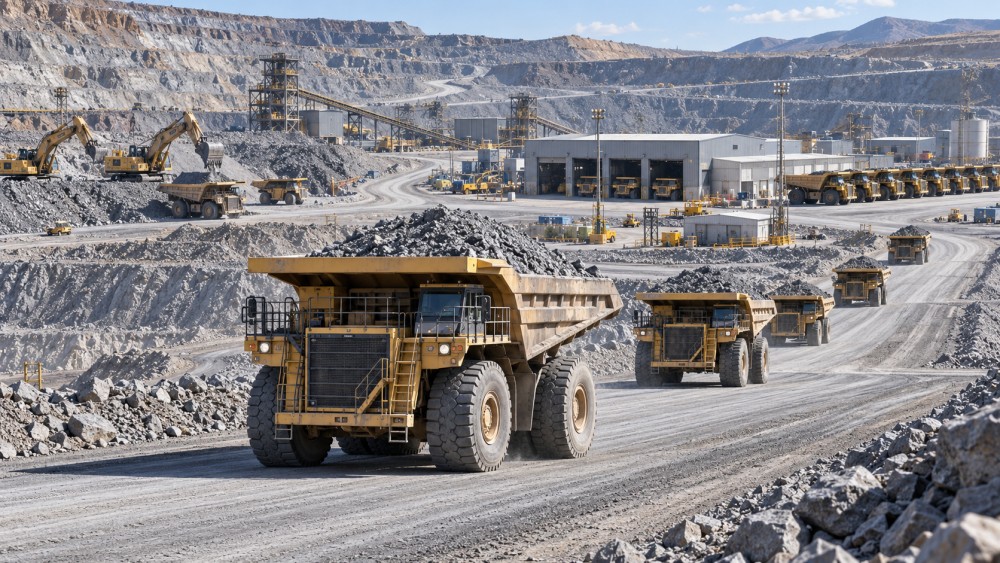
For outsourced fleets, require the bidder to show its production model rather than only its final number. The model does not need to disclose every commercial assumption, but it should make visible the planned cycle-time components: spotting, loading, loaded travel, dumping, empty return, delays, and allowances for routine service. This is where unrealistic bids often reveal themselves.
Availability Must Be Defined in Operational Terms
“High availability” is one of the most overused promises in haulage proposals. It means little until the calculation is agreed. A fleet can appear available if a contractor excludes long maintenance events, standby time, operator shortages, or trucks awaiting components. Meanwhile, the mine is still short of hauling capacity.
The contract should distinguish between physical availability, mechanical availability, utilisation, and productive utilisation. These measures answer different questions. A truck may be mechanically fit but idle because there is no operator, no fuel bowser, or no loading unit. From the mine’s perspective, all can reduce tonnes moved, but they should not be hidden in the same performance category.
Ask bidders to explain their downtime coding hierarchy and provide a sample daily fleet report. Look for clear treatment of scheduled maintenance, unscheduled repair, mine-caused delay, weather delay, and contractor-controlled delay. If the reporting structure cannot separate these categories, dispute resolution will become difficult the first time monthly performance falls behind plan.
The more useful commercial measure is often available haulage capacity against the production requirement, not an isolated availability percentage. A provider with fewer, larger trucks may produce an attractive availability figure but expose the operation to greater lost capacity when one unit fails. Conversely, a larger fleet of smaller units may offer flexibility but add operator, maintenance, and congestion burdens. There is no universally correct fleet mix; the practical choice depends on loading equipment, road constraints, reserve capacity, and the mine’s tolerance for disruption.
Examine the Fleet Behind the Proposal
Procurement should request a unit-by-unit fleet schedule, including equipment age, model, configuration, ownership status, expected mobilisation date, and major component history where relevant. “Equivalent equipment” language may be acceptable in some contracts, but it should not allow substitution with a truck that changes payload, braking performance, maintenance needs, or fuel profile without approval.
Equipment suitability also includes serviceability. A haulage provider may have technically appropriate trucks, yet lack a credible local parts pipeline, trained technicians, field workshop capacity, or tyre-management arrangement. These gaps often remain invisible during a presentation and become obvious only after a major component failure or a run of tire damage.
Useful questions include:
- Which critical components are held on site, and which must be sourced externally?
- What workshop bays, lifting tools, lubrication facilities, and diagnostic equipment will be available?
- How will planned maintenance be scheduled around the production plan?
- What is the replacement process when a truck is removed for extended repair?
- Who supplies and manages tyres, fuel, lubricants, and wear parts?
- Can the provider demonstrate experience with the proposed truck class in comparable terrain and climate?
This is also the point to assess technology claims carefully. Fleet management systems, onboard payload monitoring, fatigue tools, and remote condition monitoring can be valuable. But a dashboard does not improve performance by itself. Ask how alerts are acted on, who owns the data, how data quality is checked, and whether the mine will have access to raw operational records if a billing or performance question arises.
Build Safety Into the Commercial Evaluation
In open-pit haulage, safety is inseparable from productivity. Poor light-vehicle segregation, inadequate berm standards, weak fatigue management, improper speed control, or overloaded trucks can turn into lost shifts long before they become a formal incident statistic. A low-cost bid that relies on thin supervision or aggressive production assumptions deserves close scrutiny.
Evaluation should cover the provider’s site-specific safety system, operator competency process, pre-start inspection discipline, incident reporting practice, emergency response interface, and fatigue controls. Local legal and mine-site requirements will vary, so procurement should avoid assuming that a generic corporate policy is enough. The winning provider must be able to work within the site’s traffic management plan, communications protocol, induction requirements, and stop-work rules.
Operator quality deserves more attention than it typically receives in commercial scoring. Haul-truck operators influence fuel consumption, tire life, braking wear, payload consistency, and equipment abuse. Ask how competency is verified beyond initial licensing, how operators are coached after overspeed or harsh-event alerts, and how relief coverage is maintained for absenteeism and shift rotations.
Price the Whole Cost Mechanism, Not Just the Headline Rate
Haulage pricing usually needs to accommodate uncertainty. The problem is not that escalation clauses exist; it is that their triggers are often poorly understood. A rate per tonne may work well where routes and material volumes are stable. An hourly rate may suit variable work but can weaken incentives around cycle efficiency. A hybrid structure may be more realistic when a mine needs guaranteed capacity alongside variable production.
The procurement team should map each cost driver before negotiating the price schedule: fuel, labour, tyres, maintenance components, mobilisation, road maintenance obligations, standby, demobilisation, insurance, and applicable taxes or duties. Then identify which party carries the exposure if the driver changes. Fuel is the obvious example, but it is not the only one. Extended haul distances, wet-weather restrictions, reduced payload limits, and delayed access to dump areas can materially alter cost and output.
Do not leave “normal operating conditions” undefined. It is a convenient phrase until a haul road becomes temporarily impassable or a crusher outage creates extended queues. The contract should specify the operational assumptions used in the bid and establish a practical change-control process. This protects both parties: the mine avoids opportunistic claims, while the provider is not expected to absorb a fundamentally different scope without review.
Test the Provider’s Mobilisation Plan Before Signing
A credible provider should be able to describe mobilisation as a sequence of dependencies, not just a promised start date. Equipment transport, site access, workshop commissioning, recruitment, induction, fuel arrangements, communications, parts stock, tyre supply, and operator training all need to converge before productive hauling begins. One missing piece can leave trucks physically on site but unavailable for work.
Request a mobilisation schedule with milestones, responsibilities, prerequisites, and fallback actions. Pay attention to long-lead items such as major tyres, bodies, components, and specialist personnel. In remote locations, the service provider’s local logistics capability may matter as much as its fleet ownership.
A sensible award decision also includes a ramp-up period with transparent reporting. During this stage, the mine can validate loading compatibility, cycle-time assumptions, dispatch discipline, maintenance response, and actual fuel use without pretending that day-one output will perfectly match the long-term plan.
Use Intelligence to Challenge Assumptions, Not Replace Site Knowledge
Procurement teams increasingly have access to equipment intelligence, fleet trends, tender information, and new technology announcements. Sources such as the Global Terra-Force Hub (TF-Strategy) can help decision-makers track the heavy-haulage landscape, including developments in ultra-large mining equipment, digital fleet control, and the commercial logic behind electric mining trucks. That context is useful when assessing whether a supplier’s technology roadmap is mature, relevant, or simply well presented.
Still, market intelligence should sharpen questions rather than substitute for a route survey and technical review. A pure electric truck strategy, for example, may depend on mine geometry, charging approach, power availability, duty cycle, and operating temperature. The same caution applies to autonomous or remotely operated haulage features. These technologies can affect long-term fleet planning, but they should be evaluated against the mine’s operating reality and implementation capability.
The strongest procurement process joins commercial discipline with operational evidence. Score providers on their ability to deliver tonnes, but also on the clarity of their assumptions, the resilience of their maintenance and labour plan, and the fairness of their change mechanisms. When those elements are visible before award, the haulage contract is far more likely to support production rather than become another source of avoidable delay.
Related News
 Oct 12, 2026How to Assess a High-Altitude Mining Equipment Manufacturer for Remote ProjectsHigh altitude mining manufacturer assessment guide: compare derating, cold-climate reliability, remote service, parts resilience, and lifecycle risk for smarter project decisions.
 Oct 11, 2026What Drives TBM Cutter Head Material Cost and Life-Cycle Value?Cutter head material cost explained: compare TBM alloys, wear protection, downtime risk, and life-cycle value to choose the most reliable, cost-effective solution.
 Oct 13, 2026Mining Haulage Services Procurement Checklist for Uptime and Cost ControlMining haulage services procurement checklist for stronger uptime, safer fleet selection, transparent pricing, and better cost control across changing mine conditions.
 Oct 12, 2026How to Read Mining Equipment Performance Reviews Beyond Headline MetricsMining equipment performance reviews explained: learn to assess productivity, availability, maintenance risk, site conditions, and total ownership cost for smarter fleet decisions.


Ms. Elena Rodriguez
Weekly Insights
Stay ahead with our curated technology reports delivered every Monday.