
How to Read Mining Equipment Performance Reviews Beyond Headline Metrics
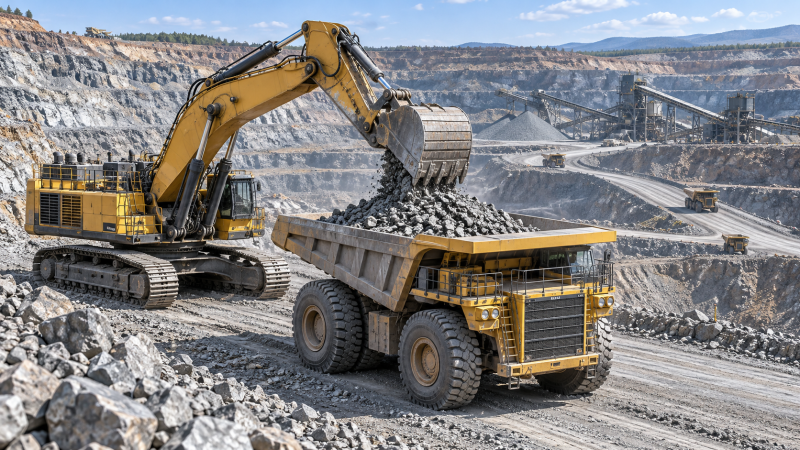
Mining equipment performance reviews are often easiest to read when the comparison is least useful. Payload, engine power, fuel consumption, breakout force, and maximum travel speed all matter, but they rarely explain whether a machine will deliver stable output in a specific mine plan. A haul truck can post an attractive tonnes-per-hour figure under ideal loading and haul-road conditions while producing poor fleet availability on steep ramps. An excavator may achieve high nominal productivity yet lose its advantage when bucket wear, operator visibility, or hydraulic heat limits become persistent constraints.
For a technical evaluator, the purpose of a review is not to identify the machine with the largest headline number. It is to determine whether the reported performance can be repeated at the required duty level, with acceptable maintenance exposure, across the operating conditions that the site will actually impose. Reviews become decision-grade only when their claims are connected to duty cycle, operating environment, component life, and maintenance reality.
Start by asking what conditions produced the number
A published performance figure without operating context is an incomplete result. Before comparing one machine against another, establish the test or reported operating conditions behind the metric. This is especially important in open-pit mining, where loading, haulage, and support equipment operate as a connected system rather than as isolated assets.
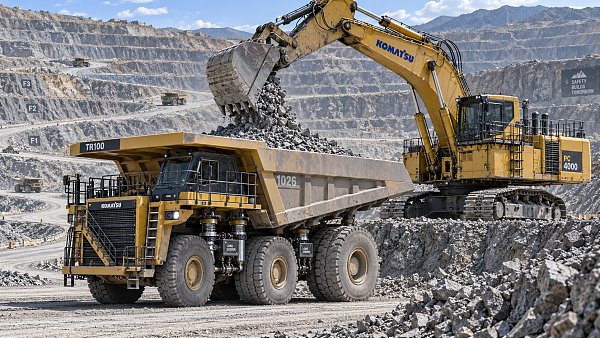
Consider a mining dump truck’s fuel-burn figure. Fuel use per hour may look favorable, but it says little by itself. A truck hauling a light material over a short, smooth route at moderate grade will behave very differently from the same truck moving dense ore over long ramps, in loose rolling resistance conditions, at elevation, or through extreme ambient temperatures. Fuel per tonne moved, fuel per tonne-kilometre, and fuel consumed over a defined haul cycle are usually more informative, provided the payload and route conditions are comparable.
The same principle applies to excavators. A review may highlight a high bucket capacity and short cycle time. That result should prompt further questions:
- What material was being excavated: fragmented ore, blasted overburden, wet clay, abrasive sand, or hard rock?
- Was the bucket filled to rated capacity, or was fill factor measured under actual digging conditions?
- How much swing angle was involved?
- Were trucks consistently positioned, or did the excavator wait between loading passes?
- Did the result include routine repositioning, bench cleanup, and operator changeover?
Headline ratings usually describe a machine’s capability envelope. Mine planning requires a view of the likely operating point within that envelope. Equipment that looks superior at peak output may be poorly matched to a site where the working face, haul route, fragmentation pattern, or maintenance window prevents that peak from being sustained.
Translate productivity claims into a repeatable production system
Production is commonly described through hourly output. That framing can conceal the losses that matter most over a shift, week, or campaign. A technically useful review distinguishes theoretical capacity from achieved, repeatable production.
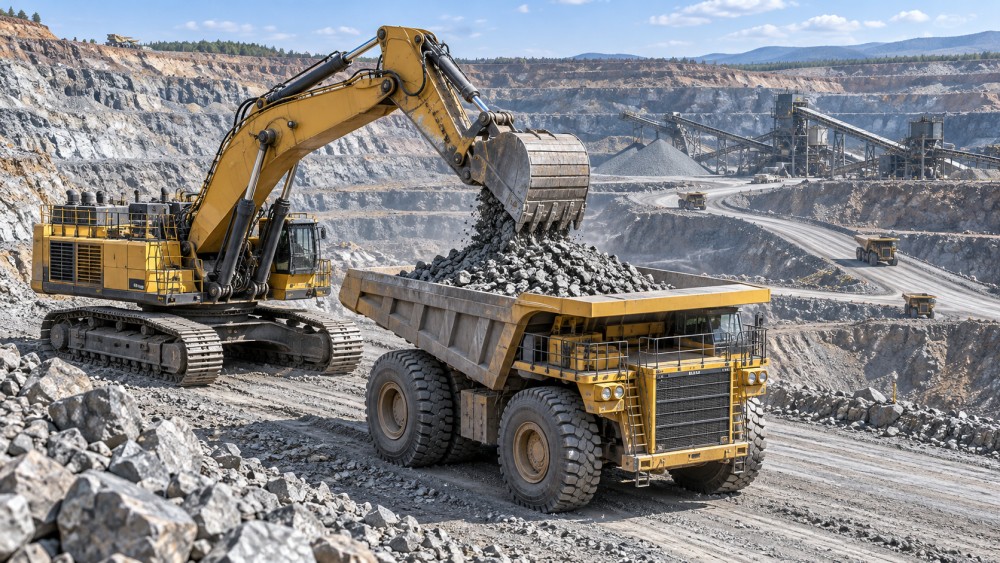
For loading equipment, a simple productivity claim should be unpacked into the variables that create it: bucket payload, number of passes per truck, loading time, truck spotting time, swing time, and interruptions. A larger bucket can reduce pass count, but it may also create payload variability, increase structural stress in difficult digging, or exceed the practical target payload for the haul fleet. Fewer passes are valuable only when the truck, loading tool, and dispatch process can exploit them consistently.
For haulage equipment, the relevant unit is often fleet output rather than individual truck output. A truck with a higher nominal payload may not increase delivered tonnes if it accelerates slowly on grade, requires longer loading, causes congestion at the crusher, or has lower availability than the fleet baseline. Reviews that state “payload” should therefore be read alongside cycle-time distribution, queueing exposure, and the number of productive cycles completed in a shift.
A useful review will make clear whether its productivity result is based on average cycle time, best observed cycle time, or a modeled target. Those are different measures. Best-cycle performance can reveal machine potential, but it is a poor standalone basis for equipment selection. Average performance is more decision-relevant, while the spread around that average can reveal how sensitive the machine is to road conditions, operator technique, loading variability, or thermal limits.
When reviewing a performance claim, look for evidence of variation rather than only averages. A machine that delivers slightly lower peak production but has tighter cycle-time consistency may be easier to schedule, easier to dispatch, and less likely to force excess standby capacity elsewhere in the operation.
Availability matters more when the fleet has little redundancy
Availability is frequently quoted, yet reviews may use the term without defining it. Technical evaluators should separate mechanical availability, physical availability, utilization, and productive utilization. A machine may be mechanically available but idle because of a bottleneck, absent operator, lack of trucks, poor face conditions, or dispatch constraints. Conversely, a highly utilized machine can still impose substantial maintenance burden if it requires frequent planned interventions to preserve that output.
The definition used in a review affects every comparison. If one result excludes planned maintenance and another includes it, the two availability figures should not be treated as equivalent. If one figure covers a short commissioning period and another represents a full operating interval, their value is also different. Early operating data can show whether major systems are functioning as intended; it rarely establishes lifecycle reliability.
The practical question is not simply, “What availability did this machine achieve?” It is, “How likely is it to be ready during the production windows that matter to this operation?” That requires attention to failure modes, repair duration, parts access, and maintenance scheduling.
A component that fails infrequently but requires a long lead time or major disassembly can carry more operational risk than a component with a higher service frequency but a predictable replacement procedure. This distinction is particularly important for large hydraulic systems, powertrain assemblies, final drives, cooling packages, electrical controls, and high-wear ground-engaging tools. Reviews that mention only total downtime may hide this difference.
Read maintenance comments as operating constraints
Maintenance observations are sometimes relegated to the final section of equipment reviews, as though they are secondary to performance. In mining, maintenance requirements are part of performance. A machine that can achieve its output only through frequent inspection, demanding lubrication discipline, specialist diagnostics, or extended planned stops has a different operating profile from one that produces slightly less but fits the site’s maintenance capacity.
Review maintenance information with four questions in mind:
- What work is required? Identify routine inspections, consumables, planned component changes, condition-monitoring tasks, and corrective repair patterns separately.
- Who can perform it? A task requiring OEM technicians, proprietary software access, or specialized lifting tools may be manageable at a large mine but difficult at a remote operation.
- How long does it take? Labor hours alone do not capture downtime. Access constraints, cure time, cooling time, component handling, and return-to-service testing affect the production loss.
- What happens when maintenance is delayed? Some service intervals have modest consequences when extended; others can accelerate high-cost failures or introduce safety exposure.
Component-life claims need the same scrutiny. A reported life for tyres, undercarriage, buckets, liners, cutter tools, or hydraulic hoses is meaningful only when the material abrasiveness, haul-road condition, operating practice, and inspection standard are known. Wear parts should be evaluated as a system of cost, replacement time, and production interruption, not just as a price per item.
Look for site sensitivity, not just machine strength
Mining equipment is selected for a site, not for an abstract specification sheet. Performance reviews are most valuable when they show how a machine responds as conditions move away from nominal operation.
Altitude can affect engine and cooling performance. Heat, dust, moisture, and cold affect fluids, seals, filtration, electronics, traction, and operator endurance. Road roughness changes truck structural loading, tyre stress, braking demand, and cycle-time variation. Fragmentation affects loader digging effort, bucket fill, and truck loading consistency. None of these conditions automatically disqualifies a machine, but each can change which specification or configuration is appropriate.
This is where evaluator judgment becomes more important than a direct ranking. A review that reports strong performance in one setting may still be highly relevant if it explains the configuration used: cooling package, filtration arrangement, tyre selection, body design, payload monitoring, automation level, or hydraulic attachment. Without that detail, it is difficult to know whether the reported result can transfer to another mine.
Configuration also affects comparisons within the same model family. An excavator with a different boom and arm combination, counterweight, bucket profile, or track-shoe width may have a different digging envelope, ground pressure, cycle behavior, and fuel profile. A truck equipped for long-distance haulage on high-speed roads should not be evaluated as though it has the same operating economics as a similarly rated machine configured for short, steep, high-resistance cycles.
Use total cost of ownership to challenge attractive operating figures
Mining equipment performance reviews often make a strong first impression through one favorable operating metric: low fuel burn, high payload, a long service interval, or a low acquisition price. Each can be commercially important. None should be treated as a complete cost conclusion.
Total cost of ownership is most useful when it connects technical performance to the mine’s production and maintenance model. Fuel cost, tyres or undercarriage, wear materials, labor, planned service, unplanned repair, major component rebuilds, operator requirements, and lost production all belong in the analysis. The cost model does not need false precision to be useful. Even a range-based comparison can expose whether an apparent advantage survives realistic assumptions.
Cost analysis should also account for the mine’s tolerance for disruption. A large, mature operation may have spare units, workshop depth, and inventory capacity that absorb a particular machine’s maintenance pattern. A smaller fleet may not. In a constrained fleet, a single extended outage can affect shovel-truck balance, crusher feed, labor deployment, and production commitments. The same equipment can therefore have a different economic result at two mines with similar annual tonnage.
Give more weight to evidence that can be audited
The strongest mining equipment performance reviews show their assumptions. They identify the duty cycle, configuration, measurement period, payload basis, maintenance definitions, and relevant operating conditions. They also distinguish between observed results, modeled projections, and manufacturer-rated values. This does not make the review infallible, but it allows an evaluator to test whether its logic fits the intended application.
Be cautious with statements that describe a machine as “more efficient,” “proven,” or “highly reliable” without defining the comparison basis. Such language may point to a useful lead, but it does not establish suitability. A review has greater decision value when it identifies where performance degraded, what operational trade-offs appeared, and which conditions the machine handled well.
Before a selection decision, convert review findings into a site-specific validation list: expected material and density range, haul profile, payload target, ambient conditions, maintenance staffing, workshop capability, parts strategy, and minimum availability requirement. The remaining uncertainty can then be addressed through structured demonstrations, comparable operating data, or contract terms that define acceptance criteria.
Good equipment evaluation does not seek a universal winner. It identifies the machine whose performance profile, maintenance burden, and operating tolerance align with the mine’s own constraints. That is the standard against which mining equipment performance reviews should be read.
Related News
 Oct 12, 2026How to Assess a High-Altitude Mining Equipment Manufacturer for Remote ProjectsHigh altitude mining manufacturer assessment guide: compare derating, cold-climate reliability, remote service, parts resilience, and lifecycle risk for smarter project decisions.
 Oct 11, 2026What Drives TBM Cutter Head Material Cost and Life-Cycle Value?Cutter head material cost explained: compare TBM alloys, wear protection, downtime risk, and life-cycle value to choose the most reliable, cost-effective solution.
 Oct 12, 2026How to Read Mining Equipment Performance Reviews Beyond Headline MetricsMining equipment performance reviews explained: learn to assess productivity, availability, maintenance risk, site conditions, and total ownership cost for smarter fleet decisions.
 Oct 11, 2026Payload Management Systems: Preventing Overloads Without Slowing ProductionPayload management helps prevent overloads, protect equipment, and keep production moving. Learn how accurate targets, pass planning, alerts, and calibration improve every load.

Ms. Elena Rodriguez
Weekly Insights
Stay ahead with our curated technology reports delivered every Monday.