
OEM Equipment Suppliers in Europe: Vetting Quality, Lead Times, and Support
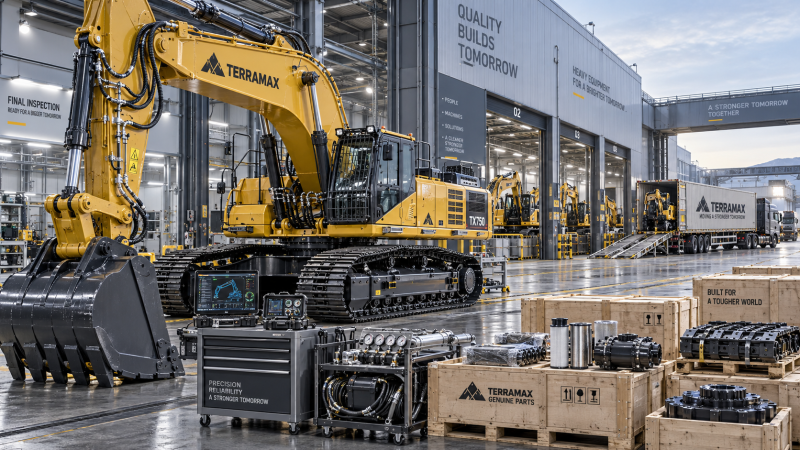
A European OEM belongs on a heavy-equipment shortlist when it can demonstrate three things: a machine configuration suited to the operating duty, a delivery plan tied to identifiable production milestones, and support capable of restoring operations at the project location. A European address, an established brand, or a competitive quotation cannot establish those conditions on its own.
For buyers sourcing tunnel boring machines, mining excavators, haul trucks, or crawler cranes, the comparison should start with the cost of having productive equipment available when required. A lower purchase price may lose its advantage through delayed commissioning, unsuitable specifications, or prolonged repairs. The strongest procurement decision connects technical evidence, schedule commitments, and service obligations before the purchase order fixes the buyer’s exposure.
Establish who is supplying the machine—and what they control
Searching for OEM equipment suppliers in Europe can produce manufacturers, subsidiaries, authorized dealers, independent distributors, and companies offering rebuilt equipment. Each can have a legitimate role, but their authority and responsibilities differ. Procurement teams need to establish which legal entity will sign the contract, who manufactures the proposed machine, and who carries responsibility for configuration, acceptance, warranty, and field support.
That distinction becomes important when a dealer promises delivery dates or technical modifications that require factory approval. Ask for evidence of authorization and written confirmation of any commitments dependent on the manufacturer. If the equipment will operate outside the supplier’s home territory, establish whether the selling entity can arrange warranty work there and whether another service organization must participate.
European location also needs interpretation. A registered office does not establish where the machine is assembled, where critical components originate, or where replacement stock is held. Those details influence inspection access, transport planning, customs obligations, and repair times. Request the proposed manufacturing location and identify the facilities responsible for major assemblies and final testing.
Before evaluating suppliers, issue a common operating specification. For a TBM, that may include the expected ground conditions, groundwater conditions, tunnel geometry, and interfaces with segment handling and spoil removal. For mining equipment, define material characteristics, gradients, haul distances, environmental conditions, and operating hours. For a crawler crane, specify the required lifts, configurations, working radius, ground conditions, and mobilization constraints.
A supplier should explain the assumptions behind its selection and identify the limits of the proposed configuration. A quotation that leaves duty conditions undefined creates room for disagreement later: the buyer may expect sustained production, while the supplier has priced a machine against a narrower operating envelope.
Verify quality through the proposed configuration and acceptance evidence
Manufacturing quality has two dimensions: whether the machine is built consistently and whether its design suits the assignment. Factory credentials help assess the first. They cannot settle the second. A well-built machine can still deliver poor results if its cooling capacity, structural configuration, wear protection, or control system does not match the intended work.
Request references that resemble the proposed duty. Similar geology matters more than a similar tunnel diameter alone. Comparable haul gradients and loading conditions are more useful than a fleet photograph. For lifting equipment, the relevant evidence should relate to the proposed configuration and operating requirements. Where references are available, ask the owner or operator about commissioning, recurring faults, parts availability, and the supplier’s response to unresolved problems.
Review the technical offer at the level where reliability and cost are determined. This includes the identities and specifications of major components, access for maintenance, inspection requirements, consumable replacement procedures, and the treatment of optional equipment. Clarify which items are included in the base configuration and which are necessary additions for the stated duty.
Critical evidence should be proportionate to the machine and its risks. Depending on the equipment, the review may cover material traceability, welding procedures, inspection records, hydraulic cleanliness controls, electrical protection, software configuration, and calibration records. Buyers need evidence relevant to the supplied machine, with a practical route to inspect or witness the most consequential checks.
Certification and conformity documentation also require careful reading. A quality-management certificate concerns the organization and the scope shown on that certificate; it does not prove the proposed machine will achieve the buyer’s production target. Where CE marking is applicable, it addresses conformity obligations rather than guaranteeing reliability, output, or suitability for every operating environment. Establish the requirements for the destination and intended use, and specify which documents must accompany delivery.
Define acceptance while the buyer still has negotiating room
Factory acceptance testing and site acceptance should have separate purposes. Factory testing can demonstrate assembly quality, selected functions, safety systems, and specified checks before shipment. Site acceptance can address installation, integration, commissioning, and agreed performance under defined operating conditions. A factory test may have limited ability to reproduce geology, loaded haul cycles, or a complete lifting operation.
The contract should state the test conditions, measurement method, responsibilities, and consequences of failure. Avoid an undefined promise that the machine will achieve “rated performance.” For a TBM, production depends on ground conditions and the supporting construction system. Mining output depends partly on loading and haul-road conditions. Crane capability depends on configuration and the conditions specified for the lift.
Identify which outcomes the supplier guarantees and which depend on the buyer’s site, operators, or supporting equipment. Agree how deviations will be recorded, who can authorize corrective action, and whether shipment or final payment can proceed with outstanding defects. Open items should have named owners and completion dates.
Turn quoted lead times into an executable delivery plan
A lead-time quotation is useful only when its starting point and endpoint are clear. “Delivery after order” may depend on receipt of an advance payment, approval of drawings, confirmation of specifications, or allocation of a production slot. Delivery itself may mean readiness at the factory, arrival at port, arrival on site, or completion of commissioning. These are different milestones with different consequences for the project schedule.
Ask the supplier to show the sequence from engineering release to operational handover. The plan should expose major component procurement, fabrication, assembly, testing, shipment, installation, and commissioning. For customized machinery, it should also identify buyer approvals and the dates by which site information must be available.
The most useful discussion concerns the critical path. Which component or activity determines completion? Has capacity been allocated? Which commitments remain provisional? What happens if the buyer changes a specification after design approval? Supporting evidence can include a production schedule, component-order status, and an agreed progress-reporting format. The objective is to distinguish a supported commitment from a sales estimate.
Compare suppliers against the same readiness milestone. An earlier factory completion date can still produce later operational availability if transport, assembly, specialist technicians, or site preparation have been omitted from the proposal. Large equipment may also require dismantling, route planning, lifting arrangements, and coordinated deliveries. Assign responsibility for these interfaces explicitly.
- Engineering release: Identify the information and approvals needed to freeze the configuration.
- Production readiness: Establish the status of critical components and the allocation of manufacturing capacity.
- Shipment release: Define required testing, documentation, packing, and closure of defects.
- Operational handover: Include installation, commissioning, training, and the agreed acceptance process.
Commercial terms should reflect this sequence. Tie progress payments to evidence of completed milestones, and agree how delays, changes, and recovery plans will be handled. Delay remedies can strengthen accountability, but they cannot recover lost project time by themselves. The buyer still needs an escalation process and a workable contingency for the activities most exposed to equipment arrival.
Be cautious about offers to accelerate delivery through component substitutions or shipment before testing is complete. Such proposals may be workable, but the revised configuration and remaining work require technical review. Schedule pressure should not leave the buyer accepting undocumented changes or discovering unfinished commissioning tasks after the machine reaches site.
Price support as part of ownership, not as an optional promise
After-sales support is where a supplier’s geographic presence either becomes useful or remains a brochure claim. A service office in Europe offers limited reassurance to a machine operating at a remote mine or overseas tunnelling site unless the supplier can explain how technicians, tools, diagnostic access, and parts will reach it.
Ask who handles the first call, who diagnoses the fault, and who authorizes dispatch. Separate response time from repair time. A commitment to acknowledge a request quickly says little about when a qualified technician will arrive or when a failed assembly will be replaced. Define coverage hours, escalation routes, travel arrangements, and the service charges that apply outside warranty.
Warranty scope deserves the same scrutiny as warranty duration. Establish when coverage starts, what operating limits apply, which maintenance records are required, and whether labour, travel, freight, and removal or reinstallation costs are included. Identify exclusions and the procedure for deciding disputed claims. For equipment delivered well before commissioning, the start date can materially affect the protection available during productive operation.
Parts planning should follow failure consequences. A low-cost sensor can stop a large machine; an expensive assembly may have a manageable replacement interval. Request a proposed commissioning package and operating spares list, then challenge the assumptions behind both. Ask where stock is held, which items are built to order, whether alternatives are approved, and how replenishment will work at the destination.
Maintenance capability also depends on information and access. Clarify what manuals, fault codes, diagnostic tools, software permissions, and training the buyer receives. For connected equipment, establish the conditions for remote access and continued operation if connectivity is unavailable. If routine fault diagnosis requires supplier intervention, include that dependency in the support agreement and cost comparison.
Compare the offers against a common operating period
A defensible cost comparison uses the same duty, operating period, and contractual scope for every bidder. Include acquisition, transport, installation, commissioning, training, planned maintenance, consumables, major replacement items, service access, and any credible end-of-period value. Keep supplier assumptions visible so that an attractive total does not conceal excluded work or optimistic component life.
Downtime deserves separate scenario analysis because its consequences vary by project. For a TBM, stopped excavation may leave crews and supporting systems idle. A failed haul truck may be partly covered by spare fleet capacity. A crane unavailable during a constrained lifting window can disrupt several contractors. Test each offer against the consequences that apply to the project, rather than assigning every machine the same downtime cost.
Use evidence-based assumptions and show the effect of uncertainty. Consider a delayed handover, an earlier major-component replacement, or a longer parts wait. These scenarios reveal whether a supplier’s price advantage survives plausible disruption. They also show where stronger contractual commitments or additional site spares would be worth paying for.
Set minimum requirements before scoring commercial offers. An unresolved safety requirement, an unsuitable configuration, or an unsupported commissioning plan should not be offset by a low price. Among suppliers that clear those requirements, weigh technical fit, delivery confidence, service capability, and ownership cost according to the project’s exposure.
The final negotiation should close the uncertainties that could change the award decision: who owns each interface, what proves acceptance, when the equipment becomes operational, and how a serious failure will be resolved. A supplier that answers those questions with specific evidence gives procurement a stronger basis for commitment. Any remaining uncertainty should have a named owner, an agreed treatment, and a visible place in the purchase decision.
Related News
 Oct 13, 2026OEM Equipment Suppliers in Europe: Vetting Quality, Lead Times, and SupportCompare OEM equipment Europe suppliers on quality, lead times, and after-sales support. Discover practical vetting steps to reduce downtime and buy heavy equipment with confidence.
 Oct 12, 2026How to Assess a High-Altitude Mining Equipment Manufacturer for Remote ProjectsHigh altitude mining manufacturer assessment guide: compare derating, cold-climate reliability, remote service, parts resilience, and lifecycle risk for smarter project decisions.
 Oct 11, 2026What Drives TBM Cutter Head Material Cost and Life-Cycle Value?Cutter head material cost explained: compare TBM alloys, wear protection, downtime risk, and life-cycle value to choose the most reliable, cost-effective solution.
 Oct 13, 2026Mining Haulage Services Procurement Checklist for Uptime and Cost ControlMining haulage services procurement checklist for stronger uptime, safer fleet selection, transparent pricing, and better cost control across changing mine conditions.



Ms. Elena Rodriguez
Weekly Insights
Stay ahead with our curated technology reports delivered every Monday.