
Selecting Mining Equipment for Extreme Heat in the Middle East
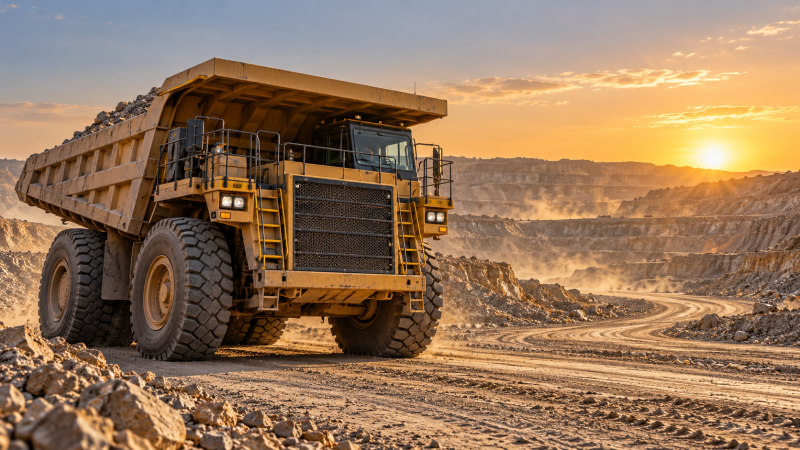
Selecting extreme temperature mining equipment Middle East operations can depend on requires more than checking a machine’s rated output. Technical evaluators must assess sustained performance under site-specific heat and dust.
Cooling capacity, filtration, lubricant compatibility, component temperature limits, and maintenance access determine whether excavators, mining trucks, and supporting equipment can deliver reliable production throughout a shift.
The strongest choice is the machine whose manufacturer can demonstrate acceptable performance at the actual operating point, supported by measurable maintenance requirements, local service capability, and defensible lifecycle costs.
Start With the Actual Mine Operating Envelope
A regional temperature label is not an equipment specification. Define the environmental and duty conditions at the pit, haul road, workshop, and refueling or charging areas.
Use site weather records to establish expected peak ambient temperature, the duration of hot periods, seasonal humidity, and night-time conditions. Identify whether measurements represent shade or direct solar exposure.
Define elevation, pit depth, prevailing winds, airborne dust concentration where available, and material characteristics. These factors affect cooling, engine performance, filtration loading, and operator visibility.
Describe the duty cycle using payload, haul distance, grades, rolling resistance, loading time, queue time, and expected idle periods. For excavators, include material hardness and digging cycle intensity.
Evaluate the hottest credible combination, not just annual averages. A loaded truck climbing a long grade after extended idling may impose a different thermal load than steady travel.
Ask suppliers to identify the ambient temperature measurement location and operating assumptions behind every rating. A published maximum temperature without a defined duty cycle is insufficient evidence.
Can the Cooling System Maintain Full Duty?
Cooling capacity is often the first constraint on mining equipment in extreme heat. Examine the complete thermal system, including engine, hydraulic oil, transmission, axles, brakes, and electrical components.
Request manufacturer performance curves or validated operating limits showing ambient temperature, elevation, engine load, fan speed, coolant temperature, and any expected power derating under the proposed duty cycle.
For haul trucks, focus on sustained uphill operation and retarding on downhill sections. High ambient temperatures can reduce available thermal margin even when the engine itself remains within limits.
For excavators, assess hydraulic oil temperatures during repeated high-load digging, swing, and travel. Confirm that cooling capacity covers simultaneous demands rather than isolated component tests.
Inspect radiator and cooler placement for dust accumulation, recirculation of hot exhaust air, and access for cleaning. A large radiator provides limited value if its airflow is routinely obstructed.
Ask whether variable-speed fans, reversible fans, protective screens, or high-ambient cooling packages are available. Confirm their effect on fuel consumption, noise, cleaning procedures, and service access.
Compare temperature alarms, power-reduction thresholds, and shutdown logic. A machine that protects itself by repeatedly derating may be reliable mechanically but unsuitable for the required production rate.
Specify a site trial that records ambient conditions, payload, cycle times, temperatures, fan operation, and derating events. Review results against agreed acceptance criteria before finalizing the fleet selection.
How Should Dust Protection Be Evaluated?
Fine airborne dust can restrict airflow, contaminate lubricants, accelerate wear, and shorten filter life. Its effect depends on particle characteristics, operating practices, and the machine’s intake design.
Review engine air intake location, precleaner capability, filter restriction monitoring, seal integrity, and service procedures. Request expected filter life for comparable conditions, with assumptions clearly stated.
Do not select filters solely by advertised efficiency. Consider restriction, dust-holding capacity, replacement frequency, availability, and the risk of contamination during filter changes.
Inspect hydraulic reservoir breathers, fuel tank vents, electrical enclosures, connector seals, and cab pressurization. Each is a potential entry point for dust or moisture.
Ask how operators and technicians identify a restricted cooler or damaged intake seal. A practical inspection routine can be more valuable than a feature that is difficult to access.
Include cleaning time, replacement elements, compressed air or washing resources, and disposal requirements in the maintenance model. Follow manufacturer guidance to avoid damaging fins or filter media.
Which Fluids and Components Need Heat-Specific Approval?
High ambient temperature changes fluid behavior, but the correct lubricant depends on actual component temperatures, load, viscosity requirements, and manufacturer approvals, not ambient temperature alone.
Request approved grades for engine oil, hydraulic fluid, transmission oil, axle lubricants, grease, and coolant. Verify both hot operating limits and cold-start requirements for the site’s seasonal range.
Confirm coolant concentration, water quality, corrosion protection, and replacement intervals. Poor coolant management can reduce heat transfer and damage components despite an appropriately sized cooling package.
Evaluate hose assemblies, seals, belts, and electrical insulation against their specified operating temperatures. Check routing near exhausts, hydraulic lines, and enclosed compartments where local temperatures can exceed ambient.
For components with published temperature limits, establish how temperatures will be measured and what operational margin is required. Avoid assuming a single machine-wide rating covers every subsystem.
Use oil analysis and condition monitoring to establish site-specific change intervals where the manufacturer permits. Increasing intervals without evidence can conceal contamination or thermal degradation.
Do Different Machine Types Face Different Risks?
Mining trucks require particular attention to loaded-grade performance, tire operating conditions, brake cooling, transmission temperatures, and the interaction between payload targets and thermal limits.
Compare truck models using the same route profile and payload basis. Include realistic traffic delays, road maintenance conditions, and any speed restrictions imposed by heat or braking limits.
Excavator assessments should prioritize hydraulic cooling, filtration, digging duty, undercarriage conditions, and access to coolers. Confirm that the machine can sustain the required loading rate throughout the shift.
For wheel loaders, graders, water trucks, and dozers, evaluate their own duty cycles and cooling demands. A production fleet can lose availability when essential support equipment overheats.
Check tire manufacturer guidance for load, speed, haul distance, pressure, and heat buildup. Tire suitability depends on the full operating cycle, not simply the highest ambient temperature.
Electrical and battery-powered equipment requires additional scrutiny of battery thermal management, charging power limits, enclosure sealing, and manufacturer-specified operating and charging temperature ranges.
Ask suppliers how high temperatures affect charging time, available power, battery life assumptions, and cooling energy use. Evaluate charger placement, electrical supply, ventilation, and emergency procedures separately.
What Protects Operators and Maintainers?
Machine selection should account for people working in and around the equipment. Cabin cooling, visibility, access routes, hot surfaces, and maintenance exposure all affect safe operation.
Verify air-conditioning performance under representative solar load, dust loading, and door-opening frequency. Review cab filtration, pressurization, window condition, and the accessibility of serviceable filters.
Assess handrails, steps, walkways, and service platforms for safe access while wearing required protective equipment. Identify hot components near routine inspection and refueling points.
Establish site heat-stress controls using local requirements and an appropriate heat-risk assessment. Equipment features support these controls but do not replace hydration, rest, supervision, and emergency planning.
For electric equipment, confirm isolation procedures, battery emergency response, and training requirements. For all machines, document safe cooling and depressurization procedures before maintenance begins.
How Should Suppliers Demonstrate Performance?
Use a common technical questionnaire so each supplier responds to the same environment, duty cycle, production target, and maintenance assumptions. Require evidence rather than unqualified suitability statements.
Request relevant test reports, operating curves, comparable site references, and the configuration used in each case. Identify differences in elevation, material, payload, and maintenance practices.
Ask for written confirmation of high-ambient options, approved fluids, service intervals, warranty conditions, and parts lead times. Clarify which claims apply to the complete machine configuration offered.
During a trial, record data over representative shifts and include the hottest practical operating periods. Where possible, compare machines under similar operators, routes, payloads, and road conditions.
Agree in advance on measurement methods, minimum observation periods, and acceptance thresholds. Capture production, fuel or electricity use, component temperatures, maintenance hours, and unscheduled stoppages.
A short trial cannot establish lifetime durability. Combine trial results with manufacturer evidence, component histories, and a clear plan for monitoring performance after commissioning.
How Can Evaluators Compare Total Cost of Ownership?
Purchase price is only one input. Build a lifecycle model around productive output, scheduled and unscheduled downtime, energy consumption, consumables, component replacement, labor, and support costs.
Express results in a comparable unit, such as cost per tonne moved or cost per operating hour. State payload, availability, utilization, and annual production assumptions explicitly.
Account for heat-related derating and cleaning time in productive capacity. A lower-priced machine may require additional units if it cannot sustain the target cycle during peak temperatures.
Include the cost of cooling packages, filters, lubricants, tires, workshop equipment, diagnostic tools, technician training, and critical spare parts. Avoid counting the same downtime twice.
Model at least a base case and a high-heat, high-dust case. Test how changes in fuel prices, filter life, component life, and parts lead times affect the ranking.
Separate supplier guarantees from estimates and document exclusions. Where a warranty depends on specific fluids, maintenance intervals, or operating practices, include the cost of compliance.
Final Selection Checklist
Before approving equipment, confirm that the proposed configuration matches the site’s maximum credible heat, elevation, dust exposure, duty cycle, and production requirements.
Require documented thermal limits, derating behavior, filtration arrangements, approved fluids, operator protection, and accessible maintenance points. Verify local parts availability and technical support commitments.
For extreme temperature mining equipment in Middle East operations, the decisive question is sustained output at an acceptable risk and cost. Select the machine that demonstrates this under site conditions.
Have questions about this sector analysis, or seeking best practices specific to your niche? Drop us a line below and let the senior consultants at TF-Strategy assist you.
Related News
 Oct 30, 2026Selecting Mining Equipment for Extreme Heat in the Middle EastChoosing extreme temperature mining equipment Middle East sites can rely on? Compare cooling, dust protection and lifecycle costs to make a confident choice.
 Oct 28, 2026Choosing a Heavy Equipment Market Intelligence Database: Coverage and Data QualityChoosing a heavy equipment market intelligence database? Compare coverage, data quality, source transparency, and updates to find reliable insights for smarter commercial decisions.
 Oct 27, 2026Construction Equipment Efficiency: How to Reduce Idle Time on JobsitesBoost construction equipment efficiency with smarter scheduling, telematics, and safe shutdown practices. Discover how to reduce idle time and fuel waste on your jobsite.
 Oct 26, 2026How TBM Electrical Systems Distribute Power and Protect Against FaultsExplore how TBM equipment electrical systems distribute power, coordinate fault protection, and maintain essential services. Learn what to check for safer, more reliable tunneling.
Ms. Elena Rodriguez
Weekly Insights
Stay ahead with our curated technology reports delivered every Monday.