
Road Construction Equipment in Europe: Choosing Machines for Road Projects
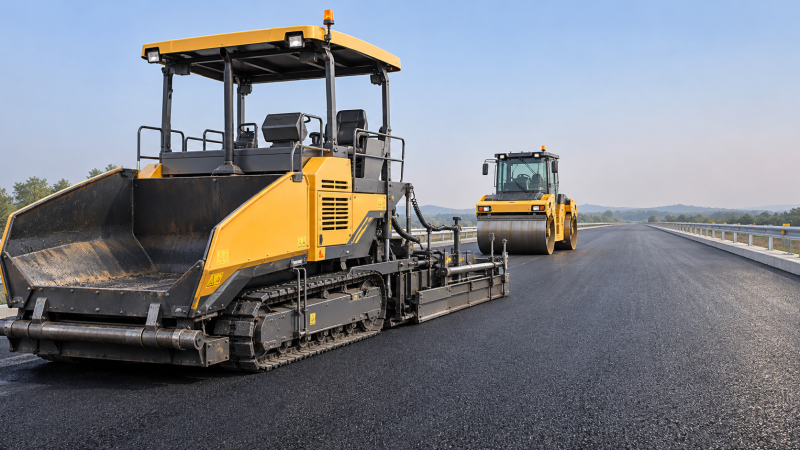
Choosing road construction equipment in Europe starts with the production sequence, not a list of machines. For a high-volume motorway project, the priority may be a balanced fleet that keeps the paving train supplied throughout a shift. For a narrow urban resurfacing contract, compact dimensions, controlled material deliveries and rapid removal from the work area may matter more than peak output.
Start with the layer quantities, working widths, available possession time and required quality, then size each machine around the operation most likely to restrict progress. A larger paver or excavator only improves delivery if the equipment and logistics around it can sustain the same rate. The final choice should also account for local access restrictions, applicable emissions requirements, service support and the cost of idle capacity.
Define the job before defining the fleet
Separate the project into earthworks, formation and grading, pavement construction, and any rehabilitation or removal work. Not every contract needs a full fleet across all four. A resurfacing job may require a milling machine, paver, rollers and trucks, while a new alignment can demand a much larger earthmoving and materials-handling operation before paving begins.
For each stage, establish the quantity to be completed within the time actually available for production. Deduct planned time for traffic management, machine moves, inspections and access handovers from the shift duration. On a constrained road closure, the theoretical output of a machine may be less useful than its ability to complete a defined section and clear the carriageway on time.
Ground conditions deserve particular attention during early fleet planning. Excavation volume alone does not describe how difficult material will be to dig, move or compact. Soft formation, hard material, groundwater and restricted tipping areas can change the balance between excavators, dozers, haul trucks and soil treatment equipment. Where site information is incomplete, consider how easily the fleet can be changed once the ground is exposed.
Size the fleet around its limiting operation
Equipment selection becomes more reliable when planned output is calculated for the whole chain. An excavator, for example, is only productive while material can be loaded and moved away. Truck capacity depends on loading time, travel distance, road condition, tipping time and queueing. As a haul route lengthens, a fleet that was initially balanced may leave the excavator waiting.
The same logic applies to paving. A paver can place asphalt only as consistently as trucks deliver it and rollers compact it within the required temperature window. Increasing paver width or theoretical placement speed may create interruptions if the plant, transport arrangement or compaction fleet cannot keep up. Frequent stops can affect surface consistency and complicate quality control.
Use a simple production model for each critical activity: divide the planned quantity by the productive time available, then compare the required rate with a realistic operating rate for the proposed fleet. Include the effects of turning, positioning, material changes and the working environment. Check the model again when the haul distance, access route or daily closure changes.
It is also useful to identify the consequence of a breakdown at each stage. An idle excavator may be absorbed if there is enough material already available downstream; a failed paver during a short night closure can jeopardise the entire shift. That distinction helps determine where standby arrangements, rapid service response or access to replacement equipment justify their cost.
Match machine size to working space
Machine dimensions affect more than transport. A wide paver may reduce the number of longitudinal joints on an open section, but it may be difficult to use around junctions, barriers or narrow lane closures. A smaller machine can be easier to position and more useful across several work fronts, although additional passes and joints may increase labour and quality-control demands.
For earthworks, a large excavator and high-capacity haul units can be effective when the digging face, haul road and tipping area offer enough room. In confined conditions, smaller units may maintain a steadier cycle and reduce interference with other trades. Check swing space, loading geometry, gradients, ground bearing capacity and the route between work areas before committing to the largest available machine.
Choose paving and compaction equipment as one system
The paving specification should shape the machine choice. Review required layer thickness, width, material type, surface tolerances, joint arrangements and any restrictions on truck access. The paver’s working range must suit the planned sections, including transitions and irregular areas, rather than only the longest straight run.
For resurfacing, coordinate milling depth and width with the paving operation. If the milled surface is uneven, contaminated or left exposed longer than intended, the paving team may lose time correcting the base before placing material. Plan the removal of milled material as carefully as its production: truck access and disposal or reuse arrangements can determine how much road can be prepared during a closure.
Compaction selection depends on the layer, mix, temperature, required density and available space. A roller fleet must provide enough coverage at the planned paving rate while allowing the operator to follow an appropriate rolling pattern. Restricted edges, bridge approaches and areas near structures may need different equipment or a modified method. Excessive vibration can also be unsuitable near sensitive assets, so check project constraints before relying on vibratory compaction everywhere.
Grade and slope controls, material transfer arrangements and compaction monitoring can support repeatable results, but they are not substitutes for a sound method. Before paying for additional technology, identify the defect or delay it is intended to reduce, the data or setup it needs, and whether the crew and survey team can support it. A control system that cannot be set up or checked within a short possession may add complexity rather than productivity.
Check European operating requirements against the actual site
Europe is not a single operating environment for road equipment. National rules, contract specifications and local restrictions can affect what may enter a site, when it can work and how it is transported. Establish the project location and the applicable requirements before comparing quotations, particularly if equipment will cross borders or move between urban and rural work areas.
For engine-powered non-road machinery, check the applicable EU emissions framework, including Stage V requirements where relevant, against the machine and engine category and its placement on the market. Equipment already in service may be subject to different circumstances from a new machine. Local low-emission zones, public procurement conditions or project-specific rules may impose additional access requirements. Obtain the machine’s documentation and confirm site acceptance with the contracting authority or site manager; an engine label alone does not establish compliance with every project condition.
Noise, vibration, dust and working-hour limits can be equally decisive. A machine with sufficient rated capacity may still be unsuitable for a night shift near homes if its operation cannot meet the permitted conditions. For electric or hybrid equipment, assess the available power supply, charging time, working duration and backup arrangements alongside the emissions benefit. If charging requires an additional generator, include that equipment and its site impacts in the assessment.
Transport permissions and route constraints also belong in the programme. Check the loaded dimensions and weight, availability of suitable trailers, access to the work zone and the time needed for assembly or setup. A machine that performs well on site can still create a schedule problem if it cannot be mobilised between closures as planned.
Compare ownership, rental and subcontracting on project exposure
Ownership can be attractive when a machine has a dependable workload beyond the present contract and the contractor can maintain it effectively. Rental can reduce exposure to underutilisation and give a project more flexibility if quantities or ground conditions change. A specialist subcontractor may be preferable for an occasional operation where the contractor would otherwise need to assemble equipment, operators and quality-control capability for a short period.
Compare these options over the expected period of use, including mobilisation, operators, fuel or electricity, servicing, wear parts, insurance and demobilisation. For owned equipment, include financing, maintenance and the risk that resale value differs from the estimate. For rental, check minimum hire periods, standby charges, usage limits and responsibility for damage or consumables. A low daily rate can become expensive if the machine spends much of the programme waiting for access.
Service support should be assessed against the project schedule. Ask what response is available at the site, which parts are held locally, how replacement equipment would be sourced and who performs routine maintenance. For a critical paving operation, a credible recovery plan may be more valuable than a small difference in hire price.
Before placing the order, test the proposed fleet against the most demanding work package: the shortest closure, longest haul, tightest access or most restrictive quality requirement. If the production model only works when every machine runs continuously and every delivery arrives on time, revise the sequence or provide appropriate contingency. The best fleet is the one that can deliver the specified road under the conditions the project is likely to encounter.
Have questions about this sector analysis, or seeking best practices specific to your niche? Drop us a line below and let the senior consultants at TF-Strategy assist you.
Related News
 Nov 21, 2026Road Construction Equipment in Europe: Choosing Machines for Road ProjectsRoad construction equipment Europe: discover how to choose a balanced fleet, meet site requirements and control costs for successful road projects.
 Nov 20, 2026Choosing Tunnel Boring Machines for Hard Rock: Key Geological FactorsChoosing tunnel boring machines for hard rock? Discover how geology, abrasivity, groundwater, and rock stress shape machine selection and reduce project risk.
 Nov 19, 2026Selecting TBM Electrical Systems: Power Supply and Tunnel ConstraintsExplore how to select TBM equipment electrical systems for your power supply and tunnel constraints, reduce downtime risks, and make smarter procurement decisions.
 Nov 18, 2026Underground Tunneling Equipment: Types and Uses by Ground ConditionExplore this underground tunneling equipment guide to compare TBMs, roadheaders, and conventional methods by ground condition and choose with confidence.
Ms. Elena Rodriguez
Weekly Insights
Stay ahead with our curated technology reports delivered every Monday.