
Tunnel Boring Machine Supplier List: Compare TBM Types and Service Coverage
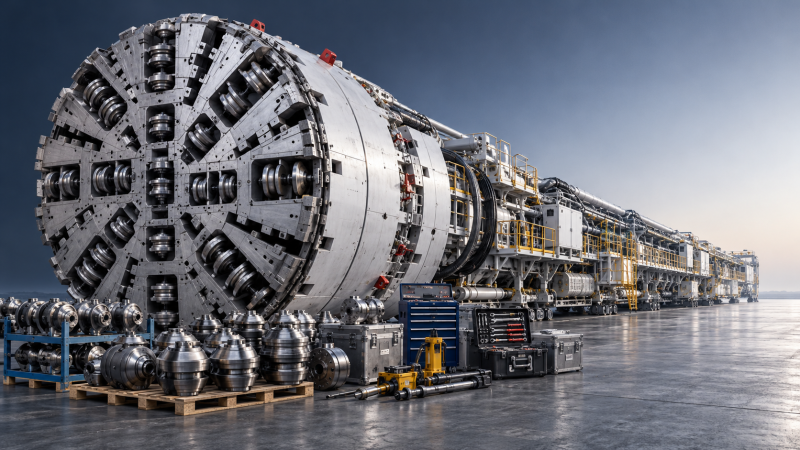
Tunnel Boring Machine Supplier List: Compare TBM Types and Service Coverage
Choosing a TBM supplier means matching machine capabilities to ground conditions—and confirming that service support can keep excavation moving. A competitive machine price means little if replacement cutters are difficult to obtain or specialist technicians cannot reach the site when needed. This tunnel boring machinery supplier list helps compare earth pressure balance, slurry, and hard rock options alongside the support commitments that affect delivery cost.
The useful shortlist is rarely the longest one. It is the group of manufacturers that can explain how their proposed machine handles your difficult ground, document relevant experience, and put credible resources behind commissioning and excavation. TF-Strategy’s approach connects equipment specifications with construction methods and lifecycle costs, rather than treating a supplier directory as a purchasing recommendation.
A practical TBM supplier shortlist
The manufacturers below provide a starting point for an international tender, not a ranking or an exhaustive directory. Product configurations, contracting entities, and regional support arrangements should be checked against current manufacturer documentation. An overseas reference project proves delivery experience; it does not, by itself, establish a permanent local service capability.
Do not assume that every listed machine family is available for every diameter, pressure envelope, or delivery window. Ask each bidder for comparable references: similar geology, groundwater pressure, diameter, alignment constraints, and excavation method. A reference in competent granite offers limited reassurance for a shallow urban drive through mixed soil and rock.
Select the excavation method before comparing prices
A tender that allows fundamentally different excavation concepts without explaining how they will be evaluated produces misleading price comparisons. The geological baseline, investigation records, groundwater conditions, and settlement limits should shape the machine specification—not the other way around.
EPB: check conditioning and discharge, not just thrust
Earth pressure balance machines use conditioned excavated material to help support the face. They are often considered for suitable soft-ground conditions, but suitability depends on grading, permeability, plasticity, groundwater pressure, and the ability to produce a controllable muck mixture.
In abrasive sand, sticky clay, or variable ground, ask how the supplier sizes the screw conveyor, manages wear, and designs conditioning injection points. Include conditioning agents and their storage in the operating-cost comparison. A low equipment bid can lose its advantage if difficult discharge repeatedly interrupts excavation.
Slurry: the surface plant belongs in the comparison
Slurry shields are frequently considered for water-bearing, permeable ground where controlled fluid pressure can support the face. Their performance depends on the whole slurry circuit: pumps, pipelines, separation equipment, treatment capacity, and operating controls.
On a constrained urban site, separation-plant footprint and spoil handling may influence the decision as much as the shield itself. Ask who guarantees the interface between the TBM and treatment plant. High fines content can complicate separation, so bidders should explain their assumptions about ground composition, discharge quality, and waste disposal.
Hard rock: strength alone is not a selection criterion
Main beam, single-shield, and double-shield TBMs solve different support and excavation problems. Selection should consider rock mass structure, fault zones, squeezing potential, water inflow, abrasivity, and lining strategy—not simply intact rock strength.
A double-shield machine can support concurrent boring and segment erection where conditions permit. That advantage may diminish in ground that restricts gripper use or shield movement. For procurement, cutter accessibility, probe drilling, pre-grouting provisions, and recovery arrangements deserve attention alongside installed power.
Mixed-ground or convertible machines require another question: what does changing operating mode actually involve? Obtain the conversion sequence, tooling requirements, access conditions, and expected interruption assumptions. “Multi-mode” is not a guarantee of seamless transitions.
Turn “global service” into a site-level commitment
Service coverage has several layers: resident commissioning staff, regional field technicians, factory specialists, and component suppliers. A local office may handle sales without holding critical spares or employing engineers qualified to troubleshoot the proposed machine.
Request a support schedule tied to the project location. It should name the responsible legal entity, working languages, staffing rotations, escalation contacts, and arrangements for nights and weekends. Where cross-border travel is necessary, examine visas, site access, and customs exposure before accepting a response-time promise.
- Separate acknowledgement from arrival. A rapid remote response is not the same as a specialist reaching the machine. Define both, including exclusions.
- Locate the stock. Distinguish site inventory, regional inventory, and factory inventory. Confirm ownership, replenishment triggers, and access outside normal working hours.
- Check specialist dependencies. Main-bearing work, drive repairs, control-system faults, and pressurized interventions may require different teams or subcontractors.
- Test remote-support access. Agree connectivity, cybersecurity permissions, data access, and an offline fallback before commissioning.
Training should follow the same practical logic. “Operator training included” is too vague. Define instruction for operators, mechanical and electrical maintenance teams, and supervisors; require usable manuals and competency checks. Training on normal operation alone leaves a gap when the crew encounters a blockage, alarm sequence, or abnormal pressure condition.
Compare the cost of a working system
The machine quotation is only one part of the delivered tunnelling system. Back-up gantries, conveyors or muck cars, segment handling, power supply, ventilation, cooling, water treatment, and launch arrangements can sit in different contractual packages. Unclear boundaries create expensive omissions.
Normalize bids against a common scope before scoring price. A useful lifecycle comparison includes purchase and transport, assembly, commissioning, consumables, planned maintenance, labour support, energy, dismantling, and any residual-value assumptions. Keep uncertain resale proceeds separate rather than using them to make an otherwise weak bid look attractive.
Then test downtime exposure. Ask bidders to explain anticipated maintenance tasks and the evidence behind proposed intervention intervals. Do not treat a forecast advance rate as a guarantee: cutter changes, ground treatment, segment supply, logistics, and shift organization all influence production.
Consumables warrant their own comparison. Check cutter and seal interchangeability, approved alternative suppliers, warranty restrictions, and prices for an agreed wear-parts basket. Buying inexpensive components is not necessarily economical if replacement frequency or installation time increases. Conversely, proprietary sourcing deserves scrutiny when it creates a single supply route.
Where a refurbished machine can make sense
A used or rebuilt TBM can be worth considering when geometry, duty history, and the new ground conditions align. The original purchase price is not the deciding factor. Obtain inspection records, operating history, structural assessments, major-component condition reports, and a clearly defined refurbishment scope.
Pay particular attention to control-system obsolescence and remaining component support. A mechanically sound machine can still carry procurement risk if essential electronics are discontinued. The warranty should distinguish reused, repaired, and replaced assemblies, with acceptance criteria for each.
Make the final tender resolve uncertainty
Before award, require a consolidated deviation register. Every departure from the technical specification, service scope, delivery programme, and commercial terms should be visible in one place. Otherwise, an apparently compliant offer may depend on qualifications scattered across attachments.
Factory acceptance testing should verify agreed functions and interfaces; it cannot demonstrate excavation performance in ground the machine has not encountered. Separate factory acceptance, site commissioning, and any contractual performance tests. Define responsibilities for test inputs, measurement, corrective work, and delayed site readiness.
At TF-Strategy, the purpose of equipment intelligence is to expose these links between machine design, construction methodology, and commercial risk. A supplier list is useful only when it leads to better questions. Before choosing the lowest evaluated offer, establish who will handle a difficult face intervention, where the critical replacement parts will come from, and which party pays when a package interface fails. Those answers should be in the contract, not left in the sales presentation.
Related News
 Oct 17, 2026Tunnel Boring Machine Supplier List: Compare TBM Types and Service CoverageExplore our tunnel boring machinery supplier list to compare EPB, slurry and hard rock TBMs, assess service coverage and lifecycle costs, and build a smarter procurement shortlist.
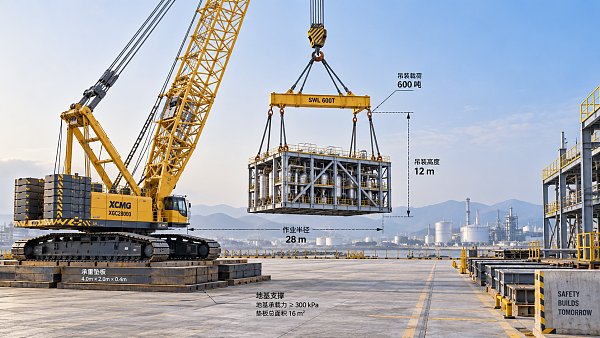
 Oct 16, 2026Heavy-Duty Petrochemical Lifting: Selecting Cranes by Load, Radius, and Site AccessExplore heavy-duty petrochemical lifting solutions. Compare cranes by load, radius, site access, and ground support to reduce project risk and optimize lifting costs.
 Oct 15, 2026Crane Selection for Petrochemical Turnarounds: Capacity, Radius, and Site AccessExplore petrochemical lifting solutions cranes can deliver, with expert guidance on capacity, working radius, and site access to help you plan a safer, more efficient turnaround.
 Oct 14, 2026High-Capacity Heavy Lifting Solutions: Matching Load, Radius, and Ground ConditionsDiscover heavy lifting solutions high capacity projects demand—compare load charts, working radius, and ground conditions to select a feasible, cost-effective system.
Ms. Elena Rodriguez
Weekly Insights
Stay ahead with our curated technology reports delivered every Monday.