
When does a lower construction machinery price raise lifecycle costs?
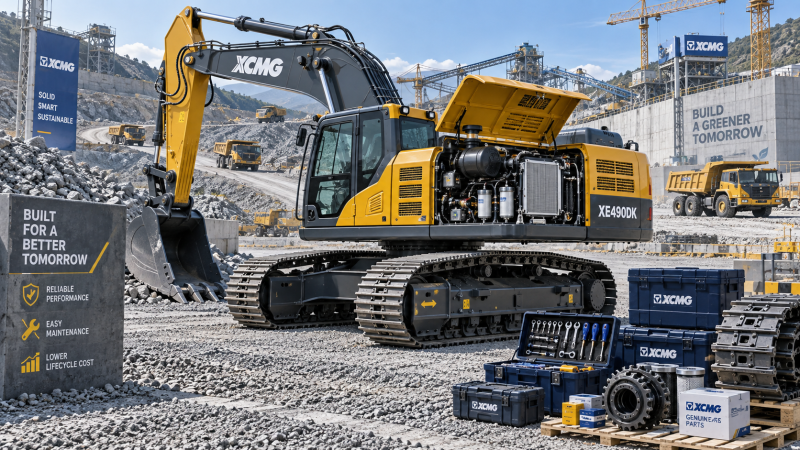
When Does a Lower Construction Machinery Price Raise Lifecycle Costs?
For procurement teams, a lower purchase quote does not always mean a lower project cost. Construction machinery pricing must be evaluated beyond the initial invoice.
Fuel efficiency, uptime, maintenance access, parts availability, operator productivity, financing exposure, and resale value can change the economics of an apparently inexpensive machine.
The practical question is not whether the machine costs less today. It is whether it delivers the required output, reliably, at the lowest total cost.
The Procurement Answer: Low Price Becomes Expensive When It Reduces Productive Hours
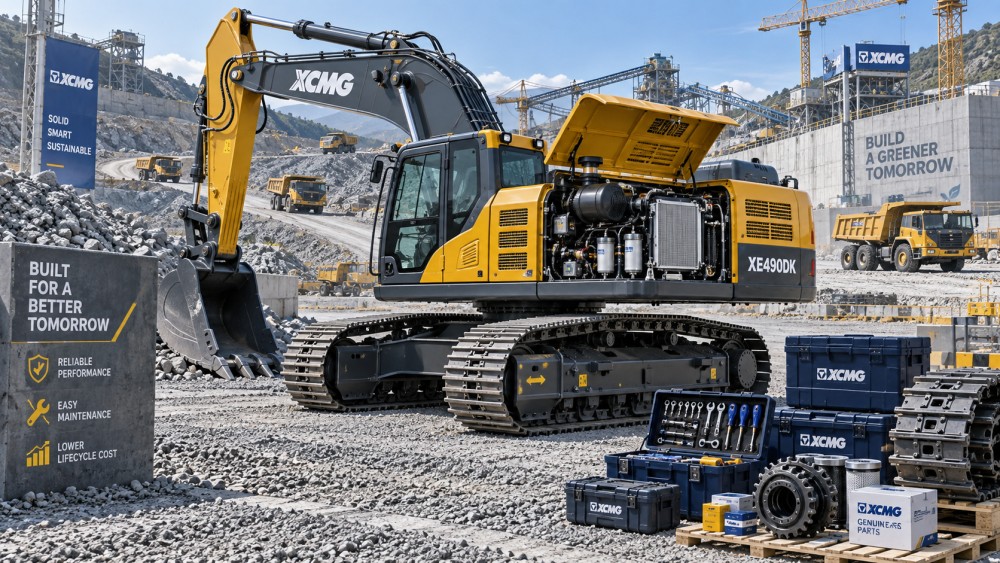
A lower-priced excavator, crawler crane, road machine, dump truck, or TBM support unit raises lifecycle costs when savings create higher operating risk or lower utilization.
Construction machinery pricing should therefore be assessed as a lifecycle decision. The purchase price is one component of a larger commercial and operational equation.
For critical equipment, one unexpected failure can erase the initial discount through idle labor, delayed materials, contractual penalties, replacement rental, and disrupted schedules.
This is especially relevant for projects with narrow weather windows, high daily output targets, remote locations, difficult geology, or tightly coordinated lifting operations.
A low initial quote can remain the best decision when equipment use is limited, downtime consequences are minor, and service support is readily available.
However, the same quote becomes risky when the machine is intended for continuous duty, harsh environments, or work where every lost hour affects multiple crews.
Procurement teams should distinguish between a genuinely efficient offer and a low price created by weaker specifications, omitted support, limited warranties, or uncertain aftersales capacity.
The objective is not to buy the most expensive machine. It is to select the option with the strongest verified value over its planned ownership period.
That requires comparing suppliers using a common total cost of ownership model, rather than allowing different proposals to hide costs in separate assumptions.
Start With Total Cost of Ownership, Not the Purchase Order Value
Total cost of ownership, or TCO, measures the full financial effect of owning and operating equipment from acquisition through disposal, trade-in, or redeployment.
The core calculation includes purchase price, financing, fuel or electricity, maintenance, repairs, wear parts, labor, insurance, downtime, transport, and residual value.
For procurement purposes, the comparison period should reflect expected operating hours, project duration, utilization rate, and the organization’s realistic replacement strategy.
A machine with a lower invoice price may have higher hourly ownership cost if it depreciates faster, requires frequent repairs, or cannot sustain planned utilization.
Buyers should also separate fixed ownership costs from variable operating costs. This makes it easier to test how different production levels affect commercial outcomes.
Fixed costs include purchase price, interest, insurance, and depreciation. Variable costs include energy, routine servicing, consumables, tires, tracks, cutters, and repair labor.
For large mining trucks and excavators, fuel consumption can dominate the equation. For cranes, mobilization, availability, inspection compliance, and lift reliability may matter more.
For tunnel projects, cutter wear, hydraulic reliability, spare-part lead times, and geological adaptability can determine whether a lower equipment price remains economically defensible.
A useful procurement model calculates both cost per operating hour and cost per productive unit, such as tonnes moved, meters bored, cubic meters excavated, or lifts completed.
Downtime Is Usually the Largest Hidden Cost of a Cheap Machine
Downtime is often underestimated because suppliers can quote repair costs while ignoring the wider project cost created when the equipment stops producing.
Calculate downtime by multiplying lost production hours by the machine’s expected contribution, then adding affected labor, subcontractor exposure, standby charges, and schedule consequences.
If an excavator failure stops loading, hauling, crushing, and stockpile management, its financial impact extends far beyond the repair invoice for the failed component.
On a wind installation project, crawler crane unavailability can delay transport, rigging, installation crews, and turbine commissioning, producing costs far above the crane’s daily rate.
Ask each supplier for documented availability data under comparable operating conditions. Marketing claims about reliability are less useful than fleet records and maintenance histories.
Also review mean time between failures, mean time to repair, recommended service intervals, and the availability of trained field technicians near the project location.
A lower-priced machine may be acceptable when a backup unit is available. It is much less attractive when it becomes a single point of failure.
Procurement should assign a financial value to criticality. A low-cost asset supporting noncritical work deserves a different evaluation from a machine controlling the project bottleneck.
Where downtime risk is material, service-level agreements, guaranteed response times, and local parts inventory should be evaluated as commercial value, not optional extras.
Fuel Efficiency and Energy Use Can Eliminate the Purchase Discount
Fuel consumption differences appear modest in brochures, but they accumulate quickly when machines operate long shifts, carry heavy loads, or work under high engine demand.
Compare fuel use using actual duty cycles rather than nominal engine ratings. Idling, load factors, haul gradients, operator behavior, and ambient temperatures affect consumption significantly.
For mining equipment, calculate liters per tonne moved or liters per tonne-kilometer. For earthmoving fleets, assess liters per cubic meter of material placed or excavated.
Electric machinery requires the same discipline. Lower energy expense may be offset by charging infrastructure, grid upgrades, battery replacement, production constraints, or electricity demand charges.
Do not accept fuel figures without defining the measurement basis. A supplier’s test cycle may not represent quarry work, soft ground, high-altitude hauling, or tunnel support operations.
Use site data from similar machines whenever possible. Internal fleet records are usually more valuable than generalized claims because they reflect local operators and working conditions.
Fuel savings also create secondary benefits, including fewer refueling interruptions, lower emissions exposure, simpler logistics, and reduced dependence on fuel deliveries in remote operations.
When energy cost is volatile, evaluate several scenarios. A low-priced machine with poor efficiency becomes increasingly unattractive as diesel prices rise or carbon-related costs increase.
The best comparison presents annual energy cost, lifetime energy cost, and energy cost per productive unit. This prevents a low invoice figure from dominating the decision.
Maintenance Access and Parts Support Determine Repair Economics
Maintenance costs are not limited to the price of filters, oils, and replacement components. They also include access time, diagnostic accuracy, labor requirements, and repair delays.
Low construction machinery pricing may reflect a supplier’s limited dealer network, smaller parts inventory, restricted technical documentation, or dependence on imported components.
Before awarding a contract, map the supplier’s support capability around each operating location. Confirm warehouses, technicians, service vehicles, and escalation procedures rather than relying on assurances.
Ask for standard lead times and emergency lead times for high-failure components. Include hydraulic pumps, electronic controls, undercarriage parts, engines, bearings, and wear systems.
For specialized machinery, identify components shared across models and those unique to one platform. Proprietary parts can create severe sourcing exposure after warranty coverage ends.
Maintenance design matters as well. Easy ground-level service points, remote diagnostics, modular assemblies, and clear fault reporting can reduce labor hours and improve uptime.
Procurement teams should request a recommended maintenance budget by operating hour, including scheduled services, expected wear replacements, and assumptions about duty severity.
Then compare the supplier estimate with independent fleet references. The purpose is not to reject optimism, but to identify unsupported assumptions before capital is committed.
A higher-priced machine with predictable service costs can be commercially stronger than a cheaper alternative whose repair profile is uncertain, irregular, or difficult to manage.
Productivity Differences Change the Meaning of Construction Machinery Pricing
Two machines performing the same nominal task may produce very different results because of cycle time, payload control, breakout force, reach, automation, and operator visibility.
Procurement should compare price against required production, not simply machine class. A lower-capacity unit can become expensive when additional shifts or machines are needed.
For excavators, evaluate bucket fill, cycle time, hydraulic response, attachment compatibility, and fuel consumed per cubic meter. Rated horsepower alone does not measure output.
For dump trucks, analyze payload accuracy, rolling resistance, speed under load, braking performance, turnaround time, and compatibility with loading equipment and haul-road conditions.
For road machinery, productivity includes paving consistency, compaction quality, material handling, automation accuracy, and the probability of rework after quality inspection.
For cranes, productivity depends on assembly time, transport configuration, lift chart performance, setup requirements, telematics, and the ability to meet planned lifting windows.
Operator factors deserve equal attention. A machine with intuitive controls, better visibility, stable automation, and lower fatigue can improve output while reducing safety incidents.
Run a production simulation using project-specific assumptions. Compare expected output per shift, then convert the difference into labor, equipment, overhead, and schedule impacts.
This analysis often shows why a higher purchase price is justified. The machine may deliver more productive work without requiring more people, fuel, or calendar time.
Residual Value, Financing, and Fleet Flexibility Must Be Included
Residual value is frequently ignored during purchase negotiations, even though it can materially reduce lifecycle cost when equipment is sold, traded, leased, or transferred internally.
Well-supported brands often retain value because buyers trust their parts supply, service history, resale market, and compatibility with existing dealer networks.
A cheaper machine can lose value rapidly if few secondary buyers recognize the brand, accept its condition risk, or can obtain reliable support after purchase.
Ask suppliers for evidence of comparable used-equipment transactions. Avoid basing residual value on optimistic percentages without checking regional demand and actual auction outcomes.
Financing terms also influence construction machinery pricing. A lower cash price may be less attractive than a higher offer with favorable payment timing, guarantees, or buyback provisions.
Evaluate interest expense, payment schedules, currency exposure, maintenance inclusions, insurance obligations, and end-of-term conditions across purchase, lease, and rental alternatives.
Fleet flexibility can justify a premium when equipment can be redeployed across projects. Standardized controls, attachments, fleet telematics, and technician familiarity reduce transition costs.
Conversely, a low-priced specialized machine may become stranded after one project. Its apparent discount disappears if the asset cannot be utilized or sold efficiently.
Procurement should therefore treat residual value and redeployment potential as measurable value drivers, especially for capital-intensive equipment with long expected service lives.
Use a Comparable Bid Framework Before Selecting the Lowest Offer
A disciplined bid framework prevents suppliers from winning through incomplete scope definitions. Every proposal should be normalized into the same commercial and operating assumptions.
Require each bidder to state machine configuration, included attachments, warranty terms, commissioning support, operator training, maintenance intervals, service coverage, and spare-parts commitments.
Define expected annual hours, duty cycle, site conditions, fuel price, labor rate, downtime cost, project duration, and target residual value before comparing proposals.
Score suppliers across purchase cost, operating cost, productivity, availability, support capability, technical fit, safety systems, financing terms, and commercial risk.
Weight the scoring model according to equipment criticality. A low-risk utility machine may favor price, while a project-critical machine should prioritize reliability and support.
Request contractual remedies for missed service commitments, delayed critical parts, or unavailable commissioning support. These protections convert promises into enforceable procurement value.
Reference checks should include current users with similar utilization and operating conditions. Ask about actual fuel use, failures, parts delays, warranty disputes, and resale experience.
Where possible, conduct a site demonstration or inspect an operating fleet. Direct observation can reveal operator ergonomics, maintenance access, and production limits hidden in specifications.
The final recommendation should show decision-makers the expected lifecycle cost range, key risks, assumptions, and break-even point between the leading equipment alternatives.
Conclusion: Buy the Lowest Verified Cost Per Productive Unit
A lower purchase price raises lifecycle costs when it leads to higher fuel use, lower productivity, frequent downtime, difficult maintenance, weak support, or poor resale value.
For procurement teams, construction machinery pricing should be treated as an investment decision supported by operating data, project-specific risk analysis, and comparable supplier commitments.
The strongest purchase decision is rarely based on the invoice alone. It is based on the machine’s ability to produce reliably throughout the required ownership period.
When bidders are compared through total cost of ownership and cost per productive unit, apparent bargains become easier to distinguish from genuinely competitive equipment offers.
That approach protects project margins, improves equipment availability, and gives procurement teams a defensible basis for selecting machinery that supports delivery, safety, and long-term fleet value.
Related News
 Sep 30, 2026What Does an Ultra-Large Excavator Really Cost Over Its Service Life?Ultra-large excavators cost far more than purchase price. Explore lifecycle expenses, uptime risks, energy use, maintenance, and cost-per-tonne insights.
 Sep 29, 2026Infrastructure Construction Standards: A Project Manager’s Guide to ComplianceInfrastructure construction standards guide for project managers: turn requirements into field controls, hold points, traceability, and compliant delivery.
 Sep 28, 2026How to Specify Custom Mining Equipment for Abrasive Ground and High-Load HaulageCustom mining equipment for abrasive ground and high-load haulage: learn how to optimize payload, wear protection, powertrains, uptime, and lifecycle cost for safer, reliable production.
 Sep 30, 2026When does a lower construction machinery price raise lifecycle costs?Construction machinery pricing can hide costly risks. Discover how downtime, fuel use, maintenance, productivity, and resale value shape total lifecycle costs.


Ms. Elena Rodriguez
Weekly Insights
Stay ahead with our curated technology reports delivered every Monday.