
How to Choose Paving Equipment in Southeast Asia for Climate, Road Specs, and Output
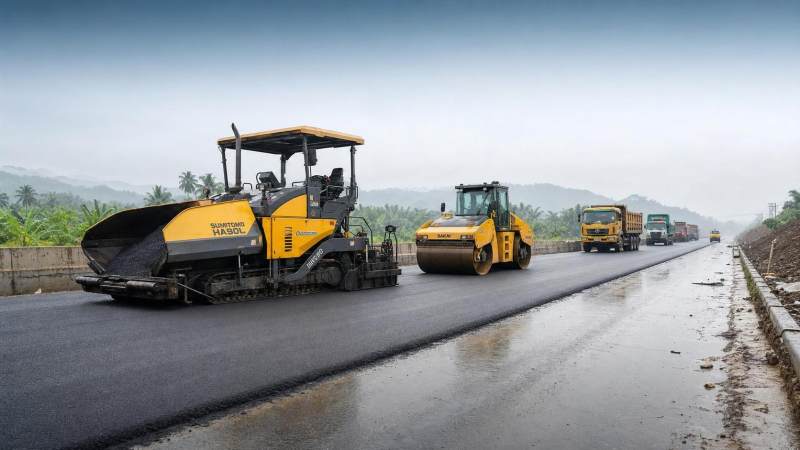
How to Choose Paving Equipment in Southeast Asia for Climate, Road Specs, and Output
Choosing paving equipment Southeast Asia projects can rely on is not only about machine size or price.
Buyers must balance tropical climate, road standards, material behavior, and daily output expectations.
That balance matters more here than in many other markets.
Across Southeast Asia, contractors face monsoon rain, high humidity, mixed aggregates, and fast-changing site logistics.
A paver that performs well in one country may struggle in another.
This also means equipment selection should start from project conditions, not catalog headlines.
The right paving equipment Southeast Asia teams choose should deliver stable mat quality, predictable output, and manageable ownership cost.
In practical terms, that requires a structured evaluation process.
Start with the regional operating environment
Climate is usually the first filter for paving equipment Southeast Asia procurement decisions.
Heat and humidity affect engines, hydraulics, electrical systems, and material handling consistency.
Frequent rainfall creates another layer of risk.
Wet sites reduce traction, slow truck exchange, and increase segregation risk during paving.
For that reason, undercarriage choice matters early.
Tracked pavers often provide better stability on softer shoulders and uneven sub-base conditions.
Wheeled models may still suit urban resurfacing with frequent relocation.
However, relocation speed should not outweigh paving stability on moisture-sensitive projects.
Cooling capacity is another point that gets underestimated.
Machines working long shifts in tropical temperatures need robust radiator design and easy cleaning access.
Dust, fines, and sticky materials can quickly reduce cooling efficiency.
When comparing paving equipment Southeast Asia suppliers offer, inspect tropical package options carefully.
- High-capacity cooling and protected electrical connectors
- Corrosion-resistant components for humid storage conditions
- Reliable traction and feeder performance during wet-season work
- Simple service access for daily cleaning and inspection
Match equipment to road specifications, not generic capacity
Road specifications vary widely across highways, urban arterials, industrial zones, and airport works.
That is why paving equipment Southeast Asia buyers shortlist must fit lane width, layer thickness, and smoothness requirements.
A machine with excess theoretical capacity may still be the wrong choice.
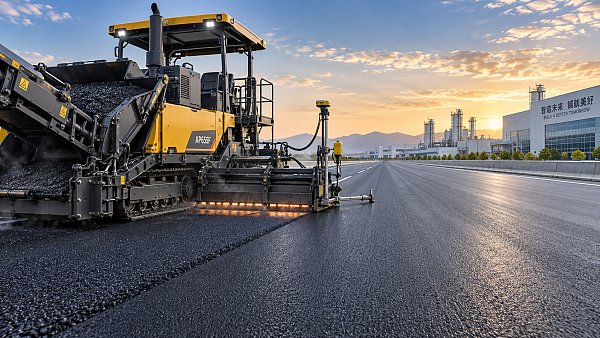
For expressways, screed stability and automation accuracy usually deserve priority.
For municipal resurfacing, maneuverability, transport convenience, and compact operating footprint may matter more.
The screed is often where buying decisions should become more technical.
Check base width, extension range, heating uniformity, crown adjustment, and vibration or tamper configuration.
Poor screed matching creates visible defects long before engine power becomes the issue.
This is especially relevant on roads with strict ride quality targets.
Understand material behavior before selecting the machine
Material characteristics can reshape the entire equipment decision.
Different aggregates, binder grades, recycled asphalt content, and haul distances affect paving performance directly.
In Southeast Asia, variability between quarries can be significant.
So the best paving equipment Southeast Asia operations deploy must tolerate changing feed conditions.
Pay close attention to hopper design, conveyor strength, auger capacity, and anti-segregation features.
These affect how evenly material reaches the screed.
Temperature retention also matters when plant-to-site distances are long.
A powerful paver cannot compensate for poorly managed material logistics.
From recent market shifts, recycled mix capability is becoming more relevant.
That means procurement teams should ask how the machine handles denser or less consistent mixes.
Ask suppliers for real project references, not only brochure claims.
Questions worth asking suppliers
- What mix types has this paver handled in tropical conditions?
- How does conveyor and auger performance hold under sticky or variable aggregates?
- What are the known wear points in humid, high-output use?
- Can the screed maintain even texture during long, continuous paving windows?
Define output in realistic site terms
Output should be measured by delivered paving performance, not by maximum theoretical tons per hour.
This is where many paving equipment Southeast Asia purchasing decisions become distorted.
Traffic control, truck dispatching, weather interruptions, and crew skill usually define real production.
In actual operations, a balanced setup often beats the largest machine.
Evaluate output with these practical dimensions.
- Average hourly placement under normal site interruptions
- Consistency of mat thickness and surface finish
- Ability to maintain paving speed without feeder instability
- Downtime linked to cleaning, setup, or minor faults
This also connects directly to fleet matching.
A paver should be selected together with rollers, trucks, and plant supply rhythm.
If one part of the chain is oversized, cost rises without improving output.
That is a common hidden issue in paving equipment Southeast Asia investment planning.
Look beyond purchase price to total operating value
Price matters, but purchase price alone rarely predicts project value.
For paving equipment Southeast Asia buyers, uptime and parts access often decide long-term cost.
A lower-priced machine can become expensive if wear parts are slow to source.
The same applies when local technicians cannot handle diagnostics quickly.
Service support should be reviewed as rigorously as technical specifications.
Check regional parts inventory, field service response times, training availability, and telematics support.
These factors reduce lifecycle risk, especially on deadline-driven road programs.
A practical value checklist
- Fuel efficiency under stop-start paving cycles
- Wear life of screed plates, conveyors, and augers
- Availability of local stock for high-turn parts
- Operator training time and control system simplicity
- Resale value in regional used equipment markets
At a strategic level, this is where intelligence-led procurement becomes useful.
TF-Strategy consistently tracks how machine parameters, construction methods, and infrastructure demand interact across heavy industries.
That perspective helps separate short-term price appeal from durable operational value.
Build a disciplined selection process
A strong decision usually comes from a clear scoring method.
For paving equipment Southeast Asia selection, a practical model keeps discussions fact-based.
This is especially helpful when several brands appear similar on paper.
- Define project mix, road class, target width, and output window.
- Score climate fit, traction, cooling, and corrosion protection.
- Review screed configuration against specification tolerances.
- Test material handling capability using likely mix conditions.
- Compare lifecycle cost, service support, and parts readiness.
- Ask for jobsite references from similar Southeast Asian environments.
The more complex signal is this.
The best paving equipment Southeast Asia projects depend on is usually the machine that fits the full operating system.
That includes climate, crew, material, specification pressure, and support network.
When these pieces align, productivity becomes more stable and rework drops sharply.
In the end, choosing paving equipment Southeast Asia road programs can trust is a decision about fit, not headline size. A disciplined review of climate exposure, road specs, material behavior, and output reality will lead to a more reliable fleet and better long-term project results.
Related News
 Oct 09, 2026Ultra-Large Excavator Bucket Size: Capacity, Width, and Site Fit ExplainedUltra large excavator bucket size explained: compare capacity, width, payload, truck matching, and site conditions to select a reliable, high-productivity bucket.
 Oct 08, 2026How to Evaluate a Heavy Machinery Information Platform for Project Equipment SourcingHeavy machinery information platform guide: compare equipment fit, source reliability, lifecycle costs, supplier capability, and compliance to make smarter sourcing decisions.
 Oct 07, 2026How to Evaluate a Hydraulic System Component Supplier for Heavy Equipment UptimeChoose a hydraulic system component supplier with proven quality, technical fit, and reliable delivery to reduce heavy equipment downtime and lifecycle costs.
 Oct 06, 2026Selecting Petrochemical Overhead Cranes for Hazardous Areas and Heavy Process LoadsPetrochemical overhead cranes for hazardous areas: learn how to match capacity, duty, controls, corrosion protection, and maintenance access for safer, reliable lifts.
Pavement Process Engineer
Weekly Insights
Stay ahead with our curated technology reports delivered every Monday.