
Paving Equipment for Airports: What to Check for Runway Smoothness and Output
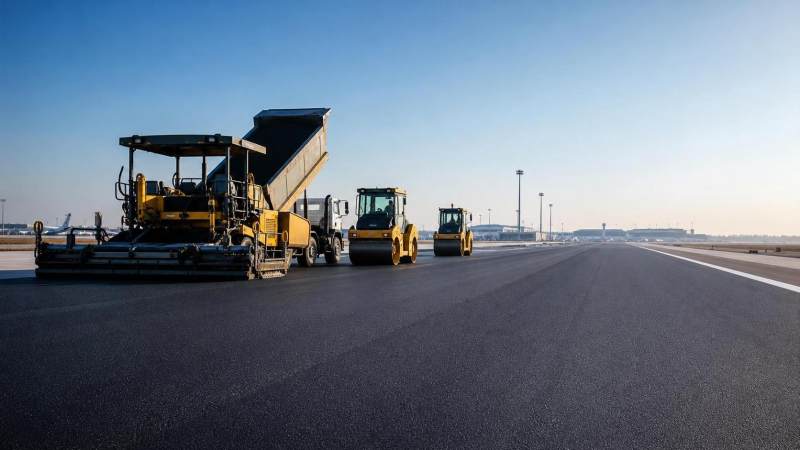
Why airport paving demands a different check logic
Choosing paving equipment for airports is rarely a simple horsepower decision. Runway work carries a tighter tolerance chain than ordinary road paving.
Smoothness affects aircraft response at speed. Output affects possession windows, labor continuity, and how quickly the surface can move to the next controlled step.
In actual projects, the harder question is balance. A machine can deliver high tons per hour, yet still create risk if the mat temperature drifts or the screed reacts slowly.
That is why paving equipment for airports should be judged as part of a system. Paver, feeder, rollers, controls, and haul rhythm all shape final runway smoothness.
This system view also matches the heavy-equipment perspective seen across TF-Strategy. In major infrastructure, physical parameters only matter when linked to method, site pressure, and delivery risk.
The same runway job can behave differently from one section to another
Airport paving looks uniform from a distance, but application conditions change quickly. A full runway rehabilitation does not ask the same things as a taxiway tie-in or shoulder widening.
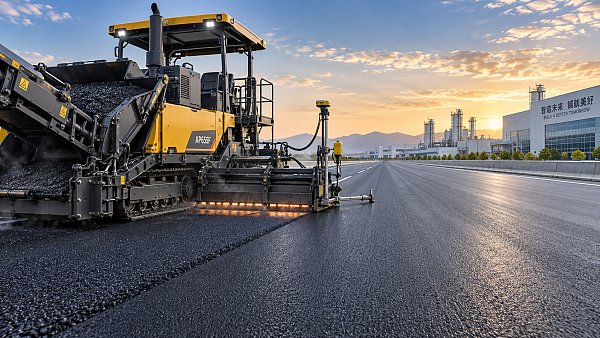
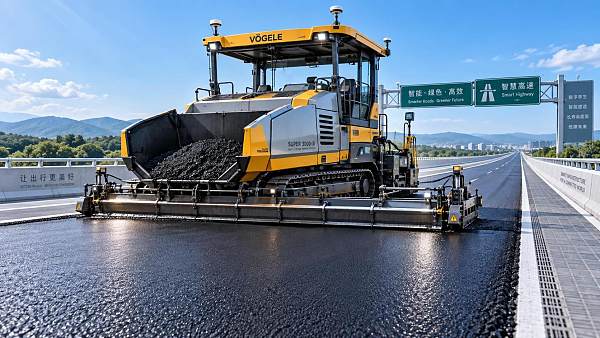
On a long central runway pass, paving equipment for airports must hold steady speed, stable head of material, and minimal screed disturbance over extended pulls.
Near intersections, lighting bases, drainage details, or connection zones, the judgment shifts. Maneuverability, width flexibility, and control precision become more important than maximum output.
Night work changes the picture again. Shorter windows make restart quality, rapid calibration, and dependable diagnostics more valuable than headline production figures.
Where smoothness matters most
Longitudinal smoothness usually drives the first equipment check. Screed stability, automatic grade control response, and feeder consistency directly influence that result.
Transverse uniformity matters too, especially where aircraft loads repeat across wheel paths. Uneven density across the width can turn a visually good surface into an early maintenance problem.
On long runway passes, stability matters more than peak output
For long, uninterrupted paving runs, the best paving equipment for airports is usually the machine that stays calm under constant feed, not the one with the highest brochure capacity.
A stable conveyor system, even material distribution, and low-vibration screed support are basic checks. Sudden surges in head material often show up later as smoothness corrections.
The tow point behavior deserves close attention. If the control system overreacts to small grade changes, the finished mat can inherit unnecessary waves.
In these sections, output still matters, but only if haul trucks, transfer vehicle, and rollers can match the paving rate without forcing stops or speed swings.
- Check whether the paver can maintain a constant paving speed across full-width runway segments.
- Confirm that auger and conveyor controls prevent segregation at both center and edge zones.
- Review screed heating consistency before the first pull, not only after production starts.
- Match roller pattern to mat cooling time, especially in windy or low-temperature conditions.
At tie-ins and constrained zones, precision replaces brute capacity
A frequent mistake is treating all airport paving like a full straight runway pull. That misses what happens at tie-ins, fillets, shoulder transitions, and utility-dense edges.
In these areas, paving equipment for airports should be checked for width adjustment range, steering accuracy, and how cleanly the screed responds during short transitions.
Material flow is still important, but oversize machines can become inefficient here. Larger platforms may create more correction work if turning radius or visibility limits operator control.
This is where application judgment becomes practical. The right setup may combine a primary paver for mainline sections and a more agile unit for details and edge-sensitive work.
A quick comparison of common airport paving situations
The table shows why one specification sheet rarely covers the whole airport job. Conditions shift, and the best decision often comes from matching machine behavior to each section.
Material consistency often decides whether output is usable
Runway smoothness is not created by the paver alone. Material segregation, thermal variation, and interruptions upstream can cancel the benefit of high-end paving equipment for airports.
A transfer vehicle becomes more valuable when mix consistency varies across truckloads or when long haul distances increase temperature spread.
In hot regions, thermal loss may seem less threatening, yet rapid surface cooling from wind can still upset compaction timing. The equipment lineup should be checked against local weather, not assumptions.
Projects with polymer-modified mixes or strict texture requirements should also confirm whether the screed, heating system, and roller package suit the material behavior.
What to verify before production begins
- Haul cycle duration versus planned paving rate.
- Expected temperature loss from plant to runway.
- Roller fleet capacity during the available compaction window.
- Joint construction method and required tolerance.
- Compatibility of automation, sensors, and survey references.
What gets overlooked when teams focus only on machine size
One common misread is assuming bigger paving equipment for airports automatically improves runway output. If support logistics are weak, a larger paver only magnifies interruptions.
Another blind spot is treating runway and taxiway work as identical. They share materials and standards, but operational geometry and correction tolerance can differ sharply.
Short-term cost focus can also distort equipment choice. Lower acquisition or rental cost may lead to more joint work, slower restarts, and extra smoothness remediation.
Maintenance access matters as well. During compressed airport schedules, a sensor fault or heating issue that takes hours to resolve can erase the value of theoretical productivity.
From a broader heavy-industry intelligence view, this is familiar. In mining, tunneling, and runway paving alike, productive output depends on the weakest operational link, not the largest machine.
How to build a practical airport paving equipment checklist
A useful checklist starts with the paving window, section geometry, and surface tolerance. Those three factors usually narrow the equipment choice faster than brand preference.
Then compare paving equipment for airports across five real controls: paving speed stability, screed quality, material handling, compaction coordination, and service readiness.
If the project includes multiple operating zones, define which machine setup belongs to each zone. That prevents a single compromise solution from weakening the entire program.
It also helps to document trigger points for adjustment. Wind increase, haul delay, mix temperature drop, or joint deviation should lead to a predefined response, not improvised correction.
- Map each runway section by length, width, access limits, and tolerance demand.
- Test the full paving train, not just the paver, under expected production rhythm.
- Confirm spare parts, sensor backup, and screed heating support before the paving window opens.
- Review whether measured output can be sustained without stop-start paving.
A better next step than comparing brochures
The best paving equipment for airports is the setup that keeps runway smoothness predictable while sustaining usable output under actual site constraints.
That usually means defining the working scenarios first, then checking machine behavior, material control, and support coordination against those scenarios.
A practical next move is to build a section-by-section matrix covering paving length, mix type, weather exposure, joint strategy, and available possession time.
Once those conditions are clear, the right paving equipment for airports becomes easier to judge on smoothness risk, output stability, and lifecycle practicality rather than headline numbers alone.
Related News
 Sep 29, 2026Infrastructure Construction Standards: A Project Manager’s Guide to ComplianceInfrastructure construction standards guide for project managers: turn requirements into field controls, hold points, traceability, and compliant delivery.
 Sep 28, 2026How to Specify Custom Mining Equipment for Abrasive Ground and High-Load HaulageCustom mining equipment for abrasive ground and high-load haulage: learn how to optimize payload, wear protection, powertrains, uptime, and lifecycle cost for safer, reliable production.
 Sep 29, 2026What belongs in a construction equipment package sourcing plan?Construction equipment package planning sourcing guide: learn how to match machines, attachments, site conditions, supplier support, costs, and acceptance gates for reliable project delivery.
 Sep 29, 2026How to verify equipment durability before approving suppliers at scaleHow can heavy equipment manufacturers verify durability and manage supplier risk at scale? Explore practical testing, traceability, audits, and control strategies.

Pavement Process Engineer
Weekly Insights
Stay ahead with our curated technology reports delivered every Monday.