
How to Evaluate a Mining Dump Truck Electric: Payload, Gradeability, Charging, and TCO
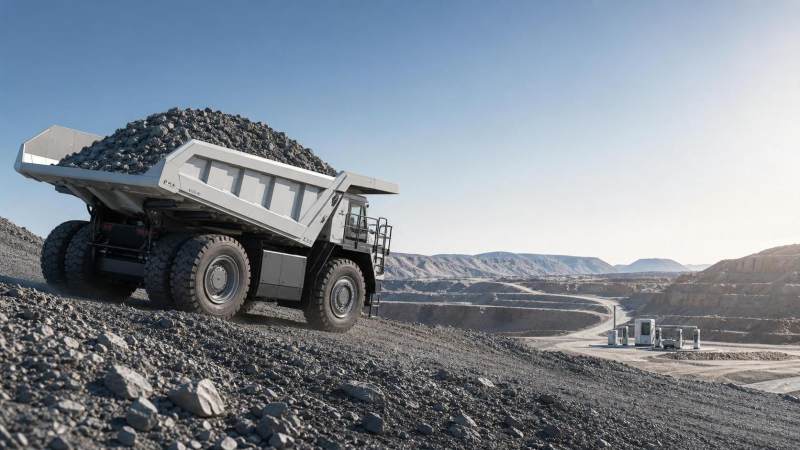
Evaluating a mining dump truck electric platform now demands more than a simple diesel-versus-battery comparison. In open-pit mining, haulage economics depend on payload, ramp performance, charging rhythm, and lifecycle cost. A truck that looks efficient on paper can underperform when altitude, long climbs, ambient temperature, or dispatch patterns change. That is why a practical review of a mining dump truck electric model must connect machine parameters with site reality, not treat electrification as a standalone feature.
Why electric haulage has become a serious evaluation topic
Heavy industry is moving through two pressures at once: decarbonization targets and tighter productivity expectations. Mining fleets are expected to cut fuel exposure, reduce maintenance interruptions, and keep output stable under difficult operating cycles.
Within that context, the mining dump truck electric segment has moved from pilot interest to capital planning. The shift is not only environmental. It is also about energy security, digital control, and more predictable operating costs.
This is also where TF-Strategy’s heavy-equipment intelligence lens matters. In large earth engineering, physical parameters only become useful when linked to construction methods, material movement patterns, and project economics.
A pure electric truck may suit one copper mine extremely well and fit another poorly. The deciding factor is usually not the headline battery size. It is the interaction between duty cycle and fleet system design.
Start with payload, but read beyond the nameplate
Payload is still the first filter because every haul road decision eventually returns to tonnes moved per shift. Yet nominal payload alone is not enough when assessing a mining dump truck electric option.
Battery systems add mass. Depending on chassis design, that can influence tare weight, axle loading, and usable payload margin. The right question is not only “What is the rated payload?” but also “What payload is sustainable on the actual route?”
In practice, three payload issues deserve close attention.
- Actual carrying capacity under local loading density and body configuration.
- Impact of payload variation on battery consumption and turnaround time.
- Structural consequences of repeated overloads on suspension, tires, and frame durability.
A truck with slightly lower rated payload can still deliver better shift output if it cycles faster, regenerates efficiently on descent, and avoids derating during hot weather.
Questions that clarify payload value
Useful evaluation often starts with route-specific data rather than catalog data.
- What is the average haul distance, not just the maximum?
- How often does the truck operate below full payload because of material fragmentation or loader matching?
- Does body volume align with ore density, or is the truck cubing out before it weighs out?
Gradeability is where the operating truth appears
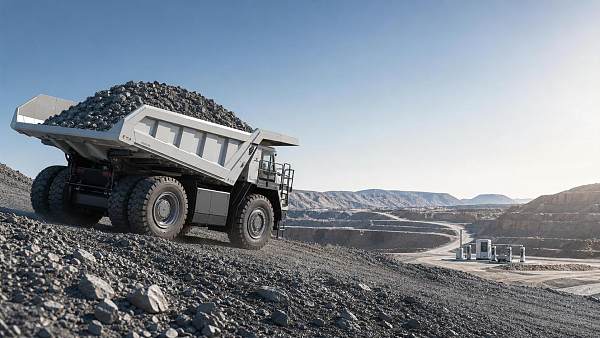
For a mining dump truck electric platform, gradeability often separates an attractive concept from a workable fleet asset. Open-pit operations rarely present flat, laboratory-style cycles.
Long uphill hauls create peak power demand. Loose surfaces, switchbacks, wet conditions, and altitude can magnify that demand. If gradeability is marginal, cycle time stretches, battery drain rises, and dispatch reliability falls.
Published gradeability figures should therefore be read carefully. Some are based on short-duration peaks. Others assume ideal traction or partial payload. A more useful review asks how the truck holds speed on sustained grades while fully loaded.
Gradeability also affects site design choices. A mine with aggressive ramps may need charging points positioned differently, more passing space, or a hybrid fleet transition period.
Charging strategy is a fleet decision, not a plug decision
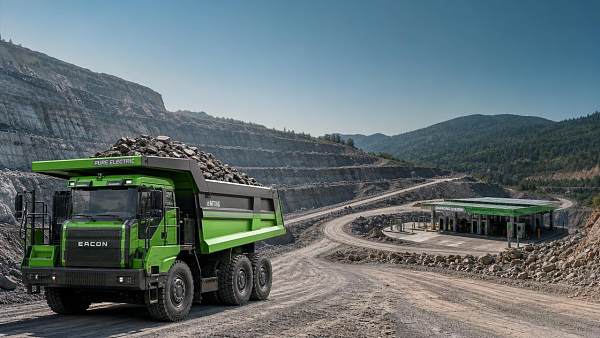
Charging is often reduced to charger power and battery size, but real performance depends on timing, infrastructure placement, and queue discipline. A mining dump truck electric fleet succeeds when charging fits dispatch logic.
There is no universal best method. Opportunity charging near loading zones, fast charging near dumping points, battery swapping, and trolley-assisted systems each solve different mine layouts.
What matters is the total operating rhythm. If trucks wait to charge during production peaks, utilization drops quickly. If charging is oversized without enough grid support, capex rises without proportional output gains.
What to review in charging planning
- Grid availability, substation distance, and expansion lead time.
- Daily production profile and charging windows by shift.
- Battery performance at low temperature or high ambient heat.
- Redundancy if one charger or bay becomes unavailable.
- Interoperability with energy management and fleet monitoring systems.
A strong charging plan should also include degradation assumptions. Fast charging can support output, but frequent high-C-rate charging may affect battery life if the chemistry and cooling architecture are not well matched.
TCO is the real comparison point
The best mining dump truck electric decision usually emerges through total cost of ownership, not acquisition price. TCO exposes whether lower energy and maintenance costs are enough to offset battery, charger, and infrastructure investment.
This analysis should stay grounded in site data. Generic fuel savings assumptions can mislead, especially when haul profiles, power tariffs, or replacement cycles differ from benchmark cases.
A useful TCO model normally includes the following cost blocks.
- Vehicle purchase and commissioning.
- Charging infrastructure, civil works, and electrical upgrades.
- Power cost by tariff period and demand charge structure.
- Maintenance labor, parts, brake wear, and cooling system service.
- Battery replacement, residual value, and second-life assumptions.
- Downtime cost from charging bottlenecks or thermal derating.
More advanced reviews also consider carbon pricing, ventilation savings in certain mixed operations, and reputational value in project financing. Those factors may not dominate every case, but they can influence the final decision.
Where TCO models often go wrong
Overly optimistic utilization rates are common. Another weak point is assuming constant battery efficiency across seasons. Some models also ignore road maintenance effects on rolling resistance and energy draw.
That is why intelligence-driven assessment matters. TF-Strategy’s approach, linking machine physics with project strategy, is especially useful when the fleet decision influences multi-year mine economics.
Different sites will rank the same truck differently
A mining dump truck electric model should be judged against the operating environment it will actually serve. The same platform may perform very differently across mine types.
Short-haul operations with consistent downhill return routes often benefit from regenerative recovery. Deep pits with long loaded climbs may prioritize power density and charging placement. Remote sites may care most about grid constraints and service access.
A practical way to compare options
A useful comparison process usually begins with a baseline diesel route model. That creates a credible benchmark for cycle time, energy cost, maintenance profile, and annual tonnes moved.
From there, electric candidates can be tested against the same route, road condition, payload distribution, and shift pattern. The aim is to compare systems under equal operating logic.
- Map actual haul segments, gradient ranges, and stop-start frequency.
- Model loaded and empty energy consumption separately.
- Stress-test charging scenarios against peak production periods.
- Run sensitivity cases for electricity price, battery life, and utilization.
- Check service network depth, software capability, and parts support.
That last point matters more than many initial evaluations assume. A mining dump truck electric fleet is also a software and infrastructure system. Diagnostics, battery analytics, and remote support can influence uptime as much as drivetrain design.
What deserves the next level of scrutiny
Once payload, gradeability, charging, and TCO are clear, the next layer is strategic fit. Can the truck align with future mine expansion, autonomous haulage plans, or renewable power integration?
That broader view is increasingly important across global infrastructure and heavy equipment. Electrification choices now influence financing narratives, supplier relationships, and long-term asset planning.
The strongest next step is usually a structured shortlist built around site-specific KPIs: tonnes per hour, ramp speed, charging downtime, energy cost per tonne, and projected TCO under multiple operating cases.
When those metrics are grounded in real haul profiles, a mining dump truck electric decision becomes clearer. It stops being a technology trend and becomes what it should be: a measurable fleet productivity choice.
Related News
 Sep 29, 2026Infrastructure Construction Standards: A Project Manager’s Guide to ComplianceInfrastructure construction standards guide for project managers: turn requirements into field controls, hold points, traceability, and compliant delivery.
 Sep 28, 2026How to Specify Custom Mining Equipment for Abrasive Ground and High-Load HaulageCustom mining equipment for abrasive ground and high-load haulage: learn how to optimize payload, wear protection, powertrains, uptime, and lifecycle cost for safer, reliable production.
 Sep 29, 2026What belongs in a construction equipment package sourcing plan?Construction equipment package planning sourcing guide: learn how to match machines, attachments, site conditions, supplier support, costs, and acceptance gates for reliable project delivery.
 Sep 29, 2026How to verify equipment durability before approving suppliers at scaleHow can heavy equipment manufacturers verify durability and manage supplier risk at scale? Explore practical testing, traceability, audits, and control strategies.
Heavy Haulage Strategist
Weekly Insights
Stay ahead with our curated technology reports delivered every Monday.