
How to Evaluate Electric Mining Trucks for Haul Roads, Payload, and Charging Cycles
How to Evaluate Electric Mining Trucks for Haul Roads, Payload, and Charging Cycles
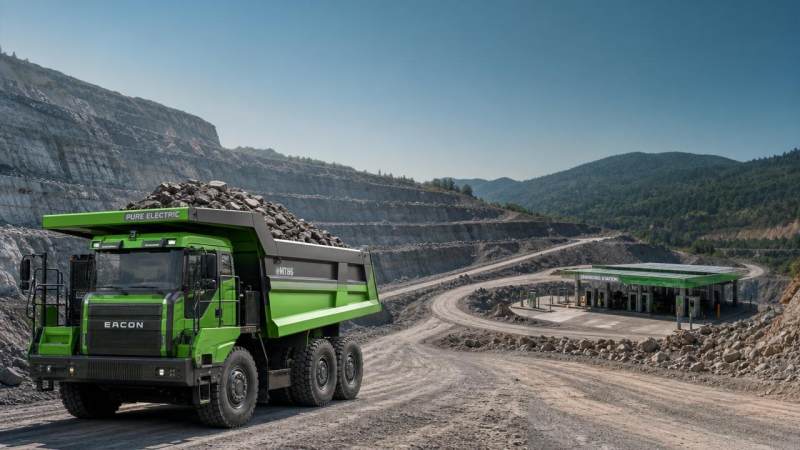
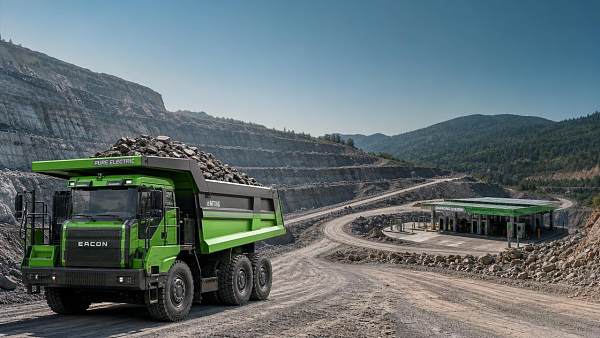
Evaluating electric mining trucks requires more than comparing battery size or rated payload.
The real decision depends on haul road grade, cycle distance, effective payload, charging windows, and uptime.
If one factor is misread, the whole fleet model can fail in production.
This guide shows how to assess electric mining trucks with practical criteria for reliable procurement and operational fit.
Start With the Haul Profile, Not the Brochure
The first mistake is evaluating electric mining trucks from catalog figures alone.
A truck that looks efficient on paper may underperform on a steep, broken, or extended haul route.
Start by mapping the actual duty cycle of the mine.
That includes loaded distance, empty return distance, vertical lift, rolling resistance, and queue time.
From recent market changes, this has become the clearest separator between successful pilots and costly misfits.
Electric mining trucks are highly sensitive to route energy demand.
A one-kilometer difference means little on flat ground.
The same difference on a long uphill segment can reshape charging frequency and fleet sizing.
Key haul road inputs to verify
- Average and peak grade on loaded sections
- Rolling resistance by season and road condition
- Total cycle distance and elevation change
- Stop-start frequency at loading and dumping points
- Ambient temperature, altitude, and dust intensity
These inputs create a realistic energy model for electric mining trucks, far better than a simple nominal range estimate.
Understand Effective Payload Instead of Rated Payload
Rated payload is useful, but it is not the final decision number.
What matters in production is effective payload across the full shift.
This becomes even more important when comparing diesel and electric mining trucks.
Battery mass, chassis layout, and axle load distribution can affect usable carrying capacity.
In actual operations, payload consistency often matters more than the highest possible payload.
A truck that carries slightly less, but maintains stable cycles, may deliver stronger shift output.
Questions that sharpen payload evaluation
- How does payload change under different state-of-charge windows?
- Is derating applied on steep grades or high temperatures?
- What is the real tonnage delivered per shift, not per trip?
- How stable is suspension behavior with uneven loading patterns?
- Are there restrictions from tire heat, braking, or road width?
For technical evaluation, productivity should be measured as tonnes moved per available operating hour.
Model the Charging Cycle as Part of Production
Charging is not a support detail.
For electric mining trucks, it is part of the production system itself.
This also means the best truck can still fail if charging logic is weak.
Evaluation should cover charging method, station location, queue risk, power availability, and recovery speed.
Some sites work well with fast charging during operator breaks.
Others need battery swapping, trolley assist, or opportunity charging near the dump point.
The right answer depends on cycle rhythm, grid strength, and expansion plans.
Core charging checks
- Energy consumed per cycle under loaded and empty travel
- State-of-charge target for battery life and output stability
- Charge time needed to recover one full haul cycle
- Peak demand impact on substation and site power costs
- Redundancy if one charger or feeder goes offline
A strong evaluation of electric mining trucks should simulate charging bottlenecks before procurement.
If not, hidden downtime usually appears after deployment, when correction costs are much higher.
Check Battery Performance Under Real Site Conditions
Battery performance should be reviewed as an operating behavior, not only a specification sheet item.
Temperature swings, altitude, regen profile, and charging habits all influence practical output.
This is where many electric mining trucks show large differences.
Cold weather can slow charge acceptance.
High ambient heat can force thermal management loads upward.
Long downhill sections may improve efficiency through regenerative braking.
But that gain depends on system design and route consistency.
Battery risks that deserve attention
- Capacity fade under aggressive fast-charging schedules
- Thermal derating during summer peaks
- Reduced efficiency at high altitude operations
- Service delays caused by cooling system complexity
- Warranty terms tied to duty cycle assumptions
A useful selection process asks suppliers for performance curves tied to real mine conditions, not generic claims.
Evaluate Fleet Uptime, Maintenance, and Supportability
Truck selection is rarely about one machine.
It is about whether a fleet of electric mining trucks can maintain production without unstable downtime.
Electric drivetrains may reduce some mechanical service needs.
However, power electronics, battery cooling, software controls, and charging hardware introduce new dependencies.
In practice, support readiness is often a stronger decision factor than brochure efficiency.
This is especially true for remote mines with limited spare coverage.
Support items to compare supplier by supplier
- Mean time to repair for battery and inverter faults
- Local spare parts availability and lead times
- Remote diagnostics and software update capability
- Training needs for electricians, operators, and planners
- Emergency procedures for high-voltage incidents
A lower-maintenance promise only matters when parts, people, and service workflows are ready on site.
Compare Total Cost of Ownership With the Right Boundaries
A realistic TCO model for electric mining trucks should go beyond fuel replacement math.
Capital cost, charging infrastructure, utility upgrades, maintenance labor, tires, and utilization losses all matter.
The stronger approach is to compare cost per moved tonne under the planned duty cycle.
That keeps the decision tied to production instead of isolated equipment cost.
When electric mining trucks are evaluated with these boundaries, cost comparisons become more defensible and more useful.
Build a Practical Selection Framework
The most reliable procurement decisions follow a structured scoring method.
That framework should combine engineering fit, operating risk, and financial outcome.
A simple model usually works better than a complicated one no team can maintain.
- Define the mine’s real haul segments and shift targets.
- Request supplier data under matching grades and temperatures.
- Simulate payload, charging, and queue interactions.
- Stress test uptime assumptions with maintenance scenarios.
- Convert results into cost per tonne and risk-weighted ranking.
This also creates cleaner internal communication.
Operations, maintenance, power planning, and procurement can evaluate the same decision map.
That reduces bias and keeps electric mining trucks aligned with site strategy, not short-term excitement.
Final Decision: Fit First, Then Scale
The best electric mining trucks are not always the ones with the largest battery or highest nominal payload.
They are the ones that match the haul road, sustain effective payload, and recover energy within production windows.
That is the practical path to lower risk and stronger long-term value.
In real mining environments, fit matters before scale.
Use route-specific data, validate charging logic, and compare tonnes delivered, not just technical claims.
That approach makes electric mining trucks easier to justify, easier to deploy, and more likely to perform as planned.
Related News
 Sep 13, 2026Crawler Crane Application Analysis for Wind Farms, Bridges, and Confined SitesCrawler crane application analysis for wind farms, bridges, and confined sites—optimize lift paths, ground conditions, access, and schedules for safer project delivery.
 Sep 12, 2026Open-Pit Mining in North America: Key Project Risks and Planning PrioritiesOpen-pit mining North America: uncover key risks and planning priorities for geology, permitting, water, fleet strategy, and resilient project delivery.
 Sep 11, 2026TBM Systems in Southeast Asia: Key Selection Factors for Variable Ground ConditionsTBM systems Southeast Asia: discover key selection factors for variable ground, pressure control, monsoon resilience, and safer tunnel delivery.
 Sep 10, 2026How to Select Bridge Lifting Machinery for Span, Load, and Site ConstraintsLifting machinery for bridges: learn how to match capacity, span, radius, ground conditions, and access constraints for safer, cost-effective bridge erection.


Heavy Haulage Strategist
Weekly Insights
Stay ahead with our curated technology reports delivered every Monday.