
How to choose crawler cranes for tight urban job sites
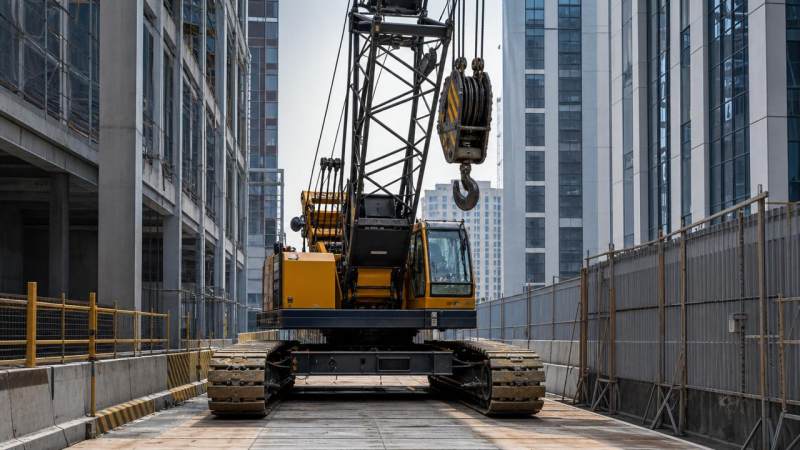
Choosing crawler cranes for tight urban job sites requires more than matching lifting capacity to load charts. Project managers must weigh footprint, ground bearing pressure, boom configuration, transport logistics, and local safety constraints in dense city environments. This guide explains how to evaluate crawler cranes for confined projects while balancing efficiency, compliance, and overall project risk.
Why a checklist-based approach matters before selecting crawler cranes
On urban projects, the wrong crane choice rarely fails on headline capacity alone. It usually fails on access roads, assembly space, neighborhood restrictions, or an overlooked ground condition. That is why project leaders should assess crawler cranes with a structured checklist instead of a single-spec comparison. A disciplined review helps teams prevent late design changes, reduce lift-plan revisions, and avoid costly idle time when a crane reaches site but cannot be assembled or operated as expected.
For project managers, the goal is practical: select crawler cranes that fit the real site envelope, maintain schedule certainty, and meet local compliance requirements. In sectors tracked by TF-Strategy, where heavy lifting intersects with constrained infrastructure delivery, the strongest decisions come from combining machine data, construction methodology, and risk control at the earliest stage.
Start with the five priority questions
Before comparing brands or boom systems, confirm these five points. They will quickly narrow the range of suitable crawler cranes for tight urban job sites.
- What is the maximum lifted load, and what is the actual lift radius at each critical pick point?
- How much operating and assembly space is truly available after fencing, traffic management, material storage, and adjacent structures are considered?
- What ground bearing pressure can the site support, and what temporary works will be required?
- Can the crane be transported, offloaded, assembled, and dismantled within local road and time restrictions?
- What city-specific safety, noise, environmental, and permit constraints will affect crane selection and working hours?
If any one of these answers remains unclear, crane selection is premature. In urban conditions, uncertainty around one factor can invalidate an otherwise ideal specification.
Core checklist: how to evaluate crawler cranes for confined projects
1. Check lift demand beyond nominal capacity
Do not shortlist crawler cranes only by maximum tonnage. Review the full lift matrix: load weight, lift radius, hook height, boom length, jib requirement, tail swing, and pick-and-carry expectations if applicable. Urban projects often involve awkward lifts over facades, utilities, rail corridors, or existing structures. In those cases, radius growth drives capacity loss much faster than many planning teams expect.
A useful rule is to identify the top three most demanding lifts rather than only the heaviest component. The crane must satisfy all three with adequate safety margin, not just the peak weight on paper.
2. Verify site footprint and swing limitations
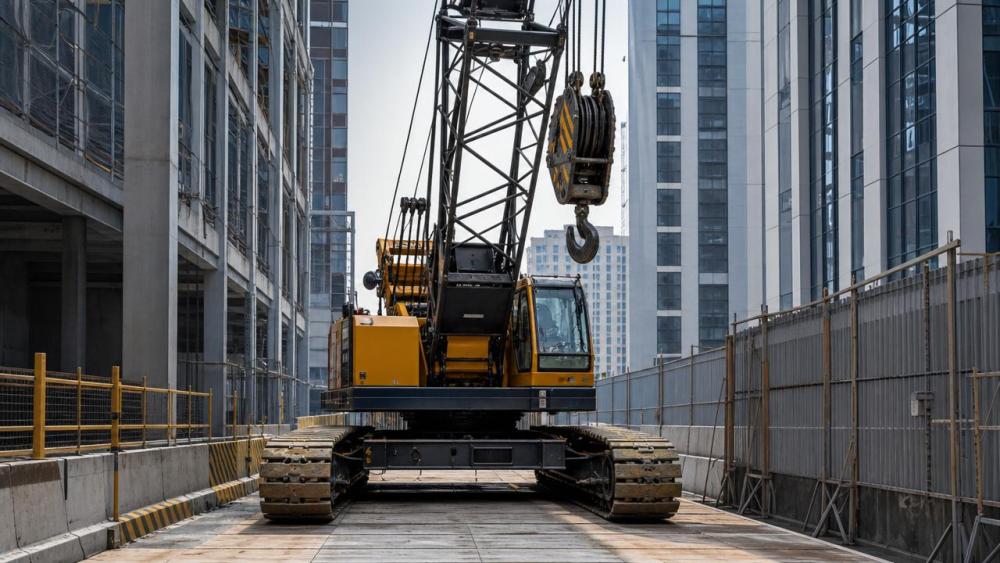
Crawler cranes are favored for stability and heavy-duty lifting, but their footprint can become a decisive constraint in dense city sites. Measure actual crane standing area, counterweight radius, crawler width, assembly zone, and separation distances from adjacent buildings. Also consider whether the crane needs to rotate freely or operate within a restricted swing sector.
If the project sits between existing buildings, near active roads, or beside overhead obstructions, reduced-tail-swing alternatives or reconfigured boom solutions may outperform a larger conventional model that appears stronger on the load chart.
3. Assess ground bearing pressure and temporary works early
Ground pressure is one of the most underestimated factors when choosing crawler cranes. Urban sites frequently involve basements, tunnels, backfilled utility corridors, suspended slabs, or mixed subgrade conditions. A crane that fits the lifting requirement may still be rejected if bearing pressure exceeds what the platform can safely support.
Project managers should request geotechnical verification, underground services mapping, and temporary works input before final selection. Include track load distribution during assembly, static lifting, and crane travel if repositioning is planned. In many cases, the cost and time for matting, piling, or platform reinforcement will materially affect crane economics.
4. Confirm boom configuration and erection sequence
Different crawler cranes can achieve similar rated lifts with very different boom systems. Luffing jib arrangements may improve reach in confined vertical environments, while fixed boom setups may simplify erection and reduce parts count. The right choice depends on clearance, sequence, and change frequency.
Ask these questions: Can the boom be assembled within the available laydown area? Is assist crane support needed? Will the project require multiple reconfigurations? How much schedule loss occurs if the crane must be partially dismantled to accommodate changing phases? On a restricted urban site, erection logic is often as important as operating performance.
5. Review transport logistics and permit complexity
Crawler cranes arrive in multiple loads, and urban logistics can become the hidden bottleneck. Evaluate transport envelope, axle load limits, route surveys, escort requirements, offloading area, night delivery windows, and neighborhood restrictions. A machine with slightly lower capacity but fewer transport loads may deliver better total project value if city access is constrained.
This is especially relevant for downtown redevelopment, metro-adjacent works, hospital expansions, and bridge replacement projects, where road occupation permits are tightly controlled. Selection should therefore include not only crane rental rates, but also the full logistics burden from gate to final hook-ready status.
6. Match the crane to regulatory and neighborhood constraints
Urban lifting projects operate under more than engineering constraints. Noise limits, emissions rules, restricted working hours, exclusion zones, aviation notifications, and public interface risk all influence the best crawler crane choice. Some municipalities impose stricter standards for engine idling, road cleanliness, or vibration monitoring near sensitive structures.
For project leaders, this means crane selection should include a compliance review with HSE, temporary works, and permitting teams. A technically capable machine can still create operational friction if it triggers additional approvals or public disruption controls.
Quick comparison table for project managers
Use the table below to compare crawler cranes in a way that reflects real urban constraints rather than brochure specifications alone.
How priorities change by urban project type
High-rise and mixed-use construction
For vertical construction, hook height, restricted swing, and lift frequency usually matter more than pure headline capacity. Project teams should pay close attention to boom-jib combinations and whether the crane can support repeated facade, steel, or MEP module lifts without frequent reconfiguration.
Bridge, rail, and corridor works
These projects often compress lifting into short possession windows. Here, crawler cranes should be evaluated for setup speed, reliability, and ability to handle heavy picks with tight access from one side only. Transport timing and contingency planning become critical because delays can affect public operations immediately.
Industrial retrofit in city zones
Petrochemical, district energy, or utility replacement projects in urban settings place extra emphasis on exclusion zones, underground networks, and coordinated shutdown schedules. The best crawler cranes here are often those that minimize interface risk with existing assets, even if they are not the largest available option.
Commonly overlooked issues that create cost and delay
- Assuming the assembly crane will fit without checking secondary access and laydown space.
- Using idealized site dimensions from tender drawings instead of updated as-built constraints.
- Ignoring underground structures such as culverts, utility trenches, or basement edges beneath crawler travel paths.
- Comparing crawler cranes on rental rate alone without including mobilization, permits, platform works, and dismantling time.
- Overlooking operator familiarity, local service support, and spare parts response when schedule float is minimal.
- Failing to plan for weather-related boom limits, especially in wind-sensitive urban canyons.
Execution checklist: what to prepare before asking for crane proposals
To receive accurate quotations and meaningful technical recommendations, project managers should prepare a concise but complete information pack. This step improves the quality of vendor responses and reduces back-and-forth during procurement.
- Lift schedule with load weights, dimensions, pick points, and required dates.
- Site layout showing crane position options, assembly areas, access roads, and exclusion zones.
- Geotechnical and underground utilities information relevant to crane standing and travel areas.
- Local permit constraints, approved work hours, and transport restrictions.
- Preferred sequencing assumptions, including whether one crane must serve multiple phases.
- Risk priorities such as minimum disruption, shortest mobilization, or lowest temporary works burden.
When these inputs are clear, suppliers can recommend crawler cranes that are aligned with actual project conditions, not generic capacity classes.
Practical decision rule for final selection
A strong final choice usually comes from scoring crawler cranes across four weighted dimensions: technical fit, site compatibility, logistics feasibility, and project risk. If two cranes can complete the lifts, prefer the one that reduces temporary works exposure, shortens mobilization, and offers stronger support coverage in the local market. In dense urban jobs, lower uncertainty often creates more value than higher nominal capability.
This is consistent with the broader heavy-equipment intelligence perspective championed by TF-Strategy: the best machinery decision is made where engineering parameters, construction methods, and commercial outcomes are evaluated together.
Final takeaway and next-step questions
Selecting crawler cranes for tight urban job sites is ultimately a risk-management exercise wrapped inside a lifting decision. Capacity matters, but footprint, ground conditions, assembly sequence, logistics, and compliance usually determine whether the plan succeeds. A checklist-led process helps project managers filter options faster and avoid expensive surprises after award.
If your team needs to move from shortlist to procurement, prioritize discussion around these questions: Which lift cases control the crane size? What is the verified ground capacity at the proposed standing area? How many transport loads and permits are required? What assembly support is needed? What local service response can the supplier provide? Clarifying those points early will lead to a more reliable crawler cranes strategy, better schedule confidence, and stronger cost control across the project lifecycle.
Related News
 Sep 22, 2026How to Evaluate a High-Altitude Mining Solutions Manufacturer for Remote ProjectsEvaluate a high-altitude mining solutions manufacturer with proven derating, cooling, service logistics, and lifecycle-cost support for remote projects.
 Sep 21, 2026Industrial Supplier Evaluation: A Risk-Based Scorecard for Quality, Capacity, and DeliveryIndustrial supplier evaluation made practical: use a risk-based scorecard to assess quality, capacity, and delivery reliability, reduce project risk, and select suppliers with confidence.
 Sep 20, 2026Comparing Heavy Equipment Warranty Suppliers: Coverage, Claims, and Downtime RiskSupplier comparison for heavy equipment warranty: evaluate coverage, claims speed, service networks, and downtime risk to protect uptime and project costs.
 Sep 19, 2026Mining Truck Technology Trends: What Fleet Managers Should Prioritize for 2026Mining truck technology trends for 2026: prioritize electrification, autonomy, predictive maintenance, and road intelligence to improve fleet uptime, safety, and cost control.


Structural Load Expert
Weekly Insights
Stay ahead with our curated technology reports delivered every Monday.