
Crawler cranes or mobile alternatives for short-duration lifts?
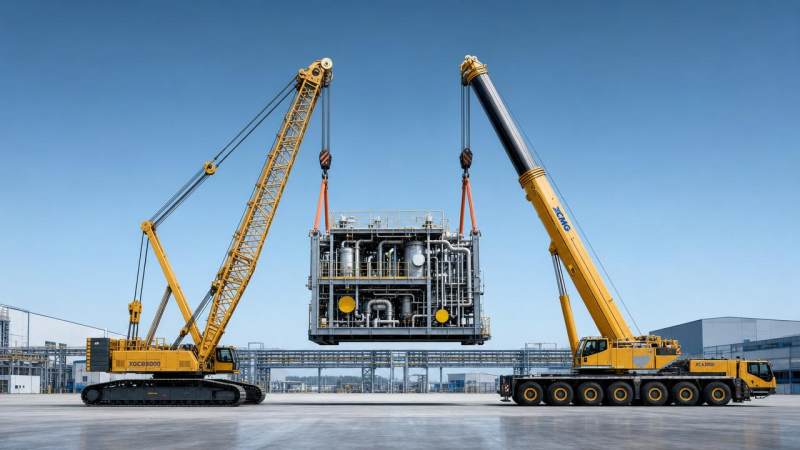
For procurement teams evaluating short-duration lifts, choosing between crawler cranes and mobile alternatives is rarely just about day rates. Mobilization speed, ground conditions, lift capacity, site constraints, and total project risk all shape the smarter investment. This article outlines when crawler cranes deliver better value and when mobile options can improve efficiency, helping buyers make faster, more cost-effective equipment decisions.
Why short-duration lifting decisions are changing faster than many buyers expect
A clear shift is underway in heavy lifting procurement. Across wind balance-of-plant work, industrial shutdowns, petrochemical maintenance, modular installation, and infrastructure packages, buyers are under pressure to shorten project windows while improving utilization and reducing standby exposure. That shift is changing how procurement teams compare crawler cranes with truck cranes, all-terrain cranes, and rough-terrain alternatives.
In the past, short-duration lifts were often assigned to mobile cranes by default because they appeared easier to dispatch and less complex to support. Today, that assumption is less reliable. Lift weights are rising, components are becoming more delicate, site access is tightening, and safety documentation is receiving closer scrutiny from clients and regulators. As a result, crawler cranes are increasingly being considered even for relatively brief scopes, especially where lift stability, pick-and-carry limitations, or repetitive heavy picks create hidden risk for mobile fleets.
At the same time, mobile alternatives are becoming more competitive in exactly the segments where speed matters most. Better roadability, fast setup systems, and improved fleet availability allow some contractors to complete short jobs with fewer logistics interfaces. For procurement personnel, the real issue is no longer “Which crane is cheaper per day?” but “Which lifting strategy creates the lowest total delivery risk for the specific window of work?”
The strongest market signals behind the crawler cranes versus mobile crane debate
Several signals explain why this comparison now matters more than before. First, project schedules have become less forgiving. Delays in civil works, transport, or permitting compress the final erection window, making equipment reliability and setup certainty more valuable than nominal rental savings. Second, owners increasingly expect lifting plans to account for full-site risk, including outrigger loads, exclusion zones, weather interruptions, and demobilization speed.
Third, the equipment mix available in many regions has changed. Some markets have added more high-capacity all-terrain units, while others still rely on crawler cranes for heavy lifts because transport regulations, axle restrictions, or fleet age limit mobile performance. Fourth, the rise of modular construction means more lifts are technically short in duration but operationally critical. A single heavy component may only take hours to place, yet the consequences of instability or rescheduling can affect an entire shutdown or commissioning sequence.
These trends do not mean crawler cranes will replace mobile cranes in short-duration work. They mean procurement teams need a more contextual selection model.
Where crawler cranes are gaining ground in short-duration projects
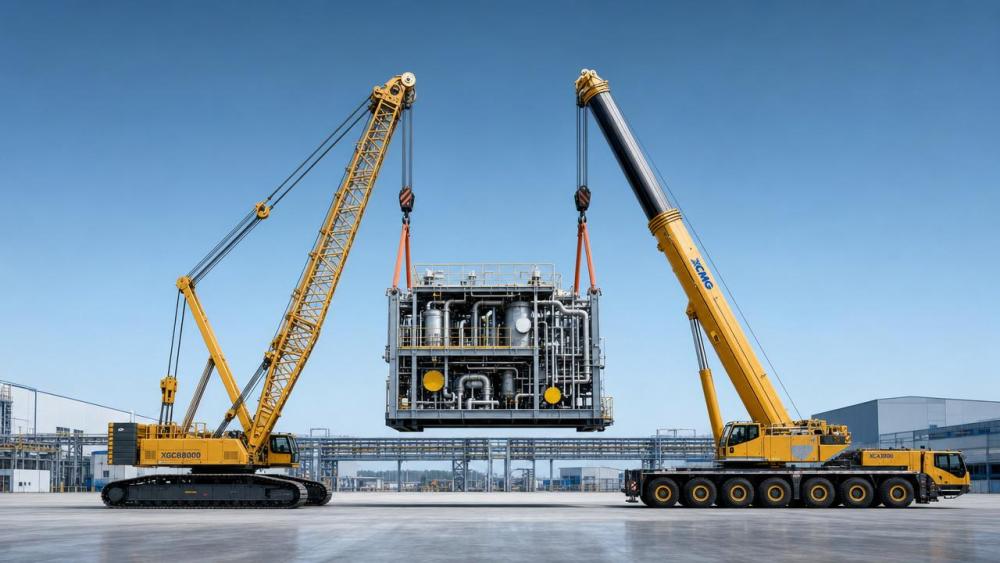
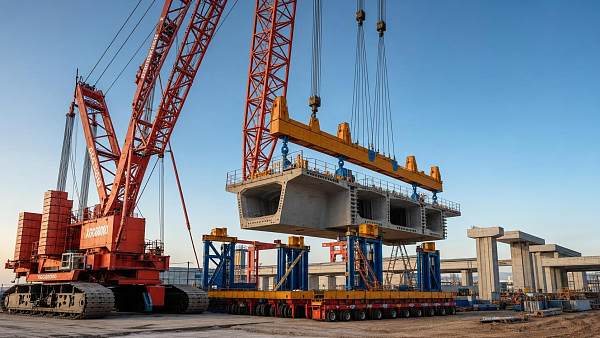
Crawler cranes are seeing stronger consideration in short-duration lifts where the lift itself is brief but preparation risk is high. That includes turbine component replacement, heavy industrial maintenance, reactor or vessel placement, bridge segment erection, and large plant tie-ins. In these scenarios, the advantage is not simply raw capacity. It is the combination of predictable load charts, stable lifting behavior, and better confidence on difficult ground when the crane is correctly configured.
Another reason crawler cranes remain relevant is their ability to support repeated heavy picks without the same dependence on outriggers and extensive matting logic seen in many mobile alternatives. When the site has soft ground, irregular bearing conditions, or limited room for repeated repositioning, a crawler crane can reduce operational friction. For procurement, that reduction can translate into fewer engineering revisions, lower interruption risk, and less exposure to weather-sensitive setup changes.
There is also a planning benefit. In many complex projects, buyers need clearer visibility on transport, assembly, and lift sequencing. Crawler cranes typically require more front-end planning, but that discipline can help identify hidden constraints earlier. On billion-dollar projects or shutdown-critical work, that visibility often matters more than the apparent simplicity of hiring a mobile unit at short notice.
Why mobile alternatives still dominate many short-lift decisions
Mobile cranes continue to lead where the job duration is genuinely short, lift weights are moderate, and site access allows rapid setup. For urban projects, scattered pick locations, utility work, HVAC placement, steel erection support, and general industrial maintenance, truck-mounted and all-terrain cranes often remain the practical choice. Their biggest advantage is time efficiency across the entire assignment: less transport complexity, faster arrival, lower assembly labor, and shorter demobilization.
For procurement teams managing multiple sites, mobile alternatives also provide scheduling flexibility. A unit can often be reassigned quickly if one package is delayed. That matters in volatile construction environments where permits, subcontractors, or deliveries shift daily. Even if crawler cranes offer stronger performance on paper, the ability of mobile cranes to move between jobs with minimal downtime can produce better fleet economics.
The growing digitalization of fleet management reinforces this advantage. Contractors increasingly track utilization, idle time, fuel burn, transport costs, and operator availability in near real time. In such systems, mobile crane deployment is easier to optimize for fragmented demand. That is one reason why buyers should view crawler cranes as high-value tools for specific risk-heavy scenarios rather than universal solutions for all short-duration lifts.
The key drivers procurement teams should evaluate before selecting crawler cranes
The most effective buyers now evaluate crane selection through a wider cost and risk lens. A short-duration lift can still justify crawler cranes when the hidden cost of failure is high. Important decision drivers include ground preparation, number of picks, load radius sensitivity, assembly complexity, road transport restrictions, standby risk, weather tolerance, operator familiarity, and the consequence of a missed lifting window.
Ground conditions deserve particular attention. If a mobile crane requires extensive matting, engineered outrigger support, traffic rerouting, or repeated setup changes, the time advantage may quickly disappear. By contrast, if the site is paved, open, and well drained, a mobile alternative may complete the assignment with lower total effort. This is why procurement teams should request not only quotes but also execution assumptions from suppliers.
Another driver is load criticality. When a project has one or two non-repeatable heavy lifts that affect commissioning, management often prioritizes confidence over apparent speed. In such cases, crawler cranes can create better value by reducing uncertainty. But when there are many small dispersed lifts over a short period, mobile cranes usually align better with operational flow.
A practical comparison framework for buyers
How these shifts affect procurement roles, suppliers, and project outcomes
The impact of this market shift is not limited to equipment managers. Procurement personnel must now collaborate more closely with lifting engineers, construction planners, HSE teams, and commercial managers. A narrow sourcing approach focused only on rate cards can lead to poor crane selection, especially when crawler cranes and mobile alternatives appear close in headline cost but differ sharply in setup assumptions and risk exposure.
Suppliers are also affected. Rental providers that can package engineering support, transport planning, operator competency, and responsive maintenance are better positioned than those competing only on fleet availability. For buyers, this means vendor evaluation should include planning quality and execution discipline, not just equipment model and price. In trend terms, the market is moving from pure crane hire toward integrated lift assurance.
Project outcomes improve when procurement identifies the real cost center early. On some jobs, the cost center is crane mobilization. On others, it is shutdown delay, ground remediation, or standby labor. Understanding that distinction is now essential when assessing crawler cranes for short-duration lifts.
What signals buyers should watch over the next procurement cycle
Looking ahead, buyers should monitor several signals. One is the continued growth of larger prefabricated components, which could expand the use case for crawler cranes even on short schedules. Another is transport regulation: axle load rules, escort requirements, and route constraints can either favor mobile deployment or increase hidden logistics cost. A third signal is workforce capability. The availability of experienced operators, rigging teams, and lift planners can materially change which crane type is safer and more efficient.
Sustainability targets are another emerging factor. Fuel consumption, support truck movements, and idle time are becoming part of equipment selection conversations, especially on projects with ESG reporting requirements. In some cases, a shorter total site presence from a mobile crane may look attractive. In others, avoiding failed mobilizations or repeat setup can make crawler cranes the more efficient choice over the full operation.
Digital lift planning will likely sharpen this comparison further. As simulations improve, procurement teams will be able to compare crawler cranes and mobile alternatives with better visibility into site geometry, ground pressure assumptions, and sequencing risk before issuing a final award.
A smarter action plan for short-duration lift procurement
For buyers, the strongest response is to standardize a decision checklist that goes beyond daily rate comparisons. Ask suppliers to define mobilization scope, setup time, required support equipment, ground assumptions, crew composition, weather limitations, and contingency options. Require a lift-specific explanation of why crawler cranes or mobile alternatives are being recommended. That step alone often reveals whether the proposal is operationally robust or commercially optimistic.
It is also useful to segment short-duration lifts into categories: rapid urban picks, shutdown-critical heavy lifts, repetitive industrial placements, and constrained-access infrastructure work. Each category tends to favor a different solution profile. Procurement teams that build such segmentation into framework agreements can reduce sourcing time and improve consistency across projects.
For organizations influenced by large-scale infrastructure, energy transition, mining expansion, or industrial modernization, the decision around crawler cranes is increasingly strategic rather than transactional. The right crane type affects schedule confidence, site safety, and total cost of ownership across the delivery chain. If your team wants to judge the trend accurately, focus on five questions: How critical is the lift window? How difficult is the ground? How many repositionings are required? What is the cost of failure? And which supplier can prove execution certainty, not just fleet access?
Those answers will usually show whether crawler cranes are the stronger choice for short-duration lifts, or whether a mobile alternative can deliver the same outcome with less complexity. In a market shaped by tighter schedules and higher accountability, that judgment is becoming one of procurement’s most valuable capabilities.
Related News
 Sep 22, 2026How to Evaluate a High-Altitude Mining Solutions Manufacturer for Remote ProjectsEvaluate a high-altitude mining solutions manufacturer with proven derating, cooling, service logistics, and lifecycle-cost support for remote projects.
 Sep 21, 2026Industrial Supplier Evaluation: A Risk-Based Scorecard for Quality, Capacity, and DeliveryIndustrial supplier evaluation made practical: use a risk-based scorecard to assess quality, capacity, and delivery reliability, reduce project risk, and select suppliers with confidence.
 Sep 20, 2026Comparing Heavy Equipment Warranty Suppliers: Coverage, Claims, and Downtime RiskSupplier comparison for heavy equipment warranty: evaluate coverage, claims speed, service networks, and downtime risk to protect uptime and project costs.
 Sep 19, 2026Mining Truck Technology Trends: What Fleet Managers Should Prioritize for 2026Mining truck technology trends for 2026: prioritize electrification, autonomy, predictive maintenance, and road intelligence to improve fleet uptime, safety, and cost control.


Structural Load Expert
Weekly Insights
Stay ahead with our curated technology reports delivered every Monday.