
Equipment Procurement Planning Price Analysis: What Drives Total Project Cost?

Equipment Procurement Planning Price Analysis Starts Before the Quote
Equipment procurement planning price analysis matters most when project budgets look fixed, yet total cost is still fluid.
That is especially true in heavy equipment fields tied to tunneling, mining, lifting, road building, and large transport systems.
A machine price alone rarely explains the final spend.
Specification drift, delivery risk, financing terms, site readiness, and future maintenance often move the budget more than expected.
In practice, equipment procurement planning price analysis is a way to connect engineering reality with commercial judgment.
This is why intelligence platforms such as TF-Strategy attract attention across global heavy industry.
Their value is not promotion.
It is the ability to link machine parameters, construction methods, material trends, and project timing into better buying decisions.
What does equipment procurement planning price analysis really cover?
Many people treat it as quote comparison.
That is too narrow for capital-intensive machinery.
A sound equipment procurement planning price analysis reviews the full path from technical definition to end-of-life exposure.
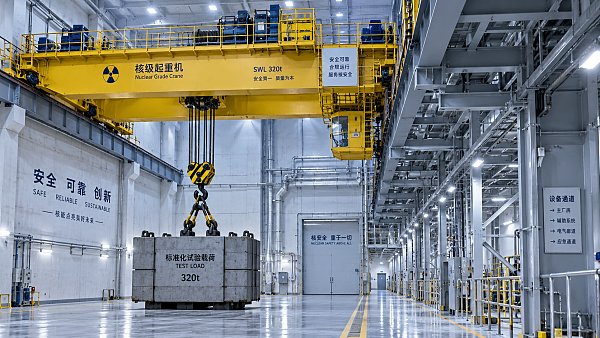
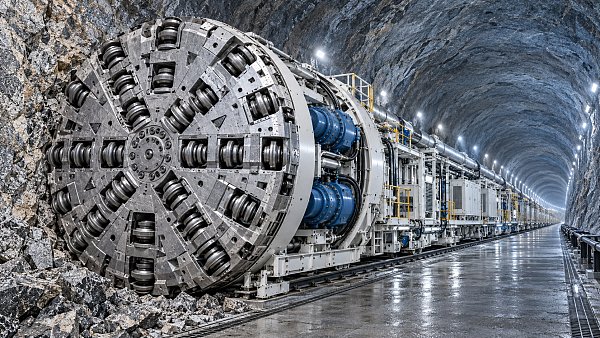
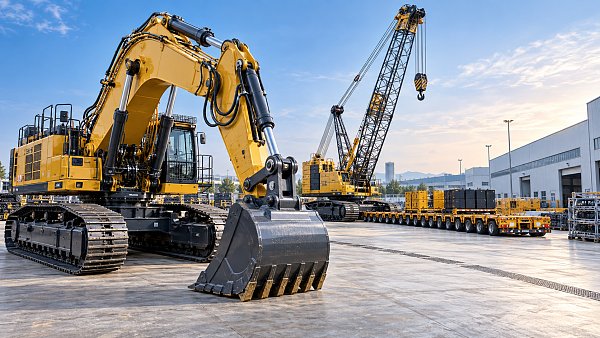
For a TBM, crawler crane, ultra-large excavator, or mining dump truck, the real question is not only purchase price.
The real question is total project cost under actual working conditions.
That usually includes:
- Base equipment price and option packages
- Engineering customization and compliance changes
- Ocean freight, inland transport, and abnormal load handling
- Insurance, duties, taxes, and currency exposure
- Assembly, commissioning, testing, and operator training
- Spare parts strategy and service response capability
- Energy, fuel, wear parts, and uptime risk
- Resale value, redeployment potential, or decommissioning cost
Simple price analysis asks, “Which offer is lower?”
Better equipment procurement planning price analysis asks, “Which offer performs better after the project absorbs every hidden cost?”
Why does the cheapest machine often lead to a higher total project cost?
This is one of the most common search questions, and the answer is usually operational.
A low headline price may hide weak productivity, slower delivery, or expensive maintenance.
For example, a lower-cost excavator in open-pit mining may consume more fuel and wear components faster.
A lower-priced crane may require imported parts with long lead times.
A road machine with limited digital diagnostics may increase downtime during seasonal paving windows.
Heavy projects also suffer from mismatch costs.
If the specification is underbuilt, productivity falls.
If it is overbuilt, capital is locked into unused capacity.
That is why equipment procurement planning price analysis should always connect machine design with site geology, haul distance, lift profile, gradient, temperature, and shift intensity.
The table below helps separate visible price from real budget pressure.
Which factors move pricing the most in heavy equipment procurement?
The strongest drivers are rarely random.
They usually sit at the intersection of engineering detail and market timing.
Specification depth
Small changes in cutter head material, boom length, payload class, emissions package, or automation features can reshape the quote.
In equipment procurement planning price analysis, unclear specifications create revision cycles and supplier padding.
Commodity and component volatility
Steel, hydraulics, tires, electrical systems, and power batteries can shift pricing quickly.
This matters even more for large cranes, electric mining trucks, and advanced TBM systems.
Project geography
Remote mines, mountain tunnels, and cross-border infrastructure projects add customs friction, site access limits, and higher support costs.
Schedule pressure
Compressed timelines can force premium production slots, air freight for critical parts, or acceptance of less favorable commercial terms.
Energy transition requirements
Battery-electric fleets, remote-control systems, and digital safety layers may raise initial cost but reduce future compliance and operating exposure.
This is where sector intelligence becomes useful.
TF-Strategy often tracks exactly these shifts, from TBM cutter head materials to electric haulage economics.
For equipment procurement planning price analysis, that kind of market context improves timing decisions.
How can you compare suppliers without missing hidden cost and risk?
Side-by-side quote comparison is useful, but only if the offers are normalized.
More common problems come from uneven assumptions.
One supplier includes supervision and training.
Another excludes foundation checks, testing media, or import packaging.
The result looks cheaper, but only on paper.
A stronger method is to build a comparison sheet around operating reality.
- Confirm equal technical scope before reading price deltas
- Map each excluded item to an internal budget owner
- Score delivery certainty, not just promised delivery date
- Check service density near the project site
- Review wear parts life under comparable duty cycles
- Stress-test payment terms against cash flow timing
- Estimate downtime cost for every critical failure scenario
In heavy industry, the supplier is not just a seller.
It becomes part of the project delivery chain.
That is why equipment procurement planning price analysis should include support capability, field response speed, and engineering discipline.
Where do procurement plans usually go wrong?
The mistakes are often familiar.
The cost impact is what surprises teams later.
Mistaking current demand for future operating need
A machine sized for peak demand may sit underused after the first phase.
Redeployment potential should be part of equipment procurement planning price analysis.
Leaving logistics to the end
For oversize machinery, route surveys, lifting plans, and customs documents can change both cost and start date.
Ignoring lifecycle data
A low acquisition cost loses value when maintenance intervals are short and spare parts need cross-border emergency shipping.
Treating intelligence as optional
Tender activity, materials inflation, and technology shifts often appear before they hit formal supplier offers.
Sources like TF-Strategy help frame those signals early, especially in complex machinery categories.
What is a practical next step for better cost control?
Start with a working model, not a final answer.
A useful equipment procurement planning price analysis should be updated as technical and commercial facts improve.
Build the model around five checkpoints:
- Define required output, operating environment, and compliance limits
- Separate must-have features from expandable options
- Convert supplier offers into comparable total cost assumptions
- Add logistics, installation, finance, and downtime scenarios
- Review market intelligence before locking timing and contract terms
That approach keeps pricing analysis close to project reality.
It also reduces the gap between budget approval and field performance.
When equipment decisions involve billion-dollar infrastructure schedules, the strongest result usually comes from combining engineering detail, commercial discipline, and sector intelligence.
Before the next sourcing round, refine the specification baseline, test the hidden cost assumptions, and compare suppliers on delivered value rather than quoted price alone.
Related News
 Oct 04, 2026Nuclear Lifting Equipment Cost: Budgeting for Compliance, Testing, and Lifecycle RiskNuclear lifting equipment cost explained: budget for compliance, proof-load testing, installation, documentation, and lifecycle risk to make confident procurement decisions.
 Oct 03, 2026How to Assess TBM Manufacturers for Hard-Rock Tunneling Projects?Choose the right tunnel boring machine manufacturer for hard-rock projects. Explore key criteria for design, lifecycle cost, factory quality, and service support.
 Oct 02, 2026How to Evaluate Heavy Equipment Technology Suppliers for Fleet Uptime and SupportHeavy equipment technology suppliers can make or break fleet uptime. Learn how to assess diagnostics, data access, parts, service coverage, and support terms before you buy.
 Oct 01, 2026How to Use Technical References to Benchmark Industrial Equipment PricesIndustrial equipment technical reference pricing: learn how to normalize specifications, scope, service life, and operating costs to benchmark quotes accurately and choose the best-value equipment.

Ms. Elena Rodriguez
Weekly Insights
Stay ahead with our curated technology reports delivered every Monday.