
Construction Equipment Efficiency Improvement: 7 Ways to Reduce Idle Time on Site
Why Idle Time Becomes the Real Cost Center on Heavy Sites
Construction equipment efficiency improvement usually begins with a simple observation: machines rarely lose money only when they break. They lose money while waiting.
On major earthworks, tunneling access works, lifting zones, haul roads, and paving fronts, idle minutes stack into missed shifts, extra fuel burn, and schedule drift.
That is why reducing idle time is not just an operating issue. It directly affects utilization, maintenance cycles, labor rhythm, and overall delivery reliability.
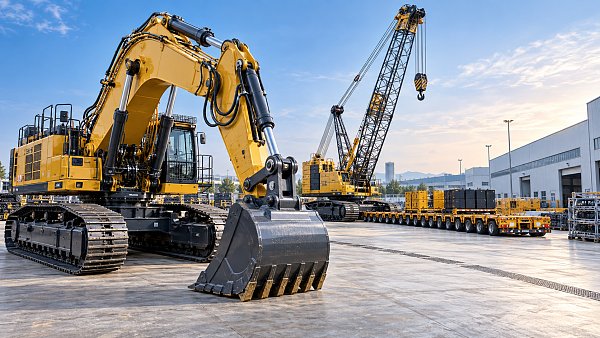
In practice, construction equipment efficiency improvement looks different on every site. A crawler crane waiting for rigging clearance has different constraints than an excavator waiting for trucks.
A road paver slowed by inconsistent material supply faces another problem entirely. So the right answer depends less on broad theory and more on site logic.
Across global heavy industry, this is where intelligence matters. The most useful analysis links machine behavior, field conditions, and workflow design rather than treating equipment as isolated assets.
Different Work Zones Create Different Idle Patterns
Construction equipment efficiency improvement often fails when similar jobs are treated as identical. Surface similarity hides very different operating bottlenecks.
For example, open-pit loading cycles depend on truck dispatch balance and haul distance. Tunnel support works depend more on access sequencing, ventilation windows, and safety clearance.
Large lifting work is even more sensitive to permit timing, weather thresholds, and ground preparation. In those cases, machine capacity alone tells very little.
A practical way to judge construction equipment efficiency improvement is to ask one question first: what causes the machine to wait most often on this site?
This comparison matters because construction equipment efficiency improvement is strongest when the root idle pattern is identified early, then managed with the right operational lever.
1. Balance Loading and Haul Cycles Before Adding More Machines
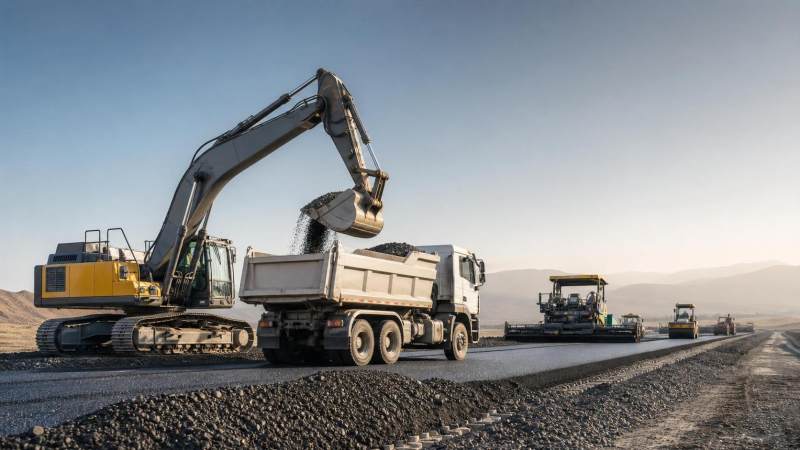
One of the most common idle scenarios appears in mass excavation. The excavator is capable, but trucks arrive in waves, then disappear.
That creates waiting at both ends. Buckets pause at the face, while trucks queue with engines running. Neither side is truly productive.
Construction equipment efficiency improvement here depends on matching loading time, travel time, dump time, and return time. More units do not always improve throughput.
On longer hauls, route condition matters almost as much as truck count. Soft segments, narrow passing points, and uneven dumping areas distort the whole cycle.
A better approach is to map real cycle times by shift, then adjust dispatch intervals, loading face position, and queuing space before increasing fleet size.
2. Remove Positioning Delays Around Cranes and High-Value Lifts
For heavy lifting, idle time often appears before the hook moves. Ground mats are incomplete, rigging is not staged, or adjacent crews still occupy the swing path.
In these conditions, construction equipment efficiency improvement is less about lifting speed and more about preparation discipline.
Crawler cranes used in wind, petrochemical, or modular work are especially sensitive to sequence gaps. A thirty-minute coordination miss can erase a full weather window.
Pre-lift checks should cover more than capacity charts. Travel path readiness, rigging location, exclusion boundaries, and communication points should be confirmed together.
This is also a common misjudgment. Teams often focus on maximum tonnage and overlook the waiting created by site access and lift handoff complexity.
3. Keep Material Flow Continuous on Paving and Linear Projects
Road machinery loses efficiency differently. A paver or roller can be mechanically ready yet still spend long periods in forced pauses.
The usual cause is uneven material supply. One delayed truck can create a cold joint risk, a stop-start surface, and unnecessary reheating or rework.
Construction equipment efficiency improvement on linear works depends on rhythm. Plant output, transport timing, paving speed, and compaction passes must stay aligned.
Where projects stretch across long corridors, reload points and traffic interface become critical. Delays often originate outside the machine zone itself.
A useful adjustment is to define acceptable delivery spacing by material type and ambient conditions, then trigger dispatch changes before the paving train slows.
4. Shorten Waiting During Shift Changes, Fueling, and Maintenance
Not all idle time comes from production flow. A large share appears in predictable support windows that are poorly organized.
Shift handover is a frequent example. If machine status, fuel level, attachment condition, and pending faults are not transferred clearly, startup drifts.
Construction equipment efficiency improvement improves quickly when fueling routes, lubrication timing, and service access are planned around actual machine duty cycles.
This matters even more in remote mining and high-altitude operations. There, support vehicles and spare access can become the real bottleneck.
Rather than treating maintenance as a separate function, strong sites schedule it as part of production continuity. That reduces unplanned waiting without pushing machines into failure.
5. Use Real-Time Visibility Where Conditions Change by the Hour
Some sites are too dynamic for static planning alone. Tunnel access works, deep cuts, and multi-front earthmoving can change materially within one shift.
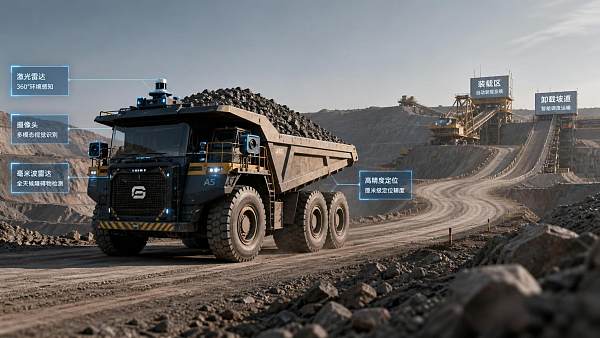
In those environments, construction equipment efficiency improvement benefits from dispatch data, geofencing, onboard payload feedback, and queue visibility.
The value is not just digital reporting. The real gain comes when supervisors can redirect trucks, re-sequence faces, or hold low-priority moves before congestion builds.
This is where heavy-industry intelligence platforms add context. Site data becomes more useful when compared with wider operating patterns, equipment behavior, and methodology trends.
For example, remote-controlled excavation, connected haulage, and utilization analytics are not equally valuable everywhere. Their return depends on variability, distance, and response speed needs.
6. Match Attachments, Access, and Ground Conditions to the Task
A machine can be technically available and still inefficient because it is wrongly configured for the ground or workface.
Buckets that are too large for fragmented loading zones, tracks unsuited to soft access, or haul trucks overloaded on steep gradients all create hidden stoppages.
Construction equipment efficiency improvement often comes from these smaller decisions. They may look secondary, yet they shape the entire production rhythm.
The same principle applies to TBM support logistics and large-component lifting. Access width, turning radius, bearing pressure, and staging layout deserve early review.
A common mistake is to rely on nominal specifications without checking how the machine interacts with actual terrain, material behavior, and traffic paths.
7. Build Idle-Time Rules Into Daily Planning, Not Only Weekly Reporting
Many operations measure utilization after the fact. By then, the delay has already spread through the schedule.
Construction equipment efficiency improvement becomes more durable when idle thresholds are managed during the shift. Waiting needs a trigger, an owner, and a response rule.
That may mean escalating truck shortages after two consecutive queue gaps, changing lift sequence after wind variability rises, or rescheduling service before fueling conflicts peak.
Useful daily controls are usually simple:
- define acceptable idle minutes by machine type;
- separate waiting causes from mechanical downtime;
- review delay patterns by zone, not only by fleet;
- assign one corrective action for each repeated trigger.
This avoids a familiar trap: collecting utilization data without changing field behavior.
Where Construction Equipment Efficiency Improvement Is Often Misread
Several misjudgments appear across heavy projects. One is assuming idle time means underpowered equipment, when the real issue is workflow imbalance.
Another is treating all waiting as unavoidable. Some delays are structural, but many come from poor staging, weak communication, or maintenance timing that can be changed quickly.
There is also a cost mistake. Short-term savings on dispatch tools, ground preparation, or service planning can increase total cost of ownership through lower utilization.
The more complex the machinery, the more dangerous this becomes. High-value assets in mining, tunneling, and ultra-large lifting lose value fastest when they spend time waiting for simpler dependencies.
The Next Step Is to Audit Waiting Causes by Site Logic
Construction equipment efficiency improvement works best when idle time is traced to actual site conditions, not generic benchmarks.
Start with one week of waiting data. Separate delays caused by dispatch, access, positioning, supply, maintenance, and safety clearance.
Then compare which causes repeat across excavation, lifting, haulage, or paving zones. That reveals where a local fix is enough and where a broader operating rule is needed.
For complex projects, it also helps to review equipment performance alongside wider industry intelligence, especially where digitalization, remote control, energy transition, and stricter safety standards are changing field methods.
The strongest gains usually come from this combination: realistic site diagnosis, disciplined coordination, and data that explains why machines wait before margins do.
Related News
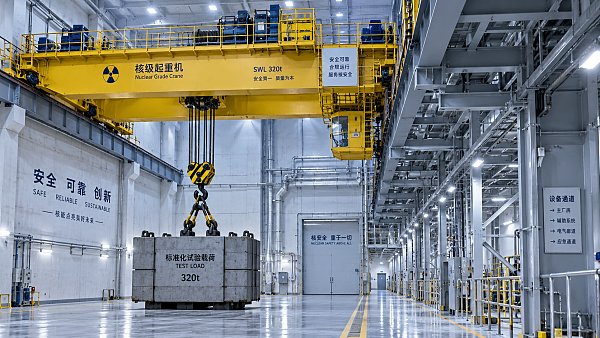
 Oct 04, 2026Nuclear Lifting Equipment Cost: Budgeting for Compliance, Testing, and Lifecycle RiskNuclear lifting equipment cost explained: budget for compliance, proof-load testing, installation, documentation, and lifecycle risk to make confident procurement decisions.
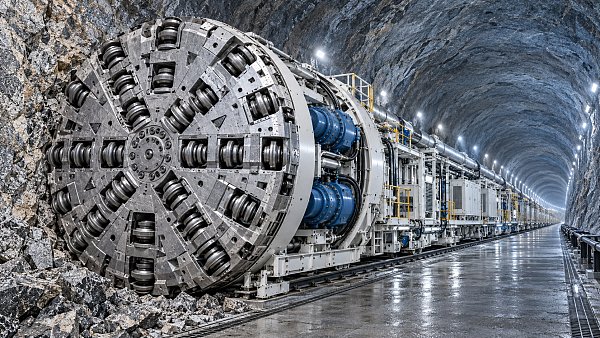
 Oct 03, 2026How to Assess TBM Manufacturers for Hard-Rock Tunneling Projects?Choose the right tunnel boring machine manufacturer for hard-rock projects. Explore key criteria for design, lifecycle cost, factory quality, and service support.
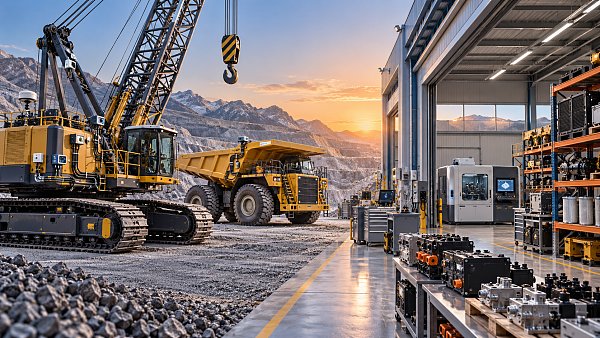
 Oct 02, 2026How to Evaluate Heavy Equipment Technology Suppliers for Fleet Uptime and SupportHeavy equipment technology suppliers can make or break fleet uptime. Learn how to assess diagnostics, data access, parts, service coverage, and support terms before you buy.
 Oct 01, 2026How to Use Technical References to Benchmark Industrial Equipment PricesIndustrial equipment technical reference pricing: learn how to normalize specifications, scope, service life, and operating costs to benchmark quotes accurately and choose the best-value equipment.

Heavy Haulage Strategist
Weekly Insights
Stay ahead with our curated technology reports delivered every Monday.