
Open Pit Drilling Solutions for Hard Rock: Equipment Options and Site Constraints
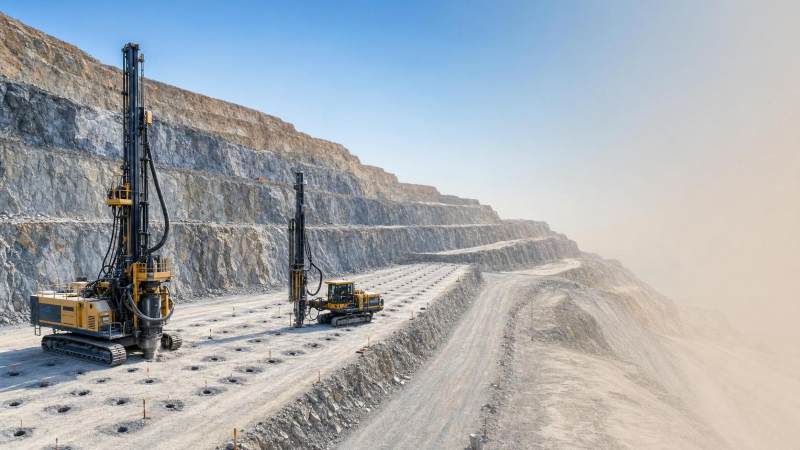
Why hard rock sites rarely need the same open pit drilling solutions
Open pit drilling solutions in hard rock are shaped by production intent, not rock strength alone.
A pit designed for tight grade control behaves differently from one chasing bulk movement at maximum tonnage.
Bench height, burden targets, groundwater, dust limits, and haul-road geometry quickly change what counts as the right drilling setup.
In practice, strong open pit drilling solutions connect drilling accuracy with blasting results, loading efficiency, and downstream truck cycles.
That systems view matters across heavy industry, where drilling errors can ripple into crusher feed variation, shovel idle time, and slope risk.
From the TF-Strategy perspective, the useful question is not which rig looks strongest on paper.
The better question is which open pit drilling solutions remain stable under real operating constraints over time.
Actual site conditions change the decision faster than brochure specifications
Hard rock can include dense granite, abrasive quartzite, fractured iron ore, or mixed formations with weathered zones.
Those materials may share compressive strength ranges, yet require different open pit drilling solutions because hole stability and penetration behavior differ.
A dry, wide bench often allows larger rotary blasthole rigs with aggressive production settings.
A narrow working area with broken toes and traffic interference usually favors more maneuverable equipment and stricter collaring control.
Groundwater adds another layer.
Water inflow can collapse cuttings removal efficiency, affect bit life, and force changes in hole cleaning, air systems, or drill method selection.
This is why open pit drilling solutions must be judged with geology, blasting, and fleet logistics in the same frame.
Where large production benches favor high-output drilling systems
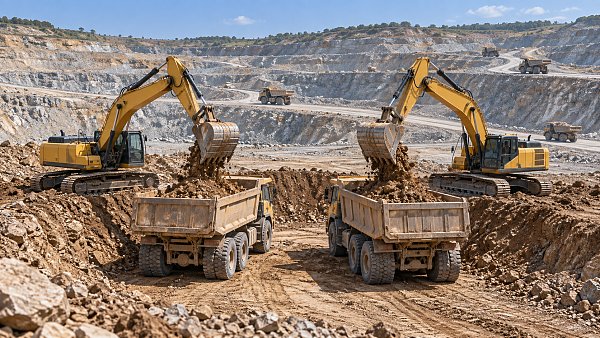
On broad benches with consistent hard rock, production pressure often drives the choice toward rotary blasthole rigs.
These open pit drilling solutions work well when the goal is long rows, repeatable patterns, and efficient drilling of larger hole diameters.
The advantage is not only footage per shift.
Larger holes can support blast designs that improve fragmentation uniformity for high-capacity excavators and primary crushers.
Still, this setup only performs if bench preparation is disciplined.
Poor floor leveling, congestion from fuel trucks, or delayed stemming can erase the theoretical productivity gain.
In these operations, the critical judgment point is fleet synchronization.
Open pit drilling solutions should be aligned with blast crew timing, shovel reach, and dump truck dispatch windows.
What usually matters most on high-volume benches
- Hole diameter matched to desired fragmentation and explosive column design
- Compressor performance under altitude and temperature variation
- Bit and pipe wear rates in abrasive formations
- Road access that supports safe rig movement between patterns
- Maintenance response time for hydraulic and dust collection systems
Narrow benches and selective zones need tighter control than sheer drilling speed
A different picture appears where ore boundaries are irregular or benches are narrow.
Here, open pit drilling solutions are judged more by positioning accuracy, deviation control, and clean collaring than by peak hourly output.
Top hammer and down-the-hole systems can both fit, but for different reasons.
Top hammer rigs are often chosen for shorter holes, tighter patterns, and fast repositioning.
DTH drilling tends to hold value when straightness and reliable penetration are more important than fast movement between holes.
The hidden risk in selective mining is dilution.
A rig that is productive but imprecise can create oversized blast movement and erase ore-waste separation discipline.
In that setting, the best open pit drilling solutions are often the ones that support cleaner downstream decisions, not just faster drilling logs.
When water, dust, and weather reshape equipment choices
Environmental constraints are not secondary filters.
They can become the main reason one group of open pit drilling solutions outperforms another.
Sites with persistent groundwater may need stronger air flushing, adapted hole cleaning practice, or foams and water-assisted controls.
Areas with strict dust rules push attention toward collector performance, sealed systems, and drill methods that reduce airborne fines during collaring.
Cold regions change hose behavior, hydraulic response, and maintenance scheduling.
High-altitude pits reduce engine and compressor efficiency, which directly affects penetration expectations.
In these conditions, open pit drilling solutions should be tested against seasonal performance windows rather than average annual assumptions.
A practical comparison of common hard rock drilling options
The equipment choice becomes clearer when compared through operating conditions instead of abstract categories.
This comparison shows why open pit drilling solutions should be filtered through bench geometry and blasting intent before brand or model preference.
The cost question is usually decided by support systems, not only by the drill rig
One common misread is to compare open pit drilling solutions through purchase price or fuel burn alone.
That misses the supporting network around the rig.
Bit inventory, rod handling, mobile lubrication, compressor service, dust suppression, and technician travel time often decide real cost stability.
A remote hard rock pit with weak service access may be better served by a slightly less aggressive system with stronger maintainability.
This is where TF-Strategy’s wider heavy equipment lens matters.
Drilling performance should be read together with excavator loading behavior, dump truck queue patterns, and the mine’s broader power and maintenance structure.
Frequent misjudgments before implementation
- Assuming two hard rock pits need the same open pit drilling solutions because rock names match
- Selecting hole size for speed while ignoring crusher feed targets
- Treating groundwater as a blasting issue rather than a drilling system issue
- Ignoring seasonal access limits for fuel, parts, and maintenance crews
- Comparing rigs without measuring deviation tolerance and bench preparation quality
A grounded way to match open pit drilling solutions to the site
A useful starting point is to map the pit into operating zones rather than search for one universal answer.
Some benches may justify heavy production drilling, while edge zones need more controlled open pit drilling solutions.
Next, compare five conditions together: rock behavior, target fragmentation, bench access, environmental exposure, and support capacity.
After that, test whether the selected method still works when haul roads tighten, weather shifts, or water inflow increases.
The best decisions usually come from staged validation.
Track penetration rates, deviation, bit consumption, unplanned downtime, and blast results over several patterns before scaling.
That approach turns open pit drilling solutions into a site-fit operating model, not a single equipment purchase decision.
For the next step, define bench-specific constraints, quantify acceptable deviation and fragmentation ranges, then compare equipment options against maintenance and logistics reality.
That is usually where a hard rock drilling strategy becomes clearer, safer, and more durable over the life of the pit.
Related News
 Oct 04, 2026Nuclear Lifting Equipment Cost: Budgeting for Compliance, Testing, and Lifecycle RiskNuclear lifting equipment cost explained: budget for compliance, proof-load testing, installation, documentation, and lifecycle risk to make confident procurement decisions.
 Oct 03, 2026How to Assess TBM Manufacturers for Hard-Rock Tunneling Projects?Choose the right tunnel boring machine manufacturer for hard-rock projects. Explore key criteria for design, lifecycle cost, factory quality, and service support.
 Oct 02, 2026How to Evaluate Heavy Equipment Technology Suppliers for Fleet Uptime and SupportHeavy equipment technology suppliers can make or break fleet uptime. Learn how to assess diagnostics, data access, parts, service coverage, and support terms before you buy.
 Oct 01, 2026How to Use Technical References to Benchmark Industrial Equipment PricesIndustrial equipment technical reference pricing: learn how to normalize specifications, scope, service life, and operating costs to benchmark quotes accurately and choose the best-value equipment.

Hydraulic Power Analyst
Weekly Insights
Stay ahead with our curated technology reports delivered every Monday.