
Extreme Temperature Mining Solutions: When Insulated Systems Are Necessary
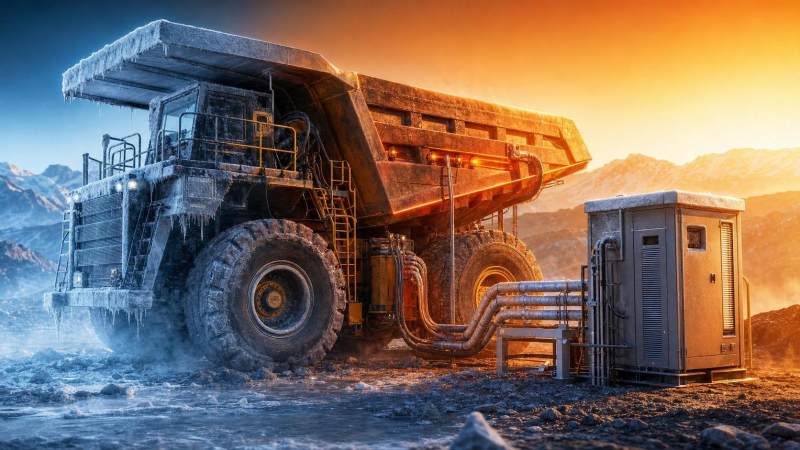
Extreme temperature mining solutions insulated systems become critical when uptime is exposed
In heavy mining, temperature is rarely just a weather issue. It changes fluid behavior, battery response, seal life, sensor stability, and operator safety at the same time.
That is why extreme temperature mining solutions insulated systems deserve a more precise discussion than a simple cold-weather or hot-weather label.
In practice, thermal protection becomes necessary when environmental stress starts affecting production continuity, maintenance frequency, or haulage risk faster than standard equipment can absorb.
Within the TF-Strategy view of global heavy equipment, this judgment matters across open-pit mines, heavy-haul fleets, support workshops, and remote infrastructure corridors.
The real question is not whether insulated systems are technically available. It is when they move from optional specification to operational requirement.
Actual site conditions create very different thermal demands
Two sites may share the same temperature range and still need different protection levels. The operating pattern usually explains why.
A mine with short cycles, heated service bays, and stable daytime production can often manage with targeted component insulation.
A remote haul route with night loading, idle periods, and long downhill braking faces another thermal profile entirely.
This is where extreme temperature mining solutions insulated designs stop being a specification line and start becoming an asset-preservation strategy.
TF-Strategy often frames this through three linked variables: exposure duration, thermal cycling frequency, and the cost of unplanned stoppage.
When all three are high, the case for insulated enclosures, heated lines, protected battery compartments, and temperature-managed hydraulics gets much stronger.
It is rarely about ambient temperature alone
Wind chill across exposed electrical cabinets, radiant heat near engine bays, altitude-related cooling shifts, and start-stop cycles often cause more trouble than the daily forecast.
That is why site evaluation should include work rhythm, parking conditions, route length, maintenance access, and standby time between shifts.
Open-pit haulage in deep cold calls for more than basic winterization
In subzero open-pit mining, the first problem is often not catastrophic failure. It is degraded responsiveness that quietly reduces output.
Hydraulic oil thickens, hose flexibility drops, cab comfort weakens, and sensor readings become less reliable during startup windows.
For dump trucks and support vehicles, extreme temperature mining solutions insulated layouts are usually justified when cold starts are frequent and idle heat cannot be retained.
In these conditions, insulation is not only about operator comfort. It protects batteries, DEF or other treatment systems, fluid lines, control cabinets, and vulnerable connectors.
A more common mistake is assuming engine power defines readiness. In reality, auxiliary systems often become the first thermal bottleneck.
If production relies on early-shift startup reliability, insulated systems deserve priority over cosmetic cold-climate packages.
What usually matters most in cold operations
- Heat retention during parked periods, not only active heating during operation.
- Protection for low-flow hydraulic circuits and control valves.
- Battery enclosure insulation for electric or hybrid auxiliary systems.
- Serviceability when technicians must work outdoors in limited weather windows.
Desert mines and high-radiation zones need a different insulated strategy
Hot-climate operations create a very different failure pattern. Here, the issue is less about startup and more about thermal saturation over long duty cycles.
Cables age faster, cooling systems lose margin, electronics drift, and tire performance becomes less predictable on abrasive haul roads.
In this setting, extreme temperature mining solutions insulated assemblies often focus on shielding heat-sensitive compartments from external gain rather than trapping internal warmth.
Battery-electric mining equipment makes this even more important. Thermal runaway risk may be low, yet persistent heat exposure still shortens useful life and narrows operating flexibility.
Insulated covers, reflective barriers, controlled ventilation paths, and sealed instrument housing can prevent small heat loads from becoming continuous downtime.
The judgment point is simple: once cooling systems spend too much time compensating for external heat intrusion, passive insulation starts paying back quickly.
Remote mixed-climate routes are where partial insulation often fails
Some of the hardest projects are not the hottest or coldest. They are the ones that swing sharply between day and night, season to season, or mine face to processing corridor.
These mixed-climate routes create repeated expansion and contraction across hoses, wiring, seals, and housing joints. Components may survive extremes but fail from cycling fatigue.
That is why extreme temperature mining solutions insulated packages are often more valuable in variable climates than in steady ones.
In actual deployment, isolated treatment of one subsystem can shift stress elsewhere. An insulated battery bay paired with unprotected connectors may still leave the fleet exposed.
A systems view works better: thermal mapping, component hierarchy, maintenance intervals, and route-specific failure records should be reviewed together.
Support equipment and fixed infrastructure are often overlooked
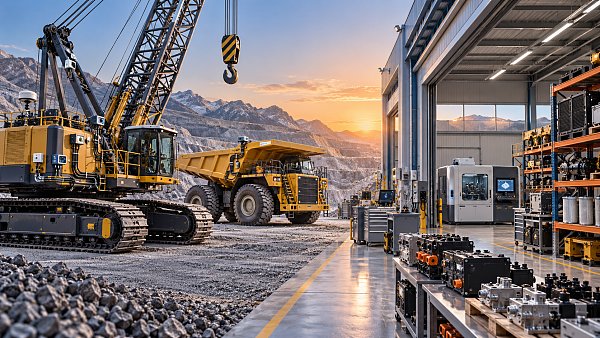
Mining does not depend on mobile equipment alone. Pump stations, charging zones, field workshops, and remote monitoring cabinets can become the weak link.
For this reason, extreme temperature mining solutions insulated planning should include service infrastructure, not only haul trucks and excavators.
A heated vehicle arriving at an unprotected charging point still loses time. A thermally managed excavator linked to unstable field electronics still inherits downtime risk.
TF-Strategy’s broader infrastructure lens is useful here. The best-performing sites usually align equipment specification with route design, service logistics, and power availability.
This is especially relevant where digitalization is increasing. Remote-control systems, telematics nodes, and autonomous support hardware all add temperature-sensitive layers.
Common misjudgments before insulated systems are specified
One frequent error is reading temperature limits from a datasheet and assuming the site is covered. Published limits rarely describe real duty-cycle stress.
Another is focusing on purchase cost while ignoring recovery time after thermal faults, emergency maintenance travel, and spare-part delays in remote regions.
There is also a tendency to copy one mine’s solution into another. Similar ore bodies do not guarantee similar temperature behavior.
Insulated systems should also be checked for compatibility with cleaning access, fire suppression layouts, and inspection routines. Poorly integrated insulation can create new maintenance blind spots.
In other words, extreme temperature mining solutions insulated packages work best when they are engineered into the operating system, not bolted on after repeated failure.
A practical way to decide when insulation is necessary
A useful decision path starts with failure evidence, not assumptions. Look for thermal patterns in startup logs, battery events, hydraulic lag, cable replacements, and electronics alarms.
Then compare those records against exposure time, route profile, service access, and seasonal variability. This reveals whether the risk is occasional or structural.
From there, insulated systems can be ranked by operational impact:
- Protect functions that block startup or dispatch first.
- Address components with high replacement delay second.
- Upgrade items exposed to repeated thermal cycling next.
- Review supporting infrastructure before scaling fleetwide.
This approach keeps extreme temperature mining solutions insulated decisions tied to measurable site value rather than generic specification pressure.
The next step is to map each thermal risk to actual equipment interfaces, confirm maintenance implications, and define acceptance criteria before deployment.
Related News
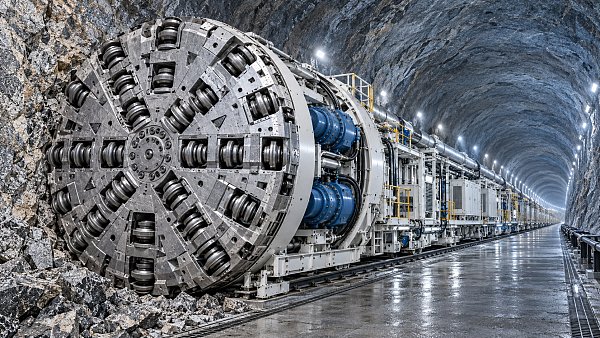
 Oct 03, 2026How to Assess TBM Manufacturers for Hard-Rock Tunneling Projects?Choose the right tunnel boring machine manufacturer for hard-rock projects. Explore key criteria for design, lifecycle cost, factory quality, and service support.
 Oct 02, 2026How to Evaluate Heavy Equipment Technology Suppliers for Fleet Uptime and SupportHeavy equipment technology suppliers can make or break fleet uptime. Learn how to assess diagnostics, data access, parts, service coverage, and support terms before you buy.
 Oct 01, 2026How to Use Technical References to Benchmark Industrial Equipment PricesIndustrial equipment technical reference pricing: learn how to normalize specifications, scope, service life, and operating costs to benchmark quotes accurately and choose the best-value equipment.
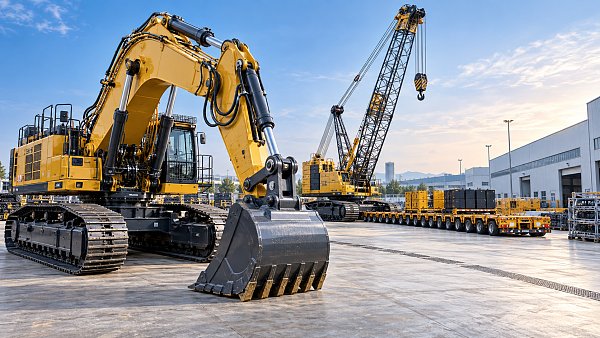
 Sep 30, 2026What Does an Ultra-Large Excavator Really Cost Over Its Service Life?Ultra-large excavators cost far more than purchase price. Explore lifecycle expenses, uptime risks, energy use, maintenance, and cost-per-tonne insights.
Ms. Elena Rodriguez
Weekly Insights
Stay ahead with our curated technology reports delivered every Monday.